Organic SEO in Manchester: Foundations for Local Growth
Understanding Organic SEO in the Manchester Context
Organic search optimisation is a long‑term strategy that helps Manchester businesses grow visibility without paying for ads. It hinges on improving the relevance, trust, and accessibility of your website so search engines rank you higher for the questions local customers actually ask. For Manchester audiences, this means a careful balance between technical excellence, user‑focused content, and signals from the local ecosystem. The aim is sustainable, incremental gains that compound over time, rather than quick, brittle wins.
At ManchesterSeo.ai, we emphasise a practical, evidence‑based approach. You’ll learn how to prioritise actions that yield enduring results, from technical foundations to content architecture and local signals. This part lays the groundwork for a robust, long‑term presence in Manchester’s search landscape, preparing you for the more advanced frameworks explored in later sections.
Why Organic SEO Matters for Manchester Businesses
Manchester is a competitive arena with a dynamic mix of sectors, from professional services to manufacturing, hospitality, and tech. Organic SEO targets people who are actively seeking solutions in and around Manchester, making it a cost‑efficient channel for local growth. Unlike paid advertising, organic rankings persist beyond a single campaign, providing ongoing traffic that compounds as you build authority and topical depth.
Industry data from reputable sources consistently shows that a substantial share of traffic comes from organic search, and the top results attract the majority of clicks. By aligning your site with these expectations, you help Google understand your expertise and relevance to Manchester audiences. This is especially important for businesses that operate in multiple neighbourhoods or service areas across Greater Manchester.
Core Pillars Of An Organic SEO Strategy For Manchester
To build a sustainable presence, focus on four interlocking pillars: technical SEO, on‑page optimisation, content strategy, and local signals. Each pillar reinforces the others, creating a resilient framework that supports steady growth in traffic and inquiries from Manchester customers.
- Technical SEOoptimise site speed, mobile usability, crawlability, and indexability. A fast, well‑structured site helps Google discover and rank content more effectively, especially on mobile devices used by local searchers.
- On‑page optimisationcraft clear title tags, meta descriptions, headers, and internal linking that reflect Manchester‑centric user intent. This clarity improves click‑through rates from search results and strengthens topical signals.
- Content strategypublish long‑form, authoritative content that answers real Manchester questions, organised into topic clusters. This approach supports depth, improves dwell time, and helps you cover subtopics that relate to your core service areas.
- Local signalsmanage Google Business Profile (GBP), build LocalPDPs (local landing pages), and optimise maps descriptors. Local signals are a major factor in organic visibility for Manchester searches, particularly near‑me and neighbourhood queries.
Setting Realistic Expectations For Manchester SEO
Organic SEO is a marathon, not a sprint. Initial wins may appear after a few weeks, but meaningful growth typically unfolds over several months as search engines reassess and reward your improved relevance and trust. For Manchester businesses, aligning content with local intent—service areas, population density, and local consumer behaviours—accelerates progress. Regular audits, performance tracking, and iterative optimisation keep momentum going and help you justify ongoing investment to stakeholders.
As you plan, reference authoritative guides to underpin best practices. For example, Google's SEO Starter Guide provides foundational guidance on structure, content quality, and technical considerations. See: SEO Starter Guide.
How Manchester SEO Aligns With Your Business Goals
Every Manchester business is unique, but the underlying aim is the same: visible, trusted search presence that drives meaningful engagement. A well‑designed organic strategy begins with a clear objective, such as increasing qualified leads from Manchester or improving the search visibility of core service pages. It then translates into concrete actions: technical fixes, content topics, and local optimisations that align with your target audience and budget.
Within our approach at ManchesterSeo.ai, we emphasise transparency and measurable progress. You can expect regular reporting that links activity to outcomes, including traffic, rankings, and conversions. If you already have analytics in place, we’ll map the data to ROI, using dashboards that compare pre‑ and post‑optimisation performance and highlight the most impactful changes for Manchester users.
What Comes Next in This Series
Part 1 introduces the rationale and the four pillars of an organic SEO program tailored for Manchester. In Part 2, we’ll translate strategy into action by setting objectives, conducting local keyword research, and outlining a phased rollout that respects your budget and timeline. Expect practical templates, checklists, and real‑world examples drawn from Manchester businesses that have grown their organic presence via methodical, repeatable processes.
Explore how our Organic SEO services can be customised for your sector. If you’d like a deeper dive sooner, contact Manchester SEO experts at ManchesterSeo.ai and we’ll tailor an starter plan around your specific locality and objectives. For authoritative guidance, always reference the Google SEO Starter Guide.
Organic SEO vs Paid Advertising: What Matters for Manchester Businesses
Key Differences Between Organic SEO And Paid Advertising
In the Manchester market, organic SEO and paid search serve complementary roles rather than competing tactics. Organic SEO (the focus of ManchesterSeo.ai) builds lasting visibility by improving relevance, trust, and accessibility, so you attract qualified traffic over time. Paid search delivers immediate visibility, rapid data on what messaging resonates, and precise control over who sees your ads. The core distinction is velocity versus durability: paid brings quick results, while organic grows a sustainable trajectory that compounds as your authority increases.
For Manchester customers, a balanced approach means leveraging LocalPDPs, GBP signals, and strong on‑page intent while testing offer angles and geographic targets with paid campaigns. This strategy allows you to capture high‑intent queries now, then progressively strengthen your organic footprint so long‑term growth becomes cheaper and more predictable.
When Organic SEO Delivers Sustainable Value In Manchester
Organic SEO in Manchester yields several distinctive advantages. Traffic is typically more stable, as rankings improve and content clusters mature. Authority signals rise when you publish depthful content that answers local questions, which in turn supports rankings for broader service areas across Greater Manchester. The cost per lead often declines over time, particularly as you expand your topic coverage and interlink related pages to reinforce topical authority.
A well‑structured organic programme also scales well with local intent. For example, cluster pages that address Manchester neighbourhoods, service areas, and common local problems can be repurposed across channels, amplifying impact without proportional budget increases. To translate strategy into execution, consider aligning content with real Manchester questions, such as local service needs, seasonal patterns, and proximity to key business districts.
To learn more about how these practices integrate with your business goals, explore our Organic SEO services page, which details how we build local relevance at Manchester scale.
Cost And ROI Considerations For Local Manchester Businesses
The cost dynamics of organic SEO differ from paid advertising. SEO requires investment in technical infrastructure, content creation, and ongoing optimisation, but the marginal cost per additional lead often falls as authority grows. PPC costs are immediate and predictable, yet can escalate during peak seasons or in competitive niches. For Manchester firms, the smartest approach is to view ROI as a horizon—a clear plan that recognises short‑term payback from paid activity while building a longer‑term, cost‑efficient foundation through organic work.
A practical way to forecast ROI is to model two scenarios: a conservative organic growth curve supplemented with a moderate PPC budget, and an aggressive organic build aimed at dominating local topics. In both cases, monitor metrics like qualified leads, contact form submissions, and phone inquiries from Manchester users. If you already use analytics, we’ll map activity to ROI and present dashboards that isolate the most impactful changes for local customers.
For guidance on best practices, reference sources such as the Google SEO Starter Guide and credible SEO literature. See: Google SEO Starter Guide and industry analyses on SEO vs PPC.
Strategic Use Of PPC To Complement Organic SEO
Paid search excels when you need rapid validation of messaging or to cover an urgent Manchester‑specific demand. Use PPC to protect branded terms and top‑of‑funnel keywords while your organic pages gain momentum. In practice, allocate a portion of your budget to geo‑targeted campaigns that mirror your LocalPDPs and service areas, enabling you to capture high‑intent searches near key Manchester locations.
Key tactics include seasonal campaigns that align with local events, remarketing to nurture visitors who engaged with Manchester pages, and A/B testing of ad copy that mirrors the language used on your high‑performing service pages. This cross‑channel approach maintains visibility during algorithmic shifts and helps you refine the more durable content strategy that underpins organic growth.
Measuring And Aligning KPIs With Local Goals
Successful Manchester campaigns hinge on clear, locally relevant KPIs. Track organic traffic growth to Manchester pages, map pack visibility, GBP interactions, and conversions from local leads. For paid campaigns, monitor cost per click, click‑through rate, and cost per lead by service area. A balanced dashboard will show how paid activity informs organic momentum and how the organic programme sustains long‑term lead quality, especially within Manchester’s diverse neighbourhoods.
Regular reviews should tie performance to business objectives, such as increasing Manchester‑driven inquiries or improving the visibility of core service pages in Local SERPs. If you’d like a structured framework, we can provide templates and dashboards tailored to Manchester markets and your service mix.
Ready to blend organic SEO in Manchester with strategic paid search? Our team at ManchesterSeo.ai specialises in creating dual‑channel plans that align with your locality, sector, and budget. Learn more about how we integrate organic SEO with targeted pay‑per‑click initiatives to maximise visibility and qualified leads across Manchester. For a tailored starter plan, contact us via the Organic SEO services page or reach out to our Manchester experts for a personalised consultation. You can also reference the Google Starter Guide for foundational practices that support both channels.
Local SEO Mastery for Manchester: Visibility in Local SERPs and Maps
Local Search in Manchester: What Makes It Different
For Manchester businesses aiming to grow organically, local search is the battleground where proximity, relevance, and trust converge. Local search success hinges on a cohesive blend of Google Business Profile (GBP) signals, well-structured local landing pages, accurate NAP (name, address, phone) data, and content that answers Manchester-specific queries. At ManchesterSeo.ai, we emphasise a practical approach: build authoritative local pages, verify your GBP, and interlock technical foundations with user-focused content to rise in local SERPs and maps results. This part expands the four-pillar model from earlier sections into actions tailored for Manchester’s diverse neighbourhoods and service areas.
Mastering Google Business Profile for Manchester
GBP is the cornerstone of local visibility. Ensure your Manchester business is claimed, verified, and optimised across the key attributes that influence local intent. Start with accurate business categories and a precise contact phone number, and keep your hours current for every service area you serve. Regular GBP posts highlighting local events, neighbourhood-specific services, and customer success stories reinforce authority and engagement signals. Respond to reviews promptly to demonstrate active community involvement and to improve perceived trustworthiness among Manchester users.
Beyond the basic profile, cultivate a rich set of local signals by integrating GBP with LocalPDPs (local landing pages) and Maps descriptors. These signals help search engines understand where you operate, which neighbourhoods you prioritise, and how your offerings align with local demand. For reference on GBP best practices, consult Google's GBP guidelines and the SEO-focused resources linked in our recommended guides.
Local Landing Pages Or LocalPDPs: Topic-Driven Locality
LocalPDPs are dedicated pages that map to specific Manchester neighbourhoods, service areas, or prominent local landmarks. Each LocalPDP should address the unique needs of its audience, incorporate location-specific keywords, and link back to core service pages. The aim is to create a network of interlinked pages that reflect the real geography of Greater Manchester while preserving a clean, crawlable site architecture. For Manchester, this means clusters like Manchester City Centre, Salford, Chorlton, and surrounding districts, all connected to your primary service themes such as installation, maintenance, or advisory services.
Build LocalPDPs with consistent NAP details, local testimonials, and maps embeds to reinforce credibility. Use clear, service-oriented headings and ensure each page answers practical local questions. This approach translates local intent into structured signals that search engines can readily interpret, boosting both local ranking and user relevance.
Maps Descriptors And Local Signals In Practice
Maps descriptors are the on-page details that help maps algorithms associate your GBP and LocalPDPs with Manchester contexts. Create precise descriptors for each location you serve and ensure consistent naming across GBP, LocalPDPs, and internal links. A well-structured geography strategy links neighbourhoods to your service taxonomy, enabling users near Manchester to discover the right offerings quickly. While GBP handles your business presence, Maps descriptors help search engines relate place data to user queries with high local intent.
When implemented cohesively, these signals improve proximity-based ranking, increase maps visibility, and strengthen your overall local presence. You can also reference the local knowledge you gain from ongoing performance data to refine your location targeting and content calendar, ensuring you stay ahead of seasonal and event-driven shifts in Manchester.
Structured Data And Local Schemas For Manchester
Implementing structured data is a practical way to communicate local context to search engines. Use LocalBusiness and Organization schemas to mark your Manchester presence, including location, hours, contact details, and service areas. The aim is to make it easy for Google to understand who you are, where you operate, and what you offer in Manchester. This is particularly valuable when you have multiple service locations or operate across several neighbourhoods in Greater Manchester.
As part of a holistic local strategy, combine structured data with GBP signals and LocalPDPs. This three-pronged approach strengthens the semantic connections between your site content, your business profile, and the local geography you serve.
Content, Reviews, And Local Authority Building
Solicit and showcase local reviews from Manchester customers, and respond with a personalised touch that demonstrates active community involvement. Pair reviews with local case studies and testimonials on LocalPDPs to build topical authority. Local content should be practical, addressing common Manchester challenges, such as proximity to transport hubs, business districts, and popular neighbourhood hubs. A steady cadence of neighbourhood-focused content solidifies your position as the local authority on your industry in Manchester.
Integrate content creation with a calendar that mirrors local events, seasonal business cycles, and regulatory considerations that affect Manchester markets. This not only improves relevance but also provides timely opportunities to capture newsworthy topics that attract local links and social engagement.
Measurement And Adaptation For Local Impact
Track local performance with a focused set of KPIs: GBP interactions, Local Pack impressions, traffic to LocalPDPs, and conversions generated from Manchester pages. Use Looker Studio or Google Data Studio dashboards to visualise how GBP, LocalPDPs, and Maps descriptors interact with core service pages. Regularly review the data to identify gaps, adjust content topics, and refine the geographic scope of your LocalPDPs. The objective is a feedback loop where local insights drive iterative improvements in visibility and user experience for Manchester audiences.
For foundational guidance on structure and quality, reference the Google SEO Starter Guide, and consider additional industry resources on local SEO strategy. See: Google SEO Starter Guide.
- LocalPDPs: Create targeted neighbourhood pages that link to core service offerings and GBP-enhanced locations.
- Maps descriptors: Define location-specific attributes that help maps platforms connect your business to local queries.
- GBP: Optimise listing details, posts, reviews, and Q&A to maintain an active local presence.
- Glossaries: Build a shared vocabulary for local terms and service areas to improve topical relevance.
- Zhidan prompts: Use AI-assisted prompts to generate locale-specific content and micro‑copy for LocalPDPs.
- Ambient captions: Add supportive image captions that reinforce local context and accessibility.
Want to explore how Local SEO mastery translates into tangible results for your Manchester business? Visit our Organic SEO services page or contact Manchester SEO experts for a tailored starter plan. We also encourage consulting the Google SEO Starter Guide for foundational practices that support both local and broader search strategies.
Core Elements Of An Organic SEO Strategy For Manchester
Four Foundations For Sustainable Local Growth
A robust organic SEO programme for Manchester rests on four interlocking pillars: technical SEO, on‑page optimisation, a disciplined content strategy, and deliberate off‑page authority building. When designed to work together, these elements create a durable trajectory of traffic, leads, and trust from Manchester audiences. At ManchesterSeo.ai we emphasise practical, measurable steps that align with local search behaviour, neighbourhood patterns, and service area dynamics. This part translates the high‑level four‑pillar model into concrete actions you can implement and track in real time.
Each pillar reinforces the others. Technical excellence makes pages fast and crawlable; on‑page clarity helps readers and search engines understand intent; content depth builds topical authority; and off‑page signals—backlinks, citations, and GBP activity—extend reach and credibility in local SERPs. The aim is not merely to rank, but to rank with relevance, authority, and a clear path to conversion for Manchester users.
Technical SEO Foundations For Manchester
The technical backbone of organic visibility is non‑negotiable. In Manchester, where search behaviour often blends city centre inquiries with nearby neighbourhood searches, a technically sound site accelerates discovery, indexing, and user satisfaction.
- Site speed and Core Web Vitalsoptimise largest contentful paint (LCP), first input delay (FID), and cumulative layout shift (CLS). Prioritise server response time, image and script optimisation, and efficient caching to deliver fast experiences for local visitors on mobile and desktop alike.
- Mobile usabilityadopt a responsive, mobile‑first design. In Manchester, many local searches originate on mobile devices—clear tap targets, readable typography, and accessible navigation are essential.
- Crawlability and indexabilityensure a clean crawl path, avoid duplicate content, and implement logical canonicalisation. Use robots.txt and XML sitemaps to prioritise core Manchester pages such as LocalPDPs and core service pages.
- Structured data and local schemasdeploy LocalBusiness or Organisation schemas that cover name, address, phone, service areas, opening hours, and neighbourhood signals. This helps search engines relate your Manchester presence to local intent.
- Index hygiene and accessibilityroutinely audit for 404s, redirect chains, and orphan pages. A well‑structured index supports faster reranking when you add LocalPDPs or expand service coverage.
On‑Page Optimisation For Manchester
On‑page signals must mirror Manchester user intent while maintaining clarity for search engines. This includes not only title tags and meta descriptions, but also headers, internal links, and the logical organisation of service pages and LocalPDPs. The goal is to create pages that answer local questions succinctly while guiding readers toward conversion points.
- Clear, Manchester‑centric title tags and meta descriptionsincorporate local intent terms and service keywords. Each page should offer a distinct and accurate summary that improves click‑through from local SERPs.
- Headers and content structureuse an organised header hierarchy (H1, H2, H3) to frame topics such as neighbourhood relevance, service categories, and regional considerations. This supports both readability and topical depth.
- Internal linking strategyconnect LocalPDPs to core service pages, glossary terms, and GBP signals. Cohesive internal links reinforce topic clusters and help users traverse Manchester’s service geography efficiently.
- Local intent alignmentmap pages to Manchester neighbourhoods, industrial zones, or popular districts (e.g., Manchester City Centre, Salford, Chorlton) to improve proximity signals and reduce friction in conversions.
Content Strategy And Topic Clusters For Manchester
A content strategy rooted in topic clusters accelerates authority building and sustains long‑term visibility. Start with a Manchester hub page that defines your core services in the context of the city and its neighbourhoods, then create a family of supporting pages that explore local needs, case studies, and practical guides. This approach yields a robust internal linking network and explains to search engines how different pages relate to a central theme.
- Topic clusters around Manchester service linesbuild pillar pages for each core service (e.g., technical SEO, local SEO, content strategy) and develop nested pages focused on Manchester neighbourhoods, service areas, and practical use cases.
- Local knowledge and practical answerspublish long‑form guides that answer common Manchester questions, such as “How to improve Maps visibility near Manchester shopping districts” or “Optimising LocalPDPs for Salford neighbour searches.”
- Content calendar aligned with local eventstie publishing to Manchester business cycles, city events, and seasonal demand to capture timely searches and earn local links.
Combining depth with relevance helps you rank for broad service topics while maintaining acute local applicability, a balance that is especially valuable in Greater Manchester’s diverse market. For additional guidance on strategy foundations, consult the Google SEO Starter Guide.
Off‑Page Authority Building In Manchester
Off‑page signals solidify your site’s authority and reach in local contexts. Manchester audiences rely on credible references, local citations, and trusted industry voices. A well‑tuned off‑page programme uses a combination of high‑quality backlinks, reputable local citations, and Google Business Profile signals to enhance trust and proximity in local search results.
- Link building and digital PRseek authoritative Manchester‑relevant domains, industry publications, and local business ecosystems for backlinks and mentions that reinforce topical authority.
- Local citations and GBP synergyensure consistent NAP across directories, augment GBP with posts about local events, neighbourhood services, and customer success stories to boost engagement signals.
- Content amplification through local partnershipscollaborate with Manchester organisations, associations, and local media to widen reach and earn contextual links that reflect local trust.
Measuring Success And UK‑Specific KPIs
A practical Manchester SEO programme requires clear, locally meaningful metrics. Track organic traffic to Manchester pages, Local Pack impressions, GBP interactions, and on‑page engagement metrics. For off‑page efforts, monitor referring domains, domain authority growth, and local citation velocity. Incorporate dashboards in Looker Studio or Google Data Studio, connected to GA4, Google Search Console, and GBP analytics, to visualise how technical, on‑page, content, and off‑page initiatives interact to move the needle in Manchester markets.
Read next: Manchester SEO consultant: the brief · Local SEO services in Manchester
Regular reviews should relate activity to business outcomes, such as qualified form submissions from Manchester, phone calls, or appointment requests. Use What‑If scenarios and ROI models to forecast how changes in LocalPDPs, GBP, and content cadence influence long‑term value. For foundational guidance, refer to Google's SEO Starter Guide as a baseline for structure and quality.
If you’d like a concrete starter plan, our team at ManchesterSeo.ai can tailor objectives, keyword clusters, and a phased rollout that respects your local budget and timeline. Explore our Organic SEO services and contact Manchester SEO experts for personalised guidance, backed by robust data and industry‑leading best practices.
With these core elements in place, you’ll have a scalable framework to grow organic visibility in Manchester. The next instalment of this series drills into setting practical objectives, conducting local keyword research, and designing a phased rollout that aligns with your sector and locality. For more context and evidence, don’t forget to consult the Google SEO Starter Guide and related industry resources.
Content Strategy for Organic SEO in Manchester
From Pillars To Pages: The Manchester Content Playbook
Having established the four foundational pillars of an organic SEO programme for Manchester—technical SEO, on‑page optimisation, content strategy, and off‑page authority building—the next step is to translate strategy into scalable content. A Manchester‑specific content strategy should create a hub of authoritative knowledge that local searchers can trust, while a coherent cluster network ensures every facet of your service footprint is discoverable. At ManchesterSeo.ai we emphasise topical depth, practical relevance, and measurable outcomes, so content work moves you closer to tangible business goals such as qualified Manchester leads and longer customer lifecycles.
Hub‑And‑Cluster: Organising Manchester Content
Adopt a hub‑and‑cluster structure centred on a comprehensive Manchester service hub. The hub page should articulate your primary service categories in the Manchester context and point to cluster pages that address neighbourhoods, service areas, and local use cases. This approach helps search engines understand the relationships between broad topics and local intent, while guiding users through a logical content journey tailored to Greater Manchester’s geography.
In practice, the hub could be titled Organic SEO for Manchester, with clusters such as Manchester neighbourhood SEO, GBP and Maps signals for Manchester, Content strategies for Manchester industries, and Technical SEO for local businesses in Manchester. Each cluster page should link back to the hub and to related core service pages to reinforce topical authority.
Creating Manchester‑Focused Content Formats
Quality content in Manchester should prioritise depth and practicality. Long‑form guides that solve local problems, neighbourhood profiles that illustrate real use cases, and case studies from Manchester‑based clients all strengthen topical authority. Use a mix of formats to meet diverse user preferences:
- Guides and how‑tos that address common Manchester scenarios, such as optimising LocalPDPs for Salford or improving maps visibility near busy commercial districts.
- Neighbourhood spotlights featuring community contexts, industry clusters, and service area nuances to improve proximity signals and local trust.
- Case studies from Manchester clients that demonstrate measurable results, backed by data and client testimonials.
- Checklists and templates for technical audits, content calendars, and local optimisation routines that readers can reuse.
Keep content aligned with your core services while reinforcing local intent. Use structured data and on‑page semantics that clearly signal Manchester relevance to search engines, alongside a robust internal linking strategy that ties LocalPDPs, GBP signals, and service pages into the cluster network.
Keyword Research With Local Intent
Keyword discovery for Manchester should move beyond generic terms to reflect local demand, service area granularity, and neighbourhood context. Start with service‑level keywords and map them to LocalPDPs and cluster pages. Layer city and neighbourhood modifiers (for example, Manchester City Centre, Salford, Chorlton) to capture proximity intent and generate phrase variants that reflect how local buyers search. Focus on intent signals—informational queries about process and outcomes, colocated with transactional queries such as quotes, audits, or consultations in Manchester.
In parallel, audit existing Manchester content to identify gaps that cluster pages should fill. Use analytics to surface topics that already perform well and expand them into deeper subtopics that address related questions. This careful expansion supports not just rankings, but user satisfaction and conversion potential on the most locally relevant pages.
Editorial Governance And Quality Assurance
Content governance ensures consistency, accuracy, and ongoing relevance in Manchester content. Establish an editorial calendar with quarterly topic plans, review cycles, and owners for each cluster. Regularly refresh cornerstone content to reflect evolving local knowledge, regulatory changes, and market shifts in Greater Manchester. Include an explicit process for updating LocalPDPs and regional case studies as new data becomes available.
Quality hinges on credible sourcing, expert inputs, and transparent author attribution. Align with Google’s guidelines on expertise, authoritativeness, and trustworthiness (E‑A‑T) by including author bios, citing sources, and linking to primary references. Use internal SOPs to maintain consistency across tone, structure, and formatting that readers in Manchester expect.
Measuring Content Performance And ROI
Content strategy in Manchester is a living system. Track metrics that reflect engagement, relevance, and business impact: page views and dwell time on Manchester pages, LocalPDP visits, GBP interactions, and conversions from local traffic. Use Looker Studio or Google Data Studio dashboards that combine GA4 data, Google Search Console insights, GBP analytics, and LocalPDP performance. Regularly review which topics drive qualified Manchester leads and adjust the calendar to capitalise on successful clusters.
ROI should be framed in terms of long‑term value: sustained traffic, higher conversion rates from local searchers, and the incremental cost efficiency that comes with authoritative, cluster‑driven content. For foundational guidance on measuring and attribution, refer to the Google SEO Starter Guide and industry best practices cited by ManchesterSeo.ai.
Part 6 of this series turns to On‑Page and Technical Optimisation for Local Search, where we translate content strategy into optimised pages, crawlability improvements, and structured data implementation for Manchester audiences. If you’re ready to start implementing the content playbook now, explore our Organic SEO services and reach out to arrange a tailored starter plan with Manchester experts. For sustainable guidance, the Google SEO Starter Guide remains a reliable reference as you scale content in Manchester.
Content Strategy for Organic SEO in Manchester
From Pillars To Pages: The Manchester Content Playbook
With the four foundational pillars established—technical SEO, on‑page optimisation, content strategy, and off‑page authority building—the next step is to translate strategy into scalable content. A Manchester‑specific content strategy should create a trusted hub of local knowledge, complemented by a disciplined cluster network that makes every facet of your service footprint discoverable. Manchester audiences look for depth, practical relevance, and a clear path to action, so ensure your content addresses real local questions while seamlessly linking to conversions and core service pages.
Our approach at ManchesterSeo.ai emphasises topical depth and measurable outcomes. Content work must move you closer to tangible business goals such as qualified Manchester leads and longer customer lifecycles, while remaining aligned with the city’s diverse neighbourhoods and service areas.
Hub‑And‑Cluster: Organising Manchester Content
Adopt a hub‑and‑cluster structure anchored on a comprehensive Manchester service hub. The hub page articulates your primary service categories in the city context and points to cluster pages that address neighbourhoods, service areas, and local use cases. This structure helps search engines understand how broad topics relate to local intent and guides readers through a logical content journey tailored to Greater Manchester.
Potential hub and cluster configurations include: hub page “Organic SEO for Manchester”; clusters such as “Manchester neighbourhood SEO”, “GBP and Maps signals for Manchester”, “Content strategies for Manchester industries”, and “Technical SEO for local businesses in Manchester”. Each cluster page should link back to the hub and to related core service pages to reinforce topical authority.
Creating Manchester‑Focused Content Formats
Quality content for Manchester should prioritise depth and practicality. Long‑form guides that solve local problems, neighbourhood spotlights that illustrate real use cases, and case studies from Manchester clients strengthen topical authority. Use a mix of formats to meet diverse reader preferences and to support different stages of the buyer journey:
- Guides and how‑tos that address common Manchester scenarios, such as optimising LocalPDPs for Salford or improving maps visibility near busy commercial districts.
- Neighbourhood spotlights featuring community contexts, industry clusters, and service area nuances to strengthen proximity signals and local trust.
- Case studies from Manchester clients that demonstrate measurable results, supported by data and client testimonials.
- Checklists and templates for technical audits, content calendars, and local optimisation routines that readers can reuse.
Keep content aligned with your core services while reinforcing local intent. Use structured data and on‑page semantics that clearly signal Manchester relevance to search engines, alongside a robust internal linking network that connects LocalPDPs, GBP signals, and service pages into topic clusters.
Keyword Research With Local Intent
Local keyword research for Manchester should move beyond generic terms to reflect local demand, service area granularity, and neighbourhood context. Begin with service‑level keywords and map them to LocalPDPs and cluster pages. Layer city modifiers such as Manchester City Centre, Salford, and Chorlton to capture proximity‑driven intent and generate phrase variants that mirror how local buyers search. Focus on a mix of informational queries that explain processes and outcomes, and transactional queries for quotes, audits, or consultations in Manchester.
Simultaneously audit existing Manchester content to identify gaps your cluster pages should fill. Use analytics to surface topics that already perform well and expand them into deeper subtopics that relate to broader topics while maintaining local specificity.
Editorial Governance And Quality Assurance
Content governance ensures consistency, accuracy, and ongoing relevance in Manchester content. Establish an editorial calendar with quarterly topic plans, review cycles, and clear ownership for each cluster. Regularly refresh cornerstone content to reflect evolving local knowledge, regulatory changes, and market shifts in Greater Manchester. Ensure credible sourcing, expert inputs, and transparent author attribution in line with E‑E‑A‑T principles.
Align with Google’s guidelines on expertise, authoritativeness, and trustworthiness by including author bios, citing sources, and linking to primary references. Implement internal standard operating procedures to maintain consistency across tone, structure, and formatting that readers in Manchester expect.
Measuring Content Performance And ROI
Content should be measured with locally meaningful metrics. Track page views, dwell time, LocalPDP visits, GBP interactions, and conversions from Manchester traffic. Use Looker Studio or Google Data Studio dashboards that combine GA4 data, Google Search Console insights, GBP analytics, and LocalPDP performance to visualise how strategy components interact. Regular reviews should identify topics that drive qualified Manchester leads and inform the content calendar to maximise return on investment.
ROI should be framed in terms of long‑term value: sustained traffic growth, higher conversion rates from local searchers, and increased efficiency from a well‑structured content network. For practical guidance, reference the Google SEO Starter Guide and related industry resources linked on ManchesterSeo.ai.
Part 6 of this series concentrates on developing a scalable content strategy for organic SEO in Manchester. In Part 7, we’ll dive into On‑Page and Technical Optimisation for Local Search, translating content strategy into optimised pages, crawlability improvements, and structured data implementation for Manchester audiences. To explore how our Organic SEO services can be customised for your sector, visit the Organic SEO services page or contact Manchester experts for a tailored starter plan. The Google SEO Starter Guide remains a reliable reference as you scale content in Manchester.
On-Page and Technical Optimisation for Local Search in Manchester
Why On-Page And Technical SEO Matter Locally
For Manchester-based businesses aiming to grow organically, a precise blend of on‑page signals and technical health is non‑negotiable. On‑page optimisation ensures each page speaks clearly to user intent, while technical optimisation keeps your site fast, crawlable, and accessible on mobile devices. Together, these elements improve the likelihood that local searchers find you when they are poised to act, whether they’re looking for a service in Manchester City Centre or a nearby neighbourhood. At ManchesterSeo.ai we translate broad SEO principles into practical, locally‑focused actions that lift relevant Manchester traffic without overhauling your entire site architecture.
In practice, this means aligning page structure, keyword usage, and internal linking with Manchester’s geography and consumer behaviour, while maintaining a technically sound foundation that search engines can trust. The goal is to deliver fast, informative experiences that convert local visitors into enquiries, consultations, or bookings. This part continues the four‑pillar framework from earlier sections, applying it directly to on‑page and technical work in the Manchester context.
Technical Foundations For Manchester Pages
The technical backbone determines how quickly Your Manchester pages are discovered, indexed, and rendered. Prioritise Core Web Vitals as a baseline expectation for mobile users in Manchester, where many searches originate from on‑the‑go devices in busy zones or transit hubs. Focus on:
- Speed and Core Web Vitalsoptimise LCP, FID, and CLS by minimising render‑blocking resources, compressing images, and improving server response times using modern hosting and caching strategies.
- Mobile‑first and responsive designensure tap targets are accessible, fonts are readable, and navigation is intuitive on small screens, reflecting how Manchester users typically search and browse.
- Crawlability and indexabilitymaintain a clean crawl path, deploy canonical tags where needed, and manage a concise XML sitemap that prioritises LocalPDPs and core service pages.
- Structured data and local schemasimplement LocalBusiness or Organisation schemas to annotate name, address, phone, opening hours, and service areas, so engines understand your Manchester footprint.
- Index hygiene and accessibilityroutinely audit for 404s, redirect chains, and orphan pages to ensure a healthy index that supports rapid reranking when LocalPDPs expand.
These foundations support all local content initiatives, ensuring that technical health underpins visibility rather than acting as a barrier to it. For further guidance, see Google's guidelines on structure and quality, including the SEO Starter Guide.
On‑Page Optimisation For Local Relevance
On‑page signals must mirror Manchester user intent while remaining clear to search engines. Start with precise, unique title tags and meta descriptions for each page, blending local identifiers with core service terms. Use descriptive H1s and an organised heading hierarchy (H1, H2, H3) to map neighbourhood relevance, service categories, and regional nuances. Internal links should guide readers from LocalPDPs to core service pages and back to the hub topic pages, reinforcing topical clusters and improving crawl efficiency.
Best practices include:
- Manchester‑centric title tags and meta descriptionsincorporate local intent terms and service keywords to improve click‑through and signal relevance to Manchester queries.
- Clear header structurestructure content with logical H2s and H3s that reflect neighbourhoods, service lines, and regional considerations to aid readability and topical depth.
- Internal linking strategylink LocalPDPs to service pages, glossary terms, and GBP signals to reinforce clusters and help users navigate Manchester’s service geography.
- Local intent alignmentmap pages to Manchester neighbourhoods or service areas (e.g., Manchester City Centre, Salford, Chorlton) to sharpen proximity signals and conversion potential.
Content should be practically useful, whether it’s a guide to Manchester neighbourhood SEO, a case study from a Manchester client, or a process page explaining how your service works locally. Pair on‑page activity with structured data to reinforce local context and improve visibility in Local Pack results.
Structured Data And Local Schemas For Manchester
Structured data communicates local context efficiently to search engines. Deploy LocalBusiness and Organisation schemas to annotate each Manchester location, including address details, service areas, and hours. Use them in conjunction with GBP signals and LocalPDPs to create a comprehensive local footprint. This three‑pronged approach helps Google relate your site content to Manchester queries and improves chances of appearing in rich results for local searches.
Key schema actions include:
- LocalBusiness and Organisation schemas with accurate location data and services.
- BreadcrumbList and WebSite schemas to establish site structure and navigational context.
- FAQ and QAP page schemas to address common local questions and capture featured snippets opportunities.
Structured data should be coordinated with LocalPDPs and GBP signals to maximise local visibility and ensure a coherent, crawled, and trusted local presence in Manchester markets.
Internal Linking And Page Architecture For Local SERPs
A well‑designed internal linking network accelerates discovery of Manchester topics and supports user journeys from broad industry pages to local service pages. Build a hub and cluster layout with a central Manchester SEO hub and dedicated LocalPDPs for neighbourhoods and service areas. Link LocalPDPs to core service pages and to GBP pages where appropriate, ensuring anchor text accurately reflects topic intent. This structure makes it easier for search engines to connect Manchester locality with your service taxonomy and improves dwell time by guiding users through a logical local path.
Practical considerations include:
- Hub‑and‑cluster configurationhub page = Organic SEO for Manchester; clusters = Manchester neighbourhood SEO, GBP and Maps signals for Manchester, Content strategies for Manchester industries, Technical SEO for local businesses in Manchester.
- Strategic LocalPDP creationlink in‑text to core services, with clear NAP and service area references.
- Descriptive anchor textuse natural language that mirrors user queries and aligns with LocalPDP topics.
Remember to keep a crawl‑friendly structure. Avoid deep nesting and ensure every LocalPDP has a defined purpose and a clear connection to primary service pages.
Measurement And Iteration: How To Track Local Performance
Local SEO in Manchester benefits from a disciplined measurement framework. Track page speed performance on Manchester pages, Local Pack impressions, GBP interactions, and conversions from local traffic. Use dashboards that combine GA4, Google Search Console, Looker Studio, and GBP analytics to visualise how on‑page changes, technical optimisations, and local content clusters influence outcomes. Regular reviews should identify pages, LocalPDPs, or neighbourhood topics that drive the most qualified Manchester leads, informing ongoing optimisation cycles.
ROI understanding is essential. Model scenarios comparing short‑term paid activity with long‑term organic growth, and monitor which local topics yield the best return on investment. For authoritative framing, consult the Google SEO Starter Guide and apply what you learn to measure quality signals and user satisfaction across Manchester markets.
Ready to translate On‑Page and Technical Optimisation into tangible Manchester results? See our Organic SEO services for Manchester and arrange a tailored starter plan with our local experts. If you’d prefer immediate guidance, contact Manchester SEO specialists and we’ll map a practical execution path to your locality and sector. The Google Starter Guide remains a trusted reference as you implement structured data, improve page signals, and scale your local presence.
Site Architecture and User Experience for Manchester Audiences
Why Site Architecture Matters For Organic SEO in Manchester
A well-planned site architecture is a cornerstone of sustainable organic seo manchester success. In a market as geographically nuanced as Greater Manchester, structuring content around a clear hub-and-cluster framework helps search engines understand how your services relate to local intent. It also guides Manchester users along a logical journey from awareness to conversion, improving engagement metrics and conversion rates across the region.
At ManchesterSeo.ai, we emphasise architectures that scale with your local footprint. A coherent layout supports technical health, reinforces topical authority, and allows you to expand service areas without creating silos that confuse both users and crawlers.
The Hub-And-Cluster Model For Manchester
The hub page acts as a comprehensive overview of your Manchester-focused organic seo activities, such as “Organic SEO for Manchester.” Each cluster page then delves into a specific topic aligned with local intent, including neighbourhood SEO, GBP and Maps signals for Manchester, content strategies for Manchester industries, and technical SEO for local businesses. This structure mirrors how Manchester audiences think about geography and service categories, enabling efficient crawling and intuitive navigation.
- Hub pageOrganic SEO for Manchester, serving as the central spine for all related clusters.
- Manchester neighbourhood SEOlocation-specific guidance, case studies, and LocalPDPs for key districts.
- GBP and Maps signals for Manchesterlocal presence and proximity signals integrated with content.
- Content strategies for Manchester industriestopic clusters that demonstrate depth and breadth across sectors.
- Technical SEO for local businesses in Manchestersite-wide performance, indexability, and structured data.
LocalLanding Pages, LocalPDPs And Geography
LocalPDPs are the engines that translate local intent into actionable pages. Each LocalPDP should address a Manchester neighbourhood, service area, or well-known landmark and link back to core service pages. Build a network where LocalPDPs reinforce central services while GPB signals and maps descriptors provide corroborating local context. A well-structured LocalPDP network enables search engines to associate your offerings with the right Manchester locales, from Manchester City Centre to Salford and neighbouring districts.
In practice, you’ll want consistent NAP details, embedded maps, and authentic testimonials that reflect local experience. Interlink LocalPDPs with hub content to create a navigable, locality-aware information architecture that serves users and signals authority to search engines.
URL Structure And Navigation For Local Relevance
Adopt a predictable, human-friendly URL scheme that communicates geography and service, such as /manchester/organic-seo/neighbourhood. Implement a clear top navigation that exposes the hub, clusters, LocalPDPs, and core service pages, with breadcrumb trails that reflect the user’s journey. A consistent navigation system reduces friction, making it easier for Manchester users to discover relevant content and for search engines to map topical authority across the city’s diverse areas.
As part of governance, maintain a concise information architecture diagram and a content map that shows how every LocalPDP links to both the hub and related clusters. This approach supports scalable growth as you add new neighbourhoods or service lines within Manchester.
- Hub page links to all clusters and LocalPDPs.
- Cluster pages link to LocalPDPs and core service pages.
- LocalPDPs connect back to hub and to related clusters for cross-pollination.
- Breadcrumbs reflect Home > Organic SEO > Manchester, accelerating user orientation and crawl clarity.
Maps Descriptors, GBP And Local Context Integration
Maps descriptors should be treated as a connective tissue across LocalPDPs, GBP, and hub content. By aligning location attributes, service areas, and neighbourhood cues throughout your pages, you create coherent local signals that search engines can easily interpret. This coherence improves proximity-based visibility and strengthens the overall local footprint in Manchester search results.
Best practices include consistent naming across GBP and LocalPDPs, precise location markers, and timely updates for neighbourhood service changes. Pair these signals with structured data to reinforce local relevance and to support rich results in local SERPs.
Accessibility, Performance And Measurement In Manchester
Good site architecture goes hand in hand with accessible, fast experiences. Ensure mobile-first navigation, keyboard operability, readable typography, and semantic HTML that supports screen readers. Optimize Core Web Vitals for Manchester users, especially on LocalPDPs and maps pages where engagement is critical for conversions.
From a measurement perspective, track metrics such as LocalPDP visits, GBP interactions, Local Pack impressions, and conversions from Manchester traffic. Use Looker Studio or Google Data Studio to create dashboards that correlate architecture improvements with user engagement and lead generation. Regular audits should verify that LocalPDPs remain correctly linked, GBP data is up to date, and the hub remains the central source of truth for Manchester-oriented content.
For practical guidance, reference the Google SEO Starter Guide as a baseline for structure and quality, and align ongoing improvements with local audience needs and regulatory considerations in Greater Manchester.
If you’re ready to implement a Manchester-focused architecture, explore our Organic SEO services for a customised starter plan. You can also contact Manchester experts for a localisation-driven strategy that scales with neighbourhoods and service areas. The Google Starter Guide remains a reliable companion as you design and expand your LocalPDPs, hub content, and GBP integration.
The SEO Implementation Process: From Objectives to Ongoing Optimisation
Translating Strategy Into Action For Manchester
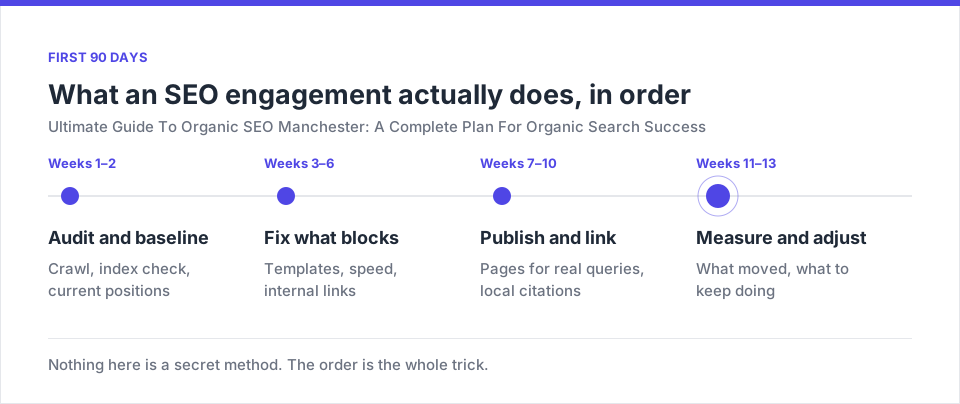
Having established the four foundational pillars for organic seo manchester, the next step is to translate strategy into a practical, phased execution plan. This part outlines how to set ambitious yet achievable objectives, establish a measurable baseline, and design a rollout that aligns with Manchester’s locality and service mix. At ManchesterSeo.ai we emphasise a methodical, data‑driven workflow that reduces risk and accelerates time‑to‑value for local businesses.
1. Define Clear Objectives Aligned With Local Goals
Start with SMART objectives that reflect Manchester’s realities: rising qualified leads from Manchester, improving Local Pack visibility, and increasing engagement on LocalPDPs. Tie these outcomes to revenue or pipeline metrics where possible, and document the expected time horizon for each objective. A well‑defined objective set provides the north star for subsequent activities and helps stakeholders understand the anticipated trajectory of results from organic seo manchester initiatives.
2. Establish A Baseline With Local Benchmarking
Audit current performance across core Manchester pages, LocalPDPs, GBP, and Local SERPs. Capture metrics such as local organic traffic, Local Pack impressions, GBP interactions, and current conversion rates from Manchester sources. This baseline enables accurate measurement of impact as you implement technical fixes, content enhancements, and local optimisations. A clear baseline also informs ROI modelling for both short‑term and long‑term horizons.
3. Map Keywords And Topics To Local Intent
Develop a locality‑aware keyword framework that connects Manchester neighbourhoods, service areas, and core offerings. Create topic clusters that reflect local questions, processes, and outcomes. Link LocalPDPs to pillar content on technical seo manchester and Local SEO, ensuring each page has a precise role within the cluster network. This mapping guides content production, internal linking, and schema usage across Manchester assets.
4. Design A Phased Rollout To Manage Risk
Split the work into logical phases that mirror real‑world constraints. Phase 1 focuses on quick wins: technical optimisations, GBP hygiene, and solidifying LocalPDPs. Phase 2 expands content clusters and local pages, while Phase 3 concentrates on authority building via off‑page signals and local collaborations. A phased approach helps you manage budget, track progress, and adapt to feedback without interrupting ongoing business activities in Manchester.
5. Build A Locally Relevant KPI Framework
Define locally meaningful KPIs that reflect user journeys from Manchester. Track organic visits to LocalPDPs, GBP interactions, Local Pack impressions, and downstream conversions such as enquiries or bookings. Combine these metrics in dashboards that pull data from GA4, Google Search Console, and GBP to show how on‑page and technical improvements translate into tangible local outcomes. A clear KPI framework makes it easier to justify continued investment in organic seo manchester.
6. Establish Editorial Governance And Roles
Assign ownership for hub content, LocalPDPs, and local‑signal assets. Create an editorial calendar with quarterly topic plans and review cycles to ensure content remains accurate, timely, and locally authoritative. Emphasise expertise, authoritativeness, and trustworthiness (E‑A‑T) by including author bios, credible sources, and transparent attributions, aligning with Google’s quality guidelines as you scale content in Manchester.
7. Finalise The Execution Toolkit
Prepare practical templates that teams can reuse: a technical SEO checklist for Manchester pages, a content calendar aligned with local events, LocalPDP creation briefs, and a governance playbook for author reviews and updates. These artefacts speed up execution, maintain consistency, and provide a scalable framework as your Manchester presence grows.
8. Integrate Measurement Across Channels
Ensure that Looker Studio/dashboards reflect a single source of truth for local SEO performance. Tie organic activity to business outcomes, and show how improvements in LocalPDPs, GBP signals, and content depth contribute to qualified Manchester leads. The goal is to demonstrate ROI and to iterate quickly based on real‑world results, not assumptions.
9. Practice Continuous Optimisation
recognise that SEO is iterative. Use what‑if analyses to model ROI scenarios, update LocalPDPs with fresh local data, refresh GBP assets as neighbourhood services evolve, and adjust content calendars in line with Manchester events. By maintaining an ongoing optimisation loop, you keep your organic presence fresh, relevant, and aligned with local consumer behaviour.
If you’d like a tailored starter plan for implementing this approach in Manchester, explore our Organic SEO services or contact Manchester experts at Manchester SEO consultants for a structured rollout. For foundational guidance, consult the Google SEO Starter Guide: Google SEO Starter Guide.
Content Strategy for Organic SEO in Manchester
From Pillars To Pages: The Manchester Content Playbook
A coherent content strategy translates the four foundational pillars of organic SEO into actionable, Manchester‑specific assets. The aim is to build a network of pages that communicate clear intent, demonstrate local authority, and guide visitors from initial discovery to meaningful action. A well‑constructed playbook aligns keyword research with audience needs across neighbourhoods, service areas, and industry sectors, ensuring every piece serves both search engines and local users. At ManchesterSeo.ai, we emphasise practical implementation: map topics to LocalPDPs, structure content around user journeys, and maintain a predictable publishing cadence that stakeholders can track and trust.
In practice, this means starting with a city‑scale hub page that articulates core offerings in the Manchester context, then developing nested pages that address specific districts, industries, and local problems. The result is a taxonomy that mirrors how Manchester customers think and search, a layout that supports easy navigation, and a content backlog that fuels sustainable growth. For examples and templates, explore how our Organic SEO services can be tailored to your sector and locality.
Manchester-Driven Topic Research
Effective content begins with rigorous topic discovery that reflects local search demand. We combine geographic intent, industry relevance, and user journey analysis to identify clusters that matter to Manchester audiences. This includes core service topics, neighbourhood‑specific needs, and practical how‑to guides that solve real local problems.
- Map core services to Manchester geography. Create cluster pages for each service area and connect them to LocalPDPs that reflect local demand.
- Prioritise local questions. Focus on “near me” style queries and neighbourhood preferences to improve proximity signals.
- Evaluate intent stages. Separate content for awareness, consideration, and decision stages to guide users efficiently.
- Audit competitive gaps. Review local rivals and industry leaders to identify underserved local topics and opportunities for differentiation.
Content Formats That Convert in Manchester
Diversity in formats helps capture different preferences among Manchester users. Long‑form guides establish authority, case studies demonstrate tangible outcomes for local clients, FAQs address immediate concerns, and short, actionable tutorials support quick wins. Visual content, such as quick explainers and annotated diagrams, can simplify complex topics and improve dwell time.
Want the numbers behind this? The analytics guide shows how organic traffic and the queries GA4 hides are rebuilt in Semalt.
- Long‑form pillar content that answers city‑wide questions and local edge cases.
- Local case studies highlighting Manchester projects, outcomes, and client testimonials.
- Neighborhood‑specific FAQs that map to LocalPDPs and service pages.
- Practical guides and checklists that readers can apply to their own Manchester context.
Content Calendar And Workflows
Consistency matters. Build a quarterly calendar that aligns with Manchester events, seasonal business cycles, and regulatory updates. Establish a standard workflow: topic ideation, keyword validation, drafting, internal review, publishing, and post‑publish optimisation. A transparent process ensures stakeholder buy‑in and steady momentum, essential for local audiences whose needs shift with city life.
- Set monthly targets for new LocalPDPs and updated service pages.
- Schedule quarterly content audits to refresh statistics, GBP signals, and local references.
- Assign owners for topics, with clear deadlines and quality criteria.
- Incorporate local events into the calendar to capture timely searches.
Quality, E‑E‑A‑T, And Local Authority Building
Quality is defined by accuracy, depth, and relevance to Manchester users. Establish author bios with local expertise, cite credible sources, and showcase local case studies that demonstrate real results in the city. Local authority is reinforced through consistent updates to LocalPDPs, thoughtful responses to user questions, and a demonstrable track record in the Manchester ecosystem. This approach signals trust to both readers and search engines.
Content should reflect a commitment to accuracy and transparency. When in doubt, validate claims with evidence, update data regularly, and maintain a clear distinction between opinion and verifiable facts. For structure and quality guidelines, reference the Google SEO Starter Guide as a baseline, alongside industry resources that emphasise local relevance.
Measurement And Optimization
Tracking the impact of Manchester‑focused content requires a targeted set of metrics. Monitor organic traffic to LocalPDPs and service pages, dwell time, scroll depth, and conversions from Manchester queries. Look for improvements in Local Pack impressions, GBP engagement, and referral traffic from local sources. Use Looker Studio or Google Data Studio to assemble dashboards that reveal how content formats, topic clusters, and local signals interact with core service pages.
Regularly analyse performance to identify topics that underperform and opportunities to refresh. Update older pages to reflect new Manchester trends, neighbourhood developments, and service innovations. For practical guidance, consult the Google SEO Starter Guide and adapt learnings to your local context. If you’d like tailored templates and dashboards, our team can provide a starter framework aligned with your locality and sector. Explore our Organic SEO services and contact Manchester SEO experts for bespoke planning.
With a solid content strategy in place, the next instalment of this series dives into integrating content with technical SEO and local signals in Manchester. This includes practical steps to optimise LocalPDPs, GBP synergy, and neighbourhood targeting, all backed by data and real‑world examples from Manchester campaigns. For further context, always reference the Google Starter Guide as a foundational resource.
Measuring Local Performance: ROI For Organic SEO In Manchester
Why Local ROI Matters For Manchester
For Manchester-based businesses, measuring local ROI means tying organic visibility to tangible outcomes in the city’s diverse markets. ROI isn’t only about immediate revenue; it encompasses pipeline growth, customer lifetime value, and the efficiency of local lead generation. A rigorous, locality-focused measurement framework helps you quantify how improvements to LocalPDPs, GBP signals, and content clusters translate into qualified inquiries and sustainable growth across Greater Manchester.
Key Local KPIs For Manchester
Track indicators that reflect local search intent and engagement. A practical KPI set includes:
- Qualified Manchester organic visits to LocalPDPs and hub pages, indicating interest in local services.
- Local Pack impressions and GBP interactions, capturing proximity and credibility signals in maps and local results.
- Conversions from Manchester traffic, such as form submissions, calls, and appointments generated by local pages.
- Lead quality and incremental revenue attributed to Manchester-origin traffic, measured through multi‑touch attribution where possible.
- User engagement metrics on LocalPDPs and neighbourhood content, including dwell time, scroll depth, and pages per session.
These KPIs form the backbone of a visible, decision‑ready dashboard that communicates value to stakeholders and guides iterative optimisation for Manchester markets.
Attribution And ROI Modelling For Manchester
Attribution in a local context is about recognising the contribution of different channels to a Manchester lead. Use a practical, staged approach: first, establish a baseline of organic performance for Manchester pages; then apply a multi‑touch attribution model to assign credit to LocalPDPs, GBP interactions, and on‑page content. Consider both short‑term gains from incremental optimisations and long‑term value from topic clusters that steadily increase trust and proximity signals in local SERPs.
What‑if analyses help forecast how changes to LocalPDPs, GBP signals, or content cadence could influence ROI. Our clients commonly run scenarios comparing conservative organic growth with a modest PPC cushion versus aggressive organic expansion to dominate local topic clusters. When you model ROI, quantify not only incremental revenue but also cost efficiency and lifetime value lift from improved local visibility.
Dashboard Architecture For Local Manchester SEO
Build a focused dashboard ecosystem that brings together data from GA4, Google Search Console, Looker Studio, and Google Business Profile analytics. A Manchester‑specific dashboard should align the following data streams: organic traffic to LocalPDPs, Local Pack impressions, GBP interactions, LocalPDP engagement metrics, and downstream conversions. Visualise how changes in technical, on‑page, and content signals correlate with local outcomes, and provide clear filters for neighbourhoods such as Manchester City Centre, Salford, and Chorlton.
Design dashboards that support quarterly reviews with local teams and leadership. Include baseline comparisons, trend lines, and actionable recommendations tied to Manchester service areas. For a practical reference point, see the Google SEO Starter Guide for foundational structure and quality signals that underpin trustworthy data interpretation.
Practical ROI Scenarios For Manchester
Scenario A: Conservative organic growth with a modest PPC buffer. This approach aims to stabilise LocalPDP traffic, increase Local Pack visibility, and improve GBP engagement, producing a steady uplift in Manchester inquiries over six to twelve months. The focus is on high‑quality, conversion‑oriented content and well‑optimised LocalPDPs that ensure efficient lead capture.
Scenario B: Aggressive organic expansion. This plan prioritises rapid topic clustering, extensive LocalPDP creation, and sustained authority building across Manchester districts. Expect higher upfront investment but increasingly lower cost per lead as authority compounds and proximity signals strengthen. Use ROI models to project cumulative value over a two‑to‑three‑year horizon.
Both scenarios should include dashboards that map activity to outcomes, enabling leadership to see how local signals translate into revenue and longer‑term value. Reference the Google SEO Starter Guide for universal principles that support both approaches.
Common Pitfalls In ROI Measurement
Avoid misattribution by separating Manchester activity from broader traffic, ensuring LocalPDPs and GBP signals are individually tracked. Don’t overlook GBP data or Local Pack performance when assessing local impact. Inconsistent NAP data across directories and GBP profiles can distort local signal quality and undermine trust with users in Manchester. Regularly audit data quality, attribution settings, and dashboard configurations to maintain a truthful view of ROI.
To mitigate these risks, establish clear data governance, maintain consistent naming conventions for LocalPDPs and neighbourhood pages, and use attribution models that reflect how Manchester users interact with your site across devices and channels. For foundational practices, consult the Google SEO Starter Guide and integrate insights from our Manchester experts via the Organic SEO services page.
Ready to implement a robust local ROI framework for organic seo manchester? Explore our Organic SEO services to tailor objectives and measurement approaches to your sector and locality. If you’d like personalised guidance, contact Manchester experts for a structured starter plan. The Google SEO Starter Guide remains a dependable reference as you operationalise LocalPDPs, GBP signals, and locality‑driven content at scale.
Local SEO Mastery for Manchester: Visibility in Local SERPs and Maps
Why Local Signals Matter More Than Ever in Manchester
In Manchester’s diverse and densely populated market, local signals are the quickest route to proximity-driven visibility. A cohesive local presence combines Google Business Profile (GBP) optimisation, LocalPDPs (local landing pages), and Maps descriptors to anchor your business in the places customers actually search from. This part of the series culminates in a practical, implementable blueprint for Manchester businesses that want to dominate local SERPs and maps results without sacrificing global authority or site quality.
Mastering Google Business Profile for Manchester
GBP is the cornerstone of local presence in Manchester. Ensure accurate business categories, verified address, consistent NAP, and up-to-date hours across all service areas. Leverage GBP posts to highlight neighbourhood events and local services, respond promptly to reviews, and curate a helpful Q&A section that anticipates common Manchester queries. A well-maintained GBP profile feeds directly into higher proximity visibility and trust with local searchers.
Beyond the basics, enrich GBP with service-area details, attributes that reflect local offerings, and photos that illustrate your Manchester footprint. Regularly audit GBP signals against LocalPDPs to ensure consistent naming, addresses, and service descriptors across channels, strengthening the link between your physical locations and digital presence.
Local Landing Pages And Geography: LocalPDP Networks
LocalPDPs act as the builders of local authority. Create neighbourhood pages for Manchester City Centre, Salford, Chorlton, and other notable districts, each linking back to core service pages and to the hub page Organic SEO for Manchester. Interlinking LocalPDPs with GBP signals creates a robust topical network that search engines recognise as a credible, locality-specific authority.
Each LocalPDP should present clear NAP details for the location, embed a map, include client testimonials from that area, and address the specific local problems your service solves. This structure translates local intent into precise signals that lift both local SERP and maps rankings while preserving a clean site architecture for crawlers.
Maps Descriptors And Local Signals In Practice
Maps descriptors are the on-page attributes that help maps algorithms associate your GBP and LocalPDPs with Manchester contexts. Craft precise descriptors for each location, ensuring consistent naming across GBP, LocalPDPs, and internal links. A geography-minded approach binds neighbourhoods to your service taxonomy, improving both proximity signals and user experience on local searches.
Coherence matters. Consistent descriptors, hours, and location data across GBP and LocalPDPs amplify proximity relevance, reduce friction in conversions, and support rich results in Local SERPs. Use structured data in tandem with Maps descriptors to strengthen semantic connections between your Manchester presence and local intent.
Content, Reviews, And Local Authority Building
Solicit authentic Manchester reviews and feature local case studies on LocalPDPs to build topical authority. Combine user-generated content with expert-led guides to demonstrate real-world outcomes in Greater Manchester. Local content should address neighbourhood realities—transport links, business districts, and community hubs—to solidify your position as the local authority on your sector in Manchester.
Editorial discipline matters: maintain a cadence of updates that reflect local events and regulatory shifts, and ensure author attribution aligns with Google’s E-A-T guidelines. Pair reviews with local success stories to generate credible signals that search engines translate into higher trust and better visibility.
Structured Data And Local Schemas
Implement LocalBusiness and Organization schemas to annotate every Manchester location, including location, hours, service areas, and contact details. Combine these with GBP signals and LocalPDPs to provide a coherent local footprint. Include FAQPage schemas on LocalPDPs to capture commonly asked Manchester questions and to improve chances of appearing in rich results.
Coordinate schema implementation with GBP and LocalPDP messaging so that the semantic relationships are easy for search engines to interpret. This three-pronged approach strengthens local relevance and supports authority-building across Manchester markets.
Measurement, Governance, And ROI Modelling
Track locally meaningful KPIs: LocalPDP visits, GBP interactions, Local Pack impressions, and conversions from Manchester traffic. Use Looker Studio or Google Data Studio dashboards that fuse GA4, Google Search Console, and GBP data to visualize how LocalPDPs, Maps descriptors, and GBP signals interact with core service pages. Establish governance artifacts such as Delta IDs, per-surface prompts, localisation glossaries, regulator narratives, and provenance dashboards to maintain a trustworthy, scalable framework as you grow Manchester coverage.
What-if analyses help forecast ROI under different rollout scenarios. Compare conservative organic growth with a modest PPC cushion against aggressive topic clustering and LocalPDP expansion, then compare outcomes across neighbourhoods to identify the most effective levers for Manchester lead generation.
Ready to elevate Manchester local visibility with a comprehensive, ROI-driven plan? Explore our Organic SEO services for Manchester and arrange a tailored starter plan with our local experts. For practical guidance, reference the Google SEO Starter Guide as a foundation while you scale LocalPDPs, GBP signals, and locality-focused content across Greater Manchester.