Getting Started With Search Engine Optimisation (SEO)
SEO is the practice of increasing a website's visibility in organic search results by ensuring search engines can discover, understand and trust the content. It encompasses technical health, on-page optimisation, content strategy, and external authority signals that collectively influence where a page appears for a user's query.
For UK businesses, a well-implemented SEO strategy can boost local visibility, attract relevant traffic, and drive sustainable growth. Aggregated data from industry research consistently shows that organic search remains a dominant channel for awareness, consideration, and revenue. Manchester SEO AI tailors approaches to scale across sectors while aligning with UK search behaviour and regulations. Explore how we can support your business by visiting our services.
Guidance from leading search engines emphasises the primacy of the user. Quality content, transparent signals, and a technically sound site are the foundation for lasting visibility. For example, Google Search Central advocates focusing on helpful content, reliable information, and accessible site architecture. See more at Google Search Central.
What SEO Addresses
- Crawling and indexing basics: search engines discover new or updated pages, then decide whether to include them in the index.
- Relevance signals: content alignment with user intent, topical coverage, and keyword clarity help determine ranking for queries.
- Trust and usability signals: site security, quality links, clear authoritativeness, and a positive user experience influence ranking and click-through.
Core Components Of An SEO Foundation
While the specifics vary by sector, the core pillars remain constant: technical health (crawlability and indexation), on-page optimisation (title tags, headings, internal links), high-quality content that satisfies user intent, and credible off-page signals such as authoritative backlinks. A strong UX, including fast page speed and mobile usability, supports retention and conversions. For context on how search engines evaluate these signals, see Google's general recommendations on content quality and site structure.
To keep the discussion concrete, consider a scenario where a small business wants to rank for "Manchester SEO services". By ensuring the page is technically accessible, clearly answers user intent, uses a crisp title tag and meta description, and earns trustworthy references from reputable sources, the page can improve its relevance and click-through rate over time.
Key Performance Indicators To Track
Foundations are measured through a focused set of metrics that indicate progress and ROI. The following KPIs provide a practical starting point for many organisations:
- Organic traffic: growth in visits arriving from search engines, versus other channels.
- Keyword rankings: movement for core target terms and variations that reflect user intent.
- Click-through rate: the proportion of impressions that lead to a visit, influenced by title and meta description quality.
- Crawlability and index coverage: the health of how pages are discovered and indexed by search engines.
- Conversion impact: leads, form submissions or sales attributable to organic search, tracked through attribution models.
With this foundation, Part 2 will explore how search engines work, including crawling, indexing, and ranking signals in practical terms, setting the stage for deeper dives into keyword research and intent in Part 3.
How Search Engines Work
Understanding the mechanics of crawling, indexing and ranking helps align your optimisation with how search engines determine results. For Manchester SEO AI, clarity about these processes informs every tactic, from technical optimisation to content architecture. By appreciating how crawlers navigate a site and how the index stores signals, organisations can prioritise changes that yield durable visibility in the UK market. To see how we tailor these principles to your business, explore our services.
At a high level, search engines perform three core actions in sequence: crawling, indexing and ranking. Each step builds on the previous one and is influenced by technical health, content quality and user experience. Understanding this flow helps prioritise fixes that deliver tangible traffic and better relevance for local search queries such as "Manchester SEO services".
Crawling: Finding Content
Crawling is how search engines discover new or updated pages. Bots (crawlers) systematically traverse links, sitemaps and existing footprints to gather pages for inspection. Key factors that affect crawling include the site’s crawlability, the presence of a robots.txt file, and how well server responses support rapid retrieval. If a page is blocked by robots.txt or requires heavy client-side rendering to access content, it may remain unseen in the index. Practical steps to improve crawling include ensuring clean internal linking, a clear sitemap, and proper server configuration that serves pages quickly to crawlers.
For dynamic sites that rely on JavaScript, consider strategies that ensure essential content is renderable by crawlers, such as server-side rendering or pre-rendering where appropriate. Regularly review crawl errors in the Google Search Console or your preferred webmaster tool, addressing 404s or server errors that impede discovery.
Indexing: Organising Signals
Indexing is the process of storing and organising information found during crawling. The index is not a clone of the entire web; it is a structured repository of signals that help determine which pages are relevant for a given query. Signals include the actual text on pages, metadata, heading structure, structured data, and the page’s user-facing experience. An optimised index entry makes it easier for the engine to understand what a page is about and how it should rank for related searches.
Robust indexing depends on clean URL structures, canonicalisation where duplicate content exists, and thorough handling of meta robots directives. Submitting an up-to-date XML sitemap allows you to communicate page priorities and update status, while proper canonical tags prevent dilution of ranking signals across multiple URLs.
Ranking Signals And How They Are Weighed
Ranking determines which pages appear first for a user’s query. The engine evaluates a multitude of signals to decide relevance and quality. Signals are weighed based on intent, context, and perceived usefulness. While algorithms continually evolve, several core categories remain central:
- Content relevance and depth: how well the page answers the user’s query and covers the topic with sufficient detail.
- Quality and trust: expertise, authoritativeness and trustworthiness (the E-E-A-T framework) and the credibility of sources referenced on the page.
- User experience signals: page speed, mobile friendliness, interactivity, stability of content during load, and overall usability (Core Web Vitals).
Google emphasises helpful content and clear site structure as foundational quality signals, while UX metrics influence engagement and satisfaction. See authoritative guidance from Google Search Central for details on how signals are interpreted and applied in ranking.
Practical Steps To Align With How Engines Assess Content
To translate these concepts into action, focus on three practical areas: technical health, content quality and structured data. Begin by auditing crawlability and indexability, then evaluate content against real user needs and intent. Finally, enhance the page with well-structured data to provide explicit meaning to search engines and improve potential appearance in rich results.
- Audit your robots.txt and ensure essential sections are accessible to crawlers. Update and re-submit sitemaps as changes occur.
- Improve on-page structure with clear headings, concise headings and intent-aligned content that satisfies user questions.
- Add schema markup where appropriate (for example, FAQ, article, or local business data) to help engines interpret content and enable rich results.
These steps create a more efficient path from discovery to indexing and ranking, helping Manchester SEO AI implement a more predictable optimisation programme. For a comprehensive plan tailored to your sector, consider how our SEO services can support your objectives.
In Part 3, we dive into keyword research and user intent, showing how to map the audience journey to content clusters, topics and pages that capture high-value traffic. This progression builds a cohesive fabric of topics that reinforces topical authority while addressing the real needs of UK searchers.
Keyword research and intent
Keyword research is the compass of a practical SEO programme. It identifies the exact language your audience uses, reveals where demand exists, and uncovers the facets of intent that drive click behaviour. For Manchester SEO AI, aligning keyword discovery with real user intent ensures content answers questions, guides decisions, and ultimately supports measurable business outcomes in the UK market. See how we translate keyword insights into action within our services.
Understanding intent is central to selecting terms that truly reflect what searchers want to do. The main intent categories are informational, navigational, transactional, and commercial investigation. Each category maps to a distinct stage in the audience journey and suggests different content formats, from in-depth guides to product comparisons. When you tailor content to these intents, you improve relevance, reduce bounce rates, and increase the likelihood of conversion on local searches such as "Manchester SEO services".
Intent types and how they guide content
- Informational intent focuses on questions and knowledge. Content types include how-to guides, tutorials, and authoritative explainers that answer the user’s underlying needs.
- Navigational intent signals a desire to reach a specific site or brand. You should optimise for brand terms and ensure your site’s internal navigation makes your destination pages obvious and accessible.
- Transactional intent indicates readiness to act, buy, or hire. Product pages, pricing content and strong CTAs are essential to capture these visitors.
- Commercial investigation sits between information and transaction. Compare alternatives, review guidance, and provide clear differentiation to help users choose your solution.
To practically identify keywords by intent, start with seed terms that describe your core offering. Then expand the list using keyword tools and SERP analysis to capture variations that mirror how UK searchers phrase questions and preferences. The aim is to produce a balanced portfolio: a handful of high-intent transactional terms complemented by broad informational terms that establish topical authority.
Useful seed ideas for a Manchester-based SEO agency might include terms like "Manchester SEO services", "SEO consultancy in Manchester", and "local SEO for Manchester businesses". From there, you extend into long-tail phrases that reveal user intent and context, such as "best Manchester SEO agency for e-commerce" or "Manchester SEO pricing for small businesses". The goal is to capture a spectrum that supports both quick wins and long-term visibility.
Keyword discovery is not just about volume; it is about relevance and opportunity. A term with moderate search volume can generate higher conversion potential if it aligns precisely with your audience’s intent and your offering. When prioritising, use a simple rubric: relevance to your services, demonstrated intent, expected traffic, and competitive feasibility. This approach helps you allocate resources to the terms most likely to move the needle in your sector and location.
Clustering keywords into content architecture
- Organise keywords into topic clusters around pillar pages that cover a broad topic comprehensively. Each cluster becomes a hub that links to specialised subtopics, reinforcing topical authority.
- Map clusters to the customer journey. Informational terms feed top-of-funnel content, commercial investigation terms fuel comparison pages, and transactional terms drive product or service pages.
- Develop internal linking strategies that connect related topics. Thoughtful interlinking improves crawlability and helps distribute authority across pages that collectively answer user needs.
Structured keyword clusters also provide a practical framework for content creation, ensuring that every piece serves a defined intent and supports a broader thematic narrative. It becomes easier to measure impact when you can trace traffic and conversions back to a specific cluster and its pillar page. For organisations seeking a tailored blueprint, our SEO services can design a clustering model aligned with your market and competitive landscape.
Beyond internal coherence, keyword research informs content quality standards. The content you create should address the user’s query with clarity, depth and credible sources. Fact-checks, best-practice guidance, and references to authoritative sources reinforce trust and improve E-E-A-T signals, which search engines increasingly weigh when determining visibility. For more on authoritative content and structure, refer to Google’s guidance on content quality and structured data.
In addition to on-site work, track how keyword-driven content performs over time. Monitor rankings, traffic, engagement, and conversions attributable to organic search. A clear measurement framework helps you refine topics, update clusters, and retire underperforming terms. Our KPI-driven approach, adapted to your business, ensures continuous improvement across your content ecosystem.
To translate these insights into an actionable plan, follow a concise workflow: begin with seed terms, expand into intent-aligned variations, cluster into pillar and topic pages, execute with high-quality content, and measure impact with consistent reporting. This process integrates naturally with the broader SEO programme at Manchester SEO AI, ensuring alignment with technical optimisation, structured data, and user experience. For detailed guidance custom-fitted to your sector, explore our SEO services and arrange a consultation.
Technical SEO Essentials
With keyword research establishing what to optimise for, Technical SEO determines whether search engines can access, interpret and trust your content efficiently. This part drills into the technical foundations that support reliable visibility in the UK market, and shows how Manchester SEO AI translates best-practice into a practical, maintainable programme. A well-tuned technical base reduces friction for crawlers, signals quality to search engines, and underpins faster, more accessible experiences for UK users. See how our SEO services translate these principles into repeatable processes for organisations of all sizes.
Crawling: Ensuring Search Engines Can Discover Content
Crawling is the mechanism by which search engines find new or updated pages. A site’s accessibility and internal linking structure determine how effectively bots can traverse it. Key factors include a clean robots.txt configuration, sensible site architecture, and server responses that enable rapid retrieval of pages. If essential content is blocked or rendered in ways crawlers cannot access, that content remains effectively invisible in the index. Practical steps to enhance crawling include maintaining a straightforward internal link graph, generating a current XML sitemap, and ensuring server responses are fast and reliable.
For dynamic sites embracing JavaScript, consider server-side rendering or pre-rendering where appropriate to ensure core content is visible to crawlers without sacrificing user experience. Regularly review crawl errors in Google Search Console (or your chosen webmaster tool), focusing on 404s and server errors that hinder discovery.
Indexing: Organising Signals for Retrieval
Indexing stores signals gathered during crawling in a structured repository that helps determine which pages are considered for a given query. Signals include the on-page text, metadata, headings, structured data, and the page’s user experience. A robust index entry improves the engine’s ability to match intent with relevance, while avoiding dilution from duplicate or near-duplicate content. Practices that support clean indexing include canonicalisation when duplicates exist, consistent URL structures, and up-to-date XML sitemaps that reflect current content priorities.
Canonical tags, proper handling of meta robots directives, and thoughtful URL organisation all contribute to a clear signal path from discovery to ranking. Submitting a well-maintained sitemap and ensuring new content is promptly crawled helps maintain momentum for high-value terms relevant to the Manchester and broader UK audience.
URL Structure And Canonicalisation
Clear, descriptive URLs support both user understanding and crawl efficiency. Short, keyword-relevant URLs with logical hierarchies improve navigability and distribution of link equity. Avoid unnecessary parameters and duplicates by employing canonical tags to indicate the preferred page version when multiple URLs access similar content. Consistent canonicalisation reduces signal dilution and helps protect the authority of primary pages across the site.
Internal linking plays a pivotal role here. A well-planned internal link graph ensures related content reinforces each other’s authority, while escape hatches like parameterised URLs are avoided or properly canonicalised. Consider a hub-and-spoke model where pillar pages link to topic pages, with internal navigation designed to guide both users and crawlers through the content architecture.
XML Sitemaps And Server Configuration
An up-to-date XML sitemap communicates page priorities, last-modified dates and update intensity to search engines. It’s a practical way to ensure new content is noticed quickly, particularly for deeper category pages or pages that require several clicks to reach from the homepage. Submit the sitemap to Google Search Console, Bing Webmaster Tools, or your preferred search engine platform, and keep it refreshed as content changes occur.
Behind the scenes, robust server configuration supports crawl efficiency and user experience. Enable compression, leverage caching where appropriate, and ensure responsive hosting that scales under traffic spikes. Security and stability matter too; a site that serves content reliably without blockages or TLS errors reinforces trust and encourages search engines to keep indexing aggressively. Consider auditing your server’s response times, error rates, and the availability of critical assets required by core pages.
Security, Accessibility And Performance
Technical health extends beyond crawl access. Security (notably HTTPS) and accessibility underpin trust signals that influence user experience and, indirectly, rankings. Implement a modern TLS configuration, maintain a valid certificate, and consider headers such as Strict-Transport-Security where appropriate. Accessibility improvements, including semantic HTML, meaningful alt text, and proper ARIA attributes, enhance usability for all users and align with search engines’ emphasis on helpful content and clear structure.
Performance is central to both UX and SEO. Core Web Vitals—Largest Contentful Paint (LCP), First Input Delay (FID), and Cumulative Layout Shift (CLS)—remain influential signals. Optimising images, minifying CSS and JavaScript, and ensuring efficient rendering paths help pages load quickly and interact smoothly on mobile devices. For UK audiences, where mobile usage is high, prioritising speed on mobile is often a high ROI activity.
Practical Checklist For Technical Optimisation
- Audit crawlability and indexability; identify blocked resources and fix robots.txt directives that impede essential pages.
- Validate canonical tags to prevent duplicate content dilution and ensure the preferred URL remains authoritative.
- Maintain an up-to-date XML sitemap and submit it to search engines; refresh on content changes.
- Improve server performance and security; implement TLS, enable compression, and optimise critical asset delivery.
- Enhance Core Web Vitals with image optimisation, code minification, and efficient rendering.
- Ensure accessibility and semantic structure; align with UK standards for usability and readability.
These steps establish a reliable, scalable technical foundation that supports the rest of the optimisation stack. As you move forward, you can map technical improvements to the KPI framework introduced earlier and measure impact on organic visibility, engagement and conversions.
For organisations seeking a tailored technical blueprint, Manchester SEO AI can design a practical, KPI-driven plan that fits your market, site architecture and growth targets. Explore our SEO services to understand how we structure technical audits, implementation, and ongoing optimisation for sustained results in the UK.
On-Page Optimisation For Content
On-page optimisation sits at the heart of turning keyword strategy into tangible visibility. It translates research and technical readiness into content that is both discoverable by search engines and genuinely useful to readers. For Manchester SEO AI, a disciplined on-page approach ensures pages answer user intent with clarity, structure and credibility while aligning with UK search behaviour and best practices. To explore how we implement these principles, visit our services.
Title Tags And Meta Descriptions
The title tag is the first explicit signal a user sees in SERPs. Craft titles that clearly state the page’s value, include the target keyword near the front, and maintain a human, compelling tone. Aim for around 50–60 characters to avoid truncation on mobile and desktop. Meta descriptions should complement the title by summarising the page’s unique benefit in 140–160 characters, inviting the searcher to click and signalling relevance. Each page should have a unique title and description, avoiding boilerplate duplicates across site sections.
Read next: Mastering search engine optimisation · SEO audit Manchester: what to check
In practice, optimise like this: a service page could use a title such as Manchester SEO Services and a meta description like Expert Manchester SEO services to boost local visibility, traffic and conversions. Learn our approach and request a no-obligation consultation. Ensure the URL is readable and mirrors the page topic, such as /services/manchester-seo. This consistency reinforces relevance and click-through potential.
Header Structures And Semantic Markup
Clear header structure guides both readers and search engines through the content. Use one H1 per page and organise sections with H2 headings, followed by H3 subsections as necessary. Include primary keywords where natural, but prioritise readability and logical flow. Properly nested headings improve accessibility for screen readers and contribute to better comprehension by search engines, which value transparent content architecture.
Descriptive headings help users skim and locate answers quickly, improving dwell time and engagement. Remember to accompany headings with meaningful, scannable content under each section. For visualisation, a typical on-page layout might place a primary service term in the H2 and use related terms in H3s to address subtopics or FAQs.
Keyword Placement And Natural Integration
Keywords should appear where readers expect them and where search engines can interpret topic relevance. Place the main keyword in the page title, early in the introductory paragraph, in at least one subheading, and naturally throughout the body content. Use variations, synonyms and semantically related terms to reinforce topic depth without triggering keyword stuffing. The aim is seamless integration that preserves readability and user trust while signalling topical alignment to engines.
A practical approach is to map core terms to natural content moments—introduction, explanations, and actionable steps—rather than forcing terms into arbitrary spots. For UK audiences researching local services, phrases like Manchester SEO or local SEO Manchester can sit alongside your main term to capture intent variations without compromising quality.
Readability, Accessibility And Tone
Readable content supports both user engagement and accessibility signals. Write in an active voice, keep sentences concise, and use short paragraphs to reduce cognitive load. Prefer plain language over jargon, and explain any specialised terms when used. Accessibility considerations—such as meaningful alt text for images, semantic HTML, and good colour contrast—enhance usability for all readers and align with search engines’ emphasis on helpful content and inclusive experiences.
Consider UK audience expectations, including formal brand voice for service pages and approachable language for blog-style explanations. Where appropriate, break complex ideas into small, digestible sections with illustrative examples, checklists, or FAQs to enhance comprehension and trust.
Content Formats, Maps And On‑Page Signals
On-page optimisation isn’t limited to a single format. Landing pages, blog posts, case studies and service pages each have distinct structural needs. Ensure each page has a targeted purpose, a clear value proposition in the opening lines, and explicit paths for users to take the next step. Internal links should guide readers to related topics or conversion points, distributing authority and reinforcing topical relevance across the site.
Beyond copy, include visual aids and concise supporting data where it adds clarity. When using images, provide descriptive alt text that complements the narrative. For example, a chart illustrating local search trends or success metrics can be captioned and described to support both comprehension and SEO signals.
Practical Workflow For On-Page Optimisation
Follow a concise, repeatable process to maintain consistency across pages. The workflow below emphasises quality, relevance and measurable impact.
- Define the page’s primary goal and align it with user intent and business outcomes.
- Draft a scan-friendly outline with a clear H1, supportive H2s and a logical progression of ideas.
- Incorporate the main keyword near the front of the title and within the opening paragraph, then distribute variations naturally through headings and body text.
- Craft a compelling meta description that communicates value and includes a local or action-focused cue.
- Enhance readability with short paragraphs, bullet points (where appropriate), and descriptive alt text for images.
- Audit for duplicates, thin content and internal cannibalisation; redirect or consolidate as needed.
Regularly review on-page signals against performance metrics such as organic click-through rate, time on page, and conversion rates to ensure content remains relevant and engaging. Our KPI-informed approach at Manchester SEO AI extends these practices from individual pages to a cohesive content ecosystem across your site. For more on how we tailor on-page optimisation to your sector, explore our services.
Next, Part 6 will delve into Content Strategy And Architecture, outlining pillar pages, topic clusters and internal linking strategies that build enduring topical authority while enhancing user experience across the UK market.
Content Strategy And Architecture
Content strategy provides the directional backbone for what you publish, why it matters to your audience, and how it ties to your business goals. Content architecture translates that strategy into an intuitive, crawlable site structure that boosts discoverability, engagement and conversions. For Manchester SEO AI, this combination is about building enduring topical authority in the UK market while delivering a seamless, value-driven experience for local and regional searchers. Explore how we implement these principles within our services.
Pillar Pages And Topic Clusters
Pillar pages are comprehensive, evergreen resources that capture a broad topic and act as authoritative hubs. They host high-level intent and link out to tightly scoped subtopics, which are the topic clusters. Together, pillar pages and clusters create a cohesive content ecosystem that signals depth, breadth and organisation to search engines. In the Manchester context, a pillar like Manchester SEO can connect to clusters such as local SEO Manchester, SEO for Manchester e‑commerce, Manchester SEO pricing, and SEO audit Manchester. These clusters reinforce the pillar and help users navigate from overview to actionable detail.
When designing clusters, begin with audience intents across the buyer journey. Early-stage informational content builds trust; mid-funnel comparisons establish credibility; late-stage service pages convert. The architecture should mirror user needs as they search for Manchester-specific solutions. A practical outcome is a clear hub-and-spoke structure: the pillar page links to each cluster, and each cluster links back to the pillar, while cross-links between related clusters strengthen topical cohesion without creating keyword cannibalisation. See how we frame pillar pages and clusters in our approach to UK audiences at our services.
Internal Linking And Site Architecture
Internal linking is the primary mechanism by which search engines understand content relationships and authority flow. A well-planned internal linking strategy directs crawlers along efficient pathways, distributes link equity, and helps users discover relevant material quickly. Start by mapping existing assets to clusters and pillars, then design links that guide readers through the ideal user journey without over-optimising anchor text. Avoid orphan pages by ensuring every important page has multiple entry points from related topics and the homepage or category hubs.
Key practices include prioritising contextual links within the body copy, using descriptive anchor text that reflects the target topic, and maintaining a clean URL structure that mirrors the information architecture. A siloed approach to linking reinforces topical authority and improves crawl efficiency. For practical patterns, see how Manchester SEO AI aligns cluster and pillar pages with internal navigation and site hierarchy in our SEO services offerings.
Content Quality Standards And Governance
A robust content strategy demands explicit quality standards and repeatable governance. Ground standards in credibility, usefulness and clarity, with clear editorial roles and review processes. Adhere to E-E-A-T principles—experience, expertise, authoritativeness and trustworthiness—by citing credible sources, providing data or case studies, and ensuring transparent author information on topical pages. For UK users, maintain a tone that reflects professional authority while remaining accessible and practically useful.
Develop a lifecycle for each content asset: brief, outline, draft, review, publish, monitor, and refresh. Use a content brief template that includes audience persona, intent, required data, sources, length, and a defined CTA. Establish a regular content audit cadence to identify gaps, update outdated information and retire redundant assets. This governance approach aligns with the KPI framework introduced earlier and helps you defend accuracy and relevance over time. For broader guidance, consult Google’s guidance on content quality and site structure and integrate that with your editorial processes Google Search Central.
Content Formats And User Experience
Different content formats serve different intents and stages of the customer journey. Pillars are typically long-form, data-informed pages with strong visual aids; clusters provide in-depth explorations of subtopics through tutorials, FAQs, case studies and how-to guides. Combine narrative with practical elements such as checklists, templates and tool recommendations to increase usefulness. Visuals should be purposeful, with alt text that supports accessibility and SEO signals. The overall experience should feel coherent, with consistent design patterns, typography and interlinking that help users progress from discovery to decision.
Editorial Workflow And Tools
Effective content strategy requires a repeatable workflow and appropriate tooling. Build an editorial calendar that coordinates topic clusters, publication dates and resource needs. Use a collaborative CMS workflow that assigns roles (content strategist, writer, editor, designer, SEO specialist) and tracks status. Integrate SEO checkpoints at every stage: keyword alignment, on-page signals, structured data where relevant, and accessibility considerations. A practical setup leverages a content repository or knowledge base that stores briefs, source materials and version histories for auditability.
To support ongoing improvement, establish a monthly content review cycle to evaluate performance by pillar and cluster, update underperforming assets, and scale successful formats. This approach aligns with our KPI-driven optimisation at Manchester SEO AI and ensures your content ecosystem remains cohesive and responsive to market shifts and emerging UK search patterns.
Measuring Impact: Content Strategy At Scale
A sound content strategy is measurable. Monitor pillar and cluster performance through a simple, intuitive set of metrics: organic traffic by hub, time on page and engagement signals, internal click-through to conversion pages, and attributed conversions by content cluster. Track depth of topic coverage, improvements in dwell time, and reductions in bounce rate as content becomes more aligned with intent. A modelled approach to ROI considers content production costs, uplift in qualified traffic, and incremental revenue tied to organic search. Regularly report progress to stakeholders using a clear dashboard that ties content activity to business outcomes.
In practice, you’ll use a mix of qualitative and quantitative signals: user feedback, search query analysis, and performance data from analytics platforms. Overlay this with your published calendar and the audit results from quarterly content inventories to drive continuous improvement. For a structured blueprint, explore how our SEO services can tailor pillar-and-cluster strategies to your sector and market in the UK.
With a well-defined content strategy and architecture in place, Part 7 will transition to Off-page signals and link building, illustrating how earned authority complements your on-site foundations and accelerates visibility in competitive UK searches.
Off-page Signals And Link Building
Off-page signals are the external cues that shape how search engines perceive a site’s authority, trust, and relevance. While on-page optimisation and technical health establish a foundation, earned signals from outside the site ultimately influence long‑term visibility in UK search results. For Manchester SEO AI, a disciplined approach to backlinks, brand mentions and reputation-building aligns with real-world outcomes, not vanity metrics. See how we integrate off-page activity with the broader strategy by exploring our SEO services.
High‑quality links signal to search engines that your content is valuable, credible and worth referencing. The best links come from relevant, authoritative domains where the linking page shares topical alignment with your content. Quantity matters less than the quality and context of each connection. When you prioritise relevance, trust and engagement, backlinks contribute to durable improvements in rankings and referral traffic, particularly for UK local queries and competitive terms like Manchester SEO services.
Quality backlinks: what matters
A backlink’s value is determined by several factors that go beyond simple link counts:
- Contextual relevance: Links from pages that discuss related topics carry more authority than generic directories.
- Domain authority and trust: The overall credibility of the linking site influences the signal passed to yours.
- Anchor text quality and distribution: Natural variation reduces risk and preserves a holistic topical signal.
- Traffic quality and engagement: Links that bring meaningful human visits often reflect stronger editorial intent.
- Link authenticity and ethics: Avoid spammy tactics that trigger penalties or erode trust with users.
To apply this in practice, imagine a case study page about a local Manchester client. Secure links from regional business journals, industry thought-leaders and complementary service providers. Each link should sit within a relevant editorial context, not merely a citation. This approach reinforces topical authority without compromising user trust. For governance and best practices, consult Google’s guidance on quality and quality guidelines.
Earned links are the product of value, not outreach brute force. Focus on creating assets that naturally attract attention: data-driven insights, practical templates, local case studies and shareable visuals. When your content earns a mention or a link, it carries a stronger trust signal than a purchased placement. This is especially important for local SEO, where community publications, industry associations and regional media can provide durable authority relevant to Manchester and the wider UK audience. Read more about editorial quality signals in Moz’s beginner guide to SEO and Google’s guidance on helpful content.
Ethical outreach and relationship building
Outreach should be personalised, reciprocal and informative. Begin with a targeted list of prospects whose work intersects with your content. Craft messages that acknowledge the publisher’s audience, offer clear mutual value and avoid boilerplate requests. A well-constructed outreach sequence includes:
- Research and qualify opportunities based on relevance and audience fit.
- Provide a customised pitch that references specific content on their site and how a collaboration improves reader experience.
- Offer something of tangible value: original data, a useful template, or an expert quote for a resource page.
- Respect editorial timelines and follow their contribution guidelines aimed at quality and relevance.
Ethical outreach is complemented by ongoing relationship management. Maintain a log of contact history, track responses and monitor link placements for editorial integrity. If a link becomes harmful or low‑quality, use a careful disavow approach and refresh the strategy rather than giving up. For a practical blueprint, see our SEO services and how we structure outreach, measurement and governance.
Link building tactics tailored to the UK market
Successful link building combines content quality with strategic channels. Consider a mix of digital PR, data-driven research pages, locally targeted stories and thoughtful collaborations with complementary Manchester businesses. Effective tactics include:
- Digital PR campaigns that secure coverage on industry sites, regional outlets and national publications with local relevance.
- Guest contributions on purpose-built platforms where editorial standards are high and audience alignment exists.
- Resource pages and roundups that naturally link to your in-depth guides, tools or case studies.
- Partnering with professional associations and local business networks to publish co-authored content or research findings.
- Events and webinars that generate attendance-driven backlinks from event pages and sponsor listings.
When planning linkable assets, tailor formats to reader intent and lifecycle needs. A robust Manchester-focused asset could be a local SEO benchmark report, a practical checklist for retailers or a data-rich case study showing visitor growth after optimisation. Regardless of format, ensure every link is earned through editorial value, not paid placement. For more on linkable content and PR-driven strategies, review authoritative resources from Moz or Ahrefs.
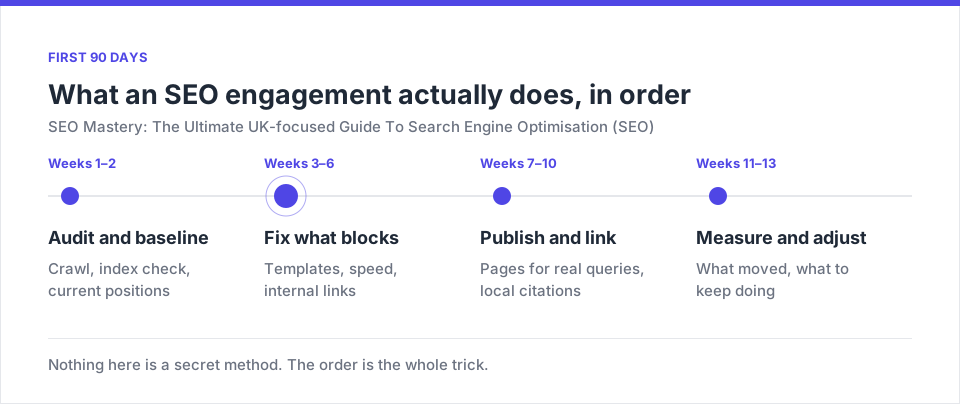
Measuring impact and guarding against risk
Backlinks should be tracked within a comprehensive measurement framework. Monitor new links, their referring domains, anchor text distribution and traffic they drive. Tools like Google Search Console, Ahrefs, and Moz provide reliable signal data, while internal dashboards should map link activity to KPI progress such as organic traffic, rankings for core Manchester terms and conversion lift attributed to search. Be vigilant for toxic links from low-quality sites. Periodic disavow reviews and a clear remediation plan help maintain the integrity of your backlink profile. Our KPI‑driven approach at Manchester SEO AI integrates off-page signals with on-site health to deliver coherent, auditable results. Learn more about measurement in our SEO analytics and reporting section.
- Establish a link‑quality rubric that weighs relevance, authority and traffic impact.
- Set thresholds for acceptable backlinks and periodic review cadences.
- Document disavow decisions and outcomes to inform future outreach and content strategy.
- Iterate your outreach playbook based on response rates, acceptance rates and link value.
A disciplined approach to off‑page signals not only strengthens your link profile but also reinforces content quality, user trust and brand authority in the UK market. If you’d like a customised off‑page plan that complements your on‑site efforts, schedule a consultation through our contact page or explore Manchester SEO AI’s SEO services.
User Experience And Core Web Vitals
Following the focus on off-page signals in Part 7, Part 8 shifts to what happens on the page and in the browser. User experience and Core Web Vitals (CWV) are essential signals that influence rankings, click‑through rates and conversions in the UK market. Manchester SEO AI integrates CWV improvements into a KPI‑driven framework to deliver measurable impact across devices, networks and audiences. For practical application, explore how these principles align with our services to shape a cohesive optimisation programme.
Core Web Vitals consist of three core metrics: Largest Contentful Paint (LCP), First Input Delay (FID), and Cumulative Layout Shift (CLS). They reflect loading performance, interactivity and visual stability. UK users, particularly on mobile networks, expect fast, smooth experiences. For detailed guidance, see Google's Core Web Vitals documentation at Core Web Vitals.
Why CWV Matters For Manchester And The UK
CWV signals correlate with user satisfaction, engagement and conversion rates. Pages that load quickly and respond promptly tend to retain visitors, reduce bounce and improve on-page decisions. Search engines interpret these signals as indicators of content usefulness and reliability, so CWV improvements often translate into higher visibility for local and competitive terms like Manchester SEO services. In practice, CWV is most effective when paired with strong on‑page signals and a solid technical foundation, forming a holistic experience that supports conversion goals.
To integrate CWV into your optimisation programme, combine lab measurements with real-user data. Lab insights from PageSpeed Insights identify potential bottlenecks; field data from the Chrome User Experience Report (CrUX) reflects actual user experiences. This dual view guides prioritisation and lets you quantify improvements in a practical UK context. See Google's guidance and CrUX data sources at Understanding Core Web Vitals and Web Vitals.
Practical Optimisation Steps
- Improve server response times and time to first byte, preferably via a UK‑focussed CDN and optimised hosting.
- optimise images using modern formats (AVIF, WebP) and appropriate dimensions; enable lazy loading where it does not compromise user perception of content.
- Minimise render‑blocking resources by deferring non‑critical CSS and JavaScript; consider inlining critical CSS for above‑the‑fold content.
- optimise font loading to avoid negative user experiences; use font‑display: swap and preconnect to font hosts.
- Ensure responsive design with minimal layout shifts and careful handling of ad networks or third‑party scripts that can cause CLS.
These steps should be treated as part of the KPI framework introduced in Part 1. Track CWV baselines and post‑change metrics to assess impact on organic visibility, engagement and conversions. A faster Manchester service page, for example, can yield higher organic clicks and lower mobile bounce rates. For a structured measurement approach, consult our SEO services and the way Manchester SEO AI maps CWV changes to KPIs.
Beyond speed, CWV intersects with accessibility and reliability. A smooth, predictable experience supports usability for all users, aligning with UK expectations around accessible digital services. Manchester SEO AI blends CWV with governance processes to ensure ongoing maintenance and accountability. For organisations seeking a broader, UX‑led optimisation, our SEO services cover practical governance alongside technical and content work.
In the upcoming Part 9, we examine Local and International SEO considerations, including localisation tactics, hreflang implementations and content governance that preserve CWV benefits across markets. This continuity ensures your UK optimisations remain effective even as you expand into new territories or target additional locales.
Local And International SEO Considerations
Local optimisation and international targeting extend the reach of a Manchester-based SEO programme beyond generic discovery. In the wake of the Core Web Vitals and on‑page work discussed earlier, Local and International SEO focus on geographic relevance, language nuances and content governance that preserves performance as you grow. Manchester SEO AI applies a structured approach to local activity while planning for scalable international expansion across markets that share a language or require localisation. See how these strategies integrate with our SEO services.
Local optimisation begins with a strong local footprint. Ensure your Google Business Profile (GBP) is claimed and optimised, with up‑to‑date your business name, address and phone number (NAP) across all listing sites. Populate GBP with complete categories, attributes, opening hours and regular posts that reflect seasonal or service updates. Encourage and manage customer reviews, responding promptly to reinforce trust and engagement. The quality of GBP signals often determines visibility in local packs and maps results, making it a primary lever for Manchester and surrounding areas.
Beyond GBP, cultivate local citations—the mentions of your business name, address and phone number on reputable directories and regional publications. Prioritise UK‑based business directories and industry associations that align with your services. Maintain consistency so engines recognise your entity across touchpoints, which strengthens trust signals for local queries such as "Manchester SEO services".
On‑page localisation is also critical. Build location‑specific pages or service areas that address nearby communities, using local landmarks or suburbs to improve relevance. Implement LocalBusiness schema with precise address, geo coordinates and hours of operation to help search engines understand regional intent. Regularly audit internal links to surface location pages for crawlers and users alike, ensuring a coherent path from the homepage to regional assets.
Internal alignment with local content enhances authority. Verify that the same business details appear in your site footer, contact pages and any local press releases. When feasible, anchor local terms to pillar pages that reflect Manchester’s market dynamics, linking to case studies and service pages that demonstrate local results. For authoritative guidance on local signals, consult Moz Local SEO resources and Google’s local guidelines.
International Targeting And Global Governance
If expansion beyond the UK is on your roadmap, plan an intentional international strategy. A well‑executed hreflang plan helps ensure users see content in their language and regional variant, while preventing duplicate content from diluting rankings. A common model is to serve language‑specific pages within country subdirectories (for example, /en-gb/ for the UK, /en-us/ for the United States) or on separate subdomains. The choice depends on your brand structure, hosting, and content management capabilities. Use a single canonical page for each target to signal the primary version, while creating self‑contained language and region signals across the site. See Google’s official hreflang guidance for best practice patterns.
Content localisation goes beyond translation. Localised term choices, currency formats, date conventions and culturally relevant examples improve resonance with new audiences. If you plan to translate content, invest in human editing or professional localisation to preserve nuances, avoid literal translation pitfalls and maintain your brand voice. Adaptation should reflect user intent in each market and not merely swap phraseology. Pair localisation with currency and delivery considerations to avoid friction in commerce or service inquiries.
Structure international assets so that regional pages, products or services map cleanly back to the global pillar where relevant. Implement country‑specific sitemaps and ensure robots.txt configurations do not block access to regionally targeted pages. When language and geography diverge, consider an en‑GB to en‑US content relationship that preserves X‑default signals for global pages while delivering targeted experiences for each market. To deepen understanding, review Google’s resources on international SEO and structured data for multi‑language sites.
Governance is essential to sustain international growth. Create a localisation brief that defines audience personas, required regional data, and editorial guidelines. Establish a quarterly audit cadence to verify NAP consistency, currency formatting, translated assets and hreflang mappings. A KPI‑driven framework helps you balance quick wins in local markets with longer‑term investments in international authority.
Measurement And Attribution Across Markets
Track local and international performance with a unified dashboard that captures region‑level impressions, clicks, enquiries and conversions. Local metrics include GBP impressions, local keyword rankings, maps views, phone calls and direction requests. International metrics cover traffic by country, language variant performance, and cross‑border conversions. Attribution should account for market‑specific behaviours, such as higher mobile engagement in urban UK areas or differing peak seasons in other regions. Our approach at Manchester SEO AI ties regional activity to overall SEO ROI, using consistent data schemas and cross‑market benchmarks.
As you scale locally and internationally, stay aligned with the broader SEO framework: maintain technical health, optimise for intent, and reinforce authority through quality content and ethical link building. Part 10 will explore Structured Data And Rich Snippets, showing how to amplify visibility with enhanced results while preserving the integrity of your localisation strategy. For tailored guidance on localisation or international rollout, reach out via our contact page or explore Manchester SEO AI’s SEO services.
Structured Data And Rich Snippets
Structured data uses semantic markup to help search engines understand page content, relationships and intent. When implemented correctly, it can unlock rich results that appear more prominently in the UK SERPs, improving visibility, click-through rates and qualified traffic for Manchester-based organisations. Manchester SEO AI integrates structured data into a cohesive framework, aligning markup with content strategy and local intent while maintaining a clean, governance-driven approach. See our SEO services for how we embed these signals within a broader optimisation programme and ensure they scale with your business goals.
At its core, structured data provides a machine‑readable description of a page’s content. This enables search engines to extract explicit meaning, such as a business address, a product price or a FAQ question set. The practical upshot is not just a knowledge panel; it can be rich snippets, carousels, breadcrumbs and other enhanced listings that improve visibility for local Manchester queries and broader UK searches.
Core schema types and when to use them
Choosing the right schema types depends on page purpose, user intent and content anatomy. Here are some of the most impactful options for a Manchester SEO programme:
- Organization or LocalBusiness: Establishes brand identity and location context, critical for local queries such as "Manchester SEO services".
- BreadcrumbList: Signals page hierarchy and assists navigation for both users and crawlers.
- FAQPage: Converts common questions into expandable snippets, reducing friction for early research.
- HowTo or Product: Demonstrates procedures or product capabilities with stepwise guidance and pricing or availability details.
- Article or BlogPosting: Enhances editorial content with publication metadata and author information to bolster E‑E‑A‑T signals.
- Review and AggregateRating: Builds trust for services or ecommerce pages through user feedback signals.
- Event and WebSite with Action types: Useful for webinars, seminars or local talks that anchor your regional authority.
For UK-focused optimisation, local intent often benefits from LocalBusiness, FAQPage and BreadcrumbList combinations, ensuring that both navigational and informational needs are signposted clearly to search engines. See Google’s guidance on structured data for practical patterns and best practices Google Structured Data Overview, and Schema.org for type definitions Schema.org.
Implementing JSON-LD correctly
JSON-LD is the recommended format because it is easy to maintain, resilient to page changes and keeps structured data separate from visible content. Place the script in the <head> or near the content block on each page, ensuring it remains valid and free of syntax errors. Avoid duplicating identical markup across pages; instead, tailor properties to each page’s content while preserving a consistent vocabulary.
A typical starter snippet for a local Manchester service page might describe the organisation, location and a few key service highlights, then expand with FAQ items or product attributes as relevant. Keep the JSON-LD compact, use canonical property names, and validate with a schema validator before publishing.
{
 "@context": "https://schema.org",
 "@type": "LocalBusiness",
 "name": "Manchester SEO AI",
 "address": {
 "@type": "PostalAddress",
 "streetAddress": "221 Manchester Road",
 "addressLocality": "Manchester",
 "postalCode": "M1 1AB",
 "addressCountry": "GB"
 },
 "url": "https://manchesterseo.ai/",
 "telephone": "+44 1234 567890",
 "openingHours": "Mo-Fri 09:00-17:00",
 "priceRange": "££"
}
Testing, validation and governance
After implementation, validate the markup with Google’s structured data testing tools and the Schema.org validator to catch syntax or semantic issues. Use the Rich Results Test to verify how your pages may appear with enhanced listings. Regular audits should be part of your content governance, ensuring that markup remains accurate as pages update, services evolve or locations change. For our clients, governance is embedded in the KPI framework described in Part 1, aligning structured data work with measurable outcomes.
Avoid common pitfalls: mis‑matching content with schema type, partial or outdated data, and over‑reliance on a single page. Rich results are most effective when they reinforce the user’s intent across the site, not merely decorate a handful of pages. A scalable approach ties structured data to pillar pages and topic clusters, ensuring consistent benefit as you broaden local reach or expand into international markets. Learn more about how we integrate structured data into a scalable editorial framework in our SEO services.
Structured data in practice: a quick blueprint
1) Audit page content to identify candidate schema types that reflect the page purpose. 2) Map data points to a schema vocabulary, prioritising LocalBusiness, BreadcrumbList, FAQPage and Article where appropriate. 3) Create JSON-LD snippets per page, consolidating shared signals through a consistent taxonomy. 4) Validate and publish, then monitor performance through search appearance and user engagement metrics. 5) Refresh periodically as content evolves or new services launch.
Structured data is a powerful lever when aligned with content strategy and localisation. It helps engines understand your offerings, supports accurate regional display, and enhances user perception in a competitive Manchester and UK landscape. If you’d like bespoke guidance on how to tailor structured data to your sector, reach out via our contact page or explore Manchester SEO AI’s SEO services for a practical rollout plan.
Next, Part 11 will turn to SEO analytics, measurement and reporting, detailing how to define key metrics, build dashboards and sustain visibility through transparent, actionable insights. This continuity ensures your structured data investments translate into observable business outcomes across Manchester and the UK. For immediate guidance, contact us or consult our SEO services for a structured data implementation playbook.
SEO Analytics, Measurement And Reporting
Accurate measurement underpins sustainable SEO. SEO analytics translate activity into actionable insights, enabling Manchester SEO AI to optimise on a KPI-driven basis. This section outlines the metrics, dashboards and governance required to track traffic, rankings, conversions and ROI across the UK market, ensuring every optimisation step connects to tangible business outcomes.
Want the numbers behind this? The analytics guide shows how organic traffic and the queries GA4 hides are rebuilt in Semalt.
Defining Core SEO Metrics
A practical analytics framework starts with a focused set of metrics that directly reflect business value. Establish a clear hierarchy where top-line indicators tie back to your objectives, and lower-level signals explain why changes occur. At Manchester SEO AI, we typically monitor the following core metrics:
- Organic search traffic growth, showing how search brings qualified visitors over time.
- Keyword rankings for core target terms and deliberate variations that reflect user intent.
- Click-through rate (CTR) from search results, influenced by the relevance and appeal of titles and snippets.
- Conversion rate from organic visits, including leads, form submissions or purchases attributed to organic search.
- Revenue or revenue-equivalent impact attributable to organic search, using appropriate attribution models.
- User engagement signals such as time on page and pages per session, which indicate content usefulness.
- Technical health indicators including crawl, index coverage and the proportion of important pages indexed.
- Data integrity and governance metrics, such as data freshness, source accuracy and reporting latency.
Building Practical Dashboards
Dashboards should be custom-built for different stakeholders while maintaining a single source of truth. Use data from Google Analytics 4 (GA4), Google Search Console (GSC), your CRM or e‑commerce platform, and your internal analytics database. Our recommended approach includes:
- Design a KPI tree that maps business objectives to specific metrics (e.g., brand visibility, lead quality, and revenue impact).
- Create executive dashboards for leadership with high-level trends, risks and opportunities.
- Develop operational dashboards for marketing teams showing campaign-level performance and content clusters.
- Instrument data governance in dashboards to ensure consistent definitions and refresh cycles.
- Automate regular data exports and report distribution to reduce manual effort and delays.
For UK-based clients, consider tailoring dashboards to local markets, GB currency reporting where relevant and seasonal patterns in consumer behaviour. See how our SEO services integrate analytics checkpoints into a broader optimisation programme.
Attribution And ROI Modelling
Understanding which touchpoints drive results is essential to allocating resources efficiently. We advocate multiple attribution approaches, validated against your data ecosystem, to reveal where organic SEO contributes most to your funnel. Key considerations include:
- Choosing an attribution model that aligns with how customers convert in your sector, such as data-driven or multi‑touch models.
- Tagging and sanitising all marketing campaigns with consistent UTM parameters to enable clean path analysis.
- Integrating CRM and analytics data to connect on-site behaviour with downstream outcomes like qualified leads or purchases.
- Using a test-and-learn mindset: run controlled experiments or holdout tests where feasible to confirm causal impact.
Clear ROI calculations build credibility with stakeholders. A practical plan links incremental organic traffic and engagement to conversion lift, then translates these into revenue or value units that feed budget decisions. Our KPI‑driven approach at Manchester SEO AI ensures off‑site activities, content strategy and technical improvements feed a coherent ROI narrative. Learn more about measurement in our SEO analytics and reporting section.
Reporting Cadence And Stakeholder Communication
Regular reporting sustains visibility and accountability. A practical cadence balances timely insights with meaningful long-term analysis. We typically recommend:
- Weekly tactical checks for anomaly detection, data freshness, and rapid response to issues affecting visibility.
- Monthly performance reports that summarise traffic, rankings, engagement, conversions and ROI, with narrative context and recommended actions.
- Quarterly strategic reviews that assess topic authority, content performance, and alignment with business goals and market shifts in the UK.
Storytelling matters. Present data with concise narratives, visuals and clear next steps. Ensure every metric has a definition, a source, a calculation method and a responsible owner. For clients expanding internationally, align regional reports to global dashboards while maintaining local relevance for Manchester and broader UK markets. If you need practical governance, our editorial and analytics frameworks in Manchester SEO AI’s SEO services cover implementation and ongoing refinement.
As part of ongoing governance, schedule periodic audits of data sources, KPI definitions and dashboard integrity. Validate key reports against raw data periodically and maintain a living glossary of terms to avoid misinterpretation. This disciplined approach ensures your structured data investments translate into observable business outcomes, reinforcing trust with leadership and clients across Manchester and the UK.
For teams seeking a customised analytics framework, we can tailor a measurement plan that integrates with your existing data stack and governance policies. Reach out via our contact page to discuss a structured analytics playbook aligned with your sector and growth targets, and explore Manchester SEO AI’s SEO services for end‑to‑end implementation guidance.
SEO Tools, Processes And Workflows
Effective search optimisation relies on the right toolkit and disciplined workflows. In Part 12 of our Manchester SEO AI series, we map essential tools to auditing, research, monitoring and collaboration, showing how to translate data into repeatable improvements. This section complements the KPI-driven framework introduced in Part 1 and sets the stage for Part 13, which focuses on SEO for ecommerce and product pages. Manchester SEO AI emphasises practical, governance‑driven practices that scale across UK markets, ensuring every tool choice aligns with measurable business outcomes. To explore how we tailor tool‑led programmes for your sector, visit our services.
Essential Tools For Auditing, Research, Monitoring And Collaboration
A coherent toolkit combines auditing, research, monitoring and collaboration capabilities. The goal is to enable repeatable workflows, transparent governance and auditable results that stakeholders can trust. We favour integrated platforms that connect data across analytics, search console signals and editorial processes while supporting local and international UK needs.
Audit Tools
- Screaming Frog SEO Spider provides comprehensive crawl data and on‑page signals to identify technical and content issues. It helps prioritise fixes based on impact and feasibility.
- Google Search Console offers index coverage, crawl errors and performance data essential for initial discovery and ongoing health checks.
- Google Analytics 4 alongside search data enables attribution and user‑level insights that connect organic visits to conversions.
- External audit platforms such as Sitebulb or similar tools can augment findings with visualised crawl reports and architecture maps.
Research And Analysis Tools
- Keyword research platforms (for example, SEMrush or Ahrefs) help uncover search demand, competitive gaps and long‑tail opportunities aligned with UK intent.
- Search engine results page (SERP) analysis tools provide snapshots of ranking features, snippets and competitor presence.
- Authority and content gap analyses guide topic development and topical authority strategy.
- Authoritative reference sources such as Google’s guidelines and industry trusted guides support theory with evidence.
Monitoring Tools And Dashboards
- Looker Studio (formerly Google Data Studio) and other dashboards consolidate data from GA4, GSC and CRM systems to provide real‑time visibility.
- Regular monitoring of crawl and index health, backlink profiles and content performance helps detect anomalies early.
- Technical change logs and KPI dashboards ensure teams track what changed, why it changed, and the effect on outcomes.
- Automation and alerting maintain a proactive stance on performance and risk.
Collaboration, Workflows And Governance Tools
- Project management platforms such as Jira, Trello or Asana help coordinate editorial, technical and outreach work with clear ownership and timelines.
- Editorial management systems and content briefs standardise expectations, intents and quality checks before publication.
- Version control and documentation repositories ensure auditability of changes to pages, data models and rules.
- Internal knowledge bases capture best practices, approved templates and governance policies for repeatable success.
Practical Workflows For Continuous Improvement
Transform tool outputs into a repeatable, KPI‑driven workflow. Start from a baseline, then operate in short, focused cycles that deliver measurable value and enable rapid learning. The following workflow reflects our approach at Manchester SEO AI and aligns with the broader governance model used across UK clients.
- Establish a baseline by consolidating current organic traffic, rankings, conversions and technical health metrics into a shared KPI tree.
- Define a quarterly plan that translates insights into concrete initiatives with owners, timelines and success criteria.
- Run a weekly tactical review to surface anomalies, traffic shifts, or crawl issues and assign corrective actions.
- Prioritise tasks by impact and feasibility, using a simple scoring rubric that weighs relevance, urgency and expected uplift.
- Execute changes in sprints, ensuring coordination between technical, content and outreach teams.
- Validate outcomes with post‑implementation measurements, adjusting the plan as needed.
Throughout this process, maintain a clear change log and ensure all actions feed into the KPI framework described in Part 1. This creates an auditable trail that demonstrates how tool‑driven improvements translate into visibility, engagement and revenue in the UK market. For further guidance on governance and repeatable playbooks, explore our SEO services and how we structure a tooling and workflow strategy for growth.
Integrating Tools With The KPI Framework
Tools exist to illuminate performance, but the real value comes from translating data into decisions. By mapping every tool output to the KPI tree from Part 1, teams can identify which activities move the needle for specific objectives such as local visibility, qualified traffic or conversion lift. Our approach emphasises data governance: clear definitions, reliable data sources, refresh cadence and responsible owners for every metric. See how our SEO analytics and reporting services integrate dashboards, attribution models and governance into a scalable programme.
Another practical consideration is integration with Looker Studio dashboards and your CRM or ecommerce platform. A unified data layer enables cross‑functional teams to see how SEO activities drive downstream outcomes and supports transparent stakeholder conversations. For external learning and best practices, review Google’s guidance on measurement and structure Google SEO best practices and industry primers from Moz or Ahrefs.
Internal alignment is critical when you scale to new markets or product lines. Our practical governance framework combines the editorial workflow with technical and analytics checkpoints, ensuring every change is validated, documented and communicated. For organisations exploring expansion, our SEO services provide a structured rollout plan that maintains consistency across UK regions and future territories.
In the next part, Part 13, we turn to SEO for ecommerce and product pages, detailing optimisations that maximise product visibility, category performance and revenue generation. If you’re ready to start implementing a tool‑led workflow today, contact our team through the contact page or request a tailored plan via Manchester SEO AI.
SEO For E-Commerce And Product Pages
Product pages represent the frontline of organic revenue for many Manchester-based retailers and service providers. A well-optimised ecommerce workflow blends precise product data with user-centric content, fast experiences and trusted signals that help search engines understand intent and value. Manchester SEO AI applies a KPI-driven approach to ecommerce, ensuring product pages not only rank but also convert within the UK market. To explore how our ecommerce optimisation fits into a broader strategy, see our services and get in touch.
Key to ecommerce success is translating catalog richness into searchable signals. This means structured product data, compelling descriptions, optimised imagery and a clear, scalable architecture that handles variants, stock status and cross-sell opportunities without creating duplicate content or confusing the user journey. The following sections outline actionable steps tailored to Manchester and the broader UK audience, with practical guidance on implementation and governance.
Core product page elements
Each product page should present a cohesive bundle of signals that answer the shopper’s questions and reduce friction to purchase. Essential elements include a clear product name, model or SKU, price, currency, stock status, product imagery with accessible alt text, and a concise value proposition in the opening copy. Use a primary keyword naturally where it fits, but prioritise readability and trust over keyword density. Also plan for variations (size, colour, style) under a single canonical page when feasible to avoid content dilution.
- Optimised product titles that reflect user intent and local relevance, for example, Manchester SEO Audit Service or SEO Tools for Manchester Retailers.
- Unique, benefit-focused descriptions that cover usage, compatibility and outcomes, avoiding boilerplate templates across the catalog.
- High-impact imagery with descriptive alt attributes and appropriately sized assets to support fast loading.
- Structured data that communicates product attributes, pricing, availability and reviews to search engines.
- Strategic internal linking to category pages, related products and relevant content to foster a natural authority flow.
Structured data for product pages
Structured data helps search engines interpret product semantics and enables rich results such as price carousels, ratings, breadcrumbs and FAQ snippets. For UK ecommerce, a robust Product schema combined with Offer and Review types provides the most durable visibility. See Google’s guidance on product markup and rich results, along with Schema.org definitions, to ensure consistent implementation across pages.
典例 (a representative JSON-LD starter):
{
 "@context": "https://schema.org",
 "@type": "Product",
 "name": "Manchester SEO Audit",
 "image": ["https://example.com/photos/1x1.jpg"],
 "description": "A comprehensive SEO audit tailored for Manchester businesses, covering technical health, content gaps and local signals.",
 "sku": "MSEOA-001",
 "brand": {
 "@type": "Brand",
 "name": "Manchester SEO AI"
 },
 "offers": {
 "@type": "Offer",
 "url": "https://manchesterseo.ai/services/",
 "priceCurrency": "GBP",
 "price": "499.00",
 "availability": "https://schema.org/InStock"
 },
 "aggregateRating": {
 "@type": "AggregateRating",
 "ratingValue": "4.8",
 "reviewCount": "128"
 }
}
Structured data should be maintained as content evolves—price changes, stock status and new variants must reflect promptly. Validate markup with Google’s Rich Results Test and Schema.org validators before publishing. This governance aligns with the KPI framework introduced earlier and ensures scalable, auditable data across product pages.
Managing product variants and canonicalisation
Variant pages (different sizes, colours or configurations) can create duplicate content if each variant is indexed separately without differentiation. A practical approach is to keep a canonical page for the primary product while using structured data to describe variants and associated offers. If variants significantly change price or availability, consider indexing strategies that reflect real user intent and search demand. Where there is meaningful differentiation, separate pages can be justified, but always implement clean canonical and cross-linking to maintain a coherent signal flow.
Product attributes, reviews and social proof
Attributes such as material, size, weight and compatibility help users make informed decisions and matter for long-tail search. Reviews and star ratings act as social proof and feed Review markup, AggregateRating and potentially Q&A sections in rich results. Encourage authentic reviews after purchases and provide a straightforward path for customers to submit feedback. When displaying reviews on PDPs, balance user content with moderation to maintain trust and compliance with UK consumer regulations.
On-page signals and content strategy for ecommerce
On-page signals on product pages should reflect buyer intent, combining direct product details with guidance that helps conversion. Use concise feature bullet points, anticipatory copy addressing common objections, and clear CTAs that move shoppers toward purchase, enquiry or comparison. Internal linking should guide users from category hubs to individual products and from product pages to related guides or FAQs. In the UK context, ensure content remains readable, factual and compliant with consumer expectations around pricing, returns and delivery.
Speed, accessibility and mobile experience on product pages
Speed matters especially on mobile networks. Compress images, implement lazy loading for below-the-fold content and minimise render-blocking resources. Ensure accessibility by validating semantic HTML, outcome-focused alt text and keyboard navigability. A smooth, accessible shopping experience supports both user satisfaction and search engine signals, particularly for local shoppers who research and purchase on mobile devices.
Pagination, faceted navigation and crawl efficiency
Facets (filters) and pagination can throttle crawl efficiency and dilute signal if not managed carefully. Use canonicalisation to point to the most representative pages, and consider noindex directives for low-value filter combinations. Keep a clean, crawl-friendly URL structure that communicates intent and preserves user experience. When implementing faceted navigation, test that essential product signals are preserved across filters and that internal linking remains coherent for both crawlers and shoppers.
Measurement, governance and ecommerce performance
Track product-level metrics such as organic revenue contribution, product page unique visits, conversion rate from organic traffic, and average order value associated with search-driven sessions. Build dashboards that map product clusters to business outcomes, and integrate CRM or ecommerce data with analytics to attribute uplift to specific optimisations. Regularly audit product data quality, schema integrity and page cache health to sustain long-term growth in visibility and revenue for Manchester markets and the wider UK.
For organisations seeking a practical rollout, Manchester SEO AI offers a structured ecommerce playbook within our SEO services. We tailor product-page governance, data standards and optimisation experiments to your catalog, offering clear milestones, ownership and KPI tracking to demonstrate ROI. If you’re ready to optimise product pages for ecommerce revenue growth in Manchester and beyond, contact us via our contact page.