Manchester SEO consultant: Local expertise that drives durable growth
A Manchester SEO consultant blends technical proficiency with intimate knowledge of the Mancunian market. For businesses based in Manchester, local signals carry distinct weight—from neighbourhood dynamics to commuter patterns and event calendars. A governance-led approach ensures that district-level optimisations reinforce city-wide authority rather than producing signal fragmentation. At manchesterseo.ai, we emphasise a clear, auditable path from discovery to ongoing optimisation, with defined ownership, regulator-ready artefacts, and measurable ROI that resonates with Manchester stakeholders.
This opening overview establishes what to expect from a Manchester-focused partner: governance-led processes, district-aware strategy, and a transparent route from initial audit through scalable growth across GBP health, Local Pack dynamics, and Knowledge Panels. The aim is durable visibility that translates into meaningful business outcomes in Manchester’s competitive landscape.
Why Local Manchester Expertise Matters
Manchester’s local ecosystem features professional services, manufacturing, tech firms, hospitality, and retail. Local expertise enables prioritisation of signals that matter to Mancunian searchers—proximity, hours aligned with major events, and district-specific services. A Manchester-focused consultant can translate district briefs into hub topics that maintain city-wide authority while addressing local intents, such as services in Ancoats, Salford Quays, or Didsbury. This locality-aware framing reduces content drift and strengthens overall relevance across surfaces.
Local knowledge also mitigates the risk of generic city-wide content that fails to land with Manchester audiences or regulators. It informs structured data choices, canonical strategies, and Local Pack enrichment in ways that feel authentic to residents and visitors. The resulting visibility becomes more durable, adapting to seasonal events (football fixtures, concerts at Manchester Arena) without compromising technical health or governance fidelity.
Core Capabilities To Look For In A Manchester SEO Partner
When evaluating proposals, prioritise capabilities that reflect Manchester’s distinct pace and regulatory expectations. The following capabilities offer a practical checklist for governance-led engagements:
- Local market intelligence: understanding Manchester’s districts, commuter flows, and local business ecosystems to translate nuance into actionable optimisation.
- Data-driven governance: auditable change logs, dashboards, and ownership maps that clearly tie decisions to KPIs and ROI.
- Hub-to-district parity: a structure that preserves city-wide authority while delivering district-specific value.
- Cross-functional collaboration: collaboration with developers, content teams, analytics, and client stakeholders to ensure durable implementation.
- Ethical, sustainable practices: white-hat techniques designed to withstand algorithm changes and regulatory scrutiny while maintaining user trust.
Manchester brands increasingly demand more than isolated technical fixes or keyword games. They benefit from an integrated, governance-first programme that aligns district signals with hub content, maintains GBP health, and optimises Local Pack dynamics. The right Manchester SEO consultant offers transparent pricing, predictable cadences, and regulator-ready artefacts that support board-level reporting and cross-location consistency.
To explore how this approach translates into practice, browse our Manchester SEO Services or book a scoping call to discuss district mix, growth goals, and how governance-led optimisation can scale across Manchester’s marketplace.
External validation comes from a broader Local SEO lens that recognises the importance of structured data, user-centric content, and accessible practices. A Manchester-focused consultancy translates these principles into practical steps that drive durable visibility. For Manchester-specific implementation, visit our internal Manchester SEO Services page to evaluate scope and readiness, and consider booking a scoping call to align on a governance-first roadmap.
Ready to begin a district-aware, governance-led journey? Start with our Manchester SEO Services page to understand service scope and pricing, or book a scoping call to align your goals with a Manchester-focused optimisation plan. This partnership approach ensures hub strength remains aligned with district signals, GBP health, and Local Pack dynamics across Manchester’s surfaces.
Manchester Search Landscape: Local Competition, Key Industries, and Signals
Manchester’s local search scene is a dynamic mosaic where district nuance meets city-wide authority. A Manchester-based SEO consultant understands that visibility in this market hinges on district-aware strategies that respect local signals, event calendars, and commuter patterns. At manchesterseo.ai, we advocate a governance-first approach that ties district briefs to hub topics, preserving GBP health while strengthening Local Pack presence and Knowledge Panels in Manchester’s varied districts.
Core Manchester Industries Driving Local Search Demand
Manchester’s economic fabric spans technology, manufacturing, education, hospitality, and professional services. Local search intent aligns with these sectors, so a Manchester SEO consultant should prioritise signals that resonate with Mancunian searchers. Key industry angles include:
- Technology and digital innovation: searches around software, fintech, and tech services cluster around university hubs, tech parks, and business districts like Deansgate and Spinningfields.
- Manufacturing and logistics: Trafford Park and surrounding suburbs generate demand for B2B services, maintenance, and industrial suppliers, with district pages supporting region-wide authority.
- Education and healthcare: universities, colleges, and NHS facilities create recurring local queries for study programmes, campus facilities, and medical services.
- Hospitality and events: music venues, theatres, and football fixtures drive timely local intent around evenings and weekends, affecting opening hours and event-driven content.
- Professional services and retail: law firms, finance, and retailers rely on local credibility signals, NAP consistency, and service-area pages to capture near-me searches.
GBP Health And Local Pack Dynamics In Manchester
A district-aware Manchester strategy begins with Google Business Profile health. Ensure each location has complete profiles, accurate categories, and consistent NAP data. Regular GBP posts, rapid response to reviews, and effective Q&A management improve relevance for near-me searches in districts like Ancoats, Didsbury, and Salford Quays. Local Pack performance hinges on a cohesive signals network across hub content and district pages, with governance artefacts that make changes auditable and scalable across Manchester surfaces.
- Profile completeness: fill core fields, add high-quality photos, and maintain updated hours reflecting local patterns, including events and weekend openings.
- Local posts and engagement: publish district-specific promotions and events to keep GBP profiles active and informative.
- Q&A and reviews: curate responses that address local concerns and common questions about neighbourhood services.
- NAP consistency: maintain a single source of truth for Name, Address, and Phone across directories and Maps surfaces.
District Landing Pages That Scale In Manchester
Think of Manchester districts—Ancoats, Chorlton, Didsbury, Salford, Salford Quays, Stockport, and Hulme—as content clusters that feed hub topics. Each district page should foreground local landmarks, services, and micro-moments, while linking back to central hub content to preserve city-wide authority. A disciplined taxonomy and robust internal linking prevent content drift and support scalable growth across multiple locations. Structured data should extend LocalBusiness, Service, and Event schemas to capture district-specific intent and boost Knowledge Panels and Local Pack visibility.
- Districts align with hub themes but maintain distinct local value such as neighbourhood FAQs, local events calendars, and landmark roundups.
- Internal linking should create clear pathways from district pages to hub topics and vice versa.
- Canonical practices must safeguard authority flow and avoid content duplication across the Manchester network.
Structured Data And Local SERP Enhancements For Manchester
Structured data enables richer results for local searches. For Manchester, extend LocalBusiness, Service, Event, and FAQPage schemas with district attributes to capture local intent and feed Knowledge Panels and Local Pack signals. A governance-minded rollout ensures data accuracy, locale-specific attributes, and timely updates that keep surface health aligned with reader intent. Consistency across hub and district schemas prevents signal fragmentation as the network expands.
- Core schemas: LocalBusiness, Service, and Event are foundational for local discovery and seasonal campaigns.
- FAQ and Q&A schemas: address district-specific questions to surface in knowledge panels and rich results.
- Event signals: reflect local happenings (markets, sports fixtures, concerts) to boost district-level engagement.
Measuring Success In Manchester Campaigns
Measurement translates GBP engagement, Local Pack impressions, and district-page visits into business value. Establish KPIs that blend surface health with conversions and revenue. Deploy regulator-friendly dashboards and auditable change logs so leadership can review progress and ROI without data silos. A Manchester-focused governance model ensures hub strength supports district signals and GBP health across Local Pack surfaces.
- KPIs to track: GBP engagement, Local Pack impressions, district-page visits, conversions, and revenue impact by district.
- Cadence: monthly surface health checks, quarterly ROI reviews, regulator-ready reporting.
- Artefacts: auditable change logs, ownership maps, district briefs, and region dashboards that document progress and investment rationale.
To explore governance-driven Manchester SEO and district-aware measurement, visit our Manchester SEO Services or book a scoping call to tailor a district-wide measurement framework that scales with your growth goals.
Core Services: What A Manchester SEO Consultant Offers
A Manchester-based SEO consultant delivers a governance-led, district-aware set of core services designed to protect the city-wide authority while delivering tangible value to local districts. At Manchester SEO AI (manchesterseo.ai), we structure delivery to align hub topics with district signals, maintain GBP health, and strengthen Local Pack and Knowledge Panel visibility in Manchester’s diverse business landscape. This section details the practical services you should expect from a Manchester SEO partner and how each component ties into durable, auditable growth.
On‑Page And Technical SEO
Core on-page elements start with meticulous keyword targeting aligned to Manchester’s local intents, followed by optimised title tags, meta descriptions, and structured headings that mirror user journeys. A Manchester-focused consultant also prioritises canonicalisation, duplicate content elimination, and clear internal linking that supports hub authority while allowing district pages to address local nuances. In parallel, technical SEO fixes address crawl budget, server performance, and Core Web Vitals to ensure fast, accessible experiences on mobile devices throughout Manchester’s districts.
Practically, you should receive a technically grounded plan that lists high‑impact fixes, a staged implementation schedule, and auditable outcomes showing how changes influence visibility and engagement. Regular technical sprints are complemented by a living backlog that ties to governance artefacts, so leadership can review progress against KPIs without ambiguity.
Local Optimization And GBP Health
Local optimization centres on Google Business Profile health, local listings consistency, and district-level signals. A Manchester consultant ensures GBP profiles are complete, categories are precise, and posts reflect local events and offers. Review responses are timely and locally resonant, while Q&A management addresses common district questions. Consistent NAP data across Maps and directories reinforces trust signals that underpin Local Pack performance.
District landing pages sit alongside hub content, each with tailored FAQs, local landmarks, and district-specific call-to-action moments. The governance approach makes updates auditable and scalable, preserving city-wide credibility while delivering tangible, locally relevant results.
Content Strategy And Topic Modelling
Content strategy for Manchester mirrors a hub-to-district model. Start with a central content spine that addresses audience needs at city level, then populate district pages with localised content, events calendars, and neighbourhood-specific FAQs. A well-structured content calendar ensures frequent, meaningful updates that reinforce Knowledge Panels and Local Pack signals. Topic maps and content briefs should align with district briefs to maintain coherence across Manchester’s surface ecosystem.
Deliverables include district-specific content briefs, a monthly editorial calendar, and a clear mapping of district topics to hub topics. The aim is to maximise relevance for local searchers while preserving the broader authority of Manchester as a whole.
Structured Data And Knowledge Panels
Structured data for LocalBusiness, Service, Event, and FAQPage schemas is essential to capture local intent and feed Knowledge Panels. A Manchester-focused programme extends these schemas with district attributes to improve local relevance and surface accuracy. Governance ensures data quality, locale-specific attributes, and timely updates, preventing signal fragmentation as the network grows.
- Core schemas: LocalBusiness and Service as foundations; Event and FAQPage where applicable to district contexts.
- District attributes: include locale, neighbourhood identifiers, and local event signals to improve relevance.
- Validation cadence: regular schema checks to catch errors before they propagate to search surfaces.
Link Building And Local Authority
Healthy backlink profiles anchored in Manchester’s local ecosystem remain a cornerstone of durable rankings. A Manchester SEO consultant develops a local digital PR and link-building plan that prioritises high-quality, district-relevant placements. Partnerships with universities, business associations, local media, and industry bodies can yield authoritative backlinks that bolster both hub authority and district credibility. Remember to pursue relevance, editorial integrity, and contextual relevance rather than sheer link volume.
Maintenance involves monitoring link quality, disavowing toxic links, and ensuring that new links reinforce district-to-hub authority without creating signal misalignment.
Measurement, Reporting And Governance Artefacts
Deliverables should include auditable change logs, ownership maps, and regulator-ready dashboards that demonstrate how district actions feed hub performance and GBP health. KPIs blend surface health with conversions and revenue attribution at district level, with dashboards designed for leadership reviews and regulatory scrutiny. A well-constructed governance spine enables rapid rollouts across multiple districts while maintaining city-wide coherence.
- KPIs to track: GBP engagement, Local Pack impressions, district-page visits, conversions, and revenue by district.
- Cadence: monthly surface health reviews, quarterly ROI analyses, regulator-ready reporting.
- Artefacts: change logs, ownership maps, district briefs, and region dashboards to communicate progress.
For an accessible demonstration of governance in action, visit our Manchester SEO Services or book a scoping call to align on a district-wide measurement framework that scales with your growth goals.
The essential SEO audit
A Manchester-focused SEO audit acts as the diagnostic spine for a governance-led, district-aware programme. It establishes a clear baseline across hub content, Google Business Profile (GBP) health, Local Pack dynamics, and district pages. With manchesterseo.ai guiding the process, the audit translates local nuance into auditable actions, enabling durable improvements in visibility, reliability, and ROI across Manchester's diverse districts.
Audit Scope And Objectives
The audit seeks to answer three core questions: where are the gaps in technical health, content alignment, and local signals; how do district pages feed hub authority without fragmenting the city-wide narrative; and what governance artefacts will enable auditable, scalable improvements across Manchester surfaces.
- Technical health baseline: crawlability, indexing, site architecture, Core Web Vitals, mobile performance, and server-side issues that hinder visibility.
- On-page and site structure: URL hygiene, canonical practices, internal linking, navigational clarity, and content depth aligned to Manchester intents.
- Local signals maturity: GBP health, NAP consistency, local listings accuracy, reviews management, and Q&A activity across Manchester districts.
- Structured data readiness: LocalBusiness, Service, Event, and FAQPage schemas extended with district attributes to power Knowledge Panels and Local Pack.
- Content and topic alignment: how hub topics map to district briefs, minimising content drift while maximising local relevance.
- Backlink and authority posture: the health of Manchester-focused links and opportunities for regionally meaningful digital PR.
Deliverables from this phase form the governance spine for ongoing improvements, with a clearly prioritised backlog and auditable change logs that leadership can review without ambiguity.
Technical SEO And Site Health Audit
Technical health forms the foundation of durable visibility. The Manchester audit evaluates crawl budget efficiency, indexation coverage, and page-level performance, placing emphasis on Core Web Vitals and mobile experience across district pages. Practical outputs include a prioritised backlog of fixes, a staged implementation plan, and a validation matrix showing the impact of each change on visibility and user experience.
Key focus areas include: sitemap integrity, robots.txt hygiene, canonical management to avoid duplicate content across hub and district pages, and server performance optimisations that reduce latency for Manchester users during peak times (commuters, events, football fixtures).
On-Page Optimisation And Content Alignment
Audit outputs guide on-page priorities that reflect Manchester’s local intents. The process begins with validating title tags, meta descriptions, header structure, and keyword targets, ensuring they mirror district and hub user journeys. A district-aware content map helps avoid cannibalisation by clearly identifying which district pages support which hub topics, while preserving city-wide authority.
Content gaps are identified by comparing district briefs to hub topics, with recommendations for new pages, updated FAQs, and event-centric content that aligns with district calendars (e.g., local markets, stadium events, and cultural happenings). Registering a living content calendar supports regular refreshes and keeps Knowledge Panels dynamic and accurate.
Local Signals And GBP Health Audit
A Manchester audit places GBP health at the centre of local visibility. The assessment covers completeness of profiles, accuracy of categories, regular posting, and the management of reviews and Q&A for districts such as Ancoats, Didsbury, and Salford Quays. It also evaluates NAP consistency across maps and directories, ensuring the district pages tie back to the hub content with verifiable signals.
Structured data extensions for district-related LocalBusiness and Service schemas support richer Knowledge Panels and Local Pack signals. The audit includes a plan for ongoing GBP health maintenance, with governance artefacts that enable auditable governance and reporting to stakeholders.
Deliverables And Governance Artefacts
From the Manchester audit, you should receive a comprehensive deliverable set that supports auditable, scalable growth. Expect: a discovery report with baseline metrics, a technical backlog, district-to-hub content mappings, a district content calendar, and a governance package including change logs, ownership maps, and regulator-ready dashboards. Each artefact links directly to KPIs such as GBP health, Local Pack impressions, district-page visits, and conversions.
For practical governance, use the Manchester audit as a gatekeeper before proceeding to the broader Manchester SEO Services. This ensures every subsequent optimisation phase is traceable, justified, and aligned with district needs and city-wide authority. To explore how our audit framework translates into durable growth, visit our Manchester SEO Services page or book a scoping call to tailor a district-wide audit plan.
Read next: SEO consultant in Manchester: fit · SEO audit Manchester: what to check
Technical SEO priorities for Manchester sites
A governance-led, district-aware Manchester SEO programme begins with a rock-solid technical foundation. For a Manchester SEO consultant, the first priority is to stabilise site speed, mobility, crawlability, and indexing so that hub content and district pages can reliably surface in Local Pack, Knowledge Panels, and organic results. At manchesterseo.ai we treat technical health as a governance artefact: auditable, actionable, and aligned with district signals and city-wide authority. This part outlines the critical priorities you should embed in your roadmap to ensure durable visibility across Manchester surfaces.
Core Web Vitals And Page Experience In Manchester
Core Web Vitals remain a practical compass for prioritising improvements that directly affect user satisfaction and search ranking. The key metrics are Largest Contentful Paint (LCP) for perceived loading speed, First Input Delay (FID) for interactivity, and Cumulative Layout Shift (CLS) for visual stability. In Manchester’s diverse districts—ranging from dense city-centre halls to suburban nodes—mobile performance and responsive rendering are particularly important due to high mobile search volumes during commuting windows and event days. A governance-first approach requires auditable changes, with a clear link from each optimisation to KPI uplifts. For reference, see authoritative sources on Core Web Vitals and page experience guidance from Google and web.dev.
Practically, establish a baseline for LCP, FID, and CLS across the hub and key district pages, prioritise fixes that yield the largest ROIs (e.g., server response improvements, render-blocking resource reductions, and image optimisation), and maintain regular reporting so leadership can track progress against district-level targets. This is not about chasing perfect scores; it is about delivering faster, more reliable experiences that decrease bounce and lift engagement in Manchester’s local search intent.
Crawlability, Indexing And Site Architecture
A clean, well-structured site makes it easier for search engines to discover hub and district content without traffic leakage into duplicate or orphaned pages. Begin with a lucid sitemap, sensible robots.txt directives, and a robust URL taxonomy that mirrors how Manchester users navigate local services. Regularly audit indexation to confirm that hub pages and district pages are discoverable and prioritised in line with business goals. A well-designed crawl budget plan prevents over-indexing low-value pages and ensures crawlers focus on high-impact surfaces, including Local Pack-relevant paths and district landing pages.
Key tactical moves include consolidating duplicate content, implementing consistent canonical signals, and stabilising internal navigation so users and crawlers can move logically from hub topics to district briefs and back. Documented, auditable changes help you demonstrate governance discipline to stakeholders and regulators while maintaining velocity in Manchester’s competitive landscape.
Canonicalisation, Duplicates, And Migrations
Canonical strategies are essential when supporting hub-to-district content without creating signal fragmentation. Maintain a single authoritative version of essential pages, with district variants clearly delineated and properly canonicalised back to the hub topic when appropriate. When migrations are unavoidable—such as site redesigns or re-platforming—apply a staged plan with pre-migration audits, 301 mappings, and post-migration validation. This disciplined approach keeps rankings stable and ensures district pages retain visibility while preserving city-wide authority.
In practice, publish migration hypotheses as artefacts, track impact with a pre-defined dashboard, and sequenced rollouts to avoid spikes in 404s or drops in GBP health. A governance spine that captures these decisions makes it easier to justify changes to leadership and regulators, especially when coordinating multiple districts within Manchester’s ecosystem.
Structured Data Health And Knowledge Panels
Structured data underpins Knowledge Panels, Local Pack features, and event-rich results that Manchester residents expect. Extend LocalBusiness and Service schemas with district attributes such as neighbourhood identifiers, local landmarks, and event signals to improve relevance. Regular schema validation prevents errors from propagating to search surfaces and ensures that hub topics remain coherent when district content expands. Governance artefacts should capture schema changes, test results, and approvals to maintain regulator readiness.
In addition to schema, implement validation rules for region-specific attributes and ensure consistency with district landing pages. This alignment strengthens knowledge-based results and supports more accurate, timely representation of Manchester services, events, and districts in SERPs.
Mobile Performance And User Experience
Manchester’s urban density and transport patterns mean many users access information on the move. Prioritise mobile-first design, legible typography, fast loading times, and accessible interactive elements. A district-aware mobile strategy should guarantee that district pages load quickly, display critical information promptly, and offer intuitive navigation to hub content. Regular performance testing across devices and networks helps identify real-world frictions that hinder local conversions or hamper GBP health signals.
Integrate mobile-focused performance improvements into your governance cadence. Tie enhancements to measurable outcomes such as increased district-page visits, reduced bounce rates, and higher engagement with local calls to action. These gains contribute to a more reliable Local Pack and Knowledge Panel presence in Manchester’s search ecosystem.
Governance Artefacts And Metrics For Technical SEO
Technical SEO needs a governance backbone. Deliverables should include auditable change logs, ownership maps, and dashboards that connect technical health with business outcomes. Track KPIs such as LCP times on hub and district pages, crawl efficiency, indexation coverage, and schema validation status. Regular governance reviews help ensure the Manchester strategy remains aligned with district needs, GBP health, and Local Pack dynamics even as algorithms evolve.
For practical implementation, reference our Manchester SEO Services page and book a scoping call to tailor a technical roadmap that suits your district mix and growth goals. A regulator-ready, auditable approach to technical SEO is central to achieving durable visibility across Manchester’s surfaces.
Internal links: Manchester SEO Services • book a scoping call.
Local SEO Best Practices For Manchester
Manchester businesses benefit from a disciplined, locale-aware approach to local search. A Manchester-focused SEO consultant recognises that GBP health, district-specific pages, and nuanced district signals work together to create durable visibility across Local Pack, Knowledge Panels, and organic results. This part outlines practical best practices for Manchester: how to optimise GBP, build effective local landing pages, standardise NAP and citations, leverage reviews and schema, and measure what matters for sustained growth within the city’s competitive landscape.
GBP Optimisation And Local Profiles
A robust Manchester GBP health baseline begins with complete, accurate profiles for every location. Use consistent categories that map to core Manchester services and avoid category clutter that dilutes relevance. Regularly add posts that reflect local events, seasonal offers, and district-specific news to keep profiles engaging and timely. Proactively manage reviews with prompt, locally resonant responses, and leverage Q&A to answer district-specific questions about neighbourhood services, parking, or accessibility. A governance-first approach ensures every update is auditable and aligned with city-wide authority while supporting district-level conversions.
- Profile completeness: fill every field, upload high-quality photos of each district, and keep hours aligned with local patterns, events, and community calendars.
- Local posts and updates: publish district-centric promotions and events to sustain engagement and signal freshness to local searchers.
- Reviews and Q&A: monitor, respond promptly, and address district-specific concerns to improve credibility and click-through.
- NAP consistency across maps: ensure Name, Address, and Phone remain uniform across GBP, Maps listings, and local directories to reinforce trust signals.
Local Landing Pages That Scale Across Manchester
Think of Manchester as a network of districts that feed hub topics. Each district landing page should foreground local landmarks, services, and micro-moments while linking back to a central hub topic to preserve city-wide authority. Develop a disciplined taxonomy that mirrors how Mancunian searchers navigate neighbourhoods, such as Ancoats, Chorlton, Didsbury, and Salford Quays, then connect district pages to hub content using clear, semantic internal links. Robust schema should extend LocalBusiness and Service with district attributes to capture local intent and improve Knowledge Panels and Local Pack signals.
- District specificity: include local FAQs, event calendars, and district insights that contextualise hub topics for nearby residents and visitors.
- Canonical discipline: maintain city-wide hub authority while preventing content duplication through clear hub-to-district mappings.
- Internal linking strategy: design pathways from district pages to hub topics and back, reinforcing authority flow and user guidance.
NAP Consistency And Local Citations
Maintaining a single, accurate master NAP dataset across Manchester’s GBP profiles, maps listings, and major directories is essential. Regular reconciliation catches drift caused by office moves, rebrands, or address changes. In parallel, prioritise high-quality, district-relevant citations from reputable local sources—business associations, universities, and community publications—that strengthen relevance and authority. A governance framework documents each citation update, making it auditable for leadership and regulators alike.
- Centralised NAP data: maintain one canonical record and feed it to all Manchester locations and directories.
- District-aware adjustments: allow limited local variations (e.g., district phone prefixes) only when there is no risk of inconsistency.
- Citation quality scoring: prioritise sources by relevance, authority, and accuracy of data fields, not quantity.
Reviews, Ratings And Local Engagement
Reviews remain a tangible trust signal for Manchester customers. Encourage authentic feedback from district customers and respond with context about local service experiences. Use Q&A to address location-specific questions about amenities, parking, accessibility, or district special events. A well-managed review system boosts engagement metrics, contributes to higher GBP quality scores, and improves Local Pack prominence when coupled with accurate NAP and timely updates.
- Response best practices: thank reviewers, address concerns, and tailor replies to the district’s audience.
- Q&A excellence: pre-empt common local questions with helpful, specific answers that reflect Manchester’s neighbourhood realities.
- Review governance: track sentiment and response times as part of a district health dashboard.
Schema, Knowledge Panels, And Local Signals
Structured data anchors local search performance. Extend LocalBusiness and Service schemas with district attributes such as neighbourhood identifiers, local landmarks, and event signals to capture Manchester-specific intent. Add Event schemas for district happenings and FAQPage schemas for district FAQs to enhance Knowledge Panels and Local Pack results. Governance ensures data quality, locale-specific attributes, and timely updates so the Manchester network remains coherent as districts expand.
- Core schemas: LocalBusiness and Service form the base; add Event and FAQPage where relevant to district contexts.
- District attributes: include neighbourhood identifiers and local landmarks to boost relevance for local queries.
- Schema validation cadence: schedule regular checks to catch errors before they surface in search results.
Measuring success in Manchester local SEO means translating GBP health, Local Pack impressions, and district-page visits into tangible outcomes like footfall, inquiries, and bookings. Use regulator-ready dashboards to tie changes back to ROI, with auditable change logs that demonstrate a clear governance trail. If you’d like to see how these practices translate into durable growth for Manchester businesses, explore our Manchester SEO Services or book a scoping call to tailor a district-wide plan that fits your growth goals.
Link Building And Authority In Manchester
A Manchester-based SEO consultant treats link building as a governance-enabled, district-aware capability that strengthens hub authority while elevating local credibility. In Manchester’s multi-layered market, high‑quality backlinks from locally relevant sources deliver durable signals to search engines, support Local Pack authority, and improve Knowledge Panel outcomes across districts from Ancoats to Didsbury. At Manchester SEO AI (manchesterseo.ai), we frame link building as a controlled, auditable programme that integrates with hub topics, GBP health, and district pages for scalable growth.
The objective is not volume alone, but relevance, editorial integrity, and enduring relationships with Manchester’s universities, business networks, and media partners. A careful governance spine ensures every outreach effort ties back to a district brief and a central content pillar, delivering measurable ROI while preserving city‑wide authority.
Strategic Local Link Opportunities In Manchester
Effective Manchester link-building starts with a mapped set of local, high‑authority sources that naturally align with district signals and hub topics. Prioritise opportunities where editorial context already exists or can be plausibly created around district life, events, and services. Consider the following anchors for durable, Manchester‑relevant backlinks:
- Universities and research bodies: partner on research pages, case studies, and community-facing resources that showcase local expertise and innovation.
- Local business associations and chambers of commerce: contribute insights, guides, or event calendars that earn placements on authoritative local domains.
- Regional media and trade press: offer data-informed stories, district roundups, and industry perspectives that fit Manchester’s news cycle.
- Public sector and city council resources: collaborate on open data, business support pages, and event listings that carry strong locality signals.
- Neighbourhood and community publications: create district-focused resources that become reference points for locals and visitors.
Outreach And Relationship Building In Manchester
Outreach should start with a personalised, value-first approach. Research each potential partner’s audience, editorial style, and link expectations before making contact. Build relationships through:
- Contextual outreach: explain how a district page or hub topic aligns with the partner’s audience and add tangible collaboration ideas.
- Editorially sound requests: propose long-term collaborations (co-authored guides, event roundups, or resource pages) rather than one-off links.
- Clear value exchange: offer data, insights, or co-created content that benefits both parties and strengthens relevance for Manchester readers.
- Local anchor strategy: use natural anchor text linked to district pages and hub topics, prioritising relevance over anchor density.
Maintain a living outreach playbook with templates, partner contact logs, and a regulator-ready trail of outreach activity that ties to governance artefacts. This discipline keeps partnerships transparent and scalable as Manchester’s business landscape evolves.
Content Assets That Earn Links In Manchester
Link-worthy content in Manchester should offer practical, district-relevant value. Create assets that naturally attract editorial mentions and social shares, such as local data visualisations, district guides, and case studies featuring Mancunian firms or community initiatives. Structure these assets to be easily repurposed for outreach pitches and local news cycles. Always couple content development with a clear outreach plan to maximise attribution opportunities.
- District resource pages: provide comprehensive neighbourhood guides, local services, and event calendars that others want to reference.
- Local data visualisations: share insights about Manchester’s business landscape, commuting patterns, or district demographics that journalists can publish with proper attribution.
- Case studies featuring Manchester clients: demonstrate real-world impact and offer credible, local narratives for backlinks.
- Collaborative research or reports: co-create content with universities or associations to secure significant editorial placements.
Governance Of Link Profiles
Link health in Manchester benefits from a regulated, auditable approach. Maintain a backlink inventory with source domain, page, anchor text, and context tags. Regularly assess link quality against relevance, authority, and risk indicators, and perform disavow actions when necessary. Document outreach calendars, partner approvals, and content assets that justify link placements, ensuring all activity is traceable within the governance framework.
Cross-check backlinks against hub topics to confirm that district pages support central themes without creating signal misalignment. This discipline protects GBP health and Local Pack performance as the Manchester network expands.
Measuring Link-Building Success In Manchester
Translate links into meaningful outcomes by tracking quality over quantity. Key indicators include the rate of acquired high‑quality Manchester backlinks, referral traffic to hub and district pages, and the contribution of links to Local Pack impressions and Knowledge Panel growth. Monitor anchor-text diversity, domain authority trends, and the longevity of acquired links. Regularly report on progress with regulator-ready dashboards and change logs that connect outreach to tangible business value.
For a practical starting point, review your current backlink profile, identify immediate Manchester-relevant targets, and plan a Q2 outreach calendar aligned with district events. Our Manchester SEO Services page offers a governance-first framework you can tailor to your portfolio, and a scoping call can help align targets with growth goals.
To explore how link-building fits into a district-aware SEO plan, visit Manchester SEO Services or book a scoping call to tailor a link-building plan that scales across Manchester surfaces.
Structured Data And Knowledge Panels
Structured data underpins Knowledge Panels, Local Pack features, and event-rich results that Manchester residents expect. Extend LocalBusiness and Service schemas with district attributes such as neighbourhood identifiers, local landmarks, and event signals to improve relevance. Regular schema validation prevents errors from propagating to search surfaces and ensures that hub topics remain coherent when district content expands. Governance artefacts should capture schema changes, test results, and approvals to maintain regulator readiness.
In addition to schema, implement validation rules for region-specific attributes and ensure consistency with district landing pages. This alignment strengthens knowledge-based results and supports more accurate, timely representation of Manchester services, events, and districts in SERPs.
Schema Extensions And District Attributes
For Manchester, build out LocalBusiness and Service schemas with district-level attributes such as neighbourhood identifiers, landmark references, and local event signals. Add Event schemas for district-led activities (markets, concerts, sports fixtures) and FAQPage schemas for district FAQs. This enrichment feeds Knowledge Panels with precise local context and improves Local Pack qualification by aligning surface signals with user intent across Manchester's boroughs.
Governance artefacts should capture each schema change, the rationale behind it, and the test outcomes that verify correct rendering in search results. A clear trail supports regulator reviews and internal audits.
Validation, Testing And Compliance
Schema validation is not a one-off task; it is an ongoing discipline. Regular tests ensure that district attributes render correctly in Knowledge Panels and Local Pack cards, and that schema markup remains synchronised with district landing pages. A governance cadence should include quarterly checks, versioned schema deployments, and built-in rollback options to protect surface health. To anchor best practices, refer to the Google guidelines for structured data and schema validation as a reference point for quality control.
Tip: keep a central register of schema changes, test results, and approvals to demonstrate regulator readiness and to facilitate cross-team reviews. This artefact set is essential as Manchester content scales across districts and hub topics.
For external reference, consult the official materials on structured data guidelines from Google, which provide concrete examples of how to mark up LocalBusiness, Service, Event, and FAQPage content for rich results.
Internal links: consider linking to our Manchester SEO Services to explore how our structured data playbooks are applied at scale.
Mobile Performance And User Experience
Manchester's districts feature dense urban cores and widespread commuter patterns. A mobile-first strategy ensures that structured data is served efficiently alongside fast, accessible pages. District pages should load quickly, present key details promptly, and provide clear navigation back to hub content. Regular performance testing across devices helps identify real-world frictions that hinder local conversions or GBP signals.
Beyond performance, ensure that schema-driven results render cleanly on mobile, where Knowledge Panels and Local Pack interactions are frequently encountered during on-the-go searches. A governance cadence should tie improvements to measurable outcomes such as increased district-page visits, lower bounce rates, and higher engagement with district CTAs.
Governance Artefacts And Metrics For Technical SEO
The governance spine must connect technical SEO health with business outcomes. Deliverables should include auditable change logs, ownership maps, and dashboards that track Core Web Vitals, crawl efficiency, indexation coverage, and schema validation status across hub and district assets. Regular governance reviews help ensure that Manchester's strategy remains aligned with district needs, GBP health, and Local Pack dynamics as algorithms evolve.
For practical implementation, align with our Manchester SEO Services page and book a scoping call to tailor a technical roadmap that suits your district mix and growth goals. A regulator-ready, auditable approach to technical SEO is central to achieving durable visibility across Manchester's surfaces.
Internal links: Manchester SEO Services • book a scoping call.
Local SEO Best Practices For Manchester
Manchester businesses benefit from a disciplined, locale-aware approach to local search. A Manchester-focused SEO consultant recognises that GBP health, district-specific pages, and nuanced district signals work together to create durable visibility across Local Pack, Knowledge Panels, and organic results. This section outlines practical best practices for Manchester: how to optimise GBP, build effective local landing pages, standardise NAP and citations, leverage reviews and schema, and measure what matters for sustained growth within the city’s competitive landscape.
GBP Optimisation And Local Profiles
A robust Manchester GBP health baseline starts with complete, accurate profiles for every location. Use consistent categories that align with core Manchester services and avoid category clutter that dilutes relevance. Regularly add posts that reflect local events, seasonal offers, and district-specific news to keep profiles engaging and timely. Proactively manage reviews with prompt, locally resonant responses, and leverage Q&A to answer district-specific questions about neighbourhood services, parking, or accessibility. A governance-first approach ensures every update is auditable and aligned with city-wide authority while supporting district-level conversions.
- Profile completeness: fill every field, upload high-quality photos of each district, and keep hours aligned with local patterns, events, and community calendars.
- Local posts and updates: publish district-centric promotions and events to sustain engagement and signal freshness to local searchers.
- Reviews and Q&A: monitor, respond promptly, and address district-specific concerns to improve credibility and click-through.
- NAP consistency across maps: ensure Name, Address, and Phone remain uniform across GBP, Maps listings, and local directories to reinforce trust signals.
Local Landing Pages That Scale Across Manchester
Manchester operates as a network of districts feeding hub topics. Each district landing page should foreground local landmarks, services, and micro-moments while linking back to central hub content to preserve city-wide authority. Develop a disciplined taxonomy that mirrors how Mancunian searchers navigate neighbourhoods such as Ancoats, Chorlton, Didsbury, and Salford Quays, then connect district pages to hub content using clear, semantic internal links. Robust schema should extend LocalBusiness and Service with district attributes to capture local intent and improve Knowledge Panels and Local Pack signals.
- District specificity: include local FAQs, event calendars, and district insights that contextualise hub topics for nearby residents and visitors.
- Canonical discipline: maintain city-wide hub authority while preventing content duplication through clear hub-to-district mappings.
- Internal linking strategy: design pathways from district pages to hub topics and back, reinforcing authority flow and user guidance.
Citations, NAP And Local Authority
Quality local citations underpin trust signals that support GBP health and Local Pack performance. Maintain a canonical master NAP dataset and synchronise it across GBP profiles, Maps listings, and major directories. Prioritise high-quality, district-relevant citations from reputable local sources—business associations, universities, community publications—that strengthen relevance and authority. A governance framework documents each update, making it auditable for leadership and regulators alike.
- Centralised NAP data: maintain one canonical record and feed it to all Manchester locations and directories.
- District-aware adjustments: allow limited local variations only where they don’t risk inconsistency.
- Citation quality scoring: prioritise sources by relevance, authority, and accuracy of data fields, not sheer quantity.
Reviews, Ratings And Local Engagement
Reviews are tangible trust signals for Manchester customers. Encourage authentic feedback from district customers and respond with context about local service experiences. Use Q&A to address location-specific questions about amenities, parking, accessibility, or district events. A well-managed review system boosts engagement metrics, contributes to higher GBP quality scores, and improves Local Pack prominence when coupled with accurate NAP and timely updates.
- Response best practices: thank reviewers, address concerns, and tailor replies to the district’s audience.
- Q&A excellence: pre-empt common local questions with helpful, specific answers that reflect Manchester’s neighbourhood realities.
- Review governance: track sentiment and response times as part of a district health dashboard.
Schema, Knowledge Panels, And Local Signals
Structured data anchors local search performance. Extend LocalBusiness and Service schemas with district attributes such as neighbourhood identifiers, local landmarks, and event signals to capture Manchester-specific intent. Add Event schemas for district happenings and FAQPage schemas for district FAQs to enhance Knowledge Panels and Local Pack results. Governance ensures data quality, locale-specific attributes, and timely updates so the Manchester network remains coherent as districts expand.
- Core schemas: LocalBusiness and Service form the base; add Event and FAQPage where relevant to district contexts.
- District attributes: include neighbourhood identifiers and local landmarks to boost relevance for local queries.
- Schema validation cadence: schedule regular checks to catch errors before they surface in search results.
Measuring success in Manchester local SEO means translating GBP health, Local Pack impressions, and district-page visits into tangible outcomes like footfall, inquiries, and bookings. Use regulator-ready dashboards to tie changes back to ROI, with auditable change logs that demonstrate a clear governance trail. If you’d like to see how these practices translate into durable growth for Manchester businesses, explore our Manchester SEO Services or book a scoping call to tailor a district-wide plan that fits your growth goals.
Governance, Measurement And Scaling For A Manchester SEO Consultant
A governance‑led approach to Manchester SEO treats measurement as a living contract between strategy and business outcomes. For a Manchester SEO consultant, dashboards are not end products; they are artefacts that enable board‑level decision making, budgetary discipline, and scalable growth across districts. At manchesterseo.ai, we embed governance into every activity, from discovery and baseline audits to ongoing optimisation, ensuring every change is auditable, justifiable, and aligned with district needs and city‑wide authority.
In practice, this means turning data into a language that executives understand: ROI, accountabilities, and risk. It also means designing a measurement spine that connects GBP health, Local Pack dynamics, and district page performance to real revenue and customer journeys in Manchester’s diverse districts.
Measuring What Matters Across Manchester Surfaces
A Manchester‑focused measurement framework starts with a clear set of primary outcomes: sustained GBP health, robust Local Pack visibility, and district pages that convert local intent into enquiries and sales. The governance model ensures that every metric has a responsible owner, a defined cadence, and an auditable rationale for changes. Beyond clicks and impressions, the framework emphasises quality signals that translate into tangible business value for Manchester clients.
Key performance dimensions include: local engagement with GBP profiles, district‑level organic visibility, hub to district content synergy, and revenue attribution by district. This composite view supports steady, durable growth rather than short‑term ranking spikes. For practical understanding, look to how district signals reinforce hub authority while respecting city‑wide narrative integrity.
- GBP engagement: measure profile interactions, calls, direction requests, and photo views across districts such as Ancoats, Chorlton, and Salford Quays.
- Local Pack impressions: track share of local results and the impact of district pages on packs across Manchester surfaces.
- District page conversions: attribute form submissions, phone calls, and on‑site actions to district campaigns and hub topics.
- Hub to district signal integrity: monitor internal linking, breadcrumb accuracy, and canonical governance to prevent dilution of city‑wide authority.
- ROI by district: connect spend and activity to revenue outcomes, providing regulator‑friendly accountability.
Key Artefacts For Manchester Campaigns
A well‑defined Manchester programme relies on artefacts that stakeholders can review without ambiguity. These artefacts create a transparent feedback loop between execution and outcomes, enabling rapid course corrections while maintaining city‑wide coherence.
- Auditable change logs: document every optimisation, the rationale, and the expected KPI impact for traceability.
- District briefs: summarise local context, priorities, and event calendars that shape district content and GBP activity.
- Ownership maps: assign responsibility for districts, hub topics, and technical health to ensure accountability.
- Regulator‑ready dashboards: present KPIs, milestones, and risk indicators in a format suitable for governance reviews.
- Backlog with prioritisation: a living queue that links technical fixes, content opportunities, and local signals to business outcomes.
- ROI model templates: standardised calculations that translate activity into revenue impact by district and hub topic.
Implementation Cadence And Change Management
Scaling a Manchester SEO programme requires disciplined cadence. Start with baseline governance, then roll out artefacts in staged sprints that align with business cycles, such as quarterly planning and seasonal campaigns. Each sprint should deliver measurable improvements and an updated artefact package for stakeholder review.
- Baseline alignment: establish the initial governance spine and agree on KPI anchors for GBP health, Local Pack, and district performance.
- Artefact production: create district briefs, ownership maps, and dashboards that link directly to KPIs.
- Cadence establishment: define monthly surface health checks and quarterly ROI reviews for leadership.
- Review and adjust: use regulator‑ready reporting to validate progress and inform budget decisions.
Dashboards And Data Architecture For Manchester
Dashboards should weave together data from GBP, Google Search Console, Google Analytics 4, site search, and offline revenue where available. A Manchester‑centric data architecture treats data as a product: clearly defined sources, transformation rules, and a governance layer that preserves data quality as the network expands. Visualisations prioritise district context while preserving the city‑wide narrative, making it easy for executives to compare districts and identify where hub topics require reinforcement.
- Data sources: GBP insights, Search Console rankings, page analytics, event tracking, and revenue attribution by district.
- Data governance: data ownership, lineage, validation rules, and auditable change history.
- Architecture pattern: modular dashboards that combine hub topics with district overlays, enabling scalable reporting across Manchester.
- Privacy compliance: ensure data collection and sharing adheres to UK GDPR and local consent requirements.
Regulatory Readiness, Data Privacy And Audit Trails
Manchester campaigns operate within a regulatory framework that values transparency and accountability. Maintain comprehensive audit trails for data processing, ensure accessibility of governance artefacts to stakeholders, and document approvals for each significant change. Data privacy protocols should be embedded in every stage—from data collection to sharing and reporting—so that district insights remain actionable without exposing sensitive information.
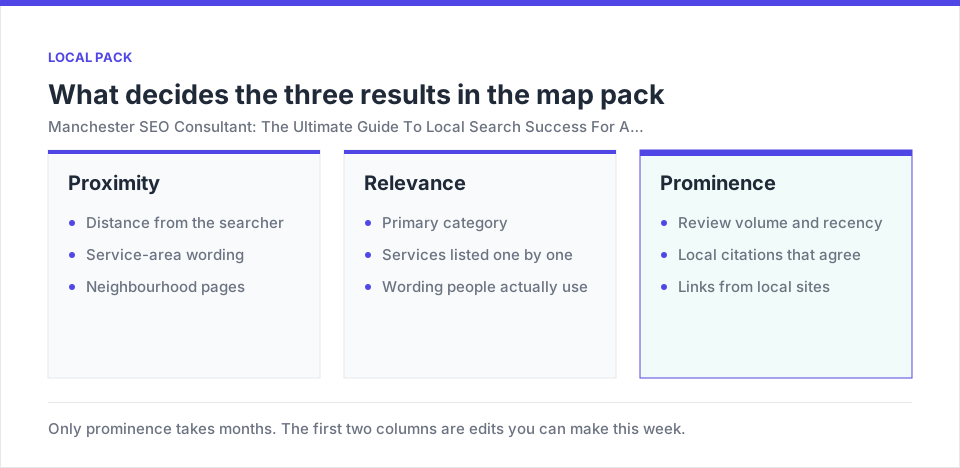
For the Local Pack side of this, the local SEO guide covers what to fix and how to track it in Semalt.
To sustain trust, publish governance summaries that explain decisions in plain language and demonstrate how activities align with GBP health targets and Local Pack objectives. Regular regulatory checks and scenario testing help anticipate algorithmic shifts and policy updates, ensuring Manchester campaigns remain robust over time.
Interested in building a district‑aware, governance‑driven measurement framework for Manchester? Explore our Manchester SEO Services for a full spectrum of capabilities, or book a scoping call to tailor a district‑level measurement and governance plan that scales with your growth goals.
Governance, Measurement, And Roadmapping For Manchester SEO
A durable Manchester SEO programme rests on a single source of truth: auditable dashboards, a clear governance spine, and a practical road map that aligns district signals with hub authority. In Manchester, success hinges on how data flows between district pages and central topics, how GBP health is maintained, and how Local Pack signals are nurtured across the city’s network. A governance-first approach from manchesterseo.ai translates local nuance into measurable outcomes, with regulator-ready artefacts and clearly defined ownership to ensure ongoing momentum.
Data Architecture For District-To-Hub Health
A well-structured data model makes it possible to attribute improvements in hub authority to district actions. The architecture should define: a hub-content layer representing city-wide topics, a district layer for neighbourhoods and services, and a signals layer that captures GBP health, Local Pack impressions, and Knowledge Panel dynamics. Clear data lineage makes it possible to demonstrate how a change on a district page—such as FAQs about a local service—propagates to hub relevance and to GBP engagement.
Key artefacts include an ownership map, a change-log ledger, and a district-to-hub mapping document. These elements ensure leadership can trace every optimisation to a business outcome, a necessity for governance, compliance, and cross-department alignment within Manchester’s competitive landscape.
- Hub-to-district mapping: a transparent relationship between central topics and local pages that preserves city-wide authority.
- Signal integration: a recipe for correlating GBP health and Local Pack signals with content changes and page-level optimisations.
- Backlog visibility: an auditable backlog that ties each item to KPIs and expected ROI.
Cadence, Rituals, And Governance Cadence
In a busy market like Manchester, regular rhythm is essential. Establish a cadence that blends fast, iterative improvements with longer-horizon reviews that assess strategic alignment and ROI. A practical framework includes a bi-weekly sprint for tactical updates, a monthly surface-health dashboard review, and a quarterly governance meeting with senior stakeholders. This cadence ensures that local signals stay aligned with hub narratives and GBP health while remaining adaptable to algorithm changes.
Describe each ritual as an artefact in governance documentation: weekly backlog refinements, monthly KPI reports, and quarterly strategy reviews. The governance spine should be visible to all stakeholders, with changes recorded in an auditable fashion to support regulatory and board-level reporting.
- Two-week sprints: prioritise high-impact district improvements that feed hub topics.
- Monthly surface-health review: examine GBP health, Local Pack visibility, and district-page engagement.
- Quarterly governance session: assess ROI, resource allocation, and alignment with growth targets.
Dashboards, Artefacts, And Regulator-Ready Reporting
Dashboards should connect technical health with business outcomes. The governance artefacts to maintain include change logs, ownership maps, district briefs, and a region-level dashboard that aggregates KPI performance. Metrics to track include GBP engagement, Local Pack impressions, district-page visits, and revenue attribution by district. The reporting cadence must satisfy leadership as well as regulatory expectations, delivering transparency about what changed, why, and what results followed.
- Auditable change logs: document reasoning, approvals, and outcomes for every optimisation.
- Ownership maps: clarify responsibilities across content, technical, and digital PR teams.
- District briefs: provide context for local nuances and justify district-level prioritisation within the backlog.
Roadmapping For Scalable Manchester Growth
Roadmapping should translate the governance framework into a practical, scalable plan. Start with a multi-quarter blueprint that links district initiatives to hub topics, GBP health, and Local Pack goals. Each milestone should have defined success criteria, detailable cost and resource implications, and a deterministic path to measurable impact. A district-aware road map requires ongoing refinement as new districts come online, as events shift, and as search engine algorithms evolve.
As you chart the course, maintain a living document that integrates feedback from district teams, technical specialists, and leadership. This keeps the plan realistic, auditable, and adaptable. For Manchester-specific implementation details, explore our Manchester SEO Services or book a scoping call to tailor a district-wide roadmap aligned with your growth goals.
Practical Next Steps
Begin by reviewing governance artefacts and aligning on a district-aware measurement framework. Create an initial backlog that prioritises district pages with high potential to uplift hub topics and GBP health. Establish the dashboard suite and start capturing baseline metrics for both hub and district surfaces. Schedule the first governance meeting to review the plan, assign ownership, and lock in reporting cadences.
For a hands-on partner, visit our Manchester SEO Services page to understand service scope, or book a scoping call to tailor a governance-led roadmap that scales across Manchester’s districts. This approach ensures that district signals, hub authority, and Local Pack dynamics move in synchrony, delivering durable growth that stands up to algorithmic and regulatory scrutiny.
Measuring Success
In a governance-led Manchester SEO programme, success is not a single KPI or a vanity metric. It is a structured, auditable outcome that ties district activity to hub authority, GBP health, Local Pack visibility, and ultimately revenue growth. The aim of this part is to translate surface health into tangible business value, using regulator-ready artefacts, clear ownership, and a measurement spine that travels with the rollout across Manchester’s districts. Each metric should tell a story about how changes in district pages, GBP health, and hub topics reinforce one another and deliver durable visibility over time.
Key Performance Indicators For Manchester Campaigns
The Manchester plan centres on a balanced scorecard that captures audience intent, surface health, and commercial impact. The following indicators provide a practical framework for executives, managers, and delivery teams to assess progress without chasing noise.
- GBP Engagement And Local Signals: measure profile interactions, phone calls, direction requests, and photo views across all district locations, filtered by district to reveal local strength or gaps.
- Local Pack Impressions And Visibility: track the share of local results that feature your GBP profile and district pages, noting improvements after district-to-hub optimisations.
- District Page Engagement And Conversions: quantify visits, form submissions, calls, and CTA interactions on district landing pages, correlated with hub topic relevance.
- Hub-to-District Signal Integrity: monitor internal-link continuity, canonical signals, and avoidance of content cannibalisation to maintain city-wide authority while delivering district nuance.
- Revenue Attribution And ROI: attribute conversions to SEO activities, balancing hub performance with district-driven outcomes to show how investments translate into revenue by district and city-wide context.
Dashboards And Reporting Cadence
Dashboards should be designed for clarity and regulator-readiness. Create a central dashboard that aggregates hub performance with district overlays, complemented by district-specific dashboards that feed into the governance spine. A typical cadence includes monthly surface-health reviews to track GBP health, Local Pack dynamics, and district-page engagement, followed by quarterly ROI analyses that translate activity into revenue. The reporting package should include the changelog, ownership maps, and district briefs to provide stakeholders with an auditable narrative of what changed, why, and what resulted.
- Cadence And Ownership: assign accountable owners for hub content, GBP health, Local Pack signals, and district pages; publish monthly health summaries.
- Regulator-Ready Artefacts: ensure dashboards, change logs, and region briefs are accessible, versioned, and easy to review in governance meetings.
- Attribution Clarity: use multi-touch attribution models where possible to show how district actions contribute to hub growth and GBP signals.
Attribution Modelling And ROI
Attribution in a district-aware Manchester programme requires a pragmatic multi-channel approach. Use first-touch, last-touch, or a blended multi-touch model, ensuring you credit district initiatives that contribute meaningfully to hub topic visibility and GBP health. Tie attribution data to a defined return on investment framework that accounts for district-level inquiries, bookings, and long-term customer value. A well-structured model supports budget discussions, justifies governance investments, and helps leadership understand where to allocate resources for durable growth.
Practical steps include documenting the attribution framework in governance artefacts, aligning it with the district content calendar, and validating model assumptions with quarterly reconciliations. This keeps ROI estimates realistic while providing a transparent basis for ongoing optimisation across Manchester’s districts.
District-Level Metrics And City-Wide Health
District-level metrics should be normalised to avoid misinterpretation when comparing busy districts with quieter ones. Create district health scorecards that blend GBP health, NAP consistency, Local Pack positions, and conversions, then present a city-wide health score that reveals overarching momentum. The governance spine ensures that district signals reinforce city-wide authority, with regular reviews to prevent signal fragmentation as the Manchester network scales.
- District Health Score: a composite metric from GBP health, district-page engagement, and local signal strength.
- City-Wide Authority: monitor hub topic coverage, internal linking integrity, and canonical strategy to maintain a coherent Manchester narrative.
- Signal Health Audits: quarterly checks on structured data, schema validity, and event signals that feed Knowledge Panels and Local Pack.
Deliverables For Stakeholders
Deliverables should enable quick comprehension and informed decision-making. Expect a regulator-ready package that includes a discovery report, a technical and content backlog, district-to-hub mapping, a district content calendar, and governance artefacts (change logs, ownership maps, and dashboards). These items connect activities to KPIs such as GBP health, Local Pack impressions, district-page visits, and conversions, providing a transparent narrative that supports governance reviews and budget decisions.
- Discovery And Baseline Report: establishes initial metrics, health checks, and district readiness.
- Backlog With Priorities: a living queue that ties technical fixes, content opportunities, and local signals to ROI.
- Governance Artefacts: change logs, ownership maps, and regulator-ready dashboards for auditability.
- District Calendars And Region Briefs: guiding content creation and GBP activity aligned to events and local needs.
- ROI And KPI Dashboards: cross-surface views that show how district actions influence hub health and revenue outcomes.
Ready to translate measuring success into durable Manchester growth? Explore our Manchester SEO Services for a governance-first framework, or book a scoping call to tailor a district-wide measurement plan that scales with your growth goals. Manchester SEO AI provides the governance spine, auditable dashboards, and district-aware reporting you need to prove value and drive long-term success.
Conclusion: Building A Trusted, Auditable Manchester SEO Programme
A governance-first Manchester SEO programme binds hub authority, Google Business Profile (GBP) health, Local Pack dynamics, and district pages into a single, auditable lifecycle. The ultimate aim is durable visibility that withstands algorithm shifts and regulatory scrutiny while delivering genuine local value for Manchester's diverse districts. By treating locality, terminology, and accessibility as first-class signals, the Manchester-focused approach maintains city-wide cohesion without eroding district nuance. The resulting framework supports consistent surface health, regulator-ready reporting, and measurable ROI across Manchester's marketplaces.
Core Pillars Of A Durable Manchester Programme
The governance spine rests on five interconnected pillars that translate policy, data, and content into action. First, auditable artefacts such as change logs and ownership maps create traceability for every optimisation. Second, district briefs tied to hub topics provide local context without compromising city-wide authority. Third, regulator-ready dashboards make performance transparent for stakeholders and regulators alike. Fourth, GBP health and Local Pack signals are treated as a unified system rather than isolated tasks. Fifth, structured data and knowledge panels extend local relevance to every surface Manchester users touch, from search results to maps and event listings.
Operational Cadence For Sustained Impact
Consistency beats sporadic bursts. Implement a predictable cadence that aligns discovery, execution, and review with Manchester's business rhythms. A practical rhythm includes monthly surface-health reviews, quarterly ROI analyses, and regular governance stand-ups with district representatives and internal stakeholders. Each cadence should produce regulator-ready artefacts and updated dashboards that tell a coherent story about progress, risks, and next steps.
Phase Map For Scaling Across Manchester
Borrowing a familiar structure, the journey can be visualised as four integrated phases. Phase 1 establishes the governance spine and district-to-hub mappings. Phase 2 concentrates on stabilising GBP health, canonical discipline, and core hub-district signals. Phase 3 expands district coverage, strengthens internal linking, and scales structured data. Phase 4 focuses on ongoing monitoring, handover to in-house teams, and regulator-ready reporting. This phased approach keeps momentum while maintaining authority integrity across the city.
- Phase 1 – Discovery And Governance Setup: assign ownership, configure change logs, and align district briefs with hub topics.
- Phase 2 – Quick Wins And Central Stabilisation: fix critical technical issues, ensure GBP health, and stabilise signals across surfaces.
- Phase 3 – Surface Realignment: deploy district-page updates, extend structured data, and reinforce internal linking for authority flow.
- Phase 4 – Monitoring And Handover: activate ongoing monitoring, publish dashboards, and formalise handover to internal teams.
Measuring Your Progress In Manchester
Measurement translates GBP engagement, Local Pack presence, and district-page activity into business value. Define KPIs that balance surface health with conversions and revenue attribution by district, and ensure dashboards provide a regulator-ready narrative. Dashboards should connect hub topics with district signals, enabling leadership to see how district initiatives boost city-wide authority while delivering local relevance.
Next Steps For Immediate Action
- Engage with Manchester SEO Services: review the full governance-first service scope and see how it maps to your district strategy. Manchester SEO Services
- Book a Scoping Call: initiate a district-wide alignment discussion with our team to tailor a governance-led plan. Book a scoping call
- Prepare Governance Artefacts: assemble current district briefs, GBP access details, NAP data, and a preliminary district calendar to accelerate onboarding.
- Define Quick Wins: identify high-impact GBP and Local Pack improvements that can be delivered within 30 days and validated with auditable dashboards.
- Commit To Regular Cadence: set up monthly reviews and quarterly ROI analyses to sustain momentum and regulator readiness.
Ready to move from strategy to durable, auditable Manchester growth? Explore our Manchester SEO Services for a governance-first framework, or book a scoping call to tailor a district-wide plan that scales with your growth goals. Manchester SEO AI offers the governance spine, auditable dashboards, and district-aware reporting you need to prove value and drive long-term success.