Introduction: Why A Local SEO Marketing Company In Manchester Matters
Manchester is a dynamic, multi‑sector city where businesses compete not just for traffic, but for the right local audience at the right moment. A Manchester‑based SEO marketing company understands the city’s distinct districts, commuter patterns, and commercial rhythms. This local expertise translates into search momentum that is both durable and accountable, turning near‑me queries and district‑level intents into tangible inquiries and conversions. The aim is to align technical health, content relevance, and local signals with Manchester’s commercial goals, so organisations can grow visibility where it matters most. Learn how a dedicated Manchester partner can translate your market context into reliable SEO momentum at the Manchester services hub on ManchesterSEO.ai, and begin conversations through the contact page.
The Manchester Local Search Landscape
Local search in Manchester is characterised by a dense fabric of districts—from the city centre and Ancoats to Salford Quays, Didsbury, and Chorlton. Each area carries unique service needs, competition levels, and consumer expectations. A Manchester SEO partner recognises these nuances and organises signals around district relevance, ensuring content, technical health, and local signals reflect real‑world experiences. This district‑aware approach strengthens rankings while driving qualified traffic, phone inquiries, and footfall to physical locations.
What A Manchester‑Focused Partner Delivers
A reputable Manchester agency blends local market insight with proven optimisations. Expect a clear discovery phase, a pragmatic district‑level strategy, and transparent execution plans that scale. The objective is to convert local intent into measurable momentum while maintaining governance and regulator readiness. Manchester‑centric agencies prioritise:
- Local Market Insight: Deep knowledge of Manchester’s key districts, including centre, Salford, and peri‑urban hubs, plus commuter and event patterns that drive demand.
- Transparent Reporting And Governance: Regular, auditable updates that show signal provenance attached to major assets and milestones.
- Pragmatic Roadmaps And Timelines: A practical, district‑first plan that starts with high‑potential areas and expands methodically as momentum grows.
Starting The Manchester Programme
Launching in Manchester requires a grounded approach that respects the city’s geography and business goals. A typical starting point is a district footprint assessment that highlights visibility gaps, content opportunities, and technical health. From there, you define quick wins—such as optimising Google Business Profile for district‑level features, aligning NAP across directories, and refreshing suburb landing pages—while laying the foundations for longer‑term signal growth across all four surfaces. The Manchester hub provides templates, governance artefacts, and onboarding routes via the contact page to tailor a district‑first programme that fits your organisation’s risk tolerance and growth targets.
Why Choose A Local Manchester SEO Partner
Local SEO is inherently contextual. Manchester’s diversity means that technical health, authentic local signals, and content must be customised to district realities. A trusted Manchester agency will:
- Demonstrate Local Authority: In‑depth knowledge of Manchester’s markets and customer journeys, from frontline city centre services to suburban districts.
- Offer Transparent Collaboration: Regular reviews, live dashboards, and clear decisions that stakeholders can understand and challenge if needed.
- Deliver Measurable Outcomes: A trackable path from discovery to conversion with measurable signals such as calls, inquiries, bookings, and visits.
What You’ll Take Away From Part 1
- A clear case for engaging a local Manchester SEO partner to navigate city‑level and district competition.
- An understanding of how signals across four surfaces translate into durable visibility for Manchester businesses.
- A practical starter plan to begin Manchester‑focused optimisation via the Manchester services hub and onboarding routes.
- Confidence to pursue governance and transparent reporting as momentum scales across districts.
To start applying these Manchester tactics, explore our Manchester hub at manchesterseo.ai/services and initiate a tailored programme through the contact page. Foundational guidance from industry authorities remains relevant: Google's SEO Starter Guide and Moz: What Is SEO?.
Manchester As A Digital Hub For SEO
Manchester’s business landscape is as diverse as its districts, blending cutting-edge tech, professional services, retail, and higher education. A Manchester-based SEO partner understands how local dynamics shape search behaviour across four surfaces while leveraging citywide momentum. By uniting district-level signals with four-surface momentum — Web Pages, Knowledge Experiences, Maps-like Panels, and Local Packs — Manchester businesses can translate proximity into qualified inquiries, appointments, and conversions. Explore the Manchester hub at manchesterseo.ai/services and initiate dialogue through the contact page to tailor a district-first programme to your growth targets.
Manchester Market Dynamics: Where Local Signals Meet Business Outcomes
Manchester operates as a city of clusters rather than a single market. Core areas such as City Centre, Salford Quays, Ancoats, Didsbury, and Chorlton each bring distinctive service needs and competitive landscapes. This regional nuance matters because search intent often nests in specific districts — from near-me queries for trades and services to B2B requests from professional firms locating in central hubs. A Manchester-focused partner translates these district realities into actionable signals, aligning technical health, content relevance, and local signals with your business goals. The result is durable visibility that scales from a district to the city, delivering measurable momentum across the four surfaces of CLTF.
- District-Driven Demand: Localised intent around service areas drives near-me and district-specific queries.
- Four-Surface Momentum: Coordinated growth across Web Pages, Knowledge Experiences, Maps-like Panels, and Local Packs creates resilient visibility.
- B2B And Local Synergy: Manchester’s professional sectors benefit from location-aware content, events, and local partnerships.
What A Manchester-Focused Partner Delivers In A Local Market Context
A credible Manchester agency combines deep local knowledge with proven, scalable SEO practices. Expect a discovery phase that captures district footprints, a pragmatic district-level strategy, and transparent execution plans that are auditable and regulator-friendly. Manchester-focused deliverables typically include:
- Local Market Insight: Comprehensive awareness of City Centre, Salford Quays, Ancoats, and peri-urban hubs, including commuter flows, event calendars, and business cycles.
- Transparent Reporting And Governance: Regular dashboards and live updates tying signals to major assets and milestones.
- Pragmatic Roadmaps And Timelines: A district-first plan that scales methodically as momentum grows.
Governance becomes a practical advantage, not a burden, enabling clear decisions, regulator-ready reporting, and a predictable path from discovery to conversion across Manchester’s districts.
Starting The Manchester Programme: Quick Wins And Foundations
Launching in Manchester benefits from a district footprint assessment that surfaces visibility gaps, content opportunities, and technical health. Quick wins include optimising Google Business Profile for district-level features, ensuring NAP consistency across directories, and refreshing suburb landing pages to reflect local realities. Simultaneously, lay the groundwork for longer-term signal growth by developing district-focused Knowledge Experiences, FAQs, and local guides. The Manchester hub provides templates, governance artefacts, and onboarding routes via the Manchester services hub and the contact page to tailor a district-first programme to your organisation’s risk tolerance and growth targets.
Why A Local Manchester SEO Partner Is The Right Fit
Local context matters. Manchester’s diversity means technical health, authentic local signals, and content must be customised to district realities. A trusted Manchester agency will:
- Demonstrate Local Authority: Deep knowledge of Manchester’s markets and customer journeys, from city centre services to suburban districts.
- Offer Transparent Collaboration: Regular governance reviews, live dashboards, and clear decision rights that stakeholders can understand.
- Deliver Measurable Outcomes: A trackable path from discovery to conversion with district-level momentum metrics.
Practical Next Steps: From Discovery To District Momentum
Begin with a district footprint and a CLTF spine for 1–3 core Manchester districts, attaching governance artefacts to major assets. Establish per-district dashboards to monitor momentum across the four surfaces and initiate governance reviews at regular intervals. Access templates and onboarding resources in the Manchester hub and start conversations via the contact page to tailor a district-first programme for your business. For grounding best practice, consult Google’s SEO Starter Guide and Moz: What Is SEO? as reference points for local and technical optimisation.
Core Services You Should Expect From A Manchester SEO Partner
A Manchester-based SEO marketing company should offer a complete, governance-forward suite of services that deliver durable visibility across the four surfaces of Canonical Local Topic Footprint (Web Pages, Knowledge Experiences, Maps‑like Panels, and Local Packs). This Part 3 outlines the essential service areas you should demand, with practical artefacts and transparent governance that align with Manchester’s district dynamics and business goals. Explore our Manchester hub at manchesterseo.ai/services and start conversations through the contact page to tailor a district-first programme for your organisation.
1) Technical SEO Audit And Health Check
A robust baseline diagnostic identifies Manchester‑specific technical optimisations that support four-surface momentum. The audit covers crawlability, indexation, site architecture, Core Web Vitals, and mobile performance, with a district-focused lens to ensure pages load quickly for users in busy urban areas and commute corridors. The outcome is a regulator‑friendly platform on which four-surface momentum can scale across districts such as City Centre, Ancoats, and Salford Quays.
- Crawlability And Indexation: Validate that search engines can discover district landing pages, knowledge assets, and GBP signals without friction.
- Core Web Vitals: Prioritise LCP, CLS, and FID improvements on district pages where users convert most.
- Site Architecture: Implement a district‑aware hierarchy that supports interlinking between landing pages, Knowledge Experiences, and GBP assets.
2) Keyword Research And Local Intent Mapping
Manchester searches are inherently district‑driven. A precise keyword footprint combines core service terms with district qualifiers (for example, Manchester City Centre boiler repair, Didsbury electricians near me, Salford window replacements) to surface terms that residents and business buyers actually use. Map each term to a district landing page or Knowledge Experience, ensuring four‑surface momentum from discovery through to conversion. This district‑aware mapping supports regulator‑friendly reporting by making signal provenance explicit from the outset.
- District‑Level Orientation: Identify primary services per district and the searcher intent that precedes a conversion action.
- Surface Allocation: Assign terms to Web Pages, Knowledge Experiences, Maps‑like Panels, or Local Packs based on user intent and proximity signals.
- Seasonality And Events: Incorporate district calendars to capture seasonal queries and local demand spikes.
3) On‑Page Optimisation And Internal Linking
On‑page optimisations reinforce district relevance without sacrificing user experience. This includes carefully crafted meta titles and descriptions, logical header structures with district qualifiers, and intentional internal linking that connects district landing pages with Knowledge Experiences and GBP assets. District‑level anchor text strengthens localisation signals and supports a clear journey from discovery to action across four surfaces.
- Meta Titles And Descriptions: Include service, district, and city signals in a concise, non‑spammy format.
- Header Architecture: Use H2s that reflect district themes and ensure H3s dive into actionable steps or FAQs.
- Internal Linking Strategy: Create a cohesive web of district pages linked to Knowledge Experiences and GBP entries to guide users through the funnel.
4) Content Strategy And Local Content
Develop a district‑forward content plan that blends suburb landing pages, district guides, and Knowledge Experiences with local relevance. A practical calendar targets district questions, common problems, and seasonal needs, with content formats designed to perform across all four surfaces. Governance artefacts (TL Notes, LF Depth, CDS Trails) accompany major assets to preserve signal provenance as Manchester’s districts evolve.
- Suburb Landing Pages: Tailor pages to reflect local services, proximity advantages, and district CTAs.
- Knowledge Experiences: FAQs, how‑tos, and district guides that demonstrate topical authority.
- Local Backlinkable Assets: Local case studies and partner‑led content to support Digital PR and link building.
5) Local SEO, GBP Governance, And Citations
A consistent Google Business Profile (GBP) presence, district‑level posts, accurate NAP data, and authentic local citations underpin four‑surface momentum. Governance artefacts accompany GBP updates to ensure signal provenance and regulator‑friendly reporting as districts grow. District citations should point to district landing pages or Knowledge Experiences to strengthen locality signals and avoid data fragmentation.
- GBP Post Cadence: Regular updates tied to local events, hours, and promotions by district.
- NAP Consistency: Align business name, address, and phone across core Manchester directories and GBP.
- Local Citations: Prioritise Edinburgh? No — Manchester‑centric directories with strong local reach that reinforce proximity signals.
6) Link Building And Digital PR With Local Authority
Ethical, locality‑driven link building strengthens proximity signals across four surfaces. Develop Manchester‑oriented partnerships with councils, chambers of commerce, universities, and industry groups. Co‑authored guides, local events, and community resources create durable authority, while governance artefacts ensure auditability for regulators as districts evolve.
- Local Authority Partnerships: Seek credible endorsements and citations on local portals.
- Chamber And BID Collaborations: Partner on events and district resources that communities reference.
- Ethical Outreach: Focus on value-driven, consent-based engagements rather than mass outreach.
7) Reporting, Governance, And Compliance
Transparency is non‑negotiable. Establish dashboards that summarise momentum by district across all four surfaces, attach TL notes, LF depth, and CDS trails to major assets, and conduct regular governance reviews. WhatIf Momentum gates preflight new assets to ensure locale relevance and surface balance before publishing, with regulator‑ready reporting baked into the process.
- Per‑District KPI Dashboards: Monitor district momentum across four surfaces with filters for major Manchester districts.
- WhatIf Momentum Gates: Preflight new assets to protect CLTF balance before going live.
- Regulator‑Ready Artefacts: Attach TL notes, LF depth, and CDS trails to major assets to preserve audit trails.
The Value Of An In-House Team For SEO And Web Development In Manchester
Within Manchester’s fast-moving business landscape, a dedicated in-house SEO and web development team offers a compelling governance advantage. Part 4 of our district-first blueprint explains why internal capability accelerates four-surface momentum across Web Pages, Knowledge Experiences, Maps-like Panels, and Local Packs. By embedding expertise, process, and accountability into your organisation, you create faster decision cycles, tighter product alignment, and regulator-friendly reporting that translates local intent into durable visibility and conversions. Explore how to structure and scale this capability within the Manchester context via the Manchester services hub.
Why An In-House Team Accelerates Four-Surface Momentum
An internal team weaves SEO, content, and development into a single, cohesive workflow. This integration reduces handoffs, speeds sprint cycles, and ensures that four-surface signals remain aligned with product releases, branding, and local market realities. When a district-focused strategy relies on timely updates to landing pages, Knowledge Experiences, GBP governance, and local citations, having a central team shortens feedback loops and improves governance traceability. Local leadership can therefore steer budget, priorities, and experimentation with immediacy that external partners rarely match.
Key Roles And Capabilities To Build In-House
- SEO Lead Oversees the district-focused CLTF spine, aligning surface strategies with Manchester targets and governance requirements.
- Content Strategist Crafts district-led content calendars, guides, and FAQs that perform across Web Pages and Knowledge Experiences.
- Web Developer / UX Specialist Partners with the SEO team to implement technical fixes, improve site speed, and optimise conversion paths without disrupting user experience.
- Data And Analytics Specialist Monitors dashboard momentum, attributes results to district signals, and maintains regulator-friendly reporting trails.
- CRO And Conversion Specialist Optimises page templates, forms, and CTAs to convert district-anchored traffic into inquiries and bookings.
- GBP / Local Signals Manager Manages GBP posts, local updates, and district-specific review responses to sustain proximity signals.
- Technical SEO And Schema Specialist Oversees structured data, canonicalisation, and surface-specific schema to drive rich results across four surfaces.
Governance, Collaboration, And The Four Surfaces
Governance artefacts sit at the centre of a healthy in-house model. TL notes explain the local rationale for content and technical decisions; LF depth captures neighbourhood texture; and CDS trails document signal lineage from seed terms to surface activations. A disciplined cadence—weekly cross-functional standups, monthly momentum reviews, and quarterly governance audits—ensures every asset remains auditable and regulator-ready. The four surfaces stay balanced through regular interlocks between web development, content, and local signals, preventing silos and ensuring accountability for district momentum.
- Weekly cross-functional standups to synchronise priorities across SEO, content, and development teams.
- Per-district dashboards with real-time momentum by surface to inform decision making.
- WhatIf Momentum gates to preflight new assets, preserving CLTF balance before publishing.
- Regulator-ready artefacts attached to major assets for auditable governance history.
A Practical Manchester Cadence: Onboarding And Ongoing Optimisation
An in-house approach begins with a clear onboarding plan that defines district footprints, four-surface priorities, and governance artefacts. Establish per-district dashboards from Day 1 and create cross-surface links between landing pages, Knowledge Experiences, and GBP assets to reinforce locality signals. A phased 90-day onboarding plan helps teams demonstrate early momentum while setting the foundation for continued growth. The Manchester hub offers templates and onboarding resources to support district-first execution, with ongoing conversations via the contact page.
What You’ll Take Away From This Part
- An in-house team can accelerate four-surface momentum by improving decision speed and cross-functional alignment in Manchester.
- A clearly defined CLTF spine supported by TL notes, LF depth, and CDS trails provides regulator-ready governance from Day 1.
- Roles spanning SEO, content, development, analytics, and GBP management create a resilient, scalable capability that adapts to district growth.
- A structured onboarding cadence and ongoing governance reviews keep momentum transparent and measurable across all surfaces.
To begin building an in-house Manchester capability, engage with the Manchester services hub at manchesterseo.ai/services and initiate a collaboration through the contact page. For practical references on industry-standard governance and best practices, consult authoritative sources such as Google's SEO Starter Guide and Moz: What Is SEO?.
B2B Focus: Tailoring SEO For Manchester's Business Landscape
Manchester hosts a thriving mix of professional services, tech start-ups, manufacturing, and education sectors. A B2B-centric approach to SEO in Manchester recognises longer buying cycles, higher stake decisions, and the need for credible, technically robust content that speaks to procurement leaders and C-suite stakeholders. This Part 5 continues the district-first momentum by outlining practical strategies to attract high-value business audiences, align messaging with buying journeys, and measure impact in a way that translates into real pipeline. Access our Manchester hub at manchesterseo.ai/services and open a dialogue through the contact page to tailor a district-focused programme for your organisation.
Understanding Manchester's B2B Buyer Journey
Business buyers in Manchester navigate a multi-stage path that often begins with awareness of a problem, moves through vendor shortlisting, and culminates in formal procurement. SEO for B2B must therefore prioritize content that supports each stage: authoritative thought leadership for the awareness phase, product and service comparisons for consideration, and concrete ROI evidence for decision. In Manchester, district-specific context helps content resonate with regional procurement practices, regulatory considerations, and local partnerships. Build district-oriented pages that speak to industry verticals such as professional services, manufacturing, and tech services, while maintaining a city-wide backbone for cross-region relevance.
Read next: Picking the right Manchester SEO firm · SEO freelancer Manchester: hiring
Messaging That Converts In Manchester's B2B Market
Effective B2B messaging blends domain authority with district relevance. Develop pillar pages for core Manchester industries, then create cluster content that answers industry-specific regulatory questions, ROI calculations, and implementation timelines. For example, a Manchester-based law firm or engineering consultancy benefits from content that demonstrates local case studies, compliance considerations, and district-wide partnerships. Use district landing pages to surface tailored CTAs such as outcome-focused consultations, district-specific ROI worksheets, or whitepapers that address the buyer’s journey from MQL to SQL.
- Industry-Focused Content: Build topic clusters around Manchester sectors, linking them to district landing pages for proximity signals.
- Thought Leadership: Publish whitepapers and guides with local benchmarks and case studies that reinforce trust.
- Clear CTAs By Stage: Guide buyers toward consultations, pilots, or proof-of-concept engagements tailored to district needs.
Attribution And Metrics For B2B SEO In Manchester
B2B buyers interact with multiple channels before converting. A rigorous attribution framework links SEO-driven touchpoints to meaningful outcomes such as qualified inquiries, pilot projects, or contract signings. Leverage CRM integrations (for example, HubSpot or Salesforce) to map visits, form submissions, and webinars to specific accounts or industries in Manchester. Use UTM parameters to tag content by district and by buyer stage, enabling clear cross-channel visibility. Key metrics include MQL-to-SQL conversion rate, pipeline influenced by organic search, and the average length of the sales cycle. Regularly report on both activity (impressions, clicks, engagements) and outcomes (inquiries, opportunities, revenue) to maintain regulator-friendly governance across four surfaces.
- Cross-Channel Attribution: Attribute outcomes to district-focused SEO initiatives with CRM-integrated data.
- Sales-Ready Signals: Track form submissions, downloads, and webinar sign-ups as indicators of intent.
- Revenue Impact: Quantify the revenue contributed by organic search across districts and industries.
Operational Models That Support B2B In Manchester
Two practical models work well in Manchester’s B2B context. The first centres on ABM (account-based marketing) where district landing pages and Knowledge Experiences are engineered around target accounts. The second blends content-led demand generation with a robust technical foundation to ensure content is discoverable and credible. Both models benefit from governance artefacts including TL notes (local rationale for content decisions), LF depth (neighbourhood texture in industry and geography), and CDS trails (signal lineage). When combined with district dashboards and WhatIf Momentum gates, teams can preflight new assets for relevance before publishing.
- ABM By District: Define target accounts per district and craft tailored content experiences.
- Content And Technical Alignment: Ensure landing pages, Knowledge Experiences, and GBP assets reinforce one another for district momentum.
- Governance For Scale: Attach artefacts to major assets to maintain audit trails as Manchester districts grow.
Practical Next Steps For Part 5
- Define 1–3 Manchester districts as initial ABM anchors and create district landing pages that address industry-specific needs.
- Develop district-focused Knowledge Experiences and whitepapers to establish authority with local procurement audiences.
- Integrate SEO with CRM for end-to-end attribution, and set up per-district dashboards to monitor activity and outcomes.
A Holistic Approach: Combining SEO With Paid Media And Strategy Workshops
In Manchester’s competitive digital landscape, sustainable momentum comes from a deliberate blend of search engine optimisation and paid media, guided by collaborative strategy workshops. A Manchester-focused SEO marketing company recognises that paid search and social can accelerate early visibility while SEO builds durable, cost-efficient growth. By running structured strategy workshops, teams align objectives, audience definitions, and measurement approaches across four surface areas—Web Pages, Knowledge Experiences, Maps-like Panels, and Local Packs—so Manchester businesses realise cohesive, regulator-friendly momentum over time. Access practical, district-focused playbooks via the Manchester services hub and begin conversations through the contact page to tailor a district-first programme for your organisation.
Strategic Synergy: How Paid Media Accelerates Four-Surface Momentum
Paid media acts as a catalyst that accelerates discovery and accelerates early momentum for district-focused SEO. When you pair PPC and paid social with district-tailored landing pages and Knowledge Experiences, you unlock faster learning loops. Data from paid campaigns—click-through rates, conversion rates, and audience overlap—feeds SEO decisions about keyword targets, page structure, and content gaps. In practical terms, a Manchester campaign can test district-specific value propositions, refine ad copy for different boroughs, and quickly validate which landing pages convert visitors from near-me searches into inquiries or appointments. The outcome is a disciplined feedback loop where paid and organic signals reinforce each other across the four surfaces, resulting in more efficient spend and stronger, longer-term visibility. For governance, attach WhatIf Momentum gates to new assets to ensure district relevance before publication and maintain regulator-ready reporting across all surfaces.
Strategy Workshops: Aligning Teams For Shared Outcomes
Regular strategy workshops bring SEO, paid media, content, web development, and sales into a single planning cycle. A typical workshop cycle yields a district-focused roadmap, a cross-surface activation plan, and a shared measurement framework. Outputs include a district slate of target keywords, landing page configurations, and ad copy experiments aligned to district intents. The aim is to translate local market context into actionable bets that drive measurable momentum across Web Pages, Knowledge Experiences, Maps-like Panels, and Local Packs. Schedule quarterly workshops to refresh district priorities, incorporate new data, and reallocate budgets where signals show the strongest proximity effects. Governance artefacts (TL notes, LF depth, CDS trails) accompany all major decisions to preserve audit trails for regulators.
- District Audience Profiles: Define primary business and consumer segments per district with their funnel position.
- Cross-Surface Activation Plan: Map district terms and content to specific assets across four surfaces.
- Measurement Framework: Establish shared KPIs, attribution paths, and regular review cadences.
Attribution And Measurement In A Manchester Context
A robust attribution model links SEO-driven signals with paid media interactions and downstream outcomes. Integrate your CRM (for example, HubSpot or Salesforce) to track visits, form submissions, and pipeline velocity by district. Use UTM parameters that embed district identifiers and funnel stages, enabling clean cross-channel analysis. Core metrics should span inquiries, bookings, qualified leads, and revenue influenced by organic search, while paid campaigns contribute incremental lift. Per-district dashboards on the Manchester hub provide regulator-friendly visibility into how four-surface momentum translates into real-world business results.
Practical Onboarding And Ongoing Collaboration
Onboarding starts with a district footprint and a CLTF spine, followed by the establishment of per-district dashboards that track momentum across four surfaces. Workshops occur on a quarterly rhythm, with an initial mobilisation phase to set district priorities, landing page configurations, and measurement protocols. Governance artefacts (TL notes, LF depth, CDS trails) accompany all major assets to ensure an auditable history of decisions and to satisfy regulator expectations. The Manchester services hub hosts templates for workshop agendas, KPI trees, and cross-surface linking strategies to accelerate deployment.
What You’ll Take Away From This Part
- A clear blueprint for integrating paid media with SEO to accelerate four-surface momentum in Manchester.
- A practical workshop cadence that aligns cross-functional teams around district-first objectives.
- A regulator-friendly measurement framework that ties district signals to inquiries, conversions, and revenue.
The Discovery And Audit Phase For Manchester SEO Momentum
In Manchester, the discovery and audit phase is the foundation of four-surface momentum across Web Pages, Knowledge Experiences, Maps-like Panels, and Local Packs. This Part 7 explains how to structure a rigorous baseline assessment, align stakeholders, and create regulator-friendly governance artefacts that set the agenda for district-focused optimisation. Access templates and onboarding routes via the Manchester services hub and start conversations through the contact page to tailor a district-first programme for your organisation.
1) Technical Audit Baseline
A robust baseline audit reveals Manchester-specific technical health issues that restrain four-surface momentum. The audit should cover crawlability, indexation, site architecture, Core Web Vitals, mobile performance, and district-level signal health. The goal is a regulator-friendly platform that supports scalable momentum across City Centre, Ancoats, Salford Quays, and surrounding districts.
- Crawlability And Indexation: Confirm district landing pages, Knowledge Experiences, and GBP signals are discoverable without friction.
- Core Web Vitals: Prioritise LCP, CLS, and FID improvements on high-potential district pages.
- Site Architecture: Implement a district-aware hierarchy that ties landing pages to Knowledge Experiences and GBP assets.
2) Content Audit And Local Relevance
Evaluate district-focused content for clarity, authority, and local relevance. Identify gaps where knowledge assets, suburb pages, and FAQs are underrepresented. Map content to four-surface momentum, ensuring that district intent translates into actionable on-page experiences and knowledge assets that perform across the four surfaces.
- Content Gap Analysis: Compare district areas against core service categories and user needs.
- Quality Thresholds: Establish editorial guidelines that reflect Manchester nuances and maintain E-E-A-T.
3) Backlink And Local Authority Review
Assess the quality and relevance of links pointing to Manchester assets, prioritising local authorities, chambers of commerce, universities, and industry groups. Create a regulator-friendly taxonomy of links with governance artefacts attached to major assets to preserve signal provenance as districts evolve.
- Local Authority Partnerships: Seek credible endorsements and citations on local portals.
- Community And Business Groups: Collaborate on district guides, events, and local resources.
4) Local Signals And GBP Readiness
Audit GBP and district citations for NAP consistency and signal provenance. District-level posts and updates reinforce proximity signals, while per-district dashboards track momentum across four surfaces.
- GBP Cadence: Establish a regular local-post schedule aligned to district calendars.
- NAP Consistency: Maintain uniform NAP across core directories and GBP for each district.
5) Outputs, Artefacts, And The Onboarding Path
The audit yields a district footprint, a CLTF spine, governance artefacts (TL notes, LF depth, CDS trails), and per-district dashboards. These outputs provide a regulator-friendly audit trail and a clear baseline for 1–3 core Manchester districts. The onboarding path integrates with the Manchester hub so teams can start quickly with district-first momentum and a transparent governance framework.
- District Footprint And Spine: Document district priorities and surface activations.
- Governance Artefacts: Attach TL notes, LF depth, and CDS trails to major assets.
- Dashboards: Establish per-district momentum dashboards for four surfaces.
Strategy Development And Workshops For Manchester SEO Momentum
Building durable four-surface momentum starts with disciplined strategy and deliberate collaboration. This Part 8 focuses on turning data-driven insights from discovery into live, district‑aware roadmaps through structured workshops. By aligning SEO, content, development, and sales teammates in Manchester, you create a shared understanding of district priorities, surface activations, and governance requirements. The outcome is a revelatory CLTF spine that can be executed with regulator‑friendly transparency across Web Pages, Knowledge Experiences, Maps‑like Panels, and Local Packs. Access templates and onboarding routes via the Manchester services hub and begin collaboration through the contact page to tailor a district‑first programme for your business.
Structured Strategy Workshops: From Data To District Roadmaps
Workshops should translate district realities into concrete, actionable plans. Each session culminates in a district‑first roadmap that ties keywords, content themes, and technical tasks to specific surface activations. The workshops are designed to be lightweight for speedy onboarding yet robust enough to support regulator‑friendly governance with artefacts attached to major assets. A typical cycle includes problem definition, opportunity mapping, surface allocation, and a reset on governance expectations to keep momentum auditable across the four surfaces.
- Problem Definition: Clarify district-level challenges, such as gaps in local landing pages or GBP signals that hinder proximity momentum.
- Opportunity Mapping: Identify district priorities across City Centre, Ancoats, Salford Quays, and peri‑urban hubs, then map them to four-surface activations.
- Surface Allocation: Allocate district terms to Web Pages, Knowledge Experiences, Maps‑like Panels, or Local Packs based on intent and proximity signals.
- Governance Alignment: Attach TL notes, LF depth, and CDS trails to plan assets to maintain auditability from day one.
Deliverables From The Workshop Series
Each workshop yields tangible artefacts that sit at the core of regulator‑friendly reporting. These artefacts ensure signal provenance and enable disciplined growth across Manchester’s four surfaces. Outputs include a district footprint with a CLTF spine, a cross-surface activation plan, WhatIf Momentum gating criteria for new assets, and per-district dashboards for ongoing governance.
- District Roadmaps: A district‑level plan detailing target surfaces, content priorities, and technical improvements.
- Activation Calendars: A calendar linking campaigns to events, seasons, and local activities per district.
- Governance Artefacts: TL notes, LF depth, and CDS trails attached to major plan assets to preserve audit trails.
- Measurement Framework: A shared KPI tree and attribution approach across the four surfaces per district.
Cadence: How Often Should Workshops Run?
A practical rhythm balances momentum with governance. Plan a quarterly strategic workshop cycle complemented by monthly tactical huddles. The strategic sessions define district priorities and surface allocations, while the monthly check-ins track progress against dashboards and validate the assumptions behind WhatIf Momentum gates before publishing new assets. This cadence sustains alignment between SEO, content, development, and sales, ensuring a coherent, auditable path from discovery to four-surface momentum.
- Quarterly Strategy Workshops: Reset district priorities, review governance artefacts, and adjust the CLTF spine as needed.
- Monthly Tactical Huddles: Close gaps, approve asset plans, and ensure surface balance across districts.
- WhatIf Momentum Gates: Preflight new assets to verify district relevance before publication.
Integrating Workshops With The Manchester Hub
The Manchester hub provides templates for workshop agendas, KPI trees, CLTF spine maps, and governance artefacts that make the process repeatable and auditable. Use the hub to align district roadmaps with the four surfaces, ensuring the outputs are immediately actionable within your website development, content, and GBP governance cycles. Start conversations via the contact page to tailor the programme to your district footprint and growth targets.
- Templates And Artefacts: Access TL notes, LF depth, and CDS trails to document decisions and signal lineage.
- Dashboards For Momentum: Per‑district dashboards that slice data by surface and district.
- Governance Cadence: Define the review cadence and sign-off authorities for rapid yet compliant progress.
What You’ll Take Away From This Part
- A practical, repeatable process for turning data into district-focused roadmaps through workshops.
- A governance-forward framework that ties district priorities to four-surface activations with auditable artefacts.
- A clear cadence for strategy and tactics that keeps Manchester momentum progressing while staying regulator-compliant.
- A direct path to start collaboration via the Manchester hub and contact page for a customised district-first programme.
To initiate or refine your workshop-led strategy, visit the Manchester hub at manchesterseo.ai/services or reach out through the contact page. For foundational best practices, you can reference Google’s SEO Starter Guide and Moz: What Is SEO? as guiding principles for local and technical optimisation.
Content Strategy For Manchester Audiences And Converting Visitors
To sustain four-surface momentum in Manchester, content strategy must be district-aware, practically implementable, and governed by transparent artefacts. This Part 9 translates the earlier strategy and workshops into a Manchester-focused content playbook that drives engagement on web pages, Knowledge Experiences, Maps-like Panels, and Local Packs. You can explore the Manchester hub at manchesterseo.ai/services and begin tailoring a district-first programme through the contact page. Governance and signal provenance remain central: TL notes explain local rationale, LF depth captures neighbourhood texture, and CDS trails document signal lineage across updates.
1) District-Focused Content Architecture
A district-aware content architecture anchors four-surface momentum by pairing district landing pages with Knowledge Experiences and local knowledge assets. Start with core Manchester zones (City Centre, Ancoats, Salford Quays, Didsbury, Chorlton) and map each to relevant services. Each district page should present a clear service scope, proximity advantages, and district-specific calls to action. Knowledge Experiences—FAQs, how-tos, and local guides—should reinforce district themes and link back to the landing pages, creating a coherent journey that travels smoothly across Web Pages, Knowledge Experiences, Maps-like Panels, and Local Packs.
2) Formats That Convert For Manchester Audiences
Content formats should address local intent with practicality and authority. Prioritise district landing pages for proximity queries, Knowledge Experiences for depth, and Local Packs-ready assets that surface in maps-rich results. Local guides, district FAQs, service comparisons in the context of Manchester neighbourhoods, and event-centred content perform well across surfaces. Integrate authentic case studies from Manchester projects to demonstrate tangible outcomes. Each format should be designed with a regulator-friendly governance trail that records decisions, updates, and signal lineage.
3) Governance Artefacts And Content Quality
Attach governance artefacts to major assets to preserve a documented history of content choices. TL notes explain the local rationale, LF depth adds neighbourhood texture, and CDS trails capture signal lineage from seed terms to surface activations. This discipline supports regulator-ready reporting and helps content teams stay accountable as Manchester districts evolve. Use artefacts to guide audits, future optimisations, and cross-surface alignment between landing pages, Knowledge Experiences, and GBP assets.
4) Local Signals And Rich Results
Schema and structured data maximise visibility across the four surfaces. Implement LocalBusiness or Service schemas with Area Served by district, FAQPage schemas for district questions, and event schemas for local activities. Rich results improve click-through and contextual relevance for near-me searches in Manchester. Ensure signals are cohesive across landing pages, Knowledge Experiences, Maps-like Panels, and Local Packs, with governance artefacts attached to major assets to keep momentum auditable.
5) Content Cadence And 90-Day Planning
Operate on a structured 90-day onboarding plan with three cycles, each ending in a WhatIf Momentum gate to preflight new content for local relevance and surface balance. Cycle 1 focuses on district footprints, starter landing pages, and Knowledge Experiences; Cycle 2 expands to additional districts and deeper assets; Cycle 3 scales to district-wide content, enhanced schema, and stronger inter-surface linking. Attach governance artefacts to every major asset to ensure regulator-friendly reviewability from Day One and enable per-district dashboards that track momentum across all surfaces.
6) Per-District Measurement And ROI Narratives
Measure content impact with district-granular dashboards that connect engagement to inquiries, bookings, and footfall. Track primary metrics such as time on page, scroll depth, and form submissions, then link these signals to district momentum across Web Pages, Knowledge Experiences, Maps-like Panels, and Local Packs. Attach TL notes, LF depth, and CDS trails to major assets to preserve auditable histories for regulators. Use per-district ROI narratives to justify content investments and to inform future calendars and governance reviews.
7) Practical Next Steps For Part 9
- Define 1–3 initial Manchester districts as content anchors and publish district landing pages with starter Knowledge Experiences.
- Develop district-focused local guides and FAQs to populate Knowledge Experiences and interlink with landing pages.
- Attach governance artefacts to every major content asset and establish per-district dashboards for momentum tracking.
Local And Regional SEO For Manchester
Local and regional search visibility in Manchester hinges on disciplined management of district signals and proximity-based assets. This part focuses on geo-targeting, local listings stewardship, reviews, and reputation strategies that elevate Manchester and surrounding areas across the four surfaces of Canonical Local Topic Footprint: Web Pages, Knowledge Experiences, Maps-like Panels, and Local Packs. A consistent, district-aware approach translates nearby intent into meaningful inquiries, appointments, and footfall. Explore how to operationalise these signals via the Manchester services hub and start conversations through the contact page to tailor a district-first programme for your business.
Local Listings And NAP Consistency In Manchester
Our Manchester approach begins with clean, district-aware listing hygiene. Name, Address, and Phone (NAP) consistency across core directories and Google Business Profile (GBP) signals proximity and trust. For each district you target—City Centre, Ancoats, Salford Quays, Didsbury, Chorlton—align the NAP and service areas with corresponding district landing pages. This localisation supports four-surface momentum by ensuring users land on pages that reflect their nearby context, reducing bounce and accelerating conversions. Governance artefacts attached to listings preserve an auditable trail for regulators and stakeholders.
- NAP Hygiene: Audit key directories and GBP entries quarterly to prevent duplicates and mismatches.
- District Landing Pages: Mirror district identifiers and local service nuances to reinforce proximity signals.
- GBP Cadence: Maintain a regular cadence of district posts, updates, and Q&A to surface local relevance.
Local Signals By District And Four-Surface Momentum
District signals should feed four-surface momentum in a coordinated fashion. GBP updates and district posts reinforce local intent; district landing pages anchor the Web Pages surface; Knowledge Experiences provide depth with FAQs and local guides; Maps-like Panels and Local Packs surface proximity cues. The governance framework should tie every district asset to signal provenance using TL notes, LF depth, and CDS trails so regulators can trace decisions from seed terms to four-surface activations.
- District Signal Alignment: Coordinate GBP, landing pages, and knowledge assets to reflect local contexts.
- Surface Interlocks: Ensure district pages link to relevant Knowledge Experiences and GBP assets.
Local Citations And Directory Strategy For Manchester
Beyond GBP, Manchester gains credibility from high-quality local citations. Prioritise Manchester-centric directories, chambers of commerce, and district media sources that publish service-relevant content. Ensure each citation points to the appropriate district landing page or a Knowledge Experience to strengthen locality signals. Regular audits reduce duplicates and broken links, maintaining signal integrity across four surfaces while supporting a regulator-ready audit trail.
- Citation Hygiene: Quarterly checks to remove duplicates and fix inaccuracies in core Manchester directories.
- District-Linked Citations: Direct citations to district pages reinforce proximity signals.
- Editorial Partnerships: Collaborate with local groups for co-authored guides and regionally relevant resources.
Reviews And Reputation Management In Manchester
Reviews shape local perceptions and conversion likelihood. Implement a proactive, district-focused review programme that encourages authentic feedback from customers across Manchester districts. Respond with timely, professional, district-specific context to demonstrate local knowledge. Monitor sentiment trends by district and identify recurring themes to feed back into Knowledge Experiences and landing pages, closing the loop between customer feedback and content updates. Attach governance artefacts to review assets to ensure momentum remains auditable for regulators.
- Response Protocol: Standardise district-specific response templates for consistency and trust.
- Sentiment Monitoring: Track district sentiment to surface opportunities or risk signals quickly.
- Review Acquisition: Encourage reviews ethically from verified customers and district-relevant contexts.
Proximity Signals And Local Content Strategy
A district-focused content plan supports proximity by answering district-specific questions and reflecting local realities. Develop district guides, FAQs, and service comparisons that address Manchester’s suburbs and business districts. Implement structured data such as LocalBusiness or Service schemas with Area Served by district, and use FAQPage schemas for district questions. Rich results improve click-through and relevance for near-me searches, while governance artefacts maintain a transparent audit trail across all four surfaces as Manchester expands.
- Schema Implementation: Use LocalBusiness or Service schemas with Area Served by district and relevant FAQPage entries.
- Content Cadence: Plan a quarterly calendar of district guides, local FAQs, and event-focused content.
- Cross-Surface Linking: Connect district landing pages with Knowledge Experiences and GBP assets for a cohesive journey.
Measurement, Reporting, And ROI For Manchester SEO Momentum
As Manchester businesses mature their district-first SEO programmes, transparent measurement and clear ROI storytelling become the backbone of sustainable momentum. This Part 11 translates the four-surface momentum framework into a regulator-friendly, data-driven discipline that ties every district signal to tangible outcomes. Built around the Manchester hub at manchesterseo.ai/services, the framework emphasises per-district dashboards, WhatIf Momentum gates, and governance artefacts that preserve signal provenance across Web Pages, Knowledge Experiences, Maps-like Panels, and Local Packs.
Per-District Dashboards: What To Monitor
Dashboards should present momentum by district (City Centre, Salford Quays, Ancoats, Didsbury, etc.) across all four surfaces. Each district dashboard needs filters for surface type, time window, and key business goals. Core components include signal provenance for every asset, time-to-conversion metrics, and trendlines that reveal leverage points where small optimisations yield outsized impact.
- Surface Momentum By District: Track impressions, clicks, and engagement for Web Pages, Knowledge Experiences, Maps-like Panels, and Local Packs per district.
- Engagement And Interaction: Measure time on page, scroll depth, knowledge asset interactions, and GBP post engagement to understand user intent progression.
What To Measure On Each Surface
Four surfaces form the spine of Manchester momentum. Metrics should be aligned with district realities while remaining regulator-friendly. For Web Pages, monitor traffic quality, conversion paths, and page speed. For Knowledge Experiences, assess time-to-consumption, FAQ completion, and asset downloads. For Maps-like Panels, track map interactions and directions requests. For Local Packs, observe GBP impressions, proximity signals, and click-through to district pages. Attach governance artefacts to major assets to preserve signal lineage and provide auditable trails for regulators.
- Web Pages: sessions, bounce rate, pages per session, form submissions per district page.
- Knowledge Experiences: FAQ views, guide downloads, video plays, and time-to-consumption by district.
- Maps-like Panels: map views, directions requests, clicks to call or website by district.
- Local Packs: GBP impressions, map pack clicks, calls, directions, and reservations by district.
Attribution: Linking SEO To Real Outcomes
A robust attribution framework bridges organic signals with CRM data to demonstrate how SEO contributes to pipeline and revenue. Integrate your CRM (for example, HubSpot or Salesforce) to map visits, form submissions, and opportunities to district-level SEO actions. Use UTM tagging to preserve district context and funnel stage, enabling clean cross-channel analysis. The objective is to show a repeatable, defendable path from discovery to conversion that regulators can audit.
- CRM Integration: Align visits and conversions with district KPIs and four-surface activations.
- Cross-Channel Tagging: Use district identifiers in UTM parameters to separate proximity signals from broader brand activity.
- ROI Attribution: Translate inquiries and opportunities into revenue influence by district across four surfaces.
Governance Artefacts: TL Notes, LF Depth, And CDS Trails
Governance artefacts anchor trust and auditability. TL notes explain the local rationale behind content decisions; LF depth records neighbourhood texture and district-specific nuances; CDS trails document signal lineage from seed terms to surface activations. Attaching these artefacts to major assets ensures regulator-ready reporting and clear traceability as Manchester districts evolve. Regular reviews verify artefact relevance and enable rapid adjustments without losing provenance.
- TL Notes: Local justification for content and technical decisions attached to assets.
- LF Depth: Neighbourhood texture captured for district signal refinement.
- CDS Trails: End-to-end signal lineage from seed terms to surface activations.
Reporting Cadence: How Often And What Gets Reviewed
Implement a cadence that blends strategic governance with agile optimisation. Schedule monthly momentum reviews focusing on district dashboards, what worked, and areas for reallocation. Quarterly governance audits verify signal provenance, artefact integrity, and compliance readiness. The WhatIf Momentum gates should be used as gatekeepers for new assets, ensuring district relevance before publishing and maintaining balance across surfaces. This disciplined rhythm keeps momentum transparent, auditable, and scalable as Manchester expands into new districts.
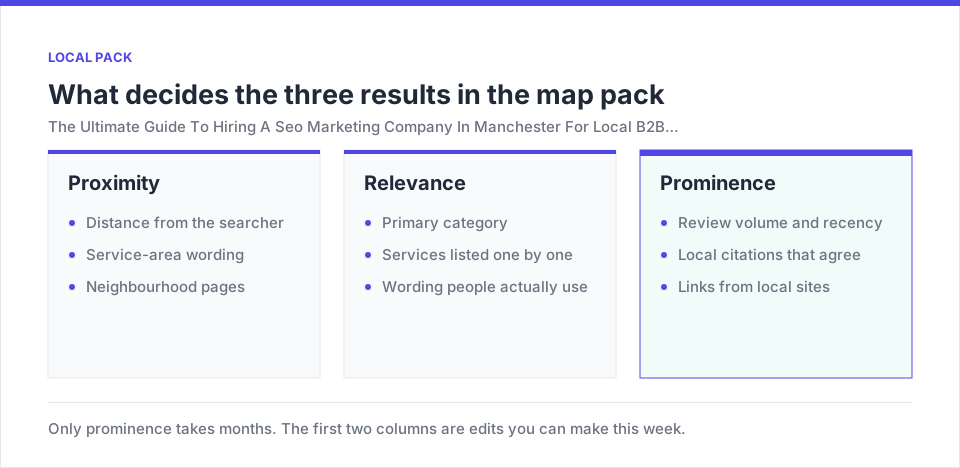
For the Local Pack side of this, the local SEO guide covers what to fix and how to track it in Semalt.
- Monthly Momentum Reviews: Inspect district dashboards, surface balance, and KPI progress.
- Quarterly Governance Audits: Validate TL notes, LF depth, and CDS trails across major assets.
- WhatIf Momentum Gates: Preflight new assets to safeguard district relevance and surface balance before going live.
Practical Next Steps: Starting Point For Part 11
- Pin a district footprint for 1–3 core Manchester districts and attach governance artefacts to starter assets.
- Set up per-district dashboards with filters for Web Pages, Knowledge Experiences, Maps-like Panels, and Local Packs.
- Define a monthly reporting cadence and a quarterly governance audit schedule to maintain regulator-ready accountability.
For ongoing guidance, dive into the Manchester hub at manchesterseo.ai/services and begin conversations via the contact page. Foundational references from Google's SEO Starter Guide and Moz: What Is SEO? remain relevant as you validate local and technical optimisation practices: Google's SEO Starter Guide and Moz: What Is SEO?.
Case studies and examples in the Glasgow context
Glasgow serves as a practical proving ground for the four-surface momentum framework in real markets. While the Manchester hub remains the primary home for our district-first approach, Glasgow-style case studies offer transferable insights into how district signals, governance artefacts, and per-suburb measurement translate into durable visibility, inquiries, and conversions. These examples demonstrate how proximity, content relevance, and local authority signals combine to drive outcomes across Web Pages, Knowledge Experiences, Maps-like Panels, and Local Packs. Readers can apply these lessons to Manchester campaigns by mapping Glasgow outcomes to the CLTF (Canonical Local Topic Footprint) surfaces and governance templates available through manchesterseo.ai/services, then initiating dialogue via the contact page.
Case Study A: City Centre Professional Services
A Glasgow City Centre campaign focused on district landing pages for professional services, complemented by district-tailored Knowledge Experiences and local GBP governance. The objective was to enhance proximity signals for near-me queries and to raise authority through district-specific FAQs and guides. Over the initial 12-week period, organic visibility for City Centre queries improved alongside an uptick in qualified inquiries. Local dashboards tracked momentum across four surfaces, with governance artefacts (TL notes, LF depth, CDS trails) attached to major assets to preserve signal provenance for regulator-friendly reporting.
- Local district landing pages were synchronised with district knowledge assets to reinforce proximity signals.
- GBP posts and updates were aligned to sponsor near-me and district-level intent, improving click-throughs from maps results.
- Per-district dashboards provided transparent visibility into surface activation and outcomes.
Case Study B: West End Retail And Local Pack Activation
A West End-focused programme combined tiered district pages with Local Packs and Maps-like Panels to surface proximity cues for shoppers and visitors. Content assets included district guides, seasonal promotions, and event-driven FAQs that addressed local shopping patterns. The outcome was a measurable rise in proximity-driven inquiries and footfall, with Local Packs delivering higher engagement on maps and directions. Governance artefacts were attached to assets to document signal lineage as the campaign scaled across surrounding suburbs.
- Local Guides and FAQs were tailored to reflect West End consumer behaviours and district events.
- GBP governance supported consistent updates and proximity signals across the four surfaces.
- Per-suburb dashboards helped quantify District Momentum and allowed rapid reallocation of resources where signals delivered the strongest proximity lift.
Case Study C: Southside Community Services
In the Southside, content emphasised local services, community resources, and district calendars. Knowledge Experiences were built around FAQs and how-to guides addressing common local questions, with landing pages reflecting proximity and district-specific needs. A robust GBP governance cadence supported timely updates and reviews, while local citations and neighbourhood-focused content strengthened proximity signals. The result was improved engagement on Knowledge Experiences and a smoother journey from discovery to action across surfaces, with regulator-ready artefacts attached to major assets.
- Community-focused content anchored to district landing pages enhanced topical authority.
- GBP activity aligned with local events fostered proximity signals and trust.
- Local citations reinforced district-level credibility and signal provenance across surfaces.
Case Study D: Multi-Suburb Enterprise Rollout
A Glasgow enterprise rollout scaled CLTF spine across City Centre, West End, Southside, and East End, with a network of district landing pages and Knowledge Experiences. Each suburb received tailored content and interlinked assets to reinforce proximity signals across all four surfaces. Governance artefacts ensured auditability as districts evolved, and per-suburb dashboards provided clear ROI narratives. The campaign demonstrated durable visibility gains and a positive shift in inquiries and engagement, supported by regulator-ready reporting that mapped momentum to district outcomes.
- District landing pages and Knowledge Experiences were centralised to ensure cohesive surface activations.
- GBP governance and local citations reinforced proximity signals and district credibility.
- Per-suburb dashboards enabled transparent measurement and ROI storytelling across the four surfaces.
Synthesis: What Glasgow Case Studies Teach For Manchester Campaigns
While these Glasgow examples are stand-alone, they reinforce universal principles that underpin four-surface momentum in Manchester. District-led content and technical health must be aligned with local intent; governance artefacts should accompany major assets to preserve auditability; per-suburb dashboards deliver transparent measurement; and WhatIf Momentum gates safeguard district relevance before publishing. A Manchester-based agency can translate these patterns into district-first roadmaps, adapting the governance artefacts and dashboard templates hosted on the Manchester hub to reflect the city’s districts and growth targets.
- District-specific content should mirror proximity signals across all four surfaces to ensure consistent user journeys.
- Governance artefacts enable regulator-friendly reporting and future audits as districts expand.
- Per-suburb dashboards provide a clear lens on ROI, inquiries, and conversions by district.
For practical templates, governance artefacts, and dashboards that support Glasgow-style case studies, visit the Manchester hub at manchesterseo.ai/services and start conversations through the contact page. Foundational references for local and technical optimisation, such as Google's SEO Starter Guide and Moz's What Is SEO, remain relevant references as you apply these Glasgow lessons to Manchester campaigns: Google's SEO Starter Guide and Moz: What Is SEO?.
What To Expect When Engaging A Manchester SEO Marketing Partner: From Onboarding To Ongoing Optimisation
Transitioning from selection to sustained momentum with a Manchester-based SEO marketing partner requires a deliberate, governance-forward approach. This final part of the series clarifies what you should anticipate during onboarding, how collaboration evolves into ongoing optimisation, and how to structure a partnership that delivers durable four-surface momentum across Web Pages, Knowledge Experiences, Maps-like Panels, and Local Packs. Explore practical onboarding resources and start conversations through the Manchester hub at manchesterseo.ai/services and the contact page to tailor a district-first programme for your organisation.
Collaborative Onboarding And Discovery
The onboarding phase sets the foundation for measurable four-surface momentum in Manchester. Expect a structured discovery that captures your district footprint, service scope, and target customer journeys. A credible partner will document TL notes (local rationale for decisions), LF depth (neighbourhood texture), and CDS trails (signal lineage) attached to major assets. This creates an auditable ladder from initial discovery to four-surface momentum, ensuring every decision is traceable for regulators and internal governance alike. The outcome should be a clearly scoped programme with defined milestones, a transparent budget, and district-led dashboards that map momentum by surface from Day One.
From the outset, agree on a district-first CLTF spine that links district landing pages, Knowledge Experiences, GBP governance, and local signals. This spine becomes the backbone for prioritising quick wins while setting the stage for deeper district activations in subsequent cycles. Remember to align expectations around budget, risk tolerance, and the cadence of reviews so both sides share a common language and a predictable rhythm.
Governance Artefacts And What They Deliver
Governance artefacts are not bureaucratic overhead; they are essential tools that preserve signal provenance, regulate decision-making, and satisfy regulator-friendly reporting. The core artefacts include TL notes (local rationale for content and technical choices), LF depth (neighbourhood texture and district nuance), and CDS trails (end-to-end signal lineage from seed terms to surface activations). Attaching these artefacts to major assets establishes an auditable history that travels with content through iterations, updates, and new district rollouts. In practice, artefacts empower faster approvals, smoother audits, and clearer justification for resource allocation as Manchester expands its district footprint.
As momentum grows, these artefacts should accompany every major asset: district landing pages, Knowledge Experiences, GBP updates, and large-scale content or technical deployments. They also provide a defensible narrative for governance reviews, ensuring that momentum remains transparent and compliant with local requirements while enabling rapid iteration where the data justifies it.
WhatIf Momentum Gates: Safeguarding Relevance And Balance
WhatIf Momentum gates are a practical safeguard in Manchester’s district-first model. They preflight new assets to verify local relevance and surface balance before publishing. Gate criteria may include district alignment with the CLTF spine, signal provenance attached to governance artefacts, and a validation that the content or technical change will move momentum across the four surfaces rather than creating disruption. Using these gates helps maintain governance discipline while accelerating learning loops from pilot assets to city-wide momentum.
Integrate these gates into your onboarding and ongoing optimisation cadence. Ensure all new assets pass through the WhatIf checks, with clear documentation stored alongside TL notes, LF depth, and CDS trails for auditability.
Collaboration Cadence And Communication
A successful Manchester engagement relies on a predictable collaboration rhythm. Establish a cadence that balances strategic governance with agile execution, including:
- Weekly Cross-Functional Standups: Short sessions that align SEO, content, development, and analytics on district priorities and surface activations.
- Monthly Momentum Reviews: Deep-dives into dashboard data, WhatIf outcomes, and asset performance across districts.
- Quarterly Governance Audits: Formal reviews of TL notes, LF depth, and CDS trails to confirm signal lineage and regulatory readiness.
Complement these with continuous updates via a dedicated collaboration channel and shared dashboards that slice data by district and surface. The Manchester hub contains templates to support this cadence, including workshop agendas, KPI trees, and governance artefacts that align with district targets.
Deliverables You Should Expect At Onboarding
- District Footprint And CLTF Spine: A documented map of target districts, with surface activations aligned to four surfaces from day one.
- Per-District Dashboards: Real-time momentum visuals across Web Pages, Knowledge Experiences, Maps-like Panels, and Local Packs for each district.
- Governance Artefacts Attached To Major Assets: TL notes, LF depth, and CDS trails, maintained for auditability.
- WhatIf Momentum Gates: Preflight criteria to ensure relevance and balance before publishing new assets.
- Starter And Priority Assets: District landing pages, starter Knowledge Experiences, initial GBP governance, and seed local content calendars.
- Regular Reporting Templates: Regulator-friendly reports that articulate momentum by district and surface outcomes.
What To Expect From The Ongoing Optimisation Cycle
Ongoing optimisation is a disciplined blend of refinement and expansion. Expect iterative improvements to district landing pages and Knowledge Experiences, continuous GBP governance, and a steady cadence of content updates that respond to local signals. The aim is not only to improve rankings but to strengthen the user journey across four surfaces, turning proximity into inquiries, appointments, and revenue. Regular governance reviews ensure all changes stay auditable and regulator-ready while maintaining agility to respond to Manchester’s dynamic district landscape.
To sustain momentum, your partner should: maintain district-focused content calendars, optimise technical health with district-specific prioritisation, and continually reassess signal provenance through artefacts attached to assets. A well-structured process keeps the organisation moving forward without losing sight of local context and regulatory compliance.
If you’re ready to begin this district-first journey, start a conversation with the Manchester team at manchesterseo.ai/services and book a session through the contact page. For foundational guidance and best practices, consult Google's SEO Starter Guide and Moz: What Is SEO? as enduring references to local and technical optimisation.