Why Local SEO Matters For Manchester Businesses
Manchester is a dynamic, densely populated commercial centre where footfall and online visibility translate directly into revenue. For retailers, professional services, hospitality, and B2B organisations, appearing prominently in local search results, maps, and knowledge panels can mean the difference between a busy week and a quiet one. Local search signals are particularly potent in Manchester due to the city’s mix of busy urban hubs—City Centre, Salford Quays, Ancoats, Chorlton, Didsbury and surrounding suburbs—combined with a high concentration of small to mid-size firms competing for nearby customers. A Manchester-focused local SEO approach aligns digital visibility with real-world proximity, helping you reach buyers exactly when they’re looking for your products or services. This is where a dedicated local SEO agency in Manchester, like Manchester SEO AI, brings governance-forward expertise to deliver durable, auditable results across four surfaces: Web, Images, News, and Hub.
What local SEO delivers for Manchester businesses
Local SEO goes beyond rankings. It shapes visibility in the places and moments that matter most to Manchester audiences—Google Maps, local knowledge panels, image search for location cues, and service-specific queries. A coherent Manchester local SEO programme drives increases in store visits, appointment bookings, and online inquiries by aligning district-level intent with four-surface activation. By prioritising proximity signals, accurate business information, and locally relevant content, you build trust with nearby customers and improve click-to-call and click-to-visit conversions. The four-surface framework (Web, Images, News, Hub) ensures your local presence remains coherent as districts evolve and consumer behaviour shifts.
Key components include optimising Google Business Profile, building locally authoritative landing pages, implementing structured data for local entities, and cultivating local signals through timely News coverage and hub resources. The aim is to create a scalable, auditable path from discovery to action that can be explained to stakeholders with tangible metrics by geography.
Manchester’s local search landscape: factors that influence queries
Several Manchester-specific dynamics shape local search performance. The city’s mix of central business districts, residential catchments, and surrounding towns creates a broad geography of opportunities. Important considerations include:
- Nap consistency and citation quality: Accurate name, address, and phone details across directories boost proximity signals and Maps rankings.
- Google Business Profile optimisation: Up-to-date hours, service areas, categories, and customer responses reinforce local authority.
- Local page depth and relevance: District landing pages and service-area content should reflect local intent and nearby customer needs.
- Schema and knowledge panels: LocalBusiness, AreaServed, and other schemas help search engines understand proximity and offerings.
- Reviews and reputation signals: Fresh, authentic reviews influence click-through and trust in local results.
- Mobile and speed considerations: Fast, mobile-friendly experiences improve local engagement and proximity signals.
Beyond technicalities, the Manchester market rewards leaders who combine pragmatic, district-aware optimisation with governance artefacts that can be audited and presented to stakeholders. This is the core of what Manchester SEO AI delivers: a scalable, four-surface strategy anchored in district depth and measurable ROI.
What a local SEO agency Manchester does for you
A Manchester-focused local SEO agency typically covers discovery, strategy, implementation, and ongoing optimisation. The aim is to translate local intent into evidence-based actions that improve visibility, relevance, and conversions across all four surfaces. Typical services include:
- Comprehensive local audits: Technical health, local presence consistency, map listings, and district-specific content gaps.
- Local keyword research and geo-targeting: Identifying Manchester- and suburb-specific terms, service-area modifiers, and intent-driven phrases.
- Google Business Profile optimisation: Optimised categories, descriptions, posts, and review response processes to bolster proximity signals.
- District landing pages and service pages: Localised content that aligns with user intent and supports four-surface activation.
- Local link building and citations: Partnerships with community organisations, local press, and industry bodies to strengthen authority in Manchester regions.
- Structured data and knowledge graph support: LocalBusiness, areaServed, and schema markup to enhance local visibility in rich results.
- Reporting and governance artefacts: Activation Briefs by surface, Guardian Dashboards by geography, and Provenance Trails for data lineage and regulator-ready audits.
Choosing the right Manchester partner
Selecting a local agency requires clarity on engagement models, transparency, and communication cadence. Look for partners who articulate a four-surface roadmap mapped to Manchester districts, with explicit milestones, dashboards, and artefacts that you can review in real time. An effective Manchester partner should provide:
- Clear engagement model: Retainer, project-based, or hybrid options that fit your needs and budget predictably.
- Transparency in deliverables: Detailed Activation Briefs by surface, geography-specific dashboards, and data provenance records.
- Regular governance cadences: Consistent review meetings, What-If planning, and monthly performance updates by district.
- Auditable ROI by geography: Demonstrable links between four-surface activities and local conversions, inquiries, or revenue.
Manchester SEO AI positions itself as a governance-forward partner, offering activation templates, reporting formats, and district-aware roadmaps accessible via our Service Portfolio and ready for discussion through the Contact page.
Getting started with a Manchester SEO expert
To start, request a free initial site audit and a short discovery call. Prepare a practical brief that outlines your goals, target customers by geography, and current performance metrics. A well-scoped engagement, paired with four-surface activation plans and regulator-ready artefacts, sets the foundation for measurable, sustainable growth in Manchester’s competitive local landscape. Explore our Service Portfolio to preview templates and artefacts, and book a strategy session via the Contact page to tailor a plan to your district priorities.
Understanding Local SEO And Manchester's Search Landscape
In Manchester, local search is a high‑impact channel for nearby buyers. A Manchester‑focused local SEO programme must capture district‑level intent, Map visibility, local knowledge panels, and service queries that reflect how people move around the city and its surrounds. This Part 2 builds on the four‑surface framework—Web, Images, News, and Hub—showing how to interpret Manchester’s unique geography, consumer behaviour, and competitive dynamics to inform practical activation plans that drive measurable ROI. Guided by governance‑forward principles, you’ll learn how to translate district depth into repeatable, auditable results that stakeholders can understand and trust.
Manchester’s Local Search Environment: What Matters
Several city‑specific dynamics influence how Manchester users search and convert. The city combines a dense urban core with diverse neighbourhoods, each with its own needs and routines. Local search success hinges on aligning district signals with four surfaces while maintaining accurate business information and timely, locally relevant content. The aim is to connect discovery with action—phone calls, form submissions, or store visits—at moments when proximity matters most.
Key signals include proximity accuracy, consistent NAP (Name, Address, Phone) across Manchester directories, and up‑to‑date Google Business Profile (GBP) health with correct categories, hours, and service areas. In addition, district‑level landing pages should reflect local intent and nearby customer needs, while schema markup helps search engines associate your business with Manchester geography and local services.
District Depth: The Core Of Local Relevance
Manchester’s districts function like micro‑markets within a single city. A thoughtful local SEO approach recognises that what works in City Centre may differ from Didsbury or Salford Quays. District depth means building authoritative, locally relevant pages and content that address specific questions and needs of nearby residents and visitors. It also means ensuring GBP health signals are monitored by geography, so proximity cues are accurate wherever your customers are searching from.
Governance artefacts—Activation Briefs by surface, Guardian Dashboards by geography, and Provenance Trails—provide auditable traces showing how district signals rolled up into four‑surface performance. This transparency is increasingly valued by senior leadership and external stakeholders who require regulator‑friendly reporting and clear ROI attribution by geography.
Manchester Districts: Practical Implications For Local SEO
Consider prioritising districts based on proximity to key customer bases, population density, and competitive intensity. The following districts commonly present distinct opportunities in Manchester:
- City Centre: High footfall, frequent events, and dense competition. Focus on GBP optimisation, local event coverage, and fast, mobile‑friendly district pages with robust local links.
- Salford Quays: Stronger demand from professionals and residents near media and tech hubs. Emphasise service area details, local partnerships, and content that highlights nearby venues and transport connections.
- Didsbury and Chorlton: Suburban clusters with leisure and lifestyle search demand. Local content should reflect community activities, local businesses, and district attraction guides.
- Ancoats and Northern Gateway areas: Transitional zones with growing residential communities. Prioritise timely News coverage of openings, local partnerships, and district landing pages with authentic, map‑friendly signals.
Each district benefits from a tailored content plan, clear What‑If scenarios for governance, and district attribution in KPI dashboards. The goal is to convert proximity into footfall, calls, or digital inquiries by geography, while maintaining coherence across all four surfaces.
Seasonality, Events And Local Search In Manchester
Manchester’s calendar includes football match days, concerts, arts festivals, and seasonal shopping campaigns. Local search patterns shift around these events, creating bursts of proximity‑driven queries. A governance‑forward plan anticipates these dynamics with pre‑planned News coverage, timely GBP updates, and district‑centric content calendars that align with event schedules. By coordinating four surfaces around these events, you can capture elevated search demand and improve proximity signals at critical moments.
Keyword Research And Geo‑Targeting For Manchester
Effective local SEO begins with disciplined keyword research that captures Manchester and district terms. Start with core Manchester terms and expand to district modifiers (e.g., "local coffee Manchester City Centre" or "plumber Ancoats Manchester"). Pair these with intent signals—informational, navigational, transactional—and map them to district landing pages and service pages. Geo‑targeted language should reflect local vernacular and user expectations for each district, reinforcing relevance across Web, Images, News, and Hub surfaces.
Competitor analysis by district reveals gaps in content depth, GBP health, and local links. Use these insights to prioritise actions and to justify resource allocation in governance artefacts that stakeholders review during What‑If planning and ROI reviews.
From Research To Action: Practical Manchester Playbook
1) Establish a district footprint and four‑surface maturity baseline by geography. 2) Build Activation Briefs by surface that tie district signals to specific actions. 3) Create Guardian Dashboards by geography to visualise health and progression. 4) Implement Provenance Trails for data lineage and regulator‑readiness. 5) Set district‑level KPIs that reflect local intent and ROI. 6) Schedule regular governance reviews to update plans as districts evolve.
This approach aligns with Manchester SEO AI’s governance‑forward philosophy, delivering auditable, district‑aware visibility that remains durable across changes in consumer behaviour and market conditions. If you want to explore templates and artefacts in practice, browse our Service Portfolio and book a strategy session via the Contact page.
As with any city, the value is in consistency: maintain district depth, keep GBP health up to date by geography, and ensure four surfaces move cohesively to support local discovery and conversion across Manchester.
Local Keyword Research And Geo-Targeting Strategies For Manchester
Building local visibility in Manchester starts with precise keyword research that reflects district-level intent and proximity. This part extends the four-surface framework (Web, Images, News, Hub) introduced in Part 2, translating district depth into actionable, verifiable SEO programmes. By outlining Manchester-specific search behaviours, district modifiers, and practical activation steps, you’ll equip your team with the exact signals search engines use to connect nearby shoppers with your local business. Partnering with a governance-forward local SEO agency in Manchester, such as Manchester SEO AI, helps codify these efforts into auditable artefacts that executives can review with confidence.
Core Manchester Local Keywords
Start with district-aware seed terms that combine core services with Manchester geography, then expand to modifiers that capture intent and proximity. The goal is to build a hierarchical keyword map that feeds every surface—Web, Images, News, and Hub—and supports district landing pages and service pages with locally relevant language.
- City Centre and central districts: terms linked to high footfall and events, such as "+City Centre Manchester", "+Manchester City Centre restaurants" or "+local shop Manchester City Centre".
- Residential districts and suburbs: modifiers like "+Ancoats Manchester", "+Didsbury Manchester", "+Chorlton local business" capture neighbourhood intent.
- Service-specific and transactional intents: include "+emergency plumber Manchester", "+plumber near me Manchester", "+manchester local SEO agency".
- Branded and category signals: "+Manchester SEO AI" and "+local SEO agency Manchester" pair brand relevance with district intent.
As you map these terms, balance broad Manchester-wide queries with district-precise phrases. This balance helps four-surface activation stay coherent as districts evolve and competitive dynamics shift.
Geo-Targeting By District: A Practical Framework
Treat Manchester as a collection of micro-markets. Prioritise districts by population density, commercial activity, and competitive intensity, then tailor keyword sets and content depth to each area. Implement a district-first publishing plan that ties keyword themes to four-surface activations and governance artefacts. This approach ensures that search visibility translates into tangible local actions, such as store visits or service inquiries.
- City Centre: concentrate on high-intent local service terms and event-driven content to support footfall and quick conversions.
- Salford Quays and tech hubs: focus on professional services and business-support content aligned with nearby venues and transport links.
- Didsbury and Chorlton: prioritise lifestyle and community content, with district landing pages rich in local imagery and FAQs.
- Ancoats and emerging districts: push timely News coverage and hub resources to reflect growth and new openings.
Use geo-targeted language in headings and meta tags, and ensure district pages mirror the intent captured in your keyword maps. Manchester SEO AI emphasises governance artefacts to demonstrate accountability for each district and surface in quarterly reviews.
Content Mapping And Surface Activation
Link keyword themes to the four surfaces with a clear content plan. Web pages should host local service details and district FAQs; Images should showcase authentic locality imagery that supports proximity signals; News should offer timely, district-relevant updates; Hub content should assemble local resources, case studies, and event calendars. This cross-surface alignment creates a cohesive user journey from discovery to action, improving proximity signals across Manchester’s maps, knowledge panels, and local search results.
Template examples for Manchester include district landing pages with explicit service sections, local testimonials, and maps showing district footprints. If you want a practical starting point, review our Service Portfolio for Activation Briefs by surface and district examples, and book a strategy session through the Contact page to tailor a Manchester-focused plan.
Measurement, Governance And ROI
A district-aware keyword strategy should feed four-surface dashboards that make ROI by geography visible. Track a combination of visibility, engagement, and conversion metrics at district level, and ensure data provenance is clearly recorded for regulator-ready reporting.
- Nearby visibility metrics: Maps impressions, local pack presence, and GBP health by geography.
- Traffic quality indicators: Organic clicks, time on page, and local engagement signals on district pages.
- Conversion signals by district: Calls, form submissions, and store visits attributed to district campaigns.
- Surface cross-attribution: Tie Web, Images, News, and Hub improvements to geography-specific ROI with provenance trails that document data lineage.
Governance artefacts such as Activation Briefs by surface, Guardian Dashboards by geography, and Provenance Trails underpin regulator-ready reporting for Manchester campaigns. For a ready-to-use framework, explore Manchester SEO AI’s Service Portfolio and contact us to align four-surface maturity with district priorities.
Ready to turn Manchester’s district depth into durable local visibility? Start with a free initial site audit and a short discovery call. Prepare a practical brief detailing your target districts, goals by geography, and current performance metrics. A governance-forward plan, including Activation Briefs by surface and Guardian Dashboards by geography, will provide a tangible path to ROI. Visit our Service Portfolio to preview templates and artefacts, and book a strategy session via the Contact page to tailor a Manchester-focused plan for four-surface maturity across Web, Images, News, and Hub.
A Forensic, Data-Driven Approach To Local SEO In Manchester
Building on the four-surface framework introduced for Manchester, this part outlines a forensic, data‑driven approach to local SEO. It translates district depth and governance maturity into a practical playbook for discovery, audits, goal setting, and staged implementation. By emphasising auditable artefacts and geography-specific ROI, Manchester businesses can secure durable visibility and reliable regulator-ready reporting across Web, Images, News, and Hub.
1) Entry Points Into The Field
Most Manchester SEO leaders begin within related digital roles in local organisations or regional agencies. Early exposure to keyword research, site audits, and content optimisation builds the four-surface mindset from Web through Hub. The objective at this stage is to develop solid fundamentals and a portfolio of small wins that demonstrate practical impact in Manchester’s diverse districts.
Read next: Local SEO service Manchester: setup · Engaging an SEO agency in Manchester
- Learn the core SEO toolkit: Crawling, indexing, Core Web Vitals, on-page optimisation, and structured data. Ensure you can translate findings into actionable fixes and quick wins.
- Gain analytics fluency: Build comfort with GA4, Search Console, and data storytelling to show how changes affect traffic and engagement by geography.
- Start district-aware experiments: Run small tests on district landing pages or local content to understand how signals travel across surfaces.
- Begin documenting impact: Maintain a simple portfolio of audits, optimisation tasks, and measurable outcomes to demonstrate progress.
2) Building Core Competencies In Manchester Markets
As you move beyond entry, focus on two reinforcing pillars: technical proficiency and governance literacy. In Manchester, employers look for the ability to deliver across four surfaces while preserving district depth. Practical steps include expanding technical know‑how, mastering analytics‑driven decision making, and contributing to activation plans that align with district goals. This stage is about turning small wins into repeatable, scalable processes across multiple districts and surfaces.
- Deepen technical mastery: Prioritise Core Web Vitals, structured data, mobile performance, and scalable site health monitoring.
- Advance analytics and attribution: Develop geography‑based reporting and multi‑touch attribution to connect SEO activity to outcomes by district.
- Co-create four-surface activation briefs: Collaborate with product, content, and design teams to translate insights into coordinated actions across Web, Images, News, and Hub.
- Improve cross‑functional collaboration: Practice stakeholder management and reporting with non‑technical audiences, including senior leadership.
3) Transitioning To A Formal Manchester SEO Manager Role
Entering a formal Manchester SEO manager position requires demonstrated governance capability, the ability to lead cross‑functional teams, and a track record of delivering measurable business outcomes. At this level, you begin owning district footprints, coordinating four-surface plans, and presenting ROI to stakeholders with clarity. You will start shaping governance artefacts that underpin regulator‑ready reporting, such as Activation Briefs by surface, Guardian Dashboards by geography, and Provenance Trails for data lineage.
- Own a district footprint and four-surface plan: Create a scalable blueprint that maps Web, Images, News, and Hub assets to district‑level opportunities.
- Lead cross‑functional initiatives: Direct collaboration between product, content, design, analytics, and engineering to deliver cohesive optimisations.
- Establish robust reporting governance: Develop auditable dashboards and artefacts that satisfy governance requirements and enable regulator‑ready reporting.
- Build a stakeholder narrative: Learn to explain complex data simply and connect SEO outcomes to business metrics familiar to executives.
4) Senior Leadership: From SEO Manager To Head Of SEO
Progression to head of SEO in Manchester demands strategic vision, budget ownership, and the ability to steer the marketing function toward sustained growth. This stage emphasises governance maturity, multi‑district scale, and the capacity to defend SEO investments to the C‑suite. You’ll lead long‑term roadmaps, oversee multiple district activations, and ensure four-surface coherence evolves with business needs.
- Set strategic direction by district and surface: Align SEO initiatives with company goals, risk tolerance, and governance standards.
- Manage budgets and teams: Command larger budgets, coordinate with product, analytics, and marketing leads, and optimise team structure for scale.
- Institutionalise governance at scale: Strengthen Activation Briefs, Guardian Dashboards, and Provenance Trails to support regulator‑ready reporting across several districts.
- Influence broader marketing decisions: Use SEO insights to shape content strategy, product features, and brand positioning in Manchester markets.
5) Certifications, Continuing Learning, And The Manchester Edge
Even at senior levels, Manchester professionals must remain curious and current. Prioritise formal certifications that validate both technical and strategic capabilities. Recommended credentials include Google Analytics, Google Search Central guidelines, and platform‑specific certifications. Complement with analytics storytelling, SQL basics, and data visualisation to strengthen governance narratives. A strong portfolio should evolve to include Activation Briefs by surface, Guardian Dashboards by geography, and Provenance Trails that demonstrate end‑to‑end data lineage and audit readiness.
- Technical foundations: Core SEO fundamentals, Core Web Vitals, structured data, and mobile performance mastery.
- Analytics proficiency: GA4, Looker Studio, attribution modelling, and geography‑based reporting.
- Governance and documentation: Activation Briefs, Guardian Dashboards, and Provenance Trails as standard artefacts.
- Leadership and communication: Strategic storytelling, stakeholder management, and cross‑functional leadership skills.
Local Keyword Research And Geo-Targeting Strategies For Manchester
Local keyword research is the bedrock of a district-aware local SEO programme. For Manchester, the aim is to fuse city-wide intent with district-level nuance so that every surface—Web, Images, News, and Hub—speaks the language your nearest customers use. This Part 5 builds on the governance-forward framework introduced by Manchester SEO AI, translating district depth into a practical, auditable playbook for identifying location-specific terms, service-area modifiers, and intent-driven keywords that capture Manchester and its surrounding suburbs.
Core Manchester Local Keywords
Begin with district-aware seed terms that couple core services with Manchester geography, then expand into modifiers that reflect user intent and proximity. A well-constructed keyword map aligns with four-surface activation, ensuring that district landing pages, service pages, and hub resources receive district-relevant cues across Web, Images, News, and Hub.
- City Centre focused terms: terms tied to high footfall and events, such as +"City Centre Manchester" and +"local shop Manchester City Centre".
- Residential districts and suburbs: modifiers like +"Ancoats Manchester" and +"Chorlton local business" capture neighbourhood intent.
- Service-specific and transactional intents: include +"emergency plumber Manchester" or +"plumber near me Manchester".
- Branded and category signals: combine +"Manchester SEO AI" with district intent to boost brand proximity signals.
As you build this map, prioritise terms that reflect district-level need, proximity, and time-sensitive intent. Use governance artefacts to document why certain terms were chosen, how they map to surfaces, and what dashboards will track their performance by geography.
Geo-Targeting By District: A Practical Framework
Manchester functions as a constellation of micro-markets. Prioritise districts by population density, commercial activity, and competitive intensity, then tailor keyword sets and content depth accordingly. A district-first publish plan should tie keyword themes to four-surface activations and governance artefacts, ensuring local discovery translates into actions such as store visits or service inquiries.
- City Centre: focus on high-intent local service terms and event-driven content to boost footfall and quick conversions.
- Salford Quays and tech hubs: emphasise professional services and business-support content aligned with nearby venues and transport links.
- Didsbury and Chorlton: prioritise lifestyle and community content with district landing pages rich in local imagery and FAQs.
- Ancoats and emerging districts: push timely News coverage and hub resources to reflect growth and new openings.
Ensure district pages feature geo-targeted headings, meta tags, and internal linking that mirror the district-specific keyword map. Governance artefacts provide a transparent trail showing how geography influences surface activation and ROI.
Content Mapping Across The Four Surfaces
Map keyword themes from your district footprint to four surfaces with a practical content plan. Web pages should host local service details and district FAQs; Images should showcase authentic locality imagery that reinforces proximity; News should deliver timely, district-relevant updates; Hub content should assemble local resources, case studies, and event calendars. This cross-surface alignment creates a cohesive user journey from discovery to action, strengthening proximity signals in Maps, Knowledge Panels, and local search results.
Template ideas for Manchester include district landing pages with service sections, local testimonials, and maps showing district footprints. For practical starting points, review our Service Portfolio for Activation Briefs by surface and district examples, and book a strategy session via the Contact page to tailor a Manchester-focused plan.
Measurement, Governance And ROI By Geography
A district-aware keyword strategy should feed four-surface dashboards that reveal ROI by geography. Track visibility, engagement, and conversions at district level, and document data provenance for regulator-ready reporting. Key metrics include:
- Nearby visibility: LocalPack presence, GBP health by geography, Maps impressions.
- Traffic quality and engagement: Organic clicks, time on page, and district-page interactions.
- Conversion signals by district: Calls, enquiry forms, and store visits attributed to district campaigns.
- Cross-surface attribution: Tie Web, Images, News, and Hub actions to geography with Provenance Trails.
Governance artefacts such as Activation Briefs by surface, Guardian Dashboards by geography, and Provenance Trails underpin regulator-ready reporting across four surfaces for Manchester campaigns. For practical templates and artefacts, explore Manchester SEO AI’s Service Portfolio and book a strategy session via the Contact page to align four-surface maturity with district priorities.
Getting Started With A Manchester Expert
Ready to begin? Start with a free initial site audit and a short discovery call. Prepare a brief that outlines the target districts, goals by geography, and current performance metrics. A governance-forward plan, including Activation Briefs by surface and Guardian Dashboards by geography, will provide a tangible path to ROI. Explore our Service Portfolio to preview templates and artefacts, and book a strategy session via the Contact page to tailor a Manchester-focused plan for four-surface maturity across Web, Images, News, and Hub.
Measurement, Governance And ROI For Local SEO In Manchester
Measurement and governance are the backbone of a durable local SEO programme in Manchester. Building on the four-surface framework (Web, Images, News, Hub) and the concept of district depth, this part explains how to quantify proximity, engagement, and conversion outcomes by geography. A well-designed measurement system enables regulator-ready reporting, demonstrates clear ROI to leadership, and guides disciplined optimisation across Manchester’s districts from City Centre to Salford Quays and beyond.
Defining ROI By Geography
ROI in local SEO isn’t a single number. It’s a constellation of metrics that proves proximity translates into action. Start with four core pillars by geography:
- Nearby visibility: local packs presence, Maps impressions, GBP health by geography, and proximity accuracy that influence discovery in Manchester districts.
- Traffic quality and engagement: organic visits to district pages, time on page, page depth, and engagement signals across Web surfaces by district.
- Engagement-to-action signals: clicks to call, directions, form submissions, and appointment requests tied to district footprints.
- Conversion and revenue impact: store visits, bookings, and lead generations attributed to district campaigns, with multi-surface attribution that aggregates Web, Images, News and Hub activity.
Present ROI by geography with attribution trails that connect district signals across surfaces to business outcomes. This visibility supports governance reviews and helps executives understand which districts, surfaces, and actions drive durable growth in Manchester.
Governance Artefacts That Drive Clarity
To make ROI auditable, rely on a trio of governance artefacts, each mapped to a surface and geography:
- Activation Briefs by surface: structured plans detailing the actions on Web, Images, News, and Hub for every district overlay.
- Guardian Dashboards by geography: real-time visuals showing surface health, traffic quality, and engagement by district, enabling quick decisions.
- Provenance Trails: data lineage records that document how data moved from discovery to reporting, essential for regulator-ready audits.
These artefacts offer a transparent, regulator-friendly narrative about how district depth is driving four-surface cohesion and ROI across Manchester markets.
Designing Dashboards For Manchester’s Districts
Dashboards should be geography-centric and surface-aware. A practical approach is to build per-district dashboards that combine four surfaces, then roll them into a governance by geography view for leadership review. Each dashboard should answer: What changed this month by district? Which surface moved the needle most? Are we moving closer to regulator-ready reporting across four surfaces?
Measurement Cadence And What-If Planning
Establish a cadence that supports steady progress without overburdening teams. A practical pattern includes monthly Guardian Dashboard reviews by geography, quarterly What-If planning sessions to stress-test budget scenarios, and biannual governance audits to refresh Activation Briefs, dashboards, and trails. What-If planning should simulate district growth, GBP health changes, or shifts in user behaviour, ensuring the business remains prepared for evolving Manchester markets.
Putting It Into Practice: A Practical 90-Day Plan
1) Define district footprints and baseline four-surface maturity by geography, 2) Create Activation Briefs by surface for the top districts, 3) Configure Guardian Dashboards by geography and surface, 4) Establish Provenance Trails to capture data lineage, 5) Set district-level KPIs that tie local signals to ROI, 6) Schedule monthly governance reviews and quarterly What-If planning, 7) Produce regulator-friendly reports that summarise progress by district.
Manchester SEO AI serves as a governance-forward partner, offering templates and artefacts aligned with four-surface maturity and district depth. Review our Service Portfolio for practical activation briefs and dashboards, and book a strategy session via the Contact page to tailor a Manchester-focused measurement framework by geography.
A Practical Manchester Playbook: From Discovery To Four-Surface Activation
Building on the forensic, data‑driven approach outlined in the previous part, this section translates district depth into a practical, auditable playbook for Manchester. It moves from discovery and audits to concrete, district‑level activation that synchronises four surfaces—Web, Images, News, and Hub—while maintaining governance artefacts that leadership can review with confidence. The aim is to deliver durable local visibility, measurable ROI by geography, and regulator‑ready reporting across Manchester’s diverse districts.
District Footprint And Surface Maturity By Geography
Begin with a clear map of Manchester districts you intend to influence. For each district, set a four‑surface maturity baseline that defines what “done” looks like on Web, Images, News, and Hub. This baseline should include local landing pages, GBP health indicators by geography, district imagery, and a starter News calendar aligned to district priorities. A governance‑forward partner will map these baselines into Activation Briefs by surface and Guardian Dashboards by geography, so you can track progression over time.
Activation Briefs By Surface: What To Include
Web Activation Briefs should describe district landing page structure, service depth, local FAQs, internal linking, and map integration. Images activation should specify locality imagery, alt text standards, and image SEO tactics that reinforce proximity signals. News Activation Briefs outline district‑specific updates, timely press opportunities, and community stories that boost local relevance. Hub Activation Briefs curate district resources, case studies, and event calendars that consolidate authority by geography. All briefs should reference district footprints and tie directly to measurable actions.
Guardian Dashboards: Visualising Health By District
Guardian Dashboards offer live visibility into surface health by geography. They should show: overall district visibility and local pack status, GBP health by geography, district page performance, and hub engagement. Use what‑if scenarios to stress test district plans and budget allocations, ensuring governance reviews can adapt without disrupting four‑surface coherence.
Provenance Trails: Ensuring Auditability Across Surfaces
Provenance Trails capture data movement, decisions, and rationale across Web, Images, News, and Hub by geography. They provide regulator‑ready evidence of how district signals contributed to surface outcomes. Include timestamps, responsible roles, and links to Activation Briefs and Guardian Dashboards to create a transparent, auditable journey from discovery to action.
A 90‑Day Rollout Plan By District
- Week 1–2: Define district footprint and baseline maturity. Document district map, establish GBP health baselines, and agree activation priorities by surface.
- Week 3–4: Build Activation Briefs by surface. Create practical templates for Web, Images, News, and Hub that link to district actions.
- Week 5–6: Configure Guardian Dashboards by geography. Set up district views with filters for each surface and implement initial data feeds.
- Week 7–8: Launch district landing pages and hub resources. Publish district pages with local depth, FAQs, maps, and testimonials.
- Week 9–12: Governance cadence and What‑If planning. Establish monthly reviews, quarterly What‑If scenarios, and regulator‑ready reporting templates.
By day 90, you should have a functioning, auditable four‑surface framework by geography, with evidence of early wins in district visibility and local inquiries. See Manchester SEO AI’s Service Portfolio for ready‑to‑use Activation Briefs and Guardian Dashboards that can be customised for your districts, and book a strategy session via the Contact page to tailor a Manchester‑focused rollout.
A Forensic, Data-Driven Approach To Local SEO In Manchester
A forensic, data‑driven approach turns local SEO in Manchester from a collection of tasks into a repeatable, auditable system. By tying district depth to a four‑surface activation framework (Web, Images, News, Hub) and anchoring every decision in measurable geography‑level ROI, Manchester businesses gain regulator‑ready reporting and predictable, durable visibility across Districts from City Centre to Salford Quays, Didsbury, Ancoats and beyond. This Part outlines a practical playbook for discovery, audits, goal setting, and staged implementation that translates signal into action and action into tangible business value.
1) Establishing Baselines For Manchester Districts
Begin with a mapped district footprint that represents the key Manchester districts you intend to influence. For each district, define a four‑surface maturity baseline: Web pages with local depth, Images that reflect authentic locality cues, timely News coverage where relevant, and Hub resources consolidating district knowledge. Create Activation Briefs by surface that connect district signals to concrete actions, and establish Guardian Dashboards by geography to visualise progress. Provenance Trails should document data lineage from discovery through to reporting, ensuring regulator‑readiness from day one.
This baseline enables rapid what‑if planning and provides leadership with a transparent audit trail. It also makes it easier to attribute ROI to geography as districts evolve over time, rather than chasing a single, city‑wide KPI.
2) Building Core Competencies In Manchester Markets
Develop two reinforcing pillars: technical proficiency and governance literacy. In Manchester, leaders must deliver across four surfaces while preserving district depth. Actions include expanding technical mastery (Core Web Vitals, structured data, mobile performance), mastering geography‑based analytics and attribution, and co‑creating Activation Briefs that tie district signals to surface actions. Practice translating insights into governance artefacts that executives can review, using district dashboards and provenance trails to demonstrate end‑to‑end accountability.
- Deepen technical mastery: Prioritise performance, structured data, mobile‑first optimisation, and scalable health monitoring.
- Advance analytics and geography‑based reporting: Develop district dashboards and attribution modelling that show how SEO actions affect outcomes by geography.
- Co‑create activation briefs by surface: Ensure plans link district signals to concrete Web, Images, News, and Hub actions.
- Improve cross‑functional collaboration: Build credibility with non‑technical stakeholders through clear governance narratives.
3) Transitioning To A formal Manchester SEO Leader
Progression requires demonstrated governance capability and the ability to lead cross‑functional teams. You will begin owning district footprints, coordinating four‑surface plans, and presenting ROI to stakeholders with clarity. Start shaping governance artefacts—Activation Briefs by surface, Guardian Dashboards by geography, and Provenance Trails—to support regulator‑ready reporting at scale across multiple Manchester districts.
- Own a district footprint and surface plan: Create a scalable blueprint mapping Web, Images, News, and Hub to district opportunities.
- Lead cross‑functional initiatives: Direct collaboration between product, content, design, and analytics to deliver cohesive optimisations.
- Establish robust reporting governance: Develop auditable dashboards and artefacts that support regulator‑ready reporting.
- Communicate ROI clearly: Translate district activity into business outcomes with simple visuals for executives.
4) Senior Leadership: Leading Four‑Surface Maturity Across Districts
At Head of SEO level, the emphasis shifts to strategic oversight, budget stewardship, and a governance‑forward roadmap. You’ll align district priorities with business goals and ensure that Activation Briefs, Guardian Dashboards, and Provenance Trails underpin regulator‑ready reporting across Manchester districts. A mature leader coordinates multi‑district activations while maintaining four‑surface coherence as markets shift.
- Set strategy by geography and surface: Align initiatives with risk tolerances and governance standards.
- Manage budgets and teams at scale: Coordinate with product, analytics, and marketing leads to optimise for district ROI.
- Institutionalise governance across districts: Strengthen artefacts to support regulator‑ready reporting across multiple geographies.
- Influence broader marketing decisions: Use SEO insights to shape content and brand positioning across Manchester districts.
5) Certifications, Learning, And The Manchester Edge
Continuing education remains crucial. Prioritise recognised credentials (Google Analytics, Google Search Central guidelines) and expand your analytics toolkit with Looker Studio, SQL basics, and data storytelling. A strong portfolio should evolve to include Activation Briefs by surface, Guardian Dashboards by geography, and Provenance Trails that demonstrate end‑to‑end data lineage and audit readiness. This combination reinforces governance maturity and district depth across Web, Images, News, and Hub.
- Technical foundations: Core SEO fundamentals, structured data, and mobile performance mastery.
- Analytics proficiency: Geography‑based reporting, attribution modelling, and data visualization.
- Governance documentation: Activation Briefs, Guardian Dashboards, and Provenance Trails as standard artefacts.
- Leadership communication: Strategic storytelling and cross‑functional leadership skills.
Note: This Part emphasises a practical, evidence‑driven route to governance‑forward leadership in Manchester, with four‑surface maturity and district depth as the core pillars.
Reputation Management, Reviews, And Conversion Optimisation For Manchester Local SEO
Trust signals are a decisive factor in Manchester’s local search landscape. Reviews, ratings, and timely responses influence not only whether a user chooses you, but also how search engines interpret proximity and authority. This Part extends the governance-forward, four-surface framework by showing how reputation management intersects Web, Images, News, and Hub to drive durable local visibility and tangible conversions across Manchester’s districts—from City Centre to Salford Quays and beyond.
Why reviews matter in Manchester local search
Reviews are a proximity-aware trust signal that helps search engines humanise proximity. In Manchester, higher review velocity and consistently solid star ratings correlate with stronger local pack presence, richer knowledge panels, and improved click-through from Maps and search results. Local buyers rely on recent feedback to validate service quality, especially in districts with vibrant commerce like the City Centre, Ancoats, and Didsbury. A coherent strategy treats reviews as a living asset that reinforces district depth across all four surfaces.
- Proximity and relevance: Reviews tied to specific districts strengthen local signals and map to district landing pages.
- Recency and velocity: Frequent reviews update proximity trust and keep GBP health fresh by geography.
- Response quality: Thoughtful responses to reviews improve user perception and demonstrate governance maturity.
- Signal quality: Authentic, diverse reviews across services and districts outperform generic testimonials.
Monitoring, responding and sentiment management
Effective reputation management requires a disciplined cadence and a clear policy. Establish a district-aware monitoring plan that aggregates reviews by geography and surface. Respond promptly, ideally within 24–48 hours, with a structured approach: acknowledge, address specifics, outline corrective actions, and invite further dialogue where appropriate. Use GBP responses that mention district context and service details to reinforce proximity cues and reinforce local relevance.
Best practice includes documenting responses in governance artefacts so leadership can audit interactions by geography. This governance discipline helps regulators and stakeholders see how sentiment is shaping local perception and customer journeys across Web, Images, News, and Hub.
Incorporating reviews into four-surface activation
Turn reputation data into actionable content across four surfaces. Web: feature district testimonials on service and landing pages; Images: showcase authentic, user-generated imagery and review snapshots; News: publish timely responses to ongoing community feedback and event coverage; Hub: curate case studies and district-specific success stories anchored by customer voices. This cross-surface alignment strengthens authority, enhances local engagement, and improves proximity signals that drive clicks, calls, and visits.
Integrate structured data for reviews (schema.org/Review, LocalBusiness) to improve rich results. For example, district pages can include star rating widgets and structured snippets that travel with Maps, Knowledge Panels, and the local knowledge graph.
Conversion optimisation grounded in reputation signals
Reputation translates into action when trust drives engagement. Implement conversion-focused enhancements on districts with high review density: prominent call-to-action (CTA) placement near testimonials, district-specific FAQs addressing common concerns, and easy-to-complete enquiry mechanisms. Use A/B testing to compare pages with and without review integrations, tracking metrics such as form submissions, click-to-call rates, and store visits by geography. The aim is to create a pipeline where positive sentiment and high-quality reviews reduce friction and elevate conversions across four surfaces.
Governance artefacts that drive clarity
Artefacts anchor reputation work in a regulation-friendly framework. By geography, produce Activation Briefs by surface that describe how reviews influence Web, Images, News, and Hub actions. Maintain Guardian Dashboards by geography to visualise review volume, sentiment, response times, and engagement across districts. Provenance Trails should document the data lineage from review collection to reporting, supporting regulator-ready audits and ensuring accountability for district-level ROI.
- Activation Briefs by surface: Distinct plans for how reviews feed each surface and the actions required.
- Guardian Dashboards by geography: Real-time visuals of review health, sentiment, and response performance per district.
- Provenance Trails: End-to-end data trails that show how feedback influenced decisions and reporting.
Measurement and ROI by geography
Key metrics include review count by district, average rating, sentiment score, response time, and conversion indicators tied to reputation signals. Link review activity to district visibility, local inquiries, and store visits, using multi-surface attribution to demonstrate ROI by geography. Governance cadences should embed What-If planning to anticipate changes in review volume or sentiment due to events or seasonality in Manchester’s districts.
For ready-to-use artefacts and practical templates that align with four-surface maturity, explore Manchester SEO AI’s Service Portfolio and book a strategy session via the Contact page to tailor a reputation-first plan by geography.
Measurement, Reporting, And ROI For Local SEO In Manchester
A governance-forward local SEO programme in Manchester requires a disciplined approach to measurement and reporting. This part expands the four-surface framework (Web, Images, News, Hub) by geography, showing how to quantify proximity, engagement, and conversions across districts such as City Centre, Salford Quays, Didsbury, and Ancoats. By organising dashboards, artefacts, and What-If planning around geography, senior stakeholders gain regulator-ready visibility and a clear, auditable path to ROI that travels from discovery to action across four surfaces.
Defining ROI By Geography
ROI in local SEO is a constellation of indicators rather than a single metric. For each district, focus on four core pillars: visibility (Maps, GBP health, local packs), engagement (clicks, time on page, page depth), action (calls, forms, directions, store visits), and revenue impact (inquiries converted, bookings, footfall). Aggregating these signals by geography reveals which districts deliver durable value and where governance needs tightening. When you present ROI by geography, you demonstrate how four-surface activation translates into tangible business outcomes across Web, Images, News, and Hub.
Four-Surface Dashboards And Geography
Guardian Dashboards should be configured per geography, with filters by district and surface. A practical setup includes: per-district visibility (Maps and local packs), GBP health by geography, district landing page performance, and hub engagement. In tandem, What-If planning dashboards simulate scenarios like GBP updates, district growth, or event-driven surges, ensuring leadership can test responses without destabilising four-surface harmony. Regularly cross-link these dashboards to Activation Briefs by surface so plans stay grounded in observable results by geography.
Artefacts That Drive Clarity And Auditability
Three governance artefacts anchor regulator-ready reporting by geography. Activation Briefs by surface lay out concrete actions for Web, Images, News, and Hub within each district overlay. Guardian Dashboards by geography visualise surface health and ROI metrics, while Provenance Trails document data lineage from discovery to reporting. Together, these artefacts create a transparent narrative that senior leadership can review and regulators can audit, ensuring accountability for district-level ROI across Manchester's districts.
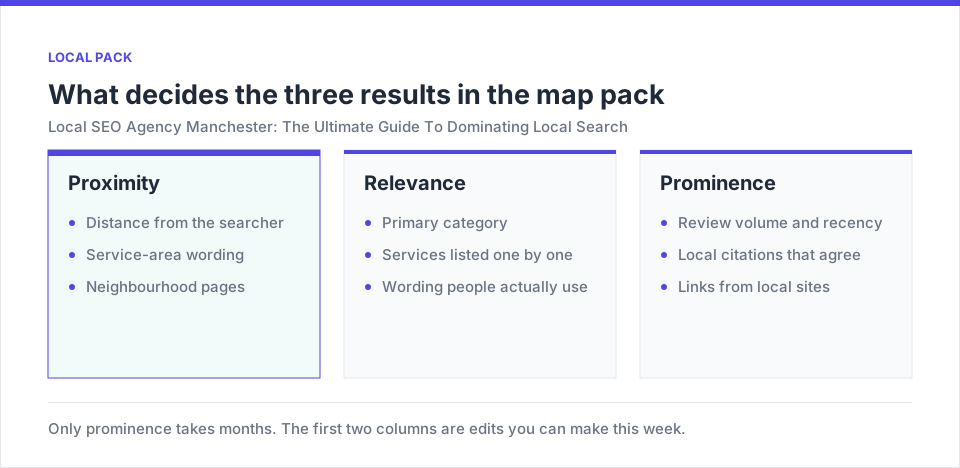
For the Local Pack side of this, the local SEO guide covers what to fix and how to track it in Semalt.
Measurement Cadence And What-If Planning
Set a rhythm that avoids overburdening teams while delivering steady progress. A practical cadence includes monthly Guardian Dashboard reviews by geography, quarterly What-If planning to stress-test budget scenarios, and biannual governance audits to refresh Activation Briefs, dashboards, and trails. What-If planning should model district growth, GBP health changes, or shifts in user behaviour, allowing the business to respond quickly while maintaining four-surface cohesion across Web, Images, News, and Hub.
A Practical 90-Day Geography-Focused Rollout
- Weeks 1-2: Define geography footprint and baseline maturity. Document district maps, establish GBP health baselines by geography, and prioritise activation by surface for top districts.
- Weeks 3-4: Build Activation Briefs by surface. Create templates linking district signals to Web, Images, News, and Hub actions per district overlay.
- Weeks 5-6: Configure Guardian Dashboards by geography. Establish district views with surface filters and data feeds to visualise health and ROI.
- Weeks 7-8: Launch district landing pages and hub resources. Publish district depth content, local FAQs, maps, and testimonials tied to geography.
- Weeks 9-12: Governance cadence and What-If planning. Implement monthly governance reviews, quarterly What-If scenarios, and regulator-ready reporting templates that tie district actions to ROI.
Manchester SEO AI offers ready-to-use artefacts and templates that can be customised by geography. Review the Service Portfolio for Activation Briefs and Guardian Dashboards, and book a strategy session through the Contact page to tailor a geography-aware rollout that sustains four-surface maturity across Web, Images, News, and Hub.
Measurement, Governance And ROI For Local SEO In Manchester
In a district-aware local SEO programme, measurement and governance are the levers that convert activity into durable, regulator-ready outcomes. This Part concentrates on attributing proximity signals to tangible actions by geography, so Manchester brands can demonstrate clear ROI across four surfaces: Web, Images, News, and Hub. The approach blends district depth with a disciplined governance cadence, ensuring findings are auditable and decisions traceable for leadership and regulators alike.
Defining ROI By Geography
ROI in local SEO is a constellation rather than a single number. For each Manchester district, focus on four pillars that reflect both visibility and conversion potential: proximity-led visibility, engagement on district pages and surfaces, action uptake (calls, forms, directions, bookings), and revenue impact linked to district activity. When ROI is framed by geography, leadership can compare district performance on a like-for-like basis and justify resource allocation with regulator-friendly transparency.
- Nearby visibility: Local packs, Maps impressions, and GBP health by geography signal discovery strength in each district.
- Engagement quality: Time on district pages, page depth, and interaction rates across Web, Images, News, and Hub help quantify user interest by area.
- Action rates by district: Calls, form submissions, directions requests, and store visits attributed to district campaigns.
- Revenue and ROI by geography: Inquiries converted, bookings completed, and revenue lift traced to district-level activations across surfaces.
Translating these metrics into a geography-based ROI narrative requires provenance: document the journey from discovery to action with clear data lineage so executives can see how district signals culminate in business results.
Four-Surface Dashboards And Geography
A governance-forward dashboard architecture ties each district footprint to four surfaces. For every geography, combine Web, Images, News, and Hub metrics to answer: What changed this month by district? Which surface delivered the strongest ROI by geography? Are we maintaining regulator-ready reporting across districts? Guardian Dashboards by geography offer live health signals, while Activation Briefs by surface translate insights into concrete actions by district.
- Nearby visibility metrics by district: GBP health, Maps presence, local packs, and proximity accuracy.
- Engagement indicators by surface: Page views, interactions, image views, and news engagement at the district level.
- Conversion signals by geography: Phone calls, form submissions, directions, and store visits linked to district campaigns.
- Cross-surface attribution: Link four-surface actions to district ROI, supported by data lineage trails that regulators recognise.
To operationalise this, deficits and opportunities must be visible in governance artefacts: Activation Briefs by surface, Guardian Dashboards by geography, and Provenance Trails for data lineage. See our Service Portfolio for ready-to-use templates and archive a quarterly ROI review that discusses district performance with stakeholders.
Governance Artefacts That Drive Clarity
Three artefacts anchor regulator-ready reporting by geography and surface. Activation Briefs by surface map district signals to concrete actions across Web, Images, News, and Hub. Guardian Dashboards by geography visualise surface health, district visibility, and ROI, enabling rapid governance decisions. Provenance Trails document data lineage, linking discovery through to reporting to demonstrate auditability and accountability.
- Activation Briefs by surface: Structured plans that connect district signals to specific Web, Images, News, and Hub actions for each district overlay.
- Guardian Dashboards by geography: Real-time visuals showing district health, surface performance, and ROI by district.
- Provenance Trails: End-to-end data lineage records that support regulator-ready audits across districts.
These artefacts are not merely reporting tools; they are the governance DNA that keeps four-surface activation coherent as districts evolve. Use them to justify budgets, prioritise district initiatives, and communicate progress to senior leadership.
Measurement Cadence And What-If Planning
Adopt a cadence that sustains momentum without overburdening teams. A practical rhythm includes monthly Guardian Dashboard reviews by geography, quarterly What-If planning sessions to stress-test budget scenarios, and biannual governance audits to refresh Activation Briefs, dashboards, and provenance trails. What-If planning should simulate GBP updates, district growth, or changing user behaviour, ensuring the organisation can respond quickly while preserving four-surface harmony by geography.
A Practical 90-Day Geography-Focused Rollout
- Weeks 1–2: Define geography footprint and baseline maturity. Document district maps, establish GBP health baselines by geography, and prioritise activation by surface for top districts.
- Weeks 3–4: Build Activation Briefs by surface. Create templates linking district signals to Web, Images, News, and Hub actions per district overlay.
- Weeks 5–6: Configure Guardian Dashboards by geography. Set up district views with surface filters and data feeds to visualise health and ROI.
- Weeks 7–8: Launch district landing pages and hub resources. Publish district depth content, local FAQs, maps, and testimonials tied to geography.
- Weeks 9–12: Governance cadence and What-If planning. Implement monthly governance reviews, quarterly What-If scenarios, and regulator-ready reporting templates that tie district actions to ROI.
With a governance-forward partner, you’ll gain a district-aware blueprint that scales four-surface maturity by geography, delivering early wins in district visibility and local inquiries. Explore our Service Portfolio for activated artefacts and book a strategy session via the Contact page to tailor a geography-centric rollout for Manchester.
Next Steps: Getting Started With A Manchester SEO Expert
A well-structured partnership with a local SEO agency Manchester expert translates district depth and four-surface activation into durable visibility, regulator-ready reporting, and measurable ROI. This final part provides a practical, action‑or‑action plan to move from decision to delivery with Manchester SEO AI as your governance-forward partner. The goal is a repeatable, auditable process that scales across City Centre, Salford Quays, Didsbury, Ancoats and surrounding districts while keeping Web, Images, News, and Hub in harmonious alignment.
1) Clarify Your Discovery Brief And Geography Footprint
Begin with a concise discovery brief that identifies which Manchester districts you intend to influence and the four-surface maturity level you aim to achieve in each. Clarify goals by geography, such as increased GBP health in City Centre or higher district page engagement in Ancoats. This geographic framing guides activation briefs by surface and keeps governance artefacts tightly aligned to district needs.
Ask your prospective partner to produce a district map showing target areas, a baseline set of KPIs by district, and a governance plan that includes activation briefs, guardian dashboards, and provenance trails. This clarity sets expectations and provides regulators with a transparent audit trail from day one.
2) Request A Free Initial Site Audit And Strategy Session
Ask for a complimentary site audit that evaluates NAP consistency, GBP health by geography, district landing pages, and local signal integrity across four surfaces. A follow‑up strategy session should translate audit findings into concrete activation plans, with district depth stitched into four-surface roadmaps. Use these outputs to validate the agency’s capability to deliver regulator-ready reporting and district-specific ROI, a hallmark of governance-forward practice.
Where to start the conversation: review the Service Portfolio for Activation Briefs by surface and district examples, and book a strategy session via the Contact page. Also examine sample templates available on the Service Portfolio to understand artefact formats and dashboards you can expect.
3) Plan A Comprehensive 90‑Day Rollout By Geography
Translate the discovery and audit outcomes into a staged rollout that markets four-surface maturity by geography. A practical template includes: defining district footprints, delivering Activation Briefs by surface, configuring Guardian Dashboards by geography, and establishing Provenance Trails for data lineage. The plan should also set district‑level KPIs tied to ROI, with What‑If planning sessions scheduled to test budget scenarios and regulatory changes.
- Weeks 1–2: Finalise district footprint and baseline maturity, confirm GBP health baselines by geography, and prioritise districts for initial activation.
- Weeks 3–4: Create Activation Briefs by surface for Web, Images, News, and Hub tied to district overlays.
- Weeks 5–6: Deploy Guardian Dashboards by geography, linking metrics to district ROIs.
- Weeks 7–9: Publish district landing pages and hub resources with depth content, case studies, and local testimonials.
- Weeks 10–12: Establish governance cadence with What‑If planning, regular reviews, and regulator-ready reporting formats.
Manchester SEO AI can supply ready‑to‑use artefacts and customisation options to accelerate this rollout. The emphasis remains on district depth, four‑surface coherence, and auditable ROI by geography.
4) Establish A Robust Onboarding And Governance Framework
The onboarding phase should deliver a governance‑forward playbook that maps each district overlay to four surfaces. Include Activation Briefs by surface, Guardian Dashboards by geography, and Provenance Trails for data lineage. Define a clear handover plan that equips internal teams to maintain four‑surface momentum, with scheduled governance reviews and What‑If planning incorporated into the routine.
Important onboarding questions to address: Which artefacts will be produced for each district overlay? How will What‑If planning integrate with governance cadences? What is the timeline for achieving regulator-ready reporting across districts?
5) Understand Budget Expectations And ROI By Geography
Budget planning should reflect district breadth and governance complexity. Expect pricing to scale with the number of districts, surface maturity, and the level of artefact production. A well-structured proposal from a Manchester expert will include: district footprints, explicit deliverables by surface and geography, onboarding costs, ongoing monthly fees, and a defined What‑If planning cadence. It will also feature a transparent path to ROI by geography, demonstrated through provenance trails and regulator-friendly dashboards.
When evaluating proposals, look for clear evidence of four‑surface interplay by geography, with dashboards and artefacts that can be reviewed in leadership meetings and audits. This clarity helps avoid scope creep and guarantees a trackable route to durable local visibility.
6) What To Ask Before You Sign The Contract
- How do you map district signals to each surface? Request concrete Activation Briefs by surface and geography to understand deployment, success metrics, and reporting cadence.
- What artefacts will you provide for regulator-ready audits? Expect Activation Briefs by surface, Guardian Dashboards by geography, and Provenance Trails documenting data lineage.
- How will What‑If planning be integrated? Look for a structured cadence with monthly governance reviews and a library of scenarios for regulatory changes or district dynamics.
- What is the expected time‑to‑value by district? Ask for a phased rollout plan with milestones and measurable ROI by geography.
- How will success be measured across four surfaces? Ensure KPIs cover district visibility, GBP health by geography, local inquiries, and cross-surface conversions with multi‑surface attribution.
Next Steps: Embedding Four‑Surface Momentum In Manchester
With the right governance framework and a district-focused plan, your four‑surface activation will scale smoothly across Manchester. Use activation artefacts to communicate progress to stakeholders, while What‑If planning keeps you prepared for regulatory or market shifts. A dependable Manchester partner can tailor templates and dashboards to your districts, helping you demonstrate ROI by geography and maintain regulator-ready reporting throughout the engagement. For a practical starting point, explore the Service Portfolio and book a strategy session via the Contact page to tailor a Manchester‑focused plan that aligns Web, Images, News, and Hub across districts.