Introduction to Technical SEO Manchester
Manchester businesses face a densely competitive local landscape where proximity signals, accurate business data, and fast, secure websites translate directly into visibility and conversions. The Manchester SEO AI approach combines rigorous technical SEO fundamentals with a governance-driven framework. We use CORA Trails to capture locale rationales behind each district modifier and Translation Provenance to preserve authentic Manchester terminology across updates. This foundation ensures your technical SEO not only improves rankings but also remains auditable and regulator-friendly as you scale across Greater Manchester and surrounding suburbs.
Technical SEO in Manchester starts with crawlability, indexability, site architecture, speed and security. When these elements are sound, search engines can discover, understand and index your pages efficiently. This creates a reliable platform for district pages, product listings, and Google Business Profile content to work in concert, delivering durable near‑me visibility in areas like Manchester City Centre, Chorlton, Didsbury, and Salford Quays.
What makes Manchester‑specific technical SEO different
Local searches in Manchester hinge on authentic district signals. Users often combine district names with venues, transport routes and landmarks. A Manchester‑focused technical SEO programme should align Local Pages (LPs) and Canonical Local Pages (CLPs) with Google Business Profile posts and knowledge panels, while embedding Translation Provenance so terminology remains recognisable to readers across the city. A robust framework also documents why each district modifier exists, enabling leaders to replay decisions if market conditions shift or new suburbs emerge.
For practical templates and dashboards, visit the Manchester Services hub or book a scoping discussion via the Contact Page.
Core technical signals that matter in Manchester
The core signals that influence Manchester rankings are interdependent. They include:
- GBP hygiene: precise business categories, accurate hours, service areas, and timely posts that reflect Manchester district realities.
- LPs and CLPs: district‑focused pages that align with GBP content and authentic Manchester proofs.
- NAP consistency: uniform brand name, address, and phone number across Manchester surfaces to reinforce trust.
- Proximity signals: precise addresses, nearby landmarks, and transport references that help users locate you quickly within a district.
- Reviews and reputation: credible, timely responses that improve reader trust and conversions.
These signals gain strength when you establish an auditable localisation history. CORA Trails records the rationale behind each district modifier, while Translation Provenance ensures consistent Manchester terminology across updates. This provenance backbone supports expansion to more districts and service areas without eroding reader trust.
Practically, a hub‑and‑spoke approach helps ensure GBP posts, district pages and knowledge panels reinforce a coherent Manchester footprint. It also provides an auditable trail as you scale to additional districts, venues, and local events.
In Part 2, we’ll dive into Manchester keyword research, district content spines, and the practical content plan that underpins near‑me visibility across the city. For district‑ready templates and dashboards, explore the Manchester Services hub and initiate a scoping discussion via the Contact Page.
Getting started: practical first steps
- Audit GBP hygiene, LP/CLP depth, and NAP consistency across target Manchester districts.
- Identify 3–5 district proofs and map a concise district content spine that mirrors real Manchester geography.
- Set governance cadences: weekly surface health checks and monthly localisation-history reviews.
- Apply CORA Trails and Translation Provenance from day one to every district modifier.
- Launch district dashboards to monitor LP/CLP health, GBP engagement, and near‑me conversions.
Access ready‑to‑use templates and artefacts via the Manchester Services hub, and book a scoping discussion through the Contact Page to tailor a district‑aware plan for your portfolio.
What is Technical SEO and why it matters for Manchester businesses
Manchester businesses operate in a competitive local ecosystem where proximity signals, accurate business data, and fast, secure websites translate directly into visibility and conversions. At manchesterseo.ai we approach technical SEO with a governance-forward mindset. CORA Trails captures locale rationales behind each district modifier, while Translation Provenance preserves authentic Manchester terminology across updates. This framework creates a robust, auditable foundation that not only improves rankings but also supports regulatory readiness as you grow across Greater Manchester and its surrounding towns.
Technical SEO hinges on five core elements: crawlability, indexability, site architecture, page speed, and security. When these are addressed in a coherent, documented manner, search engines can discover, understand and index your content efficiently. This sets the stage for district pages, product feeds, and GBP content to work together to deliver durable near-me visibility across Manchester neighbourhoods such as Manchester City Centre, Chorlton, Didsbury, and Salford Quays.
Core technical elements that matter for Manchester
The following elements are interdependent and require ongoing governance to remain effective as your portfolio grows in Manchester:
- Crawlability: Ensure search engines can reach essential surfaces such as district LPs, CLPs, and GBP-linked content. Review robots.txt, internal links, and crawl error reports to prevent blockers that hinder discovery of near-me content.
- Indexability: Confirm that pages you want visible in search results are indexable. Resolve any noindex flags that should be removed and trim or consolidate low-value pages that dilute index coverage.
- Site architecture: Build a scalable hub-and-spoke structure that mirrors Manchester’s geography, with a clear content spine linking district proofs to category and product pages. This supports intuitive navigation for users and search engines alike.
- Page speed and performance: Prioritise fast loading across devices. Optimise images, leverage caching, and minimise render-blocking resources to improve user experience and ranking potential in mobile-heavy searches from local areas.
- Security and trust: Enforce HTTPS, maintain up-to-date certificates, and ensure secure handling of any user data encountered in local signals or feedback loops. Security is a tacit trust signal that can influence both rankings and conversions.
These signals gain strength when you maintain an auditable localisation history. CORA Trails records the rationale behind each district modifier, while Translation Provenance ensures Manchester terminology remains recognisable across updates. This provenance backbone supports expansion to more districts and service areas without eroding reader trust.
Why Manchester-specific considerations matter
Local searches in Manchester often combine district names with venues, transport routes and landmarks. A Manchester-focused technical SEO programme should align Local Pages (LPs) and Canonical Local Pages (CLPs) with GBP updates and knowledge panels while embedding Translation Provenance so terminology remains recognisable to residents across districts. A robust governance approach ensures decisions behind district modifiers are documented so leadership can replay them if market conditions shift or new suburbs emerge.
- Proximity signals must be accurately mapped to district surfaces to reinforce near-me interactions such as directions requests, maps clicks, and phone form submissions.
- Canonical strategy should prevent content duplication across district variants while preserving the authority of the primary surface.
- Indexing health should be monitored by district, ensuring high-value pages remain discoverable as the portfolio grows.
To operationalise, maintain a district-proof spine where each district page reflects authentic proofs—landmarks, transport cues, and local partnerships—validated by Translation Provenance. This ensures content remains credible as you scale to additional districts and events across Greater Manchester. For practical templates and dashboards, visit the Manchester Services hub or book a scoping discussion via the Contact Page to tailor a district-aware plan for your portfolio.
Implementing a practical 90-day Manchester plan
- Audit current Manchester footprint: verify GBP hygiene, LP/CLP depth, and NAP consistency across target districts.
- Define district proofs: identify 3–5 Manchester districts with near-me potential and map a concise district content spine that mirrors real local geography.
- Set governance cadences: implement weekly surface health tacticals and monthly localisation-history reviews to keep terminology stable and auditable.
- Embed provenance from day one: apply CORA Trails and Translation Provenance to every district modifier and update.
- Launch district dashboards for transparency: configure dashboards showing LP/CLP health, GBP engagement, and near-me conversions, with provenance artefacts visible to stakeholders.
Access ready-to-use templates and artefacts via the Manchester Services hub, and book a scoping discussion through the Contact Page to tailor a district-aware rollout for your portfolio. This governance-backed approach helps ensure proximity signals remain robust as Manchester expands.
Core technical signals: crawlability, indexability, and site structure
For Manchester businesses, a well-structured technical foundation underpins durable visibility. The governance-forward framework at Manchester SEO AI combines CORA Trails (locale rationales) with Translation Provenance (authentic Manchester terminology) to ensure crawlability, indexability, and site architecture remain auditable as you scale across districts and services. This part drills into the core signals and concrete practices that keep search engines and users moving smoothly through your Manchester surface network.
Crawlability is about making it easy for search engines to discover essential surfaces such as Local Pages (LPs), Canonical Local Pages (CLPs), and Google Business Profile (GBP) content that reflect Manchester’s district realities. It starts with clean, machine-friendly navigation and ends with assured visibility of district proofs in search results. When crawlability is sound, your district pages, product feeds, and GBP posts can be indexed in a timely, predictable manner, supporting near‑me searches across districts like Manchester City Centre, Chorlton, Didsbury, and Salford Quays.
Crawlability fundamentals for Manchester
- Robots.txt hygiene: Ensure you don’t block essential district LPs, CLPs, or GBP-linked content. Use robots.txt to prune low‑value surfaces while preserving crawl access to near‑me assets that readers rely on locally.
- Internal linking strategy: Build a hub‑and‑spoke network that mirrors Manchester’s geography, with clear pathways from the central hub to district spokes and then to product or service pages. This concentrates crawl budget where it matters most.
- Crawl budget discipline: Prioritise high‑value surfaces, prune thin content, and avoid extraneous URL parameters that fragment discovery across districts.
- Noindex governance: Apply noindex strategically, but never to district assets that underpin near‑me intent. Maintain an auditable plan showing why a page is indexed or deindexed in CORA Trails.
Operational practise hinges on documenting why each district modifier exists and how it supports reader journeys. Translation Provenance preserves authentic Manchester terminology across updates, while CORA Trails provides an auditable trail of localisation decisions. This combination helps governance stakeholders replay and justify changes if markets shift or new suburbs emerge.
Indexability and canonical strategy in Manchester
Indexability determines which pages appear in search results. A disciplined approach ensures that the pages you want visible are indexable, while duplicates are controlled through canonicalisation. In Manchester, this means aligning LPs, CLPs, and GBP content so that authoritative district surfaces accumulate and maintain relevance without content cannibalisation.
- Indexing health by district: Monitor which district pages are indexed and identify any “noindex” flags that should be removed from high‑value assets.
- Canonical discipline: Use canonical tags to prevent duplicate content across district variants while preserving the authority of the primary surface. Tie each district page to its correct canonical URL reflecting the real geography.
- Content differentiation: Ensure district variants offer distinct proofs and angles (landmarks, transport cues, local partnerships) so you avoid thin duplication while strengthening proximity signals.
Translation Provenance plays a crucial role here too. By validating terminology against authentic Manchester language, you prevent terminology drift as you expand to more districts. CORA Trails records the rationale behind each modifier, enabling leadership to replay decisions in audits or regulatory reviews and ensuring consistent surface language as your portfolio grows.
Site architecture: hub, spokes, and scalable governance
A scalable site architecture mirrors Manchester’s geography and shopper journeys. A central hub page should anchor core services, with district spokes feeding LPs, CLPs, and GBP content. This hub‑and‑spoke model helps search engines interpret the geography behind intent and supports intuitive navigation for readers and crawlers alike.
- Design the taxonomy: Create top-level categories aligned to service areas and district proofs, with district pages acting as spoke surfaces to category and product pages.
- Link structure and navigation: Maintain consistent navigation paths from hub to districts to products, avoiding dead ends that waste crawl effort.
- Canonical alignment across surfaces: Ensure district LPs/CLPs point to the correct canonical in the hub, so authority is preserved and duplication is minimised.
- Structured data consistency: Apply LocalBusiness, Product, Offer, and Breadcrumb schemas coherently across hub and spokes to support rich results and local relevance.
To operationalise, assemble a Manchester district spine with authentic proofs per district and a well-mapped content spine that mirrors the geography. Translation Provenance ensures terminology remains recognisable, while CORA Trails captures the rationale behind every district modifier. Governance dashboards should make these artefacts visible to stakeholders, creating a living record that supports audits and regulatory reviews as you grow your Manchester footprint.
Practical 90‑day plan for core signals
- Audit current Manchester footprint: verify the depth of LPs/CLPs, GBP hygiene, and NAP consistency across the target districts.
- Define the district spine: identify 3–5 districts with near‑me potential and map a concise district content spine reflecting authentic proofs.
- Establish governance cadences: implement weekly surface health tacticals and monthly localisation-history reviews, with provenance artefacts visible in dashboards.
- Embed provenance from day one: apply CORA Trails and Translation Provenance to every district modifier and update.
- Launch the district spine and GBP alignment: publish the hub and initial district spokes with district proofs that mirror GBP content.
For ready‑to‑use templates, dashboards, and governance artefacts that support a district‑aware architecture, visit the Manchester Services hub and book a scoping discussion via the Contact Page to tailor an auditable plan that travels with your Manchester growth.
Page speed and performance optimisation
In Manchester’s competitive local landscape, speed is a differentiator. A fast, resilient website not only pleases readers but also earns stronger proximity signals from search engines. Our governance-forward approach at manchesterseo.ai ties Page Speed and Core Web Vitals to a district-aware surface network, using CORA Trails to justify locale rationales and Translation Provenance to preserve authentic Manchester terminology across updates. When speed is prioritised, Local Pages, Canonical Local Pages, and GBP posts work together to deliver durable near-me visibility for districts like Manchester City Centre, Chorlton, Didsbury, and Salford Quays.
Why speed matters for Manchester’s local surfaces
Speed directly affects user experience and engagement. Core Web Vitals—Largest Contentful Paint (LCP), First Input Delay (FID), and Cumulative Layout Shift (CLS)—are not abstract metrics; they are real signals that influence click-through, on-page interactions, and conversions in near-me searches. For Manchester campaigns, fast initial renders mean users in districts like Ancoats, Hulme, and Rusholme can access district proofs, GBP posts, and service information with minimal friction. Optimising speed also supports accessibility and regulatory expectations around data handling and transparency, especially as district proofs and translations evolve over time.
Key speed-related signals to optimise in Manchester
- Largest Contentful Paint (LCP): Target under 2.5 seconds on mobile and desktop for core landing surfaces that readers from Manchester use first.
- First Input Delay (FID): Minimise JavaScript blocking time so interactions such as maps, directions, or form submissions respond promptly.
- Cumulative Layout Shift (CLS): Maintain visual stability during page load, especially on district pages that load district proofs and GBP content.
- Render-blocking resources: Reduce or defer CSS and JavaScript that delay the initial render of critical content.
- Resource loading strategy: Prioritise above-the-fold content, lazy-load offscreen images, and optimise font loading to prevent layout shifts.
Practical optimisations for speed in Manchester sites
Image optimisation and media handling
Images often dominate page weight. Use modern formats (WebP or AVIF where supported), responsive images (srcset, sizes), and efficient compression. Define explicit width and height attributes to prevent layout shifts. Serve images via a content delivery network (CDN) with edge caching to minimise round-trips, particularly for district proofs that reference local landmarks or venues.
Caching, caching, and CDNs
Leverage HTTP caching headers and a reliable CDN to bring static assets closer to readers in Manchester’s multi-district environment. Consider cache-control and stale-while-revalidate strategies for frequently updated assets such as GBP posts or district proofs, ensuring readers experience fresh content without waiting for full re-fetches. A well-configured CDN also helps maintain low latency for users in different parts of Greater Manchester.
Minification and bundling of assets
Minify CSS and JavaScript, remove unused code, and bundle scripts to reduce the number of HTTP requests. Use code-splitting to ensure that only essential scripts are loaded on initial page load, with non-critical features loaded later. For Manchester sites with district spines, this reduces the risk of rendering delays when district proofs load or GBP integrations initialise.
Mobile-first optimisation and server configuration
With many Manchester users browsing on mobile, prioritise responsive design and fast mobile rendering. Consider server configurations that support HTTP/2 or HTTP/3, TLS 1.3, and efficient server-side rendering (SSR) for JavaScript-heavy pages where appropriate. Ensure that critical pages load swiftly on 4G and 5G networks, and that font loading is optimised to avoid additional delays in the render path.
Critical rendering path and font loading
Analyse the critical rendering path to expose which resources block initial paint. Inline critical CSS for above-the-fold content when feasible, and load fonts using font-display: swap or optional strategies to prevent long blocking times while typography loads. District pages that reference unique typography should be considered early in the loading sequence to avoid visible delays that could affect user perception of local authority and trust.
Measurement, governance, and dashboards
Measure improvements with both lab and field data. Use Lighthouse, PageSpeed Insights, and Chrome UX Report to track LCP, CLS, and TTI across Manchester districts. Pair these with user-centric metrics such as time-to-interact, scroll depth, and near-me actions (directions requests, phone calls, and form submissions). A governance layer, strengthened by CORA Trails and Translation Provenance, ensures every speed optimisation rationale is auditable and aligned with district proofs. Dashboards should surface LP health, GBP engagement, and speed metrics by district to empower leadership decisions and regulator readiness.
A practical 90-day plan for speed improvements
- Audit current performance by district: identify top offenders affecting LCP, CLS, and FID, prioritising district pages with high traffic or near-me intent.
- Prioritise optimisations by impact: combine image optimisation, caching, and critical rendering path improvements to maximise near-term gains.
- Implement staged improvements: apply changes in staging, validate with CORA Trails to justify district rationales, and roll out to live surfaces after testing.
- Monitor uplift and iterate: track CWV trends and user interactions by district, updating governance artefacts to reflect new findings.
- Review governance cadence: monthly localisation-history reviews to ensure Translation Provenance reflects any typography or terminology changes across districts.
Templates, dashboards, and governance artefacts to support this 90-day plan are available via the Manchester Services hub. To tailor a speed optimisation programme for your portfolio, book a scoping discussion through the Contact Page and align the plan with your district footprint.
Security, hosting, and reliable infrastructure
Manchester businesses rely on a resilient infrastructure to maintain near-me visibility and user trust. A governance-driven approach to security and hosting underpins every technical SEO initiative, from Local Pages and GBP to district proofs. At manchesterseo.ai we embed CORA Trails for locale rationales and Translation Provenance for authentic Manchester terminology across updates, ensuring regulator-friendly provenance as your portfolio scales.
This infrastructure framework directly supports technical SEO Manchester initiatives, giving you a robust, auditable platform for nearby queries and district-scale expansions.
Security starts with encryption everywhere (HTTPS) and robust certificate management. Sites should enforce TLS 1.2 or higher, adopt HTTP Strict Transport Security (HSTS), and periodically verify cipher suites. Automated certificate renewal workflows reduce downtime risk and maintain trust for districts including Manchester City Centre, Salford Quays, and Didsbury.
Read next: Technical SEO agency Manchester · SEO services in Manchester: growth
Infrastructure reliability goes beyond code. A well-governed hosting strategy uses scalable cloud platforms, multi-region failover, and a content delivery network (CDN) to ensure fast delivery of district proofs, GBP content, and hub pages across Greater Manchester. A Manchester-specific plan should align with the CORA Trails and Translation Provenance to justify choices and ensure auditable provenance.
Security and trust signals that matter for local SEO
- HTTPS everywhere and HSTS: protect data in transit and signal trust to users and search engines.
- WAF and vulnerability management: implement a web application firewall, regular scans, and patch management; link to CVEs; document remediation steps in CORA Trails.
- Access control and data minimisation: least-privilege for teams handling GBP, LP, CLP data; avoid unnecessary data exposure that could affect privacy compliance.
- Backups and disaster recovery: routine backups, tested restore processes, and DR drills to minimise downtime and preserve indexability during outages.
Hosting and performance architecture
Edge caching via CDN improves latency for near-me searches across Manchester districts. Use geo-aware routing and load balancers to distribute traffic across healthy instances. For dynamic content, ensure caching is granular and invalidated on GBP updates or district-proof changes. Use scalable hosting that can adapt to traffic spikes from events in Manchester, like football matches or concerts, without compromising crawlability or user experience.
Measurement and monitoring for governance
Monitoring should cover uptime, server response times, error rates, and security events. Pair technical metrics with user-centric signals such as time-to-interact and near-me actions in district contexts. Logging should be centralised with secure retention policies; CORA Trails and Translation Provenance should be updated to reflect any changes to security or hosting decisions. Dashboards should present LP health, GBP engagement, and district-proof latency in a single view for leadership reviews.
Practical 90-day implementation plan for Manchester
- Audit current hosting and security posture: assess HTTPS configuration, certificates, uptime, backups, and incident response readiness across Manchester districts.
- Standardise security controls across surfaces: enforce HSTS, CSP, X-Content-Type-Options, and secure headers; document rationale in CORA Trails.
- Implement load-balanced, geo-redundant hosting: set up auto-scaling groups and cross-region failover; ensure DR drills.
- Set up CDN and caching policies: configure edge caching, cache headers, and purging rules tied to GBP updates.
- Establish monitoring and incident response: create dashboards for LP/CLP/GBP health and security alerts; run quarterly incident drills.
To access practical templates, dashboards, and governance artefacts that support a district-aware infrastructure plan for Manchester, visit the Manchester Services hub, and book a scoping discussion via the Contact Page to tailor a robust hosting and security programme for your portfolio.
Security, hosting, and reliable infrastructure for Manchester Technical SEO
In Manchester, the resilience of your technical foundation is as important as the signals you optimise. A governanced approach to security, hosting, and infrastructure ensures that proximity signals, Local Pages, and Google Business Profile data stay trustworthy, available, and auditable as your district footprint expands. The CORA Trails framework captures locale rationales behind district modifiers, while Translation Provenance preserves authentic Manchester terminology across updates, supporting regulator‑friendly provenance as you scale within Greater Manchester and beyond.
Key security disciplines begin with encryption everywhere, robust certificate management, and threat mitigation. Enforce HTTPS across the board, adopt HTTP Strict Transport Security (HSTS), and maintain up‑to‑date TLS configurations. A Web Application Firewall (WAF) and routine vulnerability management help protect district pages, GBP connections, and data capture forms that underpin near‑me interactions across districts like Manchester City Centre, Chorlton, and Didsbury.
- HTTPS everywhere and HSTS: These signals build user trust and reinforce search engine confidence in your surfaces.
- Certificate management and renewal discipline: Automated renewal reduces downtime risk and keeps trust intact for district proofs and GBP integrations.
- Web application firewall and ongoing vulnerability management: Regular scans, CVE tracking, and documented remediation steps in CORA Trails.
- Data minimisation and access controls: Least‑privilege access for teams handling GBP, LPs, CLPs, and data feeds.
Hosting architecture and performance foundations
A robust hosting environment underpins crawlability, indexability, and user experience at district scale. Implement multi‑region failover, geo‑aware routing, and resilient server configurations to maintain uptime during football matches, events, or regional outages. A reputable Content Delivery Network (CDN) with edge caching delivers GBP content and district proofs with low latency to readers in Ancoats, Hulme, Rusholme, and other key districts. Prioritise HTTP/2 or HTTP/3, TLS 1.3, and, where appropriate, edge rendering for JavaScript‑heavy surfaces so that core content loads quickly for local users.
- Edge caching strategy: Define cache‑control policies and purge rules that respond to GBP updates and district proofs in near real time.
- Caching granularity: Differentiate static assets from dynamic GBP content to avoid unnecessary invalidations.
- Server configuration: favour modern protocols and enable server‑side enhancements that reduce render delays for district pages.
- Structured data alignment across surfaces: Ensure hub pages, district spokes, and GBP posts share a coherent data layer for fast, accurate indexing.
Observability, governance, and auditable provenance
A measurable infrastructure is transparent infrastructure. Establish a central observability stack to monitor uptime, latency, error rates, and security events. Centralised logging, anomaly detection, and dashboards are essential for leadership oversight and regulator readiness. CORA Trails documents the locale rationales behind every district modifier, while Translation Provenance maintains recognisable Manchester terminology across updates. Dashboards should surface LP health, GBP engagement, and district‑level performance with provenance artefacts visible to stakeholders.
- Uptime and latency by district: quick visibility into any regional degradation that could impact near‑me interactions.
- Error rates and incident response: track, triage, and resolve issues with auditable timelines.
- Security events and remediation: log CVEs, patches, and policy changes in CORA Trails.
- Provenance visibility: ensure district modifiers, translations, and governance decisions are traceable for audits.
A practical 90‑day plan for secure, scalable Manchester hosting
- Audit current posture: review GBP hygiene, LP/CLP depth, NAP consistency, and hosting resilience across target districts.
- Enforce security baseline: implement HTTPS everywhere, HSTS, and standard security headers; validate with CORA Trails.
- Standardise hosting and CDN policies: set edge caching rules, purge workflows, and cross‑region failover protocols.
- Improve observability: deploy dashboards that surface LP health, GBP engagement, and district latency by surface with provenance artefacts.
- Document provenance from day one: capture localisation rationale and terminology choices in CORA Trails and Translation Provenance for auditable reviews.
Access practical templates, dashboards, and artefacts via the Manchester Services hub, and book a scoping discussion through the Contact Page to tailor a district‑aware hosting and security programme for your portfolio.
Measuring success and adapting to change
Beyond traditional uptime metrics, tie security and hosting outcomes to reader trust, conversions, and regulator readiness. Use CORA Trails to justify every district modifier and Translation Provenance to preserve authentic Manchester terminology through updates. Regular reviews should feed improvement back into the spine, ensuring that proximity signals remain robust as your district footprint grows. For ready‑to‑use templates and governance artefacts that support a district‑aware infrastructure plan, explore the Manchester Services hub or book a scoping discussion via the Contact Page.
Internal link sharing and ongoing education about security posture help keep your Manchester technical SEO resilient. If you’re evaluating a partner to implement this infrastructure, consider providers who demonstrate clear governance cadences, auditable provenance, and practical experience with Manchester’s district signals. The Manchester Services hub can be a starting point to align on governance artefacts and dashboards that colleagues and auditors can trust.
Structured data, markup and local signals in Manchester
Structured data and schema markup create explicit signals that help search engines understand location-based intent and local commerce. In Manchester, a district-aware approach uses CORA Trails to justify district modifiers and Translation Provenance to preserve authentic Manchester terminology across updates, ensuring stable localisation history as you scale the portfolio of Local Pages (LPs), Canonical Local Pages (CLPs) and GBP assets. When implemented thoughtfully, structured data strengthens proximity signals and accelerates near-me visibility across Manchester's diverse districts.
Key structured data types to consider include LocalBusiness, Product and Offer for services or goods, Review for customer feedback, FAQ for common questions, Breadcrumbs to improve navigational context, and Organisation for the overarching company. Each type should be positioned to reinforce district proofs, helping readers and search engines recognise the authentic Manchester surface as you expand locally.
Key structured data types for Manchester
- LocalBusiness: Capture business name, physical address, geocoordinates, opening hours, contact details and service areas that map to Manchester districts such as City Centre, Chorlton, and Didsbury.
- Product and Offer: Reflect district-specific services or products with price ranges and availability tied to local stock or service delivery in each district.
- Review: Mark up customer feedback to support star ratings and location-specific sentiment that boosts trust in district pages and GBP posts.
- FAQ: Answer common Manchester-first questions (e.g., transport access, parking, hours) to surface rich results for local intent.
- Breadcrumb: Provide clear navigation paths that mirror Manchester geography from hub to district spokes, reinforcing the hub-and-spoke model.
To ensure consistency, align each district LP and CLP with a corresponding LocalBusiness entry, and connect product or service data to district proofs validated by Translation Provenance. CORA Trails records the rationale behind every modifier, enabling leadership to replay localisation decisions during audits and regulatory reviews while maintaining recognisable Manchester terminology across updates.
Practical implementation involves embedding JSON-LD in pages, applying district-specific schemas, and validating markup with authoritative tools. For best results, implement separate markup blocks for LPs, CLPs, and GBP-connected pages, ensuring the data accurately mirrors the real-world district landscape. This governance-backed approach supports near-me visibility as you scale across Greater Manchester and beyond.
Best practices for Manchester schema and local signals
- Map district to surface: Create a direct mapping from district pages to LocalBusiness and related schemas so readers see consistent geography in search results.
- Keep data fresh and verifiable: Update opening hours, addresses, and service areas promptly; attach CORA Trails rationale to justify changes in audits.
- Use district-specific proofs in markup: Include landmarks, transport cues, and local partnerships within structured data where appropriate to strengthen proximity signals.
- Validate across surfaces: Ensure LPs, CLPs, and GBP posts share coherent data layers, reducing duplication and improving content authority across districts.
- Avoid markup drift: Maintain Translation Provenance to prevent terminology drift as you expand to new districts or events; this preserves recognisable language for readers and regulators alike.
Operationally, establish a district data spine where each district page surfaces authentic proofs (landmarks, routes, local partnerships) within its schema. Link this spine to GBP posts so proximity signals are reinforced across surfaces. The CORA Trails provenance and Translation Provenance work in tandem to ensure the data narrative remains auditable and recognisable as you grow your Manchester footprint.
90-day rollout: practical steps for structured data
- Audit district footprint and data readiness: inventory LPs/CLPs and GBP connections for core Manchester districts and verify LocalBusiness markup accuracy.
- Create district schemas and proofs: implement district-specific LocalBusiness, Product/Offer, and Review markup tied to authentic proofs.
- Validate markup with tooling: run Google Rich Results Test and Schema Markup Validator to ensure accurate renderings and avoid errors.
- Publish and monitor: deploy markup across hub and spokes, track proximity signals, and adjust based on reader engagement and GBP interactions.
- Audit and iterate: document localisation decisions in CORA Trails and Translation Provenance; update dashboards for regulator-readiness and leadership visibility.
Ready-to-use governance artefacts, templates, and validation checks are available via the Manchester Services hub. To tailor a district-specific structured data programme for your portfolio, book a scoping discussion through the Contact Page and align with a district-aware strategy that strengthens local signals and reader trust across Greater Manchester.
Indexing controls: XML sitemaps, robots.txt and crawl budget
For Manchester businesses, ensuring search engines efficiently crawl and index the right surfaces is a foundational governance task. The CORA Trails framework captures locale rationales behind each district modifier, while Translation Provenance preserves authentic Manchester terminology across updates. When indexing controls are designed and audited, Local Pages (LPs), Canonical Local Pages (CLPs), and Google Business Profile (GBP) assets form a coherent network that reliably surfaces near‑me queries across districts such as Manchester City Centre, Chorlton, Didsbury, and Salford Quays. This part of the Manchester Technical SEO series focuses on practical, auditable practices for XML sitemaps, robots.txt hygiene, and crawl budget management that scale with your district footprint.
Indexing controls begin with XML sitemaps. A well-planned sitemap strategy communicates to search engines which district proofs, product surfaces, and GBP‑linked assets deserve priority indexing. In Manchester, where district pages carry distinctive proofs—landmarks, transport cues, and local partnerships—the sitemap should mirror the geography with a clear hub‑and‑spoke spine. This approach not only speeds up discovery of high‑value surfaces but also creates an auditable trail of decisions. CORA Trails explains why each district modifier exists, while Translation Provenance ensures district terminology remains recognisable as you scale.
XML sitemaps: structure, cadence, and validation in Manchester
A robust sitemap strategy for Manchester typically comprises a main sitemap for core hub pages and multiple district sitemaps that feed into a sitemap index. The hub sitemap contains the central services and LP/CLP anchors, while district sitemaps surface proofs that anchor near‑me intent in each locality. Regular updates are essential as you add districts, refresh GBP posts, or adjust opening hours and service areas. A disciplined cadence—weekly for real‑time updates to GBP content and monthly for district proofs—keeps search engines aligned with reader expectations. Use CORA Trails to justify why a district surface exists and Translation Provenance to preserve authentic Manchester terminology in every update.
- Main sitemap and district indexes: Maintain a primary sitemap (e.g., /sitemap.xml) that references district sitemaps (e.g., /sitemap-districts1.xml, /sitemap-districts2.xml) and hub pages, creating a clear crawl‑path from the city hub to district surfaces.
- Include LPs, CLPs, and GBP links: Ensure district LPs, CLPs, and GBP‑related pages are included where appropriate, with explicit priority signals for near‑me pages and essential district proofs.
- Update cadence and validation: Validate your sitemap with Google Search Console and other tooling after updates to confirm that new pages are discoverable and existing pages remain correctly indexed.
- Avoid duplication within sitemaps: Use consistent canonical signals to prevent traffic dilution across district variants and hub pages.
Beyond technical accuracy, ensure your sitemap structure aligns with Translation Provenance. District proofs—such as references to specific venues, routes, or local partnerships—should be reflected in the sitemap as distinct, indexable pages. CORA Trails documents the rationale behind each district modifier, enabling governance teams to replay decisions if market conditions shift or new suburbs emerge. A well‑documented sitemap also supports regulator readiness and transparency when presenting growth plans to stakeholders.
Robots.txt hygiene: protecting crawl efficiency while safeguarding sensitive assets
Robots.txt remains a blunt but powerful tool to guide crawlers. In Manchester, the objective is to block access to non‑public areas while allowing Google’s bots to reach pages that readers rely on. A disciplined approach avoids blocking essential district LPs, CLPs, or GBP content, which would otherwise hamper near‑me visibility. Regularly review Disallow rules to ensure they reflect current content priorities and privacy requirements. Document the decision rationale in CORA Trails so leadership can replay changes if the district footprint grows or new regulatory expectations arise.
- Protect sensitive assets: Block access to internal dashboards, staging environments, and user‑generated moderation pages that should not appear in search results.
- Preserve essential surfaces: Allow access to LPs, CLPs, GBP posts and knowledge panels that inform reader decisions about local services.
- Handle URL parameters smartly: If district pages rely on parameters for filters (e.g., district=Chorlton&service=coffee), consider canonical strategies or parameter handling rules so crawlers do not waste budget on low‑value combinations.
- Test and audit: Regularly test robots.txt changes using Google Search Console’s robots.txt Tester and reflect findings in CORA Trails.
Translation Provenance helps ensure terminology remains recognisable when changes are needed in robots policies. As districts evolve—new areas, new venues, or evolving service areas—the governance trail should remain transparent so executives can audit decisions and regulatory bodies can review the localisation history with confidence.
Crawl budget management: prioritising high‑value surfaces in Manchester
Crawl budget is the cap on how many pages a search engine will fetch in a given period. In a district‑heavy portfolio like Manchester, efficient use of crawl budget means search engines spend more time on high‑value assets and less on low‑value duplicates or thin pages. The key is to align internal linking, content depth, and canonical strategies so that the most important district proofs, GBP‑driven posts, and hub pages are crawled and indexed promptly. A well‑defined crawl budget strategy also supports transparency for audits and regulators when you expand to additional districts or new events in Greater Manchester.
- Prioritise high‑value surfaces: Establish a scoring method to identify LPs, CLPs, and GBP assets that demonstrate high user intent or strong proximity signals, and prioritise them in crawl plans.
- Prune low‑value content: Regularly audit thin content, old district variants, or outdated proofs; remove or consolidate where appropriate to free crawl capacity for more impactful pages.
- Strengthen internal linking: Build hub‑to‑district spokes and cross‑link from district pages to core category and product pages to concentrate crawl equity where it matters most.
- Optimize parameters and tracking pages: minimise parameter proliferation and separate tracking URLs from user‑facing content to reduce crawl waste.
- Monitor crawl metrics in dashboards: Use Search Console crawl stats and server logs alongside CORA Trails to validate that changes improve crawl efficiency and index coverage by district.
In Manchester, a district‑aware approach to crawl budget requires ongoing governance. Translation Provenance ensures that district proofs preserve recognisable terminology as you expand, while CORA Trails records the reasons behind every modification. Dashboards that surface LP health, CLP depth, and GBP engagement, with provenance artefacts visible to stakeholders, help leadership validate how crawl budget allocations translate into near‑me visibility and servicing outcomes.
Practical 90‑day rollout plan for indexing controls
- Audit current indexing posture by district: Map LPs, CLPs, and GBP assets; verify index coverage and ensure NAP consistency across target districts.
- Design district spine and sitemap strategy: Create a hub sitemap with district sub‑sitemaps; align with GBP content to reinforce proximity signals.
- Harmonise robots.txt governance: Establish and publish the rules for essential surfaces; ensure CORA Trails notes explain the rationale behind each decision.
- Implement crawl budget controls: Prioritise high‑value surfaces, prune low‑value content, and refine internal links to concentrate crawl equity where it matters most.
- Monitor and iterate: Set up dashboards that show LP health, CLP depth, GBP engagement, and crawl metrics by district; update CORA Trails during governance reviews.
Templates, dashboards, and governance artefacts to support this 90‑day plan can be accessed via the Manchester Services hub. To tailor a district‑aware indexing programme for your portfolio, book a scoping discussion through the Contact Page and ensure your approach travels with growth across Greater Manchester.
Measurement, governance, and ongoing improvement
Beyond the immediate technical tasks, a governance framework ties indexing controls to real business outcomes. Track proximity signals and near‑me actions by district, monitor GBP engagement, and assess index coverage improvements as you refine your sitemap and robots.txt rules. CORA Trails continues to justify why each district modifier exists, while Translation Provenance preserves authentic Manchester terminology across updates. Dashboards should present LP health, CLP depth, and GBP engagement with provenance artefacts, enabling leadership to replay decisions for audits or regulator reviews.
For ready‑to‑use templates and governance artefacts that support a district‑aware indexing programme, revisit the Manchester Services hub and arrange a scoping discussion via the Contact Page to tailor your approach for sustained near‑me visibility across Greater Manchester.
URL structure, canonical tags, redirects and site architecture governance
For Manchester brands, a clean, well-governed URL structure is more than tidy housekeeping. It underpins crawl efficiency, canonical clarity, and scalable district expansions across Greater Manchester. Our governance-forward approach at manchesterseo.ai uses CORA Trails to capture locale rationales behind district modifiers and Translation Provenance to preserve authentic Manchester terminology through every update. When URLs, canonical tags, and redirects are designed with auditable governance, Local Pages (LPs), Canonical Local Pages (CLPs), and GBP-driven surfaces can grow without creating confusion for search engines or readers in districts like Manchester City Centre, Chorlton, Didsbury, and Salford Quays.
Core principles begin with clean, descriptive URLs. Lowercase, hyphenated phrases that reflect user intent and district proofs help both readers and search engines understand the page’s purpose at a glance. Where a hub represents core services, district pages should sit beneath logical paths that resemble /manchester/{district}/service or /manchester/districts/{district}/page, depending on your content hierarchy. This structure supports near-me intent by making district proofs, landmarks, and transport cues easy to locate through simple, memorable paths. Translation Provenance ensures terminology remains recognisable to residents across districts even as you expand.
Key URL structure considerations for Manchester
- Clarity and locality: URLs should immediately signal district relevance and service area without requiring users to read page headers. This reinforces proximity signals in Manchester’s multi-district landscape.
- Depth planning: Avoid excessive nesting. A hub-and-spoke model typically keeps the hub at /manchester and spokes at /manchester/{district} with optional deeper paths for subpages. This layout helps crawlers prioritise high-value surfaces and preserves a coherent crawl path as you grow.
- Consistency across surfaces: Align district LPs, CLPs, and GBP content with unified path conventions so search engines see a stable geography narrative across surfaces.
- Readable slugs and metadata: Use descriptive slugs that incorporate district identifiers and service terms, and keep metadata aligned with the page purpose to support click-through and readability.
When planning the district spine, document the rationale for each district modifier in CORA Trails. Translation Provenance keeps Manchester terminology stable across updates, so readers recognise the same language in GBP knowledge panels, Local Pages, and product or service pages. See the Manchester Services hub for district-ready templates and dashboards, or book a scoping discussion via the Contact Page to tailor the URL strategy for your portfolio.
Canonical tags: avoiding duplication while preserving authority
Canonicalisation is not about hiding content; it’s about clarifying which URL should carry the primary authority for a given page. In Manchester, a disciplined canonical strategy prevents district variants from cannibalising each other while preserving the authority of the most relevant surface. Each district LP should clearly reference its canonical URL, typically the most business-critical or most user-beneficial surface for that district. When done with CORA Trails and Translation Provenance, governance teams can replay canonical decisions during audits and regulatory reviews, ensuring that language and district proofs remain recognisable as the portfolio grows.
Practical steps include audit-by-district for canonical tags, ensuring LPs and CLPs point to the intended canonical, and using cross-domain canonical tags only when you genuinely consolidate assets across districts. Regularly verify that noindex directives are not inadvertently hiding high-value district pages. For guidance on canonical best practices from search engines, refer to external authorities such as Google’s canonicalization guidelines, which outline when to apply canonical tags and how to avoid common pitfalls: Google's canonicalization guidelines.
Redirects and redirect governance in Manchester
Redirects maintain user journeys and preserve link equity when pages move or districts evolve. A clear redirect strategy reduces the risk of broken paths that frustrate readers and undermine proximity signals. Prioritise 301 permanent redirects for moved pages and use 302 only for temporary changes. Maintain a master redirect map aligned to your district spine, then test in staging before live rollout. Every change should be captured in CORA Trails, with Translation Provenance documenting the district rationale behind each redirect decision. This audit trail lets leadership replay decisions in regulatory reviews and when justifying shifts in district strategy.
Be mindful of redirect chains and loops. If a page migrates across multiple districts or surface changes, consolidate redirects to the final target URL to avoid crawl budget waste and confusion for readers. Update internal links to reflect new URLs and monitor the impact on indexation. For practical templates and governance artefacts that support a district-aware redirect strategy, explore the Manchester Services hub or book a scoping discussion via the Contact Page.
Site architecture governance: how to operationalise at scale
A scalable site architecture mirrors Manchester’s geography and shopper journeys. A hub-and-spoke model anchors core services in the hub, with district spokes feeding LPs, CLPs, and GBP content. This architecture supports intuitive navigation for readers and crawlers alike, while ensuring that every district modifier has a documented purpose in CORA Trails. Translation Provenance keeps terminology recognisable as you expand across districts, venues, and events, enabling a verifiable localisation history for audits and regulator-readiness.
- Taxonomy design: Create a District taxonomy aligned to service areas and district proofs, with spoke surfaces feeding into category and product pages where relevant.
- Navigation consistency: Keep hub-to-district-to-product navigation predictable, avoiding dead ends and orphaned pages that waste crawl budget.
- Canonical alignment across surfaces: Ensure LPs and CLPs point to the intended canonical, preventing signal dilution across districts.
- Structured data alignment: Apply LocalBusiness, Product, Offer, and Breadcrumb schemas consistently across hub and spokes to support rich results and local relevance.
Operational governance should include weekly surface health checks, monthly localisation-history reviews, and quarterly strategy revalidations. Dashboards must surface LP and CLP health, GBP engagement, and proximity signal strength by district, with provenance artefacts visible to stakeholders. The CORA Trails and Translation Provenance frameworks enable leadership to replay localisation decisions and demonstrate regulator-readiness as the Manchester footprint grows. For ready-to-use templates and governance artefacts, visit the Manchester Services hub, or arrange a scoping discussion via the Contact Page to tailor a district-aware URL and architecture governance plan for your portfolio.
Measuring success: Core Web Vitals, auditing, reporting
In Manchester’s competitive local landscape, measuring success goes beyond page views. A governance-driven approach links Core Web Vitals (CWV) to near‑me actions, GBP engagement, and auditable localisation history. At Manchester SEO AI we tie CWV outcomes to CORA Trails, which records the locale rationales behind each district modifier, and Translation Provenance, which preserves authentic Manchester terminology as content evolves. The result is a measurable framework that supports regulator‑friendly reporting and scalable growth across the city’s districts.
Why Core Web Vitals matter for Manchester local surfaces
Core Web Vitals capture the real-world experience readers have when interacting with district pages, GBP posts, and hub content. In Manchester, where readers mobile‑firstly navigate to near‑me services, delivering fast, stable pages reduces bounce and improves engagement with district proofs such as landmarks, transport cues, and local partnerships. CWV improvements directly bolster proximity signals, increase likelihood of maps and directions interactions, and support durable near‑me visibility across districts from Manchester City Centre to Chorlton and Salford Quays. The governance layer ensures every CWV decision is auditable, with CORA Trails explaining why a modifier exists and Translation Provenance preserving recognisable Manchester terminology during updates. For a broader technical perspective on CWV, see external guidance on Core Web Vitals from Google’s developers portal.
Defining district-specific CWV targets
Targets should be set per district surface, reflecting audience expectations and device mix. A practical starting point in Manchester is to aim for CWV milestones that support near‑me intent across hub and spoke pages. Typical targets, grounded in industry best practices, include:
- Largest Contentful Paint (LCP): Under 2.5 seconds on mobile and desktop for core district landing pages and GBP‑linked surfaces.
- First Input Delay (FID): Under 100 milliseconds to ensure timely interactions such as directions, maps, or form submissions.
- Cumulative Layout Shift (CLS): Less than 0.1 for main content areas to preserve visual stability as district proofs load (landmarks, routes, local business details).
These targets should be tailored to each district’s characteristics. Use CORA Trails to justify why a district modifier exists and Translation Provenance to keep Manchester terminology consistent as you scale. For further reading on CWV benchmarks, consult Core Web Vitals guidance.
Auditing workflow: from discovery to remediation
A repeatable CWV audit workflow ensures Manchester surfaces stay fast, stable, and索 accessible even as the district footprint grows. The process integrates CWV metrics with governance artefacts to deliver auditable improvements across LPs, CLPs, and GBP assets.
- Baseline and mapping: Establish current CWV status by district, map core pages (LPs, CLPs, GBP content) to a district spine, and identify high‑impact surfaces needing fastest improvements.
- Data collection and analysis: Collect Lighthouse, PageSpeed Insights, and Chrome UX Report data, disaggregated by district, to understand per‑surface performance and user impact.
- Root‑cause diagnosis: Investigate render‑blocking resources, image weights, and server latency. Document findings in CORA Trails with district rationales for each modifier.
- Remediation planning: Prioritise fixes by impact, including image optimisation, CSS/JS deferral, and CWV‑friendly layout changes. Attach translation provenance to any terminology changes that affect perception of district content.
- Validation and staging: Test fixes in staging, validate results against the district CWV targets, and prepare governance artefacts for review.
- Deployment and tracking: Roll out changes to live surfaces, monitor immediate effects, and update dashboards with provenance notes for regulator readiness.
Reporting cadences and governance
Reporting should be regular, actionable, and transparent. A Manchester‑specific cadence typically includes weekly surface health snapshots, monthly localisation‑history reviews, and quarterly governance sessions. Each report should tie CWV performance to near‑me outcomes (directions requests, maps clicks, calls) and GBP engagement, with provenance artefacts visible to stakeholders. CORA Trails provides the reasoning behind each district modifier, while Translation Provenance ensures terminology remains recognisable to readers across districts as updates occur. For practical dashboards and artefacts, the Manchester Services hub offers ready‑to‑use templates and visualisations.
90‑day practical plan for CWV optimisation in Manchester
- Week 1–2: Establish district CWV baselines, confirm targets, and map high‑priority surfaces. Set up governance dashboards that expose LP health, CWV trends, and GBP performance by district.
- Week 3–6: Implement quick wins: image format optimisations, server time to first byte reductions, and deferral of non‑critical JavaScript for district hubs and spokes.
- Week 7–12: Roll out staged fixes across 3–5 districts, validate improvements against targets, and document decisions in CORA Trails and Translation Provenance.
- Week 13–18: Expand CWV remediation to additional districts, refine dashboards for regulator reviews, and ensure all changes remain provenance‑driven.
- Ongoing: Maintain weekly tacticals and monthly localisation history updates to keep the provenance trail current as the Manchester footprint grows.
Ready‑to‑use templates, dashboards, and governance artefacts to support this 90‑day plan are available via the Manchester Services hub. To tailor a CWV‑driven auditing programme for your portfolio, book a scoping discussion through the Contact Page and align with a district‑aware governance approach that sustains near‑me visibility across Greater Manchester.
Measuring success: Core Web Vitals, auditing, reporting
Manchester businesses operate in a competitive local ecosystem where performance signals translate directly into reader trust, engagement, and near‑me conversions. A governance‑driven approach to measuring success links Core Web Vitals (CWV) to practical district outcomes, ensuring governance artefacts such as CORA Trails (locale rationales) and Translation Provenance (authentic Manchester terminology) stay visible and auditable as your district footprint grows. This section outlines a structured measurement framework, from CWV targets to auditable reporting cycles, designed to support regulator readiness and tangible business impact across Local Pages, Canonical Local Pages, and GBP assets.
Setting the right measurement language is as important as the metrics themselves. By anchoring CWV outcomes to district proofs and GBP interactions, you can quantify how speed, stability, and responsiveness drive user journeys in places like Manchester City Centre, Chorlton, Didsbury, and Salford Quays. The CORA Trails provenance explains why a modifier exists, while Translation Provenance ensures terminology remains recognisable across updates and audits. This combination supports both operational clarity and regulatory transparency as you scale.
Why Core Web Vitals matter for Manchester local surfaces
CWV are not abstract performance metrics; they reflect real user experiences. In Manchester, readers frequently interact with multi‑surface journeys that span hub pages, district proofs, and GBP posts. A strong CWV profile improves reliability of first impressions, reduces friction in map and directions interactions, and increases the likelihood of near‑me conversions. When LCP, FID, and CLS are optimised in a district‑aware spine, you create a smoother cascade from search results to on‑site actions, supporting durable visibility across districts such as Manchester City Centre, Chorlton, Didsbury, and Salford Quays. Translation Provenance helps prevent terminology drift as pages evolve, while CORA Trails records the rationale behind each district modifier so governance teams can replay decisions if markets shift.
Defining district-specific CWV targets
Targets should be tailored to district content and device mix, recognising that a busy hub page may perform differently from a district landing page focused on a specific proof. A practical starting point for Manchester is to set explicit CWV targets at the district level, then aggregate to an overall surface health view. Typical targets to aim for include:
- Largest Contentful Paint (LCP): under 2.5 seconds on mobile and desktop for core district landing surfaces and GBP‑driven pages.
- First Input Delay (FID): under 100 milliseconds to ensure timely interactions such as maps, directions, or form submissions.
- Cumulative Layout Shift (CLS): less than 0.1 for the main content to preserve visual stability as district proofs load (landmarks, routes, local partnerships).
These targets should be revisited in governance cadences and adjusted to reflect district growth, changes in traffic patterns, and GBP activity. CORA Trails provides the localisation rationale for any target changes, while Translation Provenance keeps Manchester terminology stable so readers recognise the evolving content. For broader CWV guidance, refer to industry benchmarks and Google’s official CWV resources.
Auditing workflow: from discovery to remediation
A repeatable CWV audit workflow turns data into actionable improvements. The process combines lab data from tools such as Lighthouse and PageSpeed Insights with field data from real‑world user interactions across Manchester districts. Each finding is tied back to CORA Trails and Translation Provenance, ensuring accountability for localisation decisions and terminology choices across updates.
- Baseline and mapping: Establish current CWV status by district, mapping LPs, CLPs, and GBP content to a district spine and outlining high‑impact surfaces that drive nearby interactions.
- Data collection and analysis: Gather Lighthouse, PSI, and Chrome UX data, disaggregated by district, and correlate with user actions such as directions requests and map clicks.
- Root‑cause diagnosis: Identify render‑blockers, image weights, server latency, and third‑party scripts; document findings with CORA Trails and terminology rationale.
- Remediation planning: Prioritise fixes by impact, including image optimisation, deferring non‑critical JS, and optimising font loading; attach provenance to any terminology changes that affect reader perception.
- Validation and staging: Validate fixes in staging environments, compare against targets, and prepare governance artefacts for live deployment.
- Deployment and monitoring: Roll out changes to live surfaces, monitor immediate effects, and update dashboards with provenance notes for regulator readiness.
Reporting cadences and governance
Regular, actionable reporting is essential for sustaining trust with stakeholders and regulators. A Manchester‑specific cadence typically combines weekly surface health snapshots, monthly localisation‑history reviews, and quarterly governance sessions. Reports should clearly connect CWV improvements to near‑me actions (directions, maps interactions, calls) and GBP engagement, with CORA Trails and Translation Provenance visible to all readers and auditors.
- Surface health dashboards by district: CWV, LCP, FID, CLS, and page speed by district surface, aligned with LPs, CLPs, and GBP assets.
- Proximity signal metrics: Strength of district proofs, landmarks, and transport cues driving engagement.
- GBP engagement indicators: Post interactions, hours accuracy, and knowledge panel signals that feed back into the district spine.
- Provenance visibility: CORA Trails and Translation Provenance artefacts visible to leadership for audits and regulator reviews.
90‑day practical plan for CWV optimisation in Manchester
- Week 1–2: Establish baseline CWV by district, confirm targets, and set up governance dashboards that surface LP health, CWV trends, and GBP performance by district.
- Week 3–6: Implement quick wins: optimise images (formats and weights), reduce render‑blocking resources, and tighten font loading for hub and district pages.
- Week 7–12: Roll out staged fixes to 3–5 districts, validate improvements against targets, and document decisions in CORA Trails and Translation Provenance. Expand to additional districts where appropriate.
- Ongoing: Maintain weekly tacticals and monthly localisation history updates; refine dashboards to reflect new provenance as the Manchester footprint evolves.
Ready‑to‑use templates and governance artefacts to support this CWV plan are available via the Manchester Services hub. To tailor a CWV‑driven auditing programme for your portfolio, book a scoping discussion through the Contact Page and align with a district‑aware governance approach that sustains near‑me visibility across Greater Manchester.
Common Pitfalls in Technical SEO and How to Avoid Them
Manchester businesses building a district-aware technical SEO programme often encounter familiar hurdles. A governance-first approach—anchored by CORA Trails for locale rationales and Translation Provenance to preserve recognisable Manchester terminology—helps teams anticipate and prevent missteps that erode visibility or reader trust. This part outlines the most common pitfalls, practical mitigations, and how to embed auditable provenance into everyday optimisation work across Local Pages (LPs), Canonical Local Pages (CLPs), and Google Business Profile (GBP) assets.
Frequent pitfalls and practical mitigations
- Missed crawl prioritisation: Crawling budget is spent on low‑value pages instead of district proofs and GBP‑driven assets. Prioritise hub pages, LPs with near‑me intent, and GBP connections to make crawl budget count.
- Blocking essential content via robots.txt or incorrect noindex: Important LPs, CLPs, or GBP‑related pages become inaccessible to search engines, hindering local visibility. Regularly audit rules and ensure noindex is used only on truly non‑essential surfaces.
- Canonical misalignment across district variants: Incorrect canonical signals dilute authority and create duplicate content concerns. Align LPs, CLPs, and GBP pages to a single, correctly chosen canonical URL per district.
- Duplicate content from district modifiers: Similar pages across districts can cannibalise each other unless differentiated by authentic district proofs and proofs of locality. Distinguish content with unique landmarks, routes, and partnerships validated by Translation Provenance.
- Inconsistent structured data and markup errors: Misfiring LocalBusiness, Product, or Review schemas lead to unreliable rich results and misinterpreted local signals. Validate markup with testing tools and maintain a single authoritative data layer for hub and spokes.
- Slow page speed and CWV shortcomings: Poor LCP, FID, or CLS degrade user experience and proximity signals, especially on district landing pages and GBP‑driven surfaces. Speed optimisations must be district‑aware and auditable.
- NAP inconsistencies across Manchester surfaces: Name, address and phone number mismatches confuse readers and confuse search engines about local authority. Standardise NAP across all GBP, LPs, and CLPs and document changes in CORA Trails.
- Outdated or evasive governance documentation: Without a clear localisation history, decisions cannot be replayed in audits or regulator reviews. Attach every district modifier to CORA Trails and Translation Provenance from the outset.
- Inadequate mobile experience: A mobile‑first audience requires responsive, fast experiences; neglecting mobile usability hurts rankings and conversions in near‑me searches.
- Poor handoff between technical and content teams: Silos delay fixes and obscure causality. Establish joint review cadences and provenance dashboards so every change is traceable to a district rationale.
Each of these pitfalls is a signal to strengthen governance. By documenting rationale, terminologies, and district proofs, teams can replay decisions if market conditions shift or new districts are added. Translation Provenance keeps Manchester terminology stable as content evolves, while CORA Trails provides an auditable trail of localisation decisions across surfaces.
Concrete tactics to avoid these missteps
- Prioritise crawl and index signals by district: Run district‑level crawl analyses, then adjust internal links to funnel authority toward LPs and GBP‑connected assets that matter most for near‑me searches.
- Audit robots.txt and noindex systematically: Quarterly reviews of rules and flags with CORA Trails notes explaining the rationale for any restrictions. Update as districts grow or new services launch.
- Standardise canonical practice across district variants: Implement a clear mapping of district LPs to their canonical URLs, and avoid cross‑district cannibalisation by using distinct, meaningful canonical targets aligned with real geography.
- Differentiate content across districts: Ensure each district page presents unique proofs—landmarks, routes, partnerships—that justify the district’s relevance, backed by Translation Provenance.
- Validate structured data continuously: Use a shared data layer for LPs, CLPs, and GBP posts; run regular validation to catch errors before they impact rich results.
- Tighten speed and CWV per district: Profile CWV by district, prioritise LCP improvements on high‑traffic pages, reduce render‑blockers, and monitor CLS with district load dynamics.
- Maintain consistent NAP across all Manchester surfaces: Use a single source of truth for NAP data and propagate changes with provenance to GBP, LPs and CLPs in lockstep.
- Create governance dashboards visible to stakeholders: Dashboards should show LP/CLP health, GBP engagement, and district proofs with CORA Trails and Translation Provenance artefacts.
- Foster collaboration between teams: Schedule cross‑functional reviews to ensure fixes align with both technical and content strategies, keeping provenance intact.
How to embed this into your Manchester workflow
Start with a district‑level health check, then codify a 90‑day plan that assigns ownership, cadence and provenance. Attach CORA Trails to every district modifier, and use Translation Provenance to stabilise terminology during updates. The governance artefacts should be accessible to stakeholders via the Manchester Services hub, with an option to book a scoping discussion via the Contact Page to tailor a district‑aware remediation plan.
Closing guidance and next steps
These common pitfalls are endemic when teams move quickly without a documented localisation framework. By placing governance, provenance, and district proofs at the centre of every technical decision, Manchester campaigns gain resilience against algorithm shifts and market evolution. For ready‑to‑use templates, dashboards, and artefacts that support a district‑aware remediation strategy, explore the Manchester Services hub and arrange a scoping discussion via the Contact Page to tailor an avoidance plan for your portfolio.
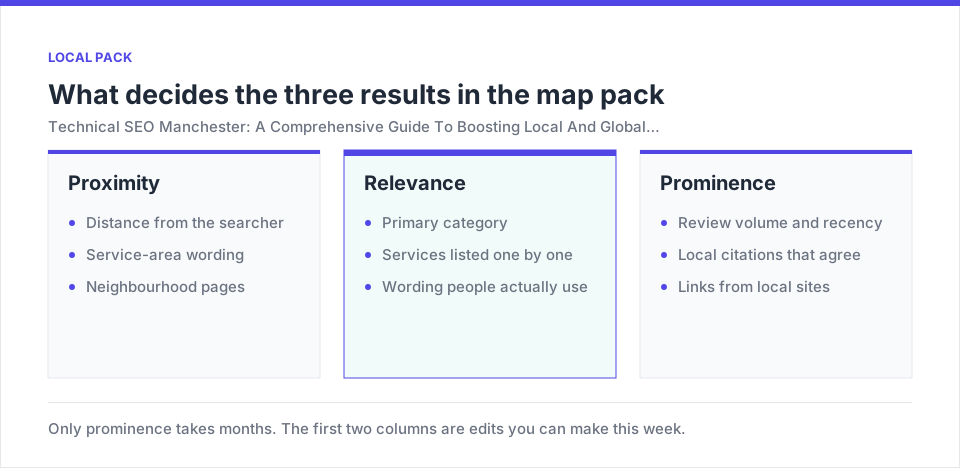
For the Local Pack side of this, the local SEO guide covers what to fix and how to track it in Semalt.
Implementing a Manchester-Focused Technical SEO Programme: Governance, Roles, and Workflows
Having established the technical foundations for Manchester, the next phase is to institutionalise governance that sustains visibility as districts evolve. At Manchester SEO AI, we emphasise CORA Trails for locale rationales behind each district modifier and Translation Provenance to preserve authentic Manchester terminology through updates. This governance-enabled approach creates auditable, regulator-ready provenance while enabling scalable growth across Greater Manchester’s districts.
A Manchester-focused programme requires clear roles, regular cadences, and artefacts that tie every decision to reader relevance and district proofs. The aim is to translate technical improvements into consistent proximity signals, reliable Local Pages (LPs), Canonical Local Pages (CLPs), and GBP activity, all while maintaining a transparent audit trail for governance and regulatory reviews.
Governance framework for Manchester
Implement a lightweight, scalable governance framework that integrates district-level decision-making with central policy. Core components include a Technical SEO Steering Committee, a District Validation Board, and a Data Provenance Owner. Each group operates within a documented provenance model, ensuring every modifier, from a new district proof to a GBP post, has a traceable rationale. CORA Trails captures the locale rationales, while Translation Provenance preserves recognisable Manchester terminology as content evolves.
- Technical SEO Steering Committee: Sets policy, approves district-spine changes, and maintains overall strategic direction for Manchester’s surface network.
- District Validation Board: Reviews district proofs, confirms district-level canonical decisions, and validates terminology against translations and local references.
- Data Provenance Owner: Maintains CORA Trails records, linking each district modifier to its justification and any data sources used.
- Editorial and Dev Liaison: Coordinates between content teams and developers to implement approved changes without disrupting user experience.
Roles and responsibilities
Assign explicit ownership to ensure accountability and rapid decision-making. The following roles are typical in a Manchester-focused programme:
- SEO Programme Lead: Drives district strategy, chairs governance cadences, and oversees CORA Trails and Translation Provenance integration.
- District Data Steward: Maintains data blocks for each district, documents provenance decisions, and ensures data accuracy across LPs, CLPs, and GBP content.
- Technical Lead (Crawling & Indexing): Oversees crawlability, indexability, and canonical health for Manchester’s surface network.
- Content & Localisation Lead: Ensures district proofs, landmarks, routes, and partnerships are reflected consistently with Translation Provenance.
- Dev/Platform Owner: Maintains hub-and-spoke architecture, site performance, and deployment governance in line with approved changes.
These roles work together within a governance cadence that aligns technical improvements with reader experience and regulatory expectations. The provenance framework ensures that every district modifier is traceable to its rationale, and terminology remains recognisable as the portfolio expands.
Cadences, artefacts, and decision logs
Governance cadences translate strategy into action. A typical Manchester cadence includes weekly surface-health tacticals, biweekly cross-functional reviews, monthly localisation-history updates, and quarterly governance sessions. Artefacts such as CORA Trails and Translation Provenance travel with every update, providing auditable trails for leadership and regulators. Dashboards should make LP health, CLP depth, GBP engagement, and district proofs visible with provenance notes for each decision.
- Weekly surface-health tacticals: Quick wins and immediate fixes that stabilise district surfaces.
- Biweekly cross-functional reviews: Align content, development, and data owners on upcoming changes.
- Monthly localisation-history reviews: Reconcile terminology and district proofs as new districts are added or updated.
- Quarterly governance sessions: Regulate policy, cadence, and resource allocation; review CORA Trails and Translation Provenance for gaps.
Governance artefacts should be accessible to stakeholders via the Manchester Services hub, with a clear path to book a scoping discussion through the Contact Page to tailor this governance framework to your portfolio. The artefacts enable leadership to replay localisation decisions during audits and regulator reviews, reinforcing reader trust and compliance across districts.
Measurement, accountability, and continuous improvement
Measurement in a Manchester programme extends beyond technical metrics. Tie improvements in crawlability, indexability, speed, and structured data to reader actions and GBP engagement. The CORA Trails provenance ensures localisation decisions are justifiable, while Translation Provenance preserves recognisable Manchester terminology as content evolves. Regular reporting should demonstrate how governance decisions translate into near‑me visibility, district proofs, and improved user outcomes.
90-day rollout prompts typically include establishing district footprints, formalising roles, launching the district spine, implementing governance cadences, and validating provenance across updates. For ready-to-use governance artefacts, dashboards, and templates that support a district-aware strategy, visit the Manchester Services hub and arrange a scoping discussion via the Contact Page to tailor the programme for your portfolio. By embedding CORA Trails and Translation Provenance at every turn, Manchester campaigns gain resilience to algorithm shifts and market changes while preserving local authenticity and regulator-readiness.
Implementing a Manchester-Focused Technical SEO Programme: Governance, Roles, and Workflows
Having established a robust technical foundation for Manchester, the next phase is to institutionalise governance that sustains near-me visibility as districts evolve. At Manchester SEO AI, we emphasise CORA Trails for locale rationales behind each district modifier and Translation Provenance to preserve authentic Manchester terminology through updates. This governance-enabled approach creates auditable, regulator-ready provenance while enabling scalable growth across Greater Manchester’s districts.
A Manchester-focused programme requires clear roles, regular cadences, and artefacts that tie every decision to reader relevance and district proofs. The aim is to translate technical improvements into consistent proximity signals, reliable Local Pages (LPs), Canonical Local Pages (CLPs), and Google Business Profile (GBP) activity, all while maintaining a transparent audit trail for governance and regulatory reviews.
Governance framework for Manchester
- Technical SEO Steering Committee: Sets policy, approves district-spine changes, and maintains overall strategic direction for Manchester’s surface network.
- District Validation Board: Reviews district proofs, confirms district-level canonical decisions, and validates terminology against translations and local references.
- Data Provenance Owner: Maintains CORA Trails records, linking each district modifier to its justification and any data sources used.
- Editorial and Dev Liaison: Coordinates between content teams and developers to implement approved changes without disrupting user experience.
This governance model ensures every district decision has a traceable rationale, and Translation Provenance keeps Manchester terminology recognisable as the portfolio grows. For practical templates and governance artefacts, see the Manchester Services hub or book a scoping discussion via the Contact Page to tailor a district-aware governance plan for your portfolio.
Roles and responsibilities
- SEO Programme Lead: Drives district strategy, chairs governance cadences, and oversees CORA Trails and Translation Provenance integration.
- District Data Steward: Maintains district data blocks, documents provenance decisions, and ensures data accuracy across LPs, CLPs, and GBP content.
- Technical Lead (Crawling & Indexing): Oversees crawlability, indexability, and canonical health for Manchester’s surface network.
- Content & Localisation Lead: Ensures district proofs, landmarks, routes, and partnerships are reflected consistently with Translation Provenance.
- Dev/Platform Owner: Maintains hub-and-spoke architecture, site performance, and deployment governance in line with approved changes.
Clear role delineation accelerates decision making and strengthens accountability. The governance artefacts—CORA Trails and Translation Provenance—ensure every modification is auditable and recognisable to readers across districts.
Cadences, artefacts and decision logs
Effective governance lives in regular cadences and visible artefacts. Core cadences include weekly surface-health tacticals, biweekly cross-functional reviews, monthly localisation-history updates, and quarterly governance sessions. Artefacts such as CORA Trails and Translation Provenance accompany every district modifier, ensuring provenance is visible to stakeholders and regulators alike. Dashboards should surface LP health, CLP depth, GBP engagement, and proximity signal strength by district, with provenance notes attached to each key decision.
Implementation roadmap: a practical 90-day plan
- Week 1–2: Kick off governance with a district inventory, confirm GBP hygiene, assess LP/CLP depth, and establish initial cadences for weekly surface-health tacticals and monthly localisation-history reviews.
- Week 3–4: Define the district spine and proofs. Validate Translation Provenance for terminology in the core districts, and set up initial governance dashboards that federate LPs, CLPs, and GBP content.
- Week 5–6: Build the hub-and-spoke content map and begin publishing the first district spokes that mirror real Manchester geography, including authentic proofs like landmarks and transport cues.
- Week 7–9: Launch GBP alignment across the initial district spine. Establish a common data layer so LPs, CLPs, and GBP posts share coherent data signals and provenance is captured for audits.
- Week 10–12: Expand to 2–3 additional districts, refine the governance artefacts, and ensure all changes are reflected in CORA Trails and Translation Provenance. Validate with regulator-ready dashboards.
These steps are designed to be adaptable to the pace of your Manchester portfolio. All templates, dashboards, and artefacts supporting the 90-day plan are available via the Manchester Services hub. To tailor this rollout for your business, book a scoping discussion through the Contact Page to align the governance framework with your district footprint.
In practice, the governance approach ensures every district modifier is anchored to a real-world justification, with Translation Provenance preserving recognisable Manchester terminology as content evolves. The outcome is a scalable, regulator-friendly programme that sustains near-me visibility while supporting responsible growth across Greater Manchester.
URL structure, canonical tags, redirects and site architecture governance
In Manchester, the organisation and discipline of your URL structure, canonical signals, and redirects directly influence crawl efficiency, indexation quality and user experience across district surfaces. The governance framework employed by Manchester SEO AI uses CORA Trails to justify every district modifier and Translation Provenance to preserve authentic Manchester terminology through updates. When these governance threads are woven into how you structure URLs and redirects, you gain auditable provenance that supports regulator-readiness as you expand navigation across Greater Manchester and its districts.
Strategically designed URLs act as both navigational breadcrumbs for users and explicit signals for search engines. A robust approach starts with a clear hub-and-spoke architecture, where the hub represents core services and district spokes reflect local proofs. This alignment reduces confusion for crawlers and makes it easier to preserve link equity as pages mature or migrate. Translation Provenance ensures the terminology remains recognisable to readers across districts, while CORA Trails chronicles the rationale behind each modifier for auditability.
Best practices for clean URL structures
- Use descriptive, hyphenated slugs that reflect geography and service intent, for example /district/manchester-city-centre/ or /districts/chorlton-services/. Avoid unnecessary parameters that complicate indexing and user comprehension.
- Keep the hub in a stable namespace and let district pages branch from it, ensuring a predictable crawl path that mirrors Manchester’s geography.
- Maintain URL stability. When you alter a slug, implement a well-documented 301 redirect and record the rationale in CORA Trails to justify the change.
- Limit dynamic query parameters on district pages. If parameters are required for filtering, ensure canonicalised versions exist and are consistent across districts.
- Document slug decisions and changes in Translation Provenance to preserve recognisable locality language as your portfolio grows.
Canonical tags clarify which page should be considered the authoritative version when similar content exists across districts. Each LP and CLP should be linked to its canonical URL, typically the primary district surface or hub page that best represents the content. Canonicalising avoids duplicate surface creation across districts while preserving the ability to signal local relevance through district-specific proofs. For Manchester teams, this means coordinating canonical references between district pages, hub pages, and GBP-connected assets so that proximity signals consolidate behind authoritative surfaces.
External guidance from industry-leading sources emphasises clean canonical strategies and proper handling of cross-district content. See the Google Search Central canonicalisation guidelines for foundational principles that align with this approach: Canonicalization best practices.
Redirect strategy and 404 handling
Redirects are governance artefacts that safeguard user journeys and preserve link equity. A well-planned redirect map prevents broken pathways when district pages move or service lines change. Use 301 redirects for permanent URL changes to transfer authority, and reserve 302s for temporary restructurings or A/B experiments. Maintain a redirect cascade that is as short as possible to minimise crawl fatigue, and archive legacy mappings in CORA Trails so leadership can replay decisions if markets shift or new districts are added. Regularly prune obsolete redirects to avoid chain complexity and index slowdowns.
- Implement redirects at the district level first, then verify hub-to-district transitions maintain navigational clarity for users and crawlers.
- Update XML sitemaps and internal links to reflect redirects, preventing search engines from discovering stale assets that could dilute rankings.
- Monitor 404s and soft 404s; provide helpful district-specific alternatives to maintain user engagement and local relevance.
- Document redirect rationale and outcomes in CORA Trails to support audits and governance reviews.
Governance and auditable provenance for district architecture
Between hub pages, district proofs and GBP connections, governance must demonstrate a clear, auditable trail of decisions. CORA Trails captures locale rationales behind every district modifier, while Translation Provenance preserves authentic Manchester terminology through updates. This dual provenance approach offers leadership a reliable way to replay decisions, justify changes, and maintain reader trust as the Manchester footprint expands. Structured data, consistent canonical signals, and a disciplined redirect strategy all feed into a robust, regulator-friendly framework.
- Document the district spine: maintain a central record of district proofs, landmarks, transport cues and partnerships that validate each district surface.
- Link changes to GBP updates: ensure district pages reflect GBP context, with provenance notes attached to updates.
- Validate with tooling: routinely test canonical configuration, redirect accuracy, and crawl health via Search Console and audits.
- Audit and report: provide periodic governance reports that surface decision rationales and outcomes for stakeholders and regulators.
- Maintain terminology integrity: use Translation Provenance to guard against drift in district language across updates.
90-day rollout priorities for URL structure and site-architecture governance include auditing current footprint, stabilising hub-to-district mappings, implementing canonical discipline, and establishing a measurable redirect framework. Templates, dashboards, and CORA Trails artefacts to support this rollout are accessible via the Manchester Services hub. To tailor a district-aware URL governance programme for your portfolio, book a scoping discussion through the Contact Page and align with a strategy that strengthens local signals across Greater Manchester.
As your district footprint grows, the combined effect of clean URLs, principled canonicalisation, and disciplined redirects becomes a durable basis for near-me visibility. The Manchester Services hub remains the central place to access ready-to-use templates, governance artefacts, and dashboards that support a scalable, regulator-ready approach to technical SEO in Manchester.
For ongoing guidance and implementation support tailored to your portfolio, consider initiating a scoping discussion via the Manchester Services hub or the Contact Page.