Local SEO Manchester: A City-First Guide To Local Visibility
Manchester is a thriving hub for local services, retail, hospitality and professional firms. Local search has become the decisive channel for nearby customers who want immediate, relevant results. A Manchester‑focused local SEO programme translates core best practices into district‑aware actions that mirror how people live, work and travel around the city and its surrounding towns. At ManchesterSEO.ai we advocate a governance‑led, data‑driven framework that aligns technical health, GBP and Maps signals, and district‑centric content with your business objectives. Transparent reporting and predictable budgeting empower you to scale with confidence.
This opening overview explains why a city‑first approach matters for Manchester, the signals that matter most, and how a deliberate, phased plan sets you up for sustainable growth across the city and its surrounding Greater Manchester communities.
Why Local SEO Matters In Manchester
Local searches in Manchester blend near‑me intent with district nuance. People look for services in the City Centre, Salford Quays, Didsbury, Chorlton, Stockport and beyond, often with travel considerations such as parking and public transport. A Manchester‑specific local SEO programme places your GBP (Google Business Profile) health, Maps presence and district landing pages at the centre of discovery to support the buyer journey from intent to enquiry and, ultimately, conversion.
Key outcomes include higher visibility for city and district queries, more qualified traffic, and stronger footfall or calls from people who actually visit your premises or buy your services locally. The value is not just in ranking more pages but in orchestrating signals so that Google recognises your business as a trusted, accessible option in the places your customers frequent.
Manchester’s Local Search Landscape And Audience
The Manchester ecosystem comprises the City Centre and its surrounding boroughs, plus the wider Greater Manchester area that feeds regional demand. Local audiences prioritise speed, accuracy and relevance: a user in Altrincham seeks nearby tradespeople; someone in Salford wants a quick café recommendation near Old Trafford; a visitor in the Northern Quarter looks for boutique services with easy access. This reality makes district‑level content and GBP governance critical. A disciplined, city‑first baseline helps ensure your business surfaces for both broad Manchester queries and highly local, district‑specific intents.
There’s a practical advantage to focusing on Manchester first: it creates a scalable model that can be extended to neighbouring towns, while keeping regulatory, accessibility and data privacy considerations at the forefront. A well‑designed Manchester programme also supports Map Pack exposure, knowledge panels and AI‑driven surfaces by providing a coherent signal spine across GBP, Maps and on‑site content.
Core Signals And The District‑First Structure
Effective local SEO in Manchester rests on four practical pillars. First, maintain GBP completeness with accurate hours, categories, offerings and posts. Second, ensure NAP consistency across GBP, Maps and district pages so proximity signals remain reliable. Third, develop a district‑first content architecture that links district landing pages to a central Manchester hub, while addressing local questions, landmarks and transport context. Fourth, implement a governance cadence with transparent dashboards that connect activity to leads, bookings and revenue across districts.
A disciplined architecture yields faster signal propagation, stronger topical authority and predictable ROI as you extend beyond initial districts to the wider Manchester catchment. For everyone planning multi‑location strategies, this city‑first model provides a robust foundation that scales with the business.
How A Manchester SEO Partner Adds Value
A credible Manchester agency translates generic SEO principles into city‑aware actions that reflect the region’s geography, transport links and industry clusters. A practical Manchester programme rests on four pillars: technical health and site structure optimised for Manchester queries; governance of GBP and Maps data to ensure reliable local signals; district‑level content that supports local buyer journeys; and transparent dashboards that clearly connect activity to ROI.
When evaluating agencies, look for local market knowledge of Manchester districts such as City Centre, Ancoats, Didsbury, Heaton Chapel and Salford, combined with a governance framework that delivers monthly health checks and quarterly ROI reviews. A well‑designed plan demonstrates scalability from central Manchester hubs to surrounding districts, while keeping user experience, accessibility and data privacy at the forefront.
Getting Started In Manchester: Early Weeks
Begin with a city‑first baseline and two to four district landing pages for high‑potential areas such as City Centre, Salford, Didsbury and Chorlton. Establish GBP governance early and connect it to a simple dashboard that blends GBP engagement, Maps impressions and district‑page engagement. A lightweight content calendar focused on local landmarks, transport notes and district FAQs helps capture local intent quickly. Plan a phased expansion, with quarterly ROI reviews to justify adding more districts as results mature.
For practical options and governance‑first packages, visit our Manchester services hub on manchesterseo.ai/services and book a scoping call via the contact page to tailor a plan to your budget and growth goals.
Manchester Local Search Landscape And Audience
Manchester presents a dense, city-first local search environment where near-term intent collides with district nuance. A Manchester-focused local SEO programme benefits from translating the local geography, transport patterns and industry clusters into district-aware actions that mirror how people live, work and move around Greater Manchester. At ManchesterSEO.ai we advocate a governance-led, data-driven spine that ties GBP health, Maps signals and district-led content to clear business objectives. This part expands the Manchester-specific understanding you need to surface in city-centre hubs, suburban districts and the wider catchment with confidence.
By anchoring discovery to a Manchester-centric signal spine, you can scale from core districts to surrounding communities while maintaining accessibility, data privacy and user experience as non-negotiables. The aim is to prepare your programme for expansion into nearby towns and to ensure every signal—from GBP to on-site content—contributes to measurable growth in footfall, inquiries and revenue.
Manchester’s Local Search Landscape And Audience
The Manchester ecosystem spans the City Centre, Salford, Didsbury, Chorlton, Ancoats and beyond, with a broader Greater Manchester catchment feeding regional demand. Local users expect speed, precision and relevance: a resident in Bredbury searches for tradespeople nearby; a shopper in Stockport looks for a cafe with easy parking near the tram line; a visitor in MediaCityUK seeks quick service recommendations with clear walking routes. This geography-driven behaviour means district-level pages and robust GBP governance are not optional extras but central to discovery and conversion.
Key Manchester-specific dynamics include the following outcomes: higher city-wide visibility when district pages are coherently linked to a central Manchester hub; improved proximity signals through accurate Maps data; and more predictable ROI as signals propagate from the city hub to district surfaces. A disciplined, Manchester-first baseline provides a scalable model that can expand to neighbouring towns while keeping data privacy and accessibility at the forefront.
Audience Segments And Intent In Manchester
Four practical audience archetypes drive Manchester’s local queries: (1) city-centre professionals seeking services within walking distance and parking context; (2) suburban families searching for reliable local providers with convenient access; (3) commuters seeking quick, nearby recommendations during their daily journeys; (4) visitors or students searching for events, venues and essential services around campuses and transit routes. Aligning district landing pages to these intents ensures the city hub stays coherent while district pages address distinct local queries.
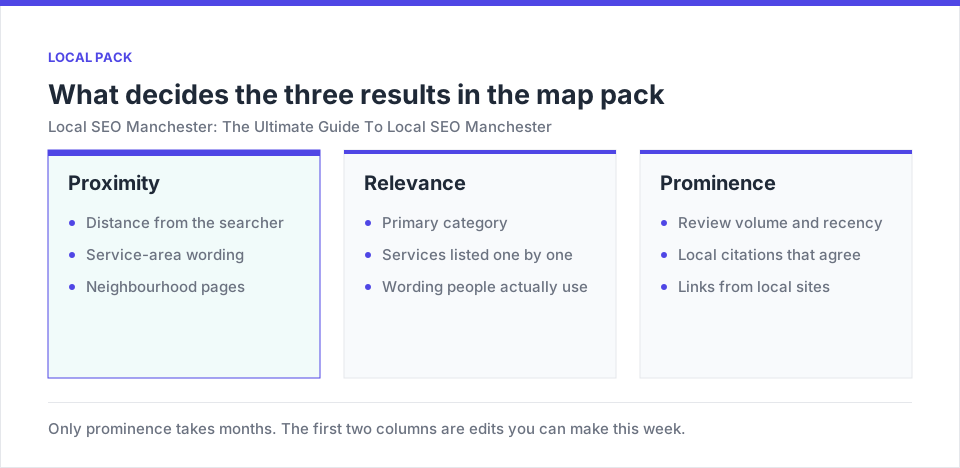
To operationalise this, structure district pages around local landmarks, transport notes, parking information and district-specific FAQs. This approach supports Local Pack exposure and knowledge panels by offering precise, district-relevant information linked to core services. Governance reports should couple district activity with city-wide objectives, so the board can see how district signals contribute to revenue across the Manchester footprint.
Geography, Signals And The Manchester Signal Spine
Think of Manchester as a hub-and-spoke system: a central Manchester hub page connects to district landing pages (City Centre, Salford, Didsbury, Chorlton, Ancoats, Old Trafford, and others) with local context. Each district page answers local questions, references nearby landmarks and transport options, and provides clear paths to core services. Internal linking should prioritise conversions by guiding users from discovery to conversion, while the city hub preserves a unified narrative. This structure accelerates signal propagation, strengthens topical authority and makes it easier to replicate in surrounding towns as ROI matures.
In practice, the spine supports GBP completeness, Maps proximity signals and on-site content. When district pages are well-scoped and linked to the central hub, Local Pack visibility improves for queries such as "Manchester dentist City Centre" or "Salford kitchen renovations near me," while retaining a city-wide quality signal that underpins broader Manchester authority.
Core Signals For A Manchester Local SEO Programme
A practical Manchester programme rests on four pillars that harmonise to deliver local discovery and revenue. The following are platform-agnostic takeaways you can apply from day one:
- GBP health and completeness: Ensure hours, categories, services and photos are current, with posts that reflect ongoing local promotions and events.
- Maps data integrity and proximity signals: Prioritise accurate Maps listings, consistent NAP data and distance-based relevance to boost Local Pack exposure near Manchester districts.
- District-first content architecture: Build district landing pages that address local intent while connecting to a central Manchester hub to retain city-wide coherence.
- Governance, dashboards and ROI: Establish monthly health checks and quarterly ROI reviews that tie district activity to enquiries, bookings and revenue across the city.
Getting Started In Manchester: Quick Wins
Begin with a city-first baseline and two to four district pages for high-potential areas such as City Centre, Salford and Didsbury. Establish GBP governance early and connect it to a simple dashboard that blends GBP engagement, Maps impressions and district-page engagement. A lightweight content calendar focused on local landmarks, transport notes and district FAQs helps capture local intent quickly. Plan a phased expansion, with quarterly ROI reviews to justify adding more districts as results mature. For practical, governance-first packages, visit our Manchester services hub on manchesterseo.ai/services and book a scoping call via the contact page to tailor a plan to your budget and growth goals.
This city-first framework sets the stage for scalable growth across Greater Manchester while keeping district relevance tangible and measurable.
Keyword Research And Planning For Manchester Local SEO
Manchester-focused keyword research is the compass for district-first local SEO. By pairing city-wide signals with district nuance, you ensure your content and pages align with how people search in Manchester. This part outlines a practical framework for building the keyword foundation that fuels district-led growth for local businesses across Manchester.
Building a Manchester Keyword Framework
Begin with a city-wide baseline of terms that reflect Manchester services and audience intent. For example, generic service keywords like Manchester plumber, Manchester dentist, Manchester architect, and Manchester bakery capture broad demand anchored to the city. These foundation terms establish a spine that helps district pages inherit authority while maintaining city-wide coherence.
Then create district keyword families around major Manchester districts and neighbourhoods such as City Centre, Salford, Didsbury, Chorlton, Ancoats, Heaton Moor and Altrincham. Each family should include variants that reflect local context, such as distance qualifiers, transport references, and district landmarks. Examples include "Manchester City Centre plumber near me", "Didsbury hair salon near me", or "Salford taxi service near Eccles".
Finally, map keywords to pages: city hub page, district landing pages, and service pages. This mapping ensures users and search engines discover the most relevant surface for each query and supports the buyer journey from initial discovery to enquiry.
Mapping Keywords To Manchester Pages
Assign each district family to a dedicated landing page. The Manchester hub aggregates the city-wide goals and links to district pages. Ensure the district pages answer common local questions, reference nearby landmarks and provide clear calls-to-action for core services. Integrate location-specific schema (LocalBusiness, FAQPage) to communicate district context to search engines and to AI surfaces alike.
- Hub-to-district routing: Parent hub page with clear pathways to district pages and service sections.
- District page depth: A practical mix of introductory copy, FAQs, and service detail tailored to the district.
- Internal linking discipline: Priority links from district pages to primary services and case studies.
Practical Keyword Research Workflow And Tools
Leverage a repeatable process to stay aligned with Manchester market dynamics. Start with Google Keyword Planner to surface search volume, seasonality and variations for the city and key districts. Augment with suggestions from the People Also Ask panels and the search results pages for Manchester queries to identify intent prompts. Use Google Trends to compare district demand and plan content calendars around events and seasonal spikes.
- Baseline keyword sets: City-wide terms reflecting Manchester services and demand.
- Add district modifiers and location context to core terms.
- Build a content calendar that pairs district pages with service pages and FAQs.
Governance, Measurement And ROI For Manchester Keyword Plans
Track performance using district-level rankings, local traffic to district pages, and inbound inquiries or conversions that originate from Manchester hub and district surfaces. Implement a simple attribution model that accounts for discovery through GBP and Maps, then mid-funnel engagement on district pages, and final actions on-site. Establish quarterly ROI reviews to confirm budget alignment and adjust district priorities as results mature.
- KPIs: Local rankings, Maps impressions, district-page traffic, leads, and revenue lift by district.
- Dashboards: A single source of truth that combines GBP engagement, Maps proximity signals, district-page interactions and on-site conversions.
- Governance cadence: Monthly health checks and quarterly ROI reviews with explicit ownership.
Next Steps: Engage With Manchester SEO Experts
With a clear keyword framework in place, translate it into concrete district pages, content calendars and governance dashboards. To learn how ManchesterSEO.ai translates city-first signals into district-led growth, visit our Manchester services or contact us to discuss your budget, timelines and district priorities.
Optimising Your Google Business Profile And Local Presence In Manchester
In Manchester, the Google ecosystem is often the doorway to local discovery. A meticulously maintained Google Business Profile (GBP) acts as a dynamic storefront, shaping what nearby customers see in Local Packs, Maps and knowledge panels. This part of the city-first plan translates GBP health, Maps proximity signals and district-focused content into a cohesive, auditable local presence that drives footfall, calls and conversions across Manchester’s districts—from City Centre to Salford and the surrounding townships.
ManchesterSEO.ai anchors GBP governance to a practical signal spine: completeness, freshness, district-specific context and transparent measurement. The result is a reliable, scalable framework that supports district pages, on-site content, and local outreach while keeping governance, accessibility and data privacy at the forefront.
Achieving GBP Completeness And Relevance In Manchester
GBP completeness means more than listing a business name and phone number. It requires accurate hours, precise categories, a comprehensive offerings list, and high-quality imagery. In Manchester, reflect district nuances by listing location-specific services and proximity-friendly attributes—such as parking options near the City Centre, tram or train access for Salford districts, and accessibility notes for Didsbury or Chorlton. Regularly post offers, events and local announcements to keep the profile fresh and relevant for nearby searches.
Read next: SEO freelancer Manchester: hiring · SEO services Manchester: the value
NAP consistency across GBP and Maps signals is essential. Use the same business name, address and phone number on all Manchester district pages and local directories to strengthen proximity signals. This coherence helps Google reliably associate the surface with the right local intent, supporting stronger Local Pack visibility and Maps surface prominence.
Structured GBP Optimisation: Categories, Attributes And Posts
Start with a curated set of core categories that reflect your Manchester service mix, then add district-specific attributes to capture local context. For example, a Manchester plumber may use categories such as Plumbing Services, Emergency Plumbing, and Drainage. In City Centre or Salford pages, highlight district-relevant attributes like on-street parking availability, rapid-response windows, and accessibility features that matter to local customers.
GBP posts are the rapid, testable mechanism to surface timely local content. Use them to promote seasonal promotions, district events, staff recognitions and service-area updates. Incorporate clear calls-to-action that direct users to district landing pages or the main service pages on manchesterseo.ai/services. Each post should be purpose-driven and time-bound to maximise engagement and click-through rates.
Reviews, Q&A And Reputation Management
Positive reviews reinforce trust and influence Local Pack ranking signals. Implement a proactive review strategy across Manchester districts: encourage happy customers to share feedback, respond professionally and promptly, and escalate unresolved issues to a dedicated manager. The Q&A section should be curated to address district-specific questions—parking in City Centre, accessibility in Ancoats, or public transport options near Chorlton. Use the Questions & Answers as a living resource that informs both users and search engines about your local authority and service reliability.
Integrate review insights into governance dashboards to track sentiment, response times and rating trends by district. When GBP and Maps signals align with steady review activity, Local Pack visibility strengthens and user trust increases across Manchester’s diverse communities.
Google Posts, Local Content And District Landing Pages
District landing pages are the engine for local intent. Each page should address common local questions, reference nearby landmarks, and present district-specific pathways to core services. Interlink district pages with the Manchester hub to maintain a cohesive surface spine and ensure Google understands the city-wide context. On-page content should naturally include district names, travel references and parking information to reflect genuine local needs.
When content, GBP posts and Maps signals are orchestrated around a central city hub, you gain momentum that translates into more qualified clicks and higher-quality inquiries from the right geographic areas.
Measurement And Governance For Manchester GBP And Local Presence
A disciplined governance model binds GBP health, Maps proximity signals and district-page performance into a single, auditable cockpit. Key metrics include GBP engagement (clicks, calls, direction requests), Maps surface and proximity signals, district-page traffic, and on-site conversions attributed to district pages or hub content. Establish monthly health checks and quarterly ROI reviews to track progress by district and to justify programme expansion as results mature.
- KPIs by district: Local rankings, GBP engagement, Maps impressions, and district-page conversions.
- Attribution: Multi-touch attribution that fairly distributes credit across discovery, local signals and on-site actions.
- Dashboard design: A single source of truth with city-wide and district-level views to empower leadership decisions.
For practical governance templates and dashboards, explore our Manchester services hub at manchesterseo.ai/services and book a scoping call through the contact page to tailor a plan to your budget and growth goals.
Building Local Authority: Citations, Links and Local Partnerships
In Manchester, local authority is earned through a disciplined mix of accurate citations, meaningful backlinks and strong local collaborations. A robust footprint across Manchester districts strengthens proximity signals, supports GBP prominence and boosts Local Pack performance. ManchesterSEO.ai emphasises governance-led, district-aware growth: a clear spine that connects NAP consistency, business citations, and local partnerships to tangible enquiries and revenue. This part reveals actionable steps to build authority that stands up to audits and evolving search signals.
Why Citations And Local Partnerships Matter In Manchester
High-quality citations validate your business location and category across maps and directories. In Manchester, the density of districts (City Centre, Salford, Didsbury, Chorlton, Ancoats) means inconsistent data can break proximity signals. The recommended approach is to unify NAP data, ensure consistent business listings, and secure local links from Manchester-based authorities. External references (Moz Local, Google Local guidelines) describe how citations and proximity signals contribute to Local Pack visibility and trust.
A well-governed plan aligns GBP health, Maps signals and on-site content with local partnerships, so your brand becomes a trusted local resource across districts and communities.
Auditing And Cleaning Manchester Citations
Begin with a citation audit: compile a master list of Manchester-focused directories and maps listings. Check NAP consistency across GBP, Maps, and district pages. Remove duplicates, correct misspellings and ensure the business name, address and phone number align with official records and GBP. Use dedicated tools or services to automate consistency checks. A clean citation baseline improves local rankings and reduces confusion for users.
- NAP consistency: Standardise the business name, address and phone number across core directories.
- Claim and optimise key Manchester directories: Ensure presence in core local directories with district-level tweaks.
- Disavow harmful links: Remove or disavow bad links that may harm local trust.
Developing Local Backlinks And Partnerships
Backlinks from Manchester-based organisations carry more weight for local signals than generic links. Build relationships with the Manchester Chamber of Commerce, universities (Manchester Metropolitan University, University of Manchester), local media, business associations and industry groups. Sponsor events, participate in community initiatives and publish co-branded content that highlights local expertise. Each partnership yields a credible link or citation that reinforces your district pages and city hub.
Content collaborations, such as guest articles on local outlets, joint webinars, or case studies featuring local clients, create natural, relevant links. Avoid link schemes; focus on value, relevance and reciprocity that benefit your partners as well.
Measuring Citations And Local Link ROI
Track citation growth, NAP consistency, and the impact on local rankings and traffic. Monitor the quality and relevance of backlinks from Manchester domains, and correlate this with local surface visibility and district-page performance. Use dashboards that display a district-level ROI view, showing how citations and partnerships contribute to enquiry rates, bookings and revenue. Align the measurement approach with Moz Local guidelines and Google’s local ranking factors to maintain credibility.
- Citation growth rate: New high-quality Manchester citations per quarter.
- Backlink quality: Domain authority and relevance of Manchester-based links.
- Impact on local signals: Changes in Local Pack visibility and GBP engagement after citation improvements.
Getting Started In Manchester: Practical Steps
Kick off with a quick audit of current Manchester citations, GBP health and district-page links. Create a master list of target Manchester directories and a plan to claim or optimise each listing. Then identify 4–6 local partner opportunities such as the Chamber, universities, and local media, and outline collaboration ideas that can yield citations and links. Finally, set governance metrics and schedule monthly checks and quarterly ROI reviews to track progress and adjust as needed.
For a practical, governance-led approach, explore our Manchester services at manchesterseo.ai/services and book a scoping call via the contact page to tailor a plan to your district priorities.
Building Local Content That Resonates With Manchester Audiences
Content quality is the fuel of a district-led local SEO strategy. In Manchester, content that speaks to local identities, landmarks and everyday needs accelerates engagement across city hub and district pages. This section outlines practical approaches to crafting Manchester-focused content that supports discovery, authority and conversions while staying within a governance-led framework established by ManchesterSEO.ai.
Audience Personas And Local Intent In Manchester
Identify four practical Manchester audiences: (a) City Centre professionals seeking services within walking distance and parking context; (b) Suburban families looking for reliable local providers with easy access; (c) Commuters requiring quick recommendations during travel; (d) Visitors and students exploring events, venues and essential services around campuses and transport routes. Target each group with district pages that address their distinctive questions, while the city hub remains a coherent, city-wide authority. Local intent often blends practical needs with place-based context, so content should reference nearby landmarks, transport routes and parking considerations to streamline decision making.
Mapping Local Content To Manchester District Pages
Structure content so each district family has a dedicated landing page connected to a central Manchester hub. For City Centre, Salford, Didsbury, Chorlton and Ancoats, produce district-intent pages that answer local queries, reference nearby landmarks and provide clear CTAs to core services. Use LocalBusiness, FAQPage and Organisation schema to communicate district context and improve rich result potential. Align content with the four pillars of governance introduced earlier: GBP health, Maps proximity, district pages and actionable on-site content that moves users toward bookings or enquiries.
Types Of Local Content That Convert
Prioritise five content formats that reliably drive local engagement. First, district-focused guides that highlight local landmarks, transport options and surface-level FAQs. Second, service pages enhanced with district context, case studies and testimonials from local clients. Third, event calendars and local partnerships that showcase involvement with Manchester communities. Fourth, neighbourhood spotlights and guest posts from local creators. Fifth, long-form how-to resources and checklists that address district-specific problems and questions. This content should be refreshed seasonally to reflect Manchester events like the Manchester International Festival, Pride events, football fixtures and university calendars, ensuring relevance and timeliness.
Content Governance And Editorial Processes
Keep a disciplined editorial calendar and a single voice across Manchester districts. Establish a content brief template linking district pages to the city hub, ensuring topics align with user intent and seasonal demand. Implement an approval workflow, maintain a central glossary for terms used across districts, and use translation memories where multiple languages apply. Regularly audit content for accuracy, freshness and accessibility, and retire underperforming pages to preserve a high-quality surface spine. Editorial stewardship should also track local events, community projects and partnerships to weave authentic local narratives into the content cadence.
Measuring The Impact Of Local Content
Track metrics that connect content to revenue. Key indicators include district-page time on page, scroll depth, internal clicks toward core services, and conversions such as enquiries or bookings attributed to Manchester district surfaces. Use dashboards that combine content performance with GBP engagement and Maps impressions to reveal how local content influences discovery and conversion within the city footprint. Establish quarterly reviews to adjust topics, topics and pacing based on ROI. Consider using GA4, Google Search Console and a content performance model that ties content investment to direct and assisted conversions in Manchester.
Next Steps: Bringing Manchester Content To Life
Begin by auditing existing Manchester district content and creating a two to four district page sprint: City Centre, Salford, Didsbury and Chorlton. Build a simple content calendar aligned with local events and transport notes, and connect district pages to the Manchester hub with clear CTAs. For governance-driven guidance and ready-to-use templates, explore our Manchester services hub on our Manchester services and book a scoping call via the contact page.
Creating Local Content That Resonates With Manchester Audiences
Content quality is the fuel of a district-led local SEO strategy in Manchester. Content that speaks to local identities, landmarks and everyday needs accelerates engagement across city hub and district pages. This section translates Manchester-specific content strategies into practical steps, aligned with governance principles that ManchesterSEO.ai champions. It ensures your content is helpful, accessible and scalable as you expand across districts like City Centre, Salford, Didsbury and Chorlton.
Audience Personas And Local Intent In Manchester
Identify four practical Manchester audiences that shape content priorities: (1) City Centre professionals seeking services within walking distance and parking context; (2) Suburban families looking for reliable local providers with easy access; (3) Commuters requiring quick recommendations during travel; (4) Visitors and students exploring events, venues and essential services around campuses and transit routes. Target each group with district pages that address their distinctive questions, while the city hub remains a coherent, city-wide authority. Local intent often blends practical needs with place-based context; content should reference nearby landmarks, transport routes and parking considerations to streamline decision making.
Mapping Local Content To Manchester District Pages
Structure content so each district family has a dedicated landing page connected to a central Manchester hub. For City Centre, Salford, Didsbury, Chorlton and Ancoats, produce district-intent pages that answer local queries, reference nearby landmarks and provide clear CTAs to core services. Use LocalBusiness, FAQPage and Organisation schema to communicate district context to search engines and to AI surfaces alike. Align content with governance pillars: GBP health, Maps proximity, district pages and actionable on-site content.
- Hub-to-district routing: Parent hub page with clear pathways to district pages and service sections.
- District page depth: A practical mix of introductory copy, FAQs, and service detail tailored to the district.
- Internal linking discipline: Priority links from district pages to primary services and case studies.
Types Of Local Content That Convert
Prioritise five content formats that reliably drive local engagement. First, district-focused guides that highlight local landmarks, transport options and surface-level FAQs. Second, service pages enhanced with district context, case studies and testimonials from local clients. Third, event calendars and local partnerships that showcase involvement with Manchester communities. Fourth, neighbourhood spotlights and guest posts from local creators. Fifth, long-form how-to resources and checklists that address district-specific problems and questions. Refresh content seasonally to reflect Manchester events and rhythms, ensuring relevance and timeliness.
- District-focused guides detailing nearby landmarks and transport notes.
- Service pages enriched with district context, case studies and local testimonials.
- Event calendars and partnership content that demonstrate active local engagement.
- Neighbourhood spotlights and guest posts from local creators.
- Long-form resources that address district-specific problems with actionable checklists.
Content Governance And Editorial Processes
Maintain a single, coherent voice across Manchester districts while enabling district-specific nuance. Establish a content brief template that links district pages to the city hub, ensuring topics match user intent and seasonal demand. Implement an approval workflow and maintain a central glossary for terms used across districts. Use translation memories for multi-language contexts and audit content for accuracy, freshness and accessibility. Regularly retire underperforming pages to preserve a high-quality surface spine and align with governance standards.
Measuring The Impact Of Local Content
Track metrics that connect content to revenue. Key indicators include district-page time on page, scroll depth, internal clicks toward core services, and conversions such as enquiries or bookings attributed to Manchester district surfaces. Use dashboards that combine content performance with GBP engagement and Maps impressions to reveal how local content influences discovery and conversion within the city footprint. Establish quarterly reviews to adjust topics, topics and pacing based on ROI. Consider using GA4, Google Search Console and a content performance model that ties content investment to direct and assisted conversions in Manchester.
Next Steps: Bringing Manchester Content To Life
Start with a district-page sprint: publish two to four district hubs linked to the city hub, build a simple governance calendar for GBP updates and district content, and implement a lightweight content calendar focused on local landmarks and transport notes. For governance-ready templates and playbooks, explore our Manchester services hub and book a scoping call to tailor a plan to your budget and growth goals. This city-first approach creates a scalable content machine that translates local insight into measurable results.
Internal navigation: visit our Manchester services page to review starter packages, and contact us to schedule your scoping call. The aim is to deliver content that resonates with local audiences, sustains engagement and drives conversions across Manchester’s diverse communities.
Creating Local Content That Resonates With Manchester Audiences
Content quality is the fuel of a district-led local SEO strategy in Manchester. Content that speaks to local identities, landmarks and everyday needs accelerates engagement across city hub and district pages. This section translates Manchester-specific content strategies into practical steps, aligned with governance principles that ManchesterSEO.ai champions. The aim is to deliver content that is helpful, accessible and scalable as you expand across districts like City Centre, Salford, Didsbury and Chorlton.
Audience Personas And Local Intent In Manchester
Identify four practical Manchester audiences: (1) City Centre professionals seeking services within walking distance and parking context; (2) Suburban families looking for reliable local providers with easy access; (3) Commuters requiring quick recommendations during travel; (4) Visitors and students exploring events, venues and essential services around campuses and transit routes. Target each group with district pages that address their distinctive questions, while the city hub remains a coherent, city-wide authority. Local intent often blends practical needs with place-based context, so content should reference nearby landmarks, transport routes and parking considerations to streamline decision making.
Mapping Local Content To Manchester District Pages
Structure content so each district family has a dedicated landing page connected to a central Manchester hub. District pages should answer local queries, reference nearby landmarks and provide clear CTAs to core services. Use LocalBusiness, FAQPage and Organisation schema to communicate district context to search engines and AI surfaces alike. Align content with governance pillars: GBP health, Maps proximity, district pages and actionable on-site content.
- Hub-to-district routing: Parent hub page with clear pathways to district pages and service sections.
- District page depth: A practical mix of introductory copy, FAQs, and service detail tailored to the district.
- Internal linking discipline: Priority links from district pages to primary services and case studies.
Types Of Local Content That Convert
Prioritise five content formats that reliably drive local engagement. First, district-focused guides that highlight local landmarks, transport options and surface-level FAQs. Second, service pages enriched with district context, case studies and testimonials from local clients. Third, event calendars and local partnerships that showcase involvement with Manchester communities. Fourth, neighbourhood spotlights and guest posts from local creators. Fifth, long-form resources that address district-specific problems with actionable checklists. This content should be refreshed seasonally to reflect Manchester events and rhythms, ensuring relevance and timeliness.
- District-focused guides detailing nearby landmarks and transport notes.
- Service pages enriched with district context, case studies and local testimonials.
- Event calendars and partnership content that demonstrate active local engagement.
- Neighbourhood spotlights and guest posts from local creators.
- Long-form resources that address district-specific problems with actionable checklists.
Content Governance And Editorial Processes
Keep a disciplined editorial calendar and a single voice across Manchester districts. Establish a content brief template linking district pages to the city hub, ensuring topics align with user intent and seasonal demand. Implement an approval workflow, maintain a central glossary for terms used across districts, and use translation memories where multiple languages apply. Regularly audit content for accuracy, freshness and accessibility, and retire underperforming pages to preserve a high-quality surface spine. Editorial stewardship should also track local events, community projects and partnerships to weave authentic local narratives into the content cadence.
Measuring The Impact Of Local Content
Track metrics that connect content to revenue. Key indicators include district-page time on page, scroll depth, internal clicks toward core services, and conversions such as enquiries or bookings attributed to Manchester district surfaces. Use dashboards that combine content performance with GBP engagement and Maps impressions to reveal how local content influences discovery and conversion within the city footprint. Establish quarterly reviews to adjust topics, topics and pacing based on ROI. Consider using GA4, Google Search Console and a content performance model that ties content investment to direct and assisted conversions in Manchester.
- KPIs by district: Local rankings, GBP engagement, Maps impressions, leads, and revenue lift by district.
- Dashboards: A single source of truth that combines content performance with GBP engagement and Maps impressions.
- Governance cadence: Monthly health checks and quarterly ROI reviews with explicit ownership.
Next Steps: Bringing Manchester Content To Life
Start with a district-page sprint: publish two to four district hubs linked to the city hub, build a simple governance calendar for GBP updates and district content, and implement a lightweight content calendar focused on local landmarks and transport notes. For governance-ready templates and playbooks, explore our Manchester services hub and book a scoping call via the contact page to tailor a plan to your budget and growth goals. This city-first approach creates a scalable content machine that translates local insight into measurable results.
Internal navigation: visit our Manchester services page to review starter packages, and contact us to schedule your scoping call. The aim is to deliver content that resonates with local audiences, sustains engagement and drives conversions across Manchester's diverse communities.
Local SEO For Multi-Location Or Greater Manchester Coverage
Manchester’s local economy is not a single-centre market; it sprawls across a constellation of districts and towns within Greater Manchester. For businesses that serve multiple locations or a broad service area, a disciplined, district-aware local SEO strategy is essential. This part of the ManchesterSEO.ai framework translates city-wide signals into scalable, location-specific momentum while preserving governance, accessibility and data integrity across every surface. The objective is to deliver consistent surface quality, robust Maps and GBP signals, and conversion-ready district pages that collectively lift visibility, footfall and revenue across Manchester’s catchment.
In practice, this means a city hub that anchors brand authority, paired with district spokes that address local intent, landmarks and transport contexts. The governance cadence keeps signal health transparent to leadership and enables responsible expansion as ROI matures. Below is a practical playbook for multi-location coverage in Manchester, designed to be scalable, auditable and regulator-friendly.
Why a Manchester Multi-Location Strategy Matters
A single Manchester surface can surface for city-wide queries, but district-specific moments capture intent that is granular enough to convert. A robust multi-location programme recognises the city’s geography, transport corridors and industry clusters, enabling district pages to mirror real-world decision journeys. The outcome is better Local Pack presence, more relevant Maps signals and higher-quality inquiries from people who are close enough to act.
Key benefits include: improved proximity signals through district-level GBP and Maps data, greater coverage for district-specific queries, and predictable ROI as signals propagate from the city hub to district surfaces. A well-governed structure also supports expansion into surrounding towns with consistent branding, accessibility and privacy controls intact.
Hub-and-Spoke Architecture For Manchester
Think of Manchester as a network: a central city hub page that anchors authority and a set of district landing pages (City Centre, Salford, Didsbury, Chorlton, Ancoats, Old Trafford and beyond) that act as spokes. Each spoke answers local questions, references nearby landmarks and provides district-specific calls to action, while linking back to the central hub for city-wide context. This architecture accelerates signal propagation, supports local intent, and makes replication straightforward as you extend to new districts or towns within Greater Manchester.
Implementation notes: ensure consistent NAP across GBP, Maps and district pages; use LocalBusiness and FAQPage schema on each district page to convey locale context; maintain a city-wide glossary to preserve language fidelity across districts; and keep a central dashboard that maps district activity to leads, bookings and revenue.
Practical Rollout: A Phased, Governed Approach
Adopt a staged rollout that minimises risk and maximises learning. A typical phased plan includes:
- Phase 1 — Baseline and initial districts: Establish the city hub and two to four high-potential districts (for example City Centre, Salford, Didsbury). Create district landing pages with core services and location-relevant FAQs, and connect them to the city hub via clear navigational pathways.
- Phase 2 — GBP governance and Maps alignment: Complete GBP health for each district, align NAP data, update hours, categories and posts, and ensure Maps proximity signals accurately reflect each district’s surface. Publish district-specific GBP posts to test engagement.
- Phase 3 — Content and schema enrichment: Develop district-tailored content calendars, implement LocalBusiness and FAQPage schema on each district page, and build internal links from district surfaces to core services.
- Phase 4 — Governance cadence and ROI tracing: Introduce monthly health checks and quarterly ROI reviews that segment performance by district, enabling evidence-based expansion decisions.
Signals And Pages: What To Build For Each District
For every district, create a dedicated landing page that answers local intent, references nearby landmarks and provides district-specific service pathways. Link district pages back to the Manchester hub to retain city-wide coherence. Use LocalBusiness markup for each district and FAQPage schema to surface timely questions and answers related to parking, transport, accessibility and local event calendars. An optimal pattern is to interlink district pages with the hub, service pages and case studies to create a coherent discovery journey while preserving topical authority at the city level.
Internal linking discipline matters: prioritise conversions by routing users from discovery to district page surfaces and then to core service pages. Maintain NAP consistency across GBP, district pages and external directories to support robust proximity signals.
Governance, Measurement And ROI By Location
A disciplined governance model binds GBP health, Maps proximity signals and district-page performance into a single cockpit. Track KPIs by district such as local rankings, Maps impressions, district-page traffic, inquiries and bookings. Use a multi-touch attribution model that fairly distributes credit across discovery, local signals and on-site conversions. Schedule monthly health checks and quarterly ROI reviews; let the board see how district activity contributes to overall Manchester growth and inform decisions about adding new districts.
- KPIs by district: Local rankings, GBP engagement, Maps impressions, district-page traffic, and district-based conversions.
- Dashboards: A unified view that blends GBP engagement, Maps proximity, district-page interactions and on-site conversions, with city-wide and district-level perspectives.
- Governance cadence: Defined owners, monthly reviews and quarterly ROI deep-dives to justify expansion and adjust priorities.
Next Steps: Scaling Your Manchester Multi-Location Programme
With a clear multi-location framework, translate the architecture into actionable assets: publish two to four district hubs, refine GBP governance, and build a district content calendar that aligns with local events and transport notes. Establish a governance cadence with monthly health checks and quarterly ROI reviews, and use dashboards that merge GBP, Maps and district-page performance with on-site conversions. To explore practical, governance-led playbooks tailored to Manchester, visit our Manchester services hub and book a scoping call via the contact page.
For the Local Pack side of this, the local SEO guide covers what to fix and how to track it in Semalt.
Internal navigation: link to our services page for starter packages and scoping calls. A city-first, district-aware approach scales cleanly across Greater Manchester while preserving accessibility, data privacy and a regulator-ready audit trail.
Measuring Local SEO Success: KPIs And Reporting
A city-first local SEO programme for Manchester relies on rigorous measurement to prove value, guide investment, and sustain growth across districts. This part translates the governance framework into a practical measurement architecture: which KPIs to track, how to attribute impact across surfaces, and how to report progress to stakeholders. The goal is a regulator-ready, auditable view of how GBP health, Maps presence, district pages and on-site content translate into inquiries, bookings and revenue in Manchester’s diverse districts—from City Centre to Salford, Didsbury, and Chorlton.
Core KPI Framework For Manchester Local SEO
Begin with four governance-aligned KPI families that map directly to the buyer journey and revenue outcomes. First, visibility signals across GBP and Maps, including local rankings, Local Pack impressions and proximity quality. Second, page-level engagement for district pages and the city hub, such as visits, time on page, and depth of interaction with service content. Third, engagement with GBP and Maps, including clicks, calls, directions requests and booking inquiries. Fourth, conversion outcomes tied to districts and the Manchester hub, encompassing enquiries, appointments and booked services with a clear path back to ROI.
These KPI families form a signal spine that allows you to see where discovery converts into action. When you tie district-level activity to city-wide objectives, you gain a transparent view of how each district contributes to overall growth and where to focus additional investment.
Detailed KPI Breakdown And Targets
Local rankings: track rankings for city-wide terms and district-specific terms (for example, Manchester plumber City Centre, Manchester dentist Salford). Map pack impressions and proximity signals: monitor how often your business surfaces in local results near each district and the surrounding transport corridors. District-page engagement: measure visits, scroll depth and conversions per district page. GBP engagement: quantify clicks, calls, direction requests and photo views per district. Conversions: attribute form submissions, calls and bookings to the relevant surface (city hub versus district page) to assess ROI by district and overall.
Revenue lift and cost per lead: model the incremental revenue generated by local signals relative to spend, enabling smarter budgeting for district expansion and content investment. Maintain a rolling three-month forecast versus actuals to catch drift early and adjust priorities before ROI deteriorates.
Attribution And Multi-Touch Modelling
A robust attribution approach recognises that discovery often starts with GBP visibility, then travels through Maps and district-page engagement before a conversion occurs on-site. Implement a multi-touch model that credits discovery (GBP impressions and clicks), local signals (Maps proximity and Local Pack exposure), and on-site interactions (district page sessions and service-page conversions). Use UTM parameters to trace traffic sources and touchpoints, and ensure the attribution model remains consistent as you scale to additional districts.
With clear attribution, leadership can see which districts drive the highest quality inquiries and sales, enabling data-driven decisions about where to expand and how to allocate content and GBP resources.
Dashboard Design And Governance Cadence
Construct dashboards that offer three perspectives: city-wide, district-level, and service-specific. The city view provides a holistic ROI picture and brand health; district views reveal local opportunities and performance gaps; service views help you understand how core offerings perform across Manchester’s districts. Schedule monthly health checks to review signal health, content freshness and user experience, plus quarterly ROI deep-dives that recalibrate district priorities and content calendars. Ensure dashboards are shareable with stakeholders and exportable as regulator-ready reports when required.
Practical Steps To Start Measuring Local SEO Success
- Baseline creation: Establish city-wide and district benchmarks for rankings, GBP engagement, Maps proximity signals and district-page engagement. Define target KPIs for the next 90 days, with a clear plan to reach them.
- Dashboard integration: Connect GBP insights, Maps data, district-page analytics and core service pages into a single cockpit. Ensure data is clean and consistent across all districts, with a central spine guiding signal propagation.
- Reporting cadence: Set monthly health checks and quarterly ROI reviews with explicit owners and escalation paths. Publish stakeholder-friendly reports that translate data into actionable growth steps.
- District prioritisation: Start with two to four high-potential districts (for example City Centre, Salford, Didsbury, and Chorlton) and plan phased expansion as ROI matures.
- Content and GBP alignment: Ensure district pages, GBP posts and local content calendars reinforce the same business objectives and reflect local context (landmarks, transport notes, parking).
For Manchester-specific guidance and ready-to-use governance templates, explore our services hub at manchesterseo.ai/services or book a scoping call via the contact page to tailor a plan to your budget and growth goals.
Measuring Local SEO Success: KPIs And Reporting
A Manchester-focused local SEO programme relies on a rigorous measurement framework to prove value, guide investment and sustain growth across districts. This part translates the governance framework into a practical KPI architecture: which metrics to track, how to attribute impact across GBP, Maps, district pages and on-site content, and how to report progress to stakeholders. The aim is a regulator-ready, auditable view of how local signals drive inquiries, bookings and revenue across Manchester’s districts—from City Centre to Salford, Didsbury and Chorlton.
Core KPI Framework For Manchester Local SEO
The KPI framework for Manchester rests on four coherent families that map directly to the buyer journey and revenue impact. First, visibility signals that confirm discovery across GBP health and Maps presence, including Local Pack impressions and proximity quality. Second, district-page and city-hub engagement metrics such as visits, time on page and interaction depth with core services. Third, engagement with GBP and Maps surfaces, including clicks to call, directions requests and photo views. Fourth, conversion outcomes anchored to districts and the Manchester hub, encompassing enquiries, bookings and revenue lift. Together, these pillars create a signal spine that shows how local activity translates into real-world outcomes.
- GBP health and visibility: Track completeness of GBP, category accuracy, photo sets, and post engagement as a barometer of local presence.
- Maps proximity signals: Monitor listing accuracy, distance relevance, and surface prominence near district surfaces.
- District and city engagement: Measure district-page sessions, page depth, and interlink navigation toward core services.
- Local conversions and revenue: Count enquiries, bookings and revenue lift attributed to district or hub surfaces.
Detailed KPI Breakdown And Targets
Set district-specific targets while preserving city-wide coherence. For 90-day horizons, consider targets such as improving city-wide local rankings for Manchester-service terms, increasing district-page visits by a defined percentage, and driving a measurable uplift in district-led enquiries. Use a simple three-tier view: city hub, individual districts, and core services. Align targets with budget and expected ROI so leadership can see value clearly across districts like City Centre, Salford, Didsbury and Chorlton.
- Local rankings by district: Track rankings for city-wide terms plus district-specific terms (e.g., Manchester City Centre plumber).
- Maps impressions and proximity: Monitor surface exposure near each district and the surrounding transport corridors.
- District-page engagement: Measure time on page, scroll depth and internal clicks toward services.
- GBP engagement: Quantify clicks, calls, directions and photo views per district.
- Conversions and revenue by district: Attribute form submissions, calls and bookings to the relevant surface and sum to city-wide ROI.
Attribution And Multi-Touch Modelling
A credible attribution model recognises that discovery often begins with GBP visibility, travels through Maps and district-page engagement, and culminates in on-site conversions. Implement a multi-touch framework that credits discovery (GBP impressions and clicks), local signals (Maps proximity and Local Pack exposure), and on-site interactions (district-page sessions and service-page conversions). Use consistent UTM tagging and cross-surface tracking to preserve data lineage as you scale to more districts.
- Attribution approach: Use a multi-touch model that reflects real user journeys across GBP, Maps, district pages and core services.
- Tracking fidelity: Ensure cross-surface tagging and analytics configurations are aligned city-wide.
- ROI translation: Tie each district surface to revenue lift and downstream conversions for clear accountability.
Dashboard Design And Governance Cadence
Design dashboards that deliver three perspectives: city-wide, district-level and service-specific. The city view presents overall ROI and brand health; district views reveal local opportunities and gaps; service views illuminate how core offerings perform across districts. Implement a regular governance cadence with monthly health checks on signal health and content freshness, plus quarterly ROI reviews that recalibrate district priorities and content calendars. Dashboards should be sharable with stakeholders and exportable for regulator-ready reporting when required.
- Dashboard views: City-wide, district-level and service-level dashboards in a single cockpit.
- Cadence and ownership: Defined owners for monthly checks and quarterly ROI deep-dives.
- Regulator-ready export: Ensure reporting pack exports are ready for audits and reviews.
Practical Steps To Start Measuring Local SEO Success
- Baseline and setup: Establish city-wide and district benchmarks for rankings, GBP engagement, Maps proximity signals and district-page engagement. Define 90-day targets with a clear plan to reach them.
- Dashboard integration: Create a single cockpit that merges GBP insights, Maps data, district-page analytics and core service pages. Ensure data cleanliness and consistent signal propagation across districts.
- Governance cadence: Initiate monthly health checks and quarterly ROI reviews with explicit owners and escalation paths. Publish stakeholder-friendly reports that translate data into actionable steps.
- District prioritisation: Start with two to four high-potential districts, then expand as ROI matures.
- Content and GBP alignment: Sync district pages, GBP posts and local content calendars to reflect local context (landmarks, transport, parking) and business goals.
For practical templates and governance-ready playbooks tailored to Manchester, explore our Manchester services hub and book a scoping call via the contact page to tailor a plan to your budget and growth goals.
Future-Proofing Local SEO Manchester: AI, Structured Data And Emerging Trends
Manchester’s local search landscape continues to evolve rapidly. The final instalment of our city-first guidance focuses on how AI, advanced data structures and forward-looking governance can sustain growth across Manchester’s districts, from City Centre to Salford and beyond. This part outlines practical, regulator-ready steps to future-proof local visibility, ensuring that signals remain accurate, accessible and auditable as technology and consumer behaviours shift.
AI-Driven Local SEO And Entity-Based Optimisation
Artificial intelligence is reshaping how search engines interpret local intent. For Manchester, the next phase is to treat entities—your business, services, districts and landmarks—as a cohesive semantic network. By building an authoritative district content ontology and linking service pages to district hubs, you harness AI to surface richer knowledge panels, improve disambiguation for near-me queries and accelerate signal propagation from the city hub to district surfaces. Practical steps include: creating district-aware briefs that preserve city-wide voice, embedding entity relationships in internal links, and using AI-assisted content briefs that maintain local relevance while scaling across districts. This approach helps GBP health, Maps signals and on-site content cohere into a single, machine-understandable narrative for Manchester.
Structured Data Maturity: LAIO, Region Briefs, Seeds And Trails
To grow confidently, extend the LAIO primitives across every district surface. Implement LocalBusiness schema on district pages, coupled with FAQPage for local questions and Event schema for community happenings. Region Briefs and Translation Memories safeguard locale fidelity as new districts and languages are introduced. Seed Terms, a central glossary and Trails dashboards provide auditable provenance for every change, enabling regulator-ready replay from seed inputs to surface outputs. The outcome is a scalable, regulator-friendly spine that remains accurate as Manchester expands within Greater Manchester.
Voice, Visual Search And AI Overlays
The rise of voice and visual search requires district-aware optimisation that respects user intent in natural language queries. Build concise FAQ pages and employ structured data to support voice results, such as long-tail, place-based questions like "Where is the nearest dentist in City Centre Manchester?". Enrich images with descriptive alt text and LocalBusiness-related image schema to improve visual search potential. By aligning content with district themes and landmarks, AI Overviews, knowledge panels and image-based surfaces can surface Manchester-specific relevance, improving click-through and engagement without resorting to keyword stuffing.
Governance And Measurement For Long-Term Growth
A sustainable Manchester programme requires disciplined governance and robust attribution. Maintain a central city hub with district spokes, ensuring GBP updates, Maps proximity and on-site signals stay coherent as you scale. Establish monthly health checks and quarterly ROI reviews, with regulator-ready export packs that summarise signal health, district performance and revenue impact. Use three-layer dashboards—city-wide, district-level and service-level—to translate signal health into tangible business outcomes. Clear data lineage and auditable records underpin trust with stakeholders and regulators alike.
12- to 18-Month Roadmap For Manchester
- Phase 1 – Baseline and core spine: Establish the city hub, GBP governance, and two to four district landing pages with clear pathways to core services. Ensure NAP consistency and publish initial GBP posts to test engagement.
- Phase 2 – Expand district coverage: Add 4–6 more districts based on ROI and signal health; implement region briefs, translation memories and district-specific FAQs.
- Phase 3 – Data maturity and schema enrichment: Roll out LocalBusiness schema on each district page, extend FAQPage and Event schema, and integrate seed terms into content briefs for consistency.
- Phase 4 – Governance cadence and regulator replay: Establish monthly health checks and quarterly ROI reviews with district-level accountability and regulator-ready export packs.
- Phase 5 – Greater Manchester expansion: Scale to additional towns and districts across GM, preserving the city-first spine and governance discipline.
Partner With Manchester SEO Experts
To translate this forward-looking plan into action, partner with ManchesterSEO.ai. Our city-first, district-aware approach combines governance discipline with data-driven execution. Explore our Manchester services to review starter playbooks and book a scoping call via the contact page. We support organisations at every scale, from SMEs to multi-location brands, with AI-enabled localisation, robust structured data and auditable measurement that stands up to scrutiny.