Local SEO in Manchester: A Practical Guide for Local Businesses
Manchester presents a distinctive local search environment where proximity, urban density, and diverse neighbourhoods shape how customers find services online. Local SEO is not just about appearing in search results; it’s about being visible to the right people in the right places at the right times. A Manchester-focused local SEO approach combines authoritative city-wide signals with granular, borough-level relevance to capture both broad discovery and local conversions. This inaugural section sets the scene for understanding how local optimisations work in Manchester and what you can expect from a structured, consultant-led programme offered by manchesterseo.ai.
Why Local SEO Matters for Manchester Businesses
Manchester hosts a broad mix of SMEs, regional branches, and service-based industries. Local search helps you connect with customers at the moment they are looking for nearby solutions, whether they are searching for a tradesperson in Levenshulme or a cafe in Didsbury. Local queries typically include proximity signals and intent that align with immediate needs, from walking tours to emergency repairs. When properly executed, localSEO drives footfall, phone calls, and online inquiries without depending solely on broad brand campaigns.
Key Manchester-specific factors include high footfall in city centre corridors, rotational commuter patterns, and district-level competition. Achieving visibility requires a disciplined mix of accurate business information, consistent maps data, optimised service-area content, and a robust Google Business Profile presence that reflects every Manchester location accurately. Research and practical testing show that proximity and currency of local data directly influence Local Pack positioning and click-through rates.
What a Local SEO Consultant in Manchester Delivers
A Manchester-based local SEO consultant translates local market knowledge into actionable strategies. Core services typically span:
- Local keyword research with Manchester intent, including borough and neighbourhood modifiers.
- Google Business Profile optimisation and GBP health management for all Manchester locations.
- NAP consistency across maps, directories, and citations to reinforce trust signals.
- Local content strategy, including borough-focused pages and linked content hubs that mirror two-tier locality signals.
- Technical SEO to support local rankings, such as mobile usability, page speed, structured data, and crawl efficiency.
- Measurement frameworks and dashboards that attribute impact to locality activities and city-wide authority signals.
At Manchester-based agencies and consultancies, the emphasis is on practical, auditable actions that can be implemented within tight timelines. A well-structured plan blends quick wins—NAP fixes, GBP enhancements, and targeted content—with longer-term activations that scale across multiple Manchester neighbourhoods.
The Manchester Engagement Model: Be Local, Act Local
Successful local SEO in Manchester requires a governance mindset that blends city-wide authority with locality credibility. This two-tier perspective prioritises Be Manchester topics that establish trust and awareness, while Ru Manchester depth pages translate that trust into tangible locality proofs for individual districts. While the terminologies may vary by provider, the underlying principle is consistent: align content, signals, and measurement to the realities of Manchester’s geography and consumer habits.
In practice, you would expect a deliverable set that includes region templates, translation provenance notes to maintain terminology consistency, and parity dashboards that show Be Manchester signals alongside borough proofs. The outcome is a scalable framework that supports both broad visibility and local conversions across the city’s neighbourhoods.
What This Part Covers and What Comes Next
This opening part introduces the fundamentals of local SEO in Manchester and outlines the practical steps a consultant will employ to achieve durable Local Pack presence and locality credibility. Subsequent parts will dive into specific tactics, such as local keyword research methodologies, on-page optimisation tailored to Manchester users, technical SEO essentials, and the governance frameworks that sustain long-term results. If you’re ready to explore targeted Manchester strategies now, visit Manchester SEO services or initiate a discovery via the contact page to tailor a plan to your industry and locations.
How to Use This Guide
The guide is designed to be practical and actionable. Readers should come away with a clear view of Manchester’s local search landscape, a method for auditing their current local presence, and a concrete plan for initiating two-tier locality work. Throughout the series, expect practical templates, checklists, and governance artefacts that you can implement with the support of a dedicated Manchester SEO consultant. For authoritative guidance on local search best practices, see resources from leading industry authorities such as Google and Moz, and apply the principles to Manchester’s unique market dynamics.
To learn more about officially supported local optimisation practices, you can consult Google’s guidance on Google Business Profile and Local Pack features, which provides foundational information for structuring GBP health and proximity signals. For broader local SEO principles, Moz’s Local SEO guide offers foundational frameworks that can be customised for Manchester realities.
The Role Of A Local SEO Consultant In Manchester
In Manchester’s competitive local landscape, a dedicated local SEO consultant acts as a strategic navigator, translating city-wide authority signals into practical, borough-specific outcomes. The role blends market intelligence with disciplined execution, ensuring strategies align with the Be Manchester (city-wide) and Ru Manchester (borough-level) two-tier framework. By leveraging deep knowledge of Manchester’s districts, commuting patterns, and consumer behaviours, a local SEO consultant turns insights into actions that drive Local Pack visibility, credible locality proofs, and measurable ROI for businesses of all sizes.
Core responsibilities in Manchester
- Local keyword research with Manchester intent, including boroughs and neighbourhood modifiers.
- Google Business Profile optimisation and GBP health management for all Manchester locations.
- NAP consistency across maps, directories, and citations to reinforce trust signals.
- Local content strategy that builds borough-focused pages and linked content hubs mirroring two-tier locality signals.
- Technical SEO to support local rankings, such as mobile usability, page speed, structured data, and crawl efficiency.
- Measurement frameworks and dashboards that attribute impact to locality activities and city-wide authority signals.
Be Manchester and Ru Manchester: aligning signals for durable results
A Manchester-based consultant ensures that city-wide Be Manchester topics establish credibility while borough-focused Ru Manchester depth pages translate that credibility into tangible locality proofs. This alignment reduces signal conflict, creates a coherent journey from discovery to conversion, and supports scalable growth across the city’s diverse districts. The practitioner maintains translation provenance notes to uphold terminology consistency as the programme expands.
Delivery model: from discovery to measurement
The engagement typically follows a structured lifecycle: discovery, audit, strategy, implementation, and measurement. In Manchester, this sequence is tailored to local realities and governed by transparent ROI expectations. A well-defined process fosters clear ownership, auditable data, and a predictable path to Local Pack improvements.
- Discovery and data access: interviews with key stakeholders and access to GBP, analytics, and listing data.
- Audit and gap analysis: evaluate GBP health, NAP consistency, local listings, and borough-specific content gaps.
- Strategy and region templates: develop two-tier content and surface mapping with Be Manchester and Ru Manchester signals.
- Implementation sprints: execute on-page, technical, and content activations across target Manchester locations.
- Measurement and governance: establish parity dashboards and a regular review cadence to track cross-surface impact.
Manchester-focused case example
Imagine a mid-sized bathroom fittings retailer with multiple Manchester branches. The consultant would map boroughs with high footfall and purchase intent, then craft Be Manchester hub content that communicates broad value while developing Ru Manchester depth pages for each district (e.g., North Manchester, South Manchester, City Centre). GBP health checks would be performed for every location, and NAP alignment would be enforced across maps and local directories. The implementation plan would prioritise quick GBP fixes, followed by borough-specific landing pages and content clusters tied to proximity-based queries, such as “bathroom showroom Manchester” or “neighbourhood bathroom installers in Salford”.
The outcome is a measurable lift in Local Pack impressions for target districts, stronger locality proofs on depth pages, and a transparent ROI model that attributes success to Be Manchester and Ru Manchester activities.
Next steps for Manchester teams
To translate these roles into action, explore the Manchester SEO services on manchesterseo.ai/services and book a practical discovery via the contact page. The two-tier Be Manchester and Ru Manchester framework is designed to scale with your business, delivering durable Local Pack visibility and credible locality proofs across Manchester. For authoritative guidance on best practices, reference Google’s Local Pack guidelines and Moz Local resources as you tailor strategies to your boroughs.
Building Local SEO Foundations for Manchester Businesses
Manchester’s competitive local economy hinges on robust foundations that translate city-wide authority into district-level credibility. This part focuses on the essential building blocks a Manchester-based local SEO consultant would implement first: accurate business data, a healthy GBP presence, precise local listings, and scalable templates that map Be Manchester topics to Ru Manchester depth pages. By establishing these foundations, you create a dependable platform for Local Pack visibility and meaningful locality proofs across Manchester’s diverse neighbourhoods and service areas. For practical guidance, see the Manchester SEO services page on manchesterseo.ai and start a discovery via the contact page to tailor a plan to your sector and locations.
NAP Consistency And Google Business Profile Health in Manchester
A single, authoritative NAP (Name, Address, Phone) across all Manchester touchpoints reinforces trust and helps search engines align surface signals with user proximity. In practice, ensure: a consistent business name across maps and directories, harmonised street addresses, and uniform phone numbers with local formatting. Any deviation dilutes locality signals and can reduce Local Pack stability, especially when multiple Manchester locations operate side-by-side.
GBP health is the companion discipline. Regularly audit each Manchester location’s GBP listing for completeness, accurate hours, appropriate primary category, service areas, attributes, photos, and posted updates. Healthy GBP profiles feed proximity signals into Local Pack and deepen locality proofs on depth pages. For authoritative guidance on GBP health from Google, reference their official Local Pack and GBP resources, and customise the recommendations to Manchester’s district layout.
- Audit all Manchester locations for consistent NAP across maps, directories, and citations.
- Verify GBP categories, hours, service areas, and attributes for each site.
- Regularly refresh visuals and posts to signal activity and locality relevance.
- Establish an issue triage process to resolve GBP health problems quickly.
Local Citations And Directory Health Across Manchester
Prioritise Manchester-specific directories and regional business groups to avoid diluting local signals with generic national listings. Consider pairing citations with Be Manchester hub content so depth pages gain authority through proximity-focused references.
- Audit critical Manchester directories for NAP consistency and completeness.
- Prioritise high-authority, locally relevant outlets for new citations.
- Maintain translation provenance so local terminology remains consistent across Be Manchester and Ru Manchester surfaces.
- Track changes and update dashboards to reflect citation health improvements.
Be Manchester And Ru Manchester: The Two-Tier Template Framework
Two-tier governance is the backbone of durable locality activation in Manchester. Be Manchester topics establish city-wide credibility and GBP health, while Ru Manchester depth pages translate that credibility into district-level proofs, maps, and proximity assets. Region templates act as reusable building blocks, enabling quick localisation across multiple Manchester boroughs without diluting terminology or signal integrity. Translation provenance notes help maintain consistent terminology as the programme scales.
In practice, you would deploy a Be Manchester hub with GBP health, overarching service pages, and cross-links to Ru Manchester depth pages crafted for each district (for example, North Manchester, South Manchester, City Centre, and inner suburbs). The result is a coherent journey from discovery to locality-specific conversions, supported by auditable data that makes ROI transparent.
On-Page Optimisation Foundations For Manchester Local Audiences
Local optimisation begins with precise, locality-aware metadata and page structure. Create H1s that mirror Be Manchester topics, supported by H2s and H3s that guide readers toward Ru Manchester proofs, proximity information, and district case studies. Use borough-specific keywords in titles, headings, and body content to reflect Manchester’s district-level intent. Implement LocalBusiness and Organisation schema to reinforce physical presence and service areas for Manchester locations, ensuring rich results in Local Pack where relevant.
- Localised meta data: titles and descriptions that weave Manchester boroughs into core offerings.
- Structured data: LocalBusiness and Organisation schemas mapped to Be Manchester and Ru Manchester surfaces.
- Content planning: cluster Be Manchester themes with Ru Manchester district proofs to create a cohesive content ecosystem.
Measuring Foundations: Governance, Dashboards And Quick Wins
Establish parity dashboards that juxtapose Be Manchester city-wide signals with Ru Manchester district proofs. Track Local Pack impressions, GBP health milestones, and the performance of borough-focused depth pages. Use the dashboards to drive governance decisions, allocate resources to high-impact boroughs, and maintain a transparent ROI narrative for stakeholders. A practical 90-day activation plan anchored to these foundations yields early wins (NAP fixes, GBP health improvements, and region-specific landing pages) while laying the groundwork for scalable locality activation across Manchester.
- Set up Be Manchester and Ru Manchester dashboards with clear ROIs and district targets.
- Define short-term quick wins and longer-term activations across Manchester boroughs.
- Document change-control processes to manage scope while preserving signal integrity.
Local Keyword Research And Market Mapping For Manchester
Effective local SEO in Manchester begins with precise, locality-aware keyword research that mirrors how residents and visitors search for services across the city. This part of the guide translates the Be Manchester and Ru Manchester two-tier framework into a practical, scalable approach to discover, map, and prioritise Manchester-specific search terms. The goal is to identify not only high-volume keywords but also proximity-driven opportunities that align with buyer intent across boroughs, districts, and service areas. For teams working with ManchesterSEO.ai, the exercise translates into a concrete plan that informs page structure, content calendars, and GBP health activities.
Understanding Manchester’s Local Search Landscape
Manchester’s digital environment combines city-wide search patterns with district-level nuances. Be Manchester signals capture the broad authority and GBP health required to appear in Local Pack at a metropolitan scale. Ru Manchester signals focus on depth pages that prove proximity and relevance within individual boroughs, from City Centre to North Manchester and beyond. The keyword research process therefore starts with city-wide seeds and then branches into borough modifiers, ensuring coverage across the city’s geography and consumer habits.
Key inputs include service categories that Manchester residents routinely search for, proximity modifiers (e.g., near Manchester city centre, in Levenshulme, around Salford border), and seasonal or event-driven queries that affect demand. By combining Be Manchester terms with district-level variants, you create an ecosystem where surfaces reinforce one another rather than competing for attention.
Be Manchester Versus Ru Manchester: Defining Local Intent
Be Manchester keywords establish city-wide credibility and platform-wide signals, such as “Manchester SEO consultant” or “local SEO Manchester” that help GBP health and Local Pack visibility across the metro area. Ru Manchester keywords translate that credibility into district-level proof, addressing specific neighbourhood needs and proximity-based intent, for example “SEO Manchester City Centre” or “SEO services North Manchester.” The taxonomy should be designed so Be Manchester topics naturally funnel into Ru Manchester depth pages, enabling a coherent journey from discovery to localisation.
Practically, create a two-tier keyword taxonomy with a clearly defined mapping: Be Manchester terms sit at the hub level, while Ru Manchester terms populate depth pages. This structure supports scalable expansion across new boroughs and ensures terminology consistency through Translation Provenance notes that accompany every update.
Methodology For Local Keyword Research In Manchester
Adopt a four-step methodology that yields actionable, auditable results. First, generate city-wide seeds from existing customer data, market insights, and competitive benchmarking. Second, expand the seed set with borough modifiers and proximity phrases using Manchester-specific search patterns. Third, classify terms by intent: transactional, informational, navigational, and location-based queries that signal proximity. Fourth, build a prioritisation model that weighs volume, difficulty, proximity potential, and likely ROI for Local Pack and depth-page performance.
- City-wide seed collection: compile core Be Manchester terms that reflect the city’s authority and broad relevance.
- Borough-modifier expansion: add district names, neighbourhoods, and service-area phrases to capture locality specificity.
- Intent categorisation: tag terms by user intent to guide on-page and content planning.
- ROI-driven prioritisation: score opportunities using a transparent weighting system and align with GBP health and Local Pack goals.
Market Mapping And Content Alignment
Market mapping connects the keyword taxonomy to pages, content clusters, and local landing experiences. Be Manchester hub topics should map to the city-wide needs (GBP health, generic services, authority-building content), while Ru Manchester depth pages address district-specific proofs (maps, testimonials, borough FAQs). Create content clusters that tie Be Manchester topics to Ru Manchester depth pages, ensuring logical internal linking and a seamless user journey from discovery to enquiry. This alignment strengthens proximity signals and improves contextual relevance for Manchester searchers.
In practice, you would develop a living content map that includes boroughs such as City Centre, North Manchester, South Manchester, and inner suburbs, each supported by proximity-focused depth content. Pair those pages with corresponding GBP optimisations and local listings updates to maintain parity across surfaces.
Prioritisation And Execution Plan
Translate the market map into an actionable plan with a prioritised execution sequence. Start with quick wins that consolidate GBP health and fix NAP inconsistencies in high-traffic boroughs. Then deploy borough-specific depth pages, align internal links, and populate Be Manchester hub content with Be Manchester topics that feed into Ru Manchester proofs. Use a 90-day activation timeline to establish measurable ROI, with parity dashboards designed to track Local Pack impressions, depth-page engagement, and conversion signals across Manchester locations.
- Phase 1: seed terms by city and borough, publish initial Be Manchester hub content, and launch GBP health improvements.
- Phase 2: develop Ru Manchester depth pages for top-priority districts, with maps, reviews, and proximity-based FAQs.
- Phase 3: expand to additional boroughs, refine internal linking, and optimise metadata for locality relevance.
Measurement And Reporting
Establish parity dashboards that compare Be Manchester surface signals with Ru Manchester depth signals. Track Local Pack visibility, proximity-driven clicks, and depth-page engagement, plus conversions attributed to locality content. Regular reporting supports governance decisions, budget allocation, and ongoing optimisation as Manchester’s search landscape evolves.
For authoritative practices, consult Google’s Local Pack and GBP resources and weave those guidelines into Manchester-specific playbooks hosted on ManchesterSEO.ai.
On-Page Optimisation For Local Manchester Audiences
Local Manchester search demands on-page signals that translate city-wide authority into district-level relevance. This section translates the Be Manchester (city-wide) and Ru Manchester (borough-level) two-tier framework into practical on-page actions. The focus is to structure pages so Manchester readers find exactly what they need, when they need it, while ensuring search engines interpret proximity and locality signals consistently across the city. This approach complements GBP health, NAP accuracy, and robust local listings, enabling durable Local Pack visibility and credible locality proofs for Manchester locations.
Localised metadata And Page Structure
Begin with meta titles and descriptions that weave Manchester boroughs into core offerings. For example, a service page might title as "Manchester Bathroom Fitters | Be Manchester Solutions" and describe proximity benefits, quick response, and district-specific capabilities. Each page should feature an H1 that mirrors its Be Manchester topic, followed by logical H2s and H3s that steer readers toward Ru Manchester proofs where relevant. LocalBusiness and Organisation schema should be utilised to reinforce the physical presence of Manchester locations, and to annotate service areas and hours where appropriate.
- Be Manchester oriented metadata: integrate city-wide signals and neighbourhood cues without sacrificing readability.
- Unique page-level metadata: avoid duplicate titles and descriptions across borough-focused pages to prevent cannibalisation.
- Descriptive headings: ensure headings guide users from Be Manchester topics to Ru Manchester proofs and proximity information.
Two-Tier Content And Region Templates
Region templates are reusable blocks that allow rapid localisation across multiple Manchester boroughs. A Be Manchester hub should anchor the city-wide narrative and GBP health, while Ru Manchester depth pages flesh out district proofs with maps, testimonials, and proximity FAQs. Translation provenance notes maintain terminology consistency as you scale, ensuring Be Manchester topics naturally funnel into Ru Manchester proofs. The on-page templates should support a consistent user experience while enabling fast rollout for new districts.
- Hub-to-depth orchestration: use a predictable structure where Be Manchester sections link to corresponding Ru Manchester blocks.
- Localized metadata templates: pre-define borough placeholders so 페이지 titles, descriptions, and schema remain aligned as pages expand.
- Internal linking discipline: plan anchors that reinforce locality signals without over-optimising any single term.
On-Page Optimisation For Local Search Intent
Think in terms of reader intent and proximity. For Manchester searches, transactional and proximity-focused queries should trigger borough-targeted pages, while broader Be Manchester content supports brand authority and GBP health. Align page copy with intent signals such as "near me" phrases and district-specific service needs. Use semantic clusters that connect Be Manchester themes to Ru Manchester depth proofs, enabling a cohesive information architecture that search engines can crawl efficiently.
- Local keyword targeting: embed borough modifiers in titles, headers, and body content in a natural way.
- Proximity-driven content: incorporate maps, directions, and district-focused case studies to reinforce locality relevance.
- Schema integration: implement LocalBusiness, Organisation, and FAQ schemas with careful borough mapping to deepen rich results in Local Pack.
Content Clustering And Internal Linking
Develop content clusters that tie Be Manchester topics to Ru Manchester proofs. Use a clear internal linking strategy to guide readers from the Be Manchester hub to district-specific depth pages. Cross-link related borough pages to strengthen proximity signals and provide contextually relevant paths to conversion points, such as contact forms orGBP updates. A well-implemented linking plan improves crawl efficiency and reinforces the two-tier signal framework across Manchester.
- Hub-to-depth linking: establish predictable navigation that moves users from city-wide content to district proofs.
- Anchor text discipline: keep anchors descriptive and locality-focused without over-optimising.
- User journey alignment: ensure every link supports the path from discovery to enquiry or booking in Manchester;
Schema, FAQs And Localised Snippets
Structured data acts as a bridge between Be Manchester authority and Ru Manchester locality proofs. Use LocalBusiness and Organisation schemas to encode addresses, hours, and service areas for all Manchester locations. Add borough-specific FAQ sections to capture common questions and improve the chance of appearing in rich results for local queries. Ensure consistency across all pages and avoid duplicating content between Be Manchester and Ru Manchester surfaces. Translation Provenance notes help maintain consistent terminology as you scale across districts.
- LocalBusiness and Organisation schemas: map to Be Manchester and Ru Manchester surfaces with precise addresses and service areas.
- FAQ schema: create borough-focused FAQs that reflect common local questions to boost rich results.
- Content governance: document terminology and ensure new boroughs follow established on-page patterns.
Measurement And Governance For On-Page Work
Establish a governance cadence that tracks on-page optimisations, GBP health integration, and Local Pack impact. Use parity dashboards to compare Be Manchester signals with Ru Manchester proofs, and quantify the lift in Local Pack impressions and borough-level engagements. Regular reviews help refine metadata templates, region templates, and internal linking rules as Manchester’s locality signals evolve.
Read next: SEO services Manchester: the value · SEO consultant in Manchester: fit
- KPIs to monitor: Local Pack impressions by borough, page-level engagement, and conversion signals from locality content.
- Change management: document scope, rationale, and ROI impact for every on-page adjustment.
- Governance cadence: monthly performance checks and quarterly strategy reviews to recalibrate priorities.
On-Page Optimisation For Local Manchester Audiences
Effective on-page optimisation for Manchester businesses requires a careful balance between city-wide credibility and district-level relevance. This part translates the Be Manchester (city-wide) and Ru Manchester (borough-level) two-tier framework into actionable, page-level tactics. The aim is to help readers produce pages that satisfy both search engines and local users, driving durable Local Pack visibility and meaningful locality proofs for Manchester locations. The approach integrates metadata discipline, schema, internal linking, and region-aware content templates that scale across the city’s diverse neighbourhoods.
Localised metadata And Page Structure
Start with metadata that mirrors Manchester’s locality intent. Craft meta titles and descriptions that weave borough identifiers into core offerings without sacrificing readability. Each page should have an H1 that aligns with its Be Manchester topic, supported by logical H2s and, where relevant, H3s that introduce Ru Manchester proofs and proximity information. Implement LocalBusiness and Organisation structured data to reinforce the physical presence of Manchester locations and to annotate service areas where appropriate.
- Be Manchester oriented metadata: infuse city-wide signals with borough cues to improve relevance across Manchester’s surface area.
- Unique page-level metadata: avoid duplicating titles and descriptions across pages to prevent keyword cannibalisation.
- Descriptive headings: ensure headings guide readers from Be Manchester topics to Ru Manchester proofs and proximity information.
Be Manchester And Ru Manchester: On-Page Mapping
On-page mapping is the process of ensuring Be Manchester hub content seamlessly funnels readers to Ru Manchester depth pages. Create a clear taxonomy where hub pages establish authority and GBP health, while district pages reveal proximity, maps, and local proofs. Translation provenance notes help maintain consistent terminology as you expand to new districts. Use inter-page links to reinforce the journey from broad city-wide information to specific neighbourhood details, without creating content silos that confuse users or search engines.
Practically, publish Be Manchester hub content with strong internal links to Ru Manchester depth pages for each targeted borough. Include district-specific maps, FAQs, testimonials, and service area descriptions to strengthen locality signals and improve click-through from locality queries.
Two-Tier Content Architecture And Region Templates
Region templates are reusable on-page blocks that support rapid localisation. Your Be Manchester hub anchors city-wide authority, GBP health, and cross-links to core service pages. Ru Manchester depth pages flesh out district proofs with maps, customer reviews, borough FAQs, and proximity content. A well-designed region template allows you to roll out new boroughs quickly while preserving consistent terminology and signal integrity. Translation Provenance notes ensure language consistency as you scale.
In practice, maintain a Be Manchester hub that links to Ru Manchester depth pages for districts such as City Centre, North Manchester, and South Manchester. Each depth page should carry borough-specific proximity information and be optimised for nearby search intents, complementing the hub’s authority with tangible locality proofs.
Internal Linking Strategy And Proximity Signals
A disciplined internal linking plan is central to two-tier locality success. Use hub-to-depth navigation that mirrors user intent from city-wide queries to district-specific needs. Anchor text should be descriptive and locality-focused, guiding readers toward proximity proofs without keyword-stuffing. Cross-link related borough pages to strengthen proximity signals and provide readers with a coherent path to conversion points such as contact forms or GBP updates. A well-structured internal network improves crawl efficiency and enhances the perception of locality relevance across Manchester.
- Hub-to-depth linking: establish a consistent pattern that moves users from Be Manchester hub sections to Ru Manchester depth pages.
- Anchor text discipline: keep anchors informative and locality-oriented, avoiding over-optimisation.
- User journey alignment: ensure every link supports the path from discovery to enquiry or booking within Manchester’s districts.
Measurement And Governance For On-Page Work
Set up parity dashboards that track Be Manchester surface signals alongside Ru Manchester depth signals. Monitor Local Pack impressions, proximity-driven clicks, and depth-page engagement, plus conversions attributed to locality content. Establish a regular governance cadence with clear ownership for Be Manchester and Ru Manchester surfaces, ensuring changes are documented, justified, and traceable. Use the dashboards to identify drift, prioritise optimisations, and demonstrate ROI to stakeholders across Manchester’s neighbourhoods.
- KPIs to monitor: Local Pack impressions by borough, depth-page engagement, and locality conversions.
- Governance cadence: monthly performance checks and quarterly strategy reviews to recalibrate priorities.
- ROI attribution: align Be Manchester activities with Ru Manchester outcomes and demonstrate a clear path to business results.
Next Steps: Discovery And Rollout
To translate these on-page tactics into a practical Manchester rollout, explore the Manchester SEO services on manchesterseo.ai/services and book a practical discovery via the contact page. The two-tier Be Manchester and Ru Manchester framework is designed to scale with your business, delivering durable Local Pack visibility and credible locality proofs across Manchester.
Local Citations, NAP Consistency, And Local Listings In Manchester
Manchester’s local search landscape rewards accuracy and reliability. Local citations, consistent NAP (Name, Address, Phone), and well-managed local listings create a trustworthy signal ecology that underpins two-tier locality activations: Be Manchester (city-wide authority) and Ru Manchester (borough-level proofs). A Manchester-focused local SEO consultant follows a disciplined process to validate data, harmonise listings, and govern updates so every surface—GBP, maps, directories, and local pages—speaks the same language. This part details practical tactics for building durable locality credibility across Manchester’s diverse districts, with practical steps you can implement via Manchester SEO services on manchesterseo.ai.
Be Manchester And Ru Manchester: The Data Foundation
In practice, you build Be Manchester credibility first—establishing broad city-wide signals and Google Business Profile (GBP) health—then translate that authority into Ru Manchester depth pages that prove proximity and district relevance. The two-tier approach requires clean, harmonised data across all Manchester touchpoints to prevent signal drift. Translation provenance notes help keep terminology consistent as you scale to new boroughs and listings.
NAP Consistency: Why It Matters In Manchester
A single, authoritative NAP across GBP, maps, directories, and your website creates a solid trust signal for search engines and users alike. In Manchester, where multiple locations may operate in close proximity, inconsistent NAP can fragment surface signals and destabilise Local Pack rankings. The core rules are simple: use the exact same business name, street address, and local phone number format across every listing and page that represents your business in Manchester.
A Practical NAP Checklist For Manchester Surfaces
- Standardise business name across GBP, citations, and websites to mirror your registered entity.
- Use a single canonical address for all Manchester locations, with consistent formatting and suite numbers where applicable.
- Publish the same local phone number (with local format) across GBP, directories, and the website contact page.
- Ensure service-area data and physical locations reflect your real footprint in Manchester’s boroughs.
- Synchronise NAP updates across all be Manchester hub pages and Ru Manchester depth pages so changes propagate everywhere in a timely manner.
Google Business Profile Health And Local Authority Signals
GBP health is a cornerstone of Local Pack visibility. Manchester campaigns should ensure GBP profiles are complete, consistently updated, and categorised correctly. Regularly verify hours, service areas, attributes, and photo inventories. Active GBP health supports proximity signals and reinforces locality proofs on depth pages. For official guidance, reference Google’s GBP resources and tailor recommendations to Manchester’s district layout. See Google’s official GBP guidance for foundational practices and adapt them to your borough strategy.
As a reference, robust GBP management aligns with Moz Local principles for consistent local signals, helping you build durable proximity credibility across Manchester’s districts.
Local Citations And Directory Health Across Manchester
Quality matters more than quantity when building local citations in Manchester. Focus on authoritative, locally relevant outlets—regional news sites, trade associations, chambers of commerce, and Manchester-specific business directories. Maintain a centralised dashboard to monitor each listing’s status, ensuring NAP consistency, accurate business descriptions, correct categories, and up-to-date service areas. A well-organised citation program strengthens locality proofs and improves Local Pack impressions city-wide.
Avoid diluting signals with low-quality national directories. Pair citations with Be Manchester hub content so depth pages gain authority through proximity-focused references. Regularly refresh citations to reflect moves, new service lines, or changes in hours, and document changes for governance purposes.
Be Manchester And Ru Manchester: Two-Tier Citations Strategy
Apply a disciplined two-tier approach to citations. Be Manchester citations bolster city-wide authority and GBP health signals, while Ru Manchester citations reinforce locality proofs for individual districts. Region templates help standardise listings across boroughs, and Translation Provenance notes ensure terminology remains consistent as you scale to more Manchester locations. The governance model should track which boroughs are in focus, which directories are most valuable, and how citation updates influence Local Pack impressions over time.
Implementation And Quick Wins
- Audit GBP health and NAP consistency for top Manchester locations and fix any discrepancies.
- Submit or update Manchester-focused citations in high-priority outlets with Be Manchester relevance.
- Align Be Manchester hub pages with Ru Manchester depth pages to strengthen proximity signals.
- Set up parity dashboards to monitor Local Pack impressions and depth-page engagement by borough.
- Document governance processes and translation provenance to sustain consistency as you grow.
Measuring Impact And Next Steps
Tracking Local Pack movements and district-level engagement requires auditable dashboards that juxtapose Be Manchester signals with Ru Manchester proofs. KPI focus includes Local Pack impressions, depth-page visits, and conversions attributed to locality content. For deeper guidance, consult Google GBP resources and Moz Local frameworks to shape your Manchester-specific playbook.
To implement these foundations with a practical, two-tier rollout, visit manchesterseo.ai/services or initiate a discovery via the contact page to tailor a plan to your boroughs and services.
Reputation, Reviews And Social Proof In Local Manchester Markets
In Manchester’s competitive local landscape, reputation is a differentiator that extends beyond your website. A robust review profile, credible social proof, and proactive reputation management reinforce both Be Manchester signals (city-wide authority) and Ru Manchester signals (borough-level proofs). When managed well, customer feedback becomes a measurable asset that improves Local Pack visibility, enhances trust, and accelerates conversions across Manchester’s diverse districts. A disciplined approach, led by a Manchester-based local SEO consultant, translates feedback into strategic improvements that touch GBP health, content strategy, and local listings alike.
The Two-Tier Reputation Advantage: Be Manchester And Ru Manchester
Be Manchester establishes broad credibility and currency through strong GBP health and city-wide content that signals authority. Ru Manchester brings locality proofs to life by showcasing district-specific reviews, case studies, maps, and FAQs. The two-tier model ensures that strong, city-wide reputation supports deeper district trust, while Be Manchester signals provide a framework for aspirational content that can be translated into tangible district assets. When aligned, scorecards and dashboards reveal how a single positive review can lift Local Pack impressions not just for a single location but for nearby borough pages as well.
Key Reputation Signals In Manchester
Manchester audiences respond to a mix of signals that reflect reliability, local relevance, and responsiveness. Core indicators include:
- Volume and velocity of authentic customer reviews across GBP and third-party platforms.
- Average star rating and sentiment stability across boroughs such as City Centre, North Manchester, and South Manchester.
- Response quality and speed from business accounts when customers leave feedback.
- Consistency of business information on local listings and maps to reinforce proximity signals.
- borough-specific social proof, such as testimonials and local case studies that validate proximity relevance.
Be Manchester And Ru Manchester: Alignment Of Reviews Across Surfaces
Reviews feed into GBP health, depth-page relevance, and proximity signals. A Manchester consultant will map review themes to borough-facing depth pages, ensuring that feedback about a specific district’s service quality informs the corresponding depth content. This alignment creates a coherent journey from city-wide awareness to neighbourhood credibility, making reviews a predictable driver of Local Pack visibility and local conversions.
Collecting Reviews Ethically In Manchester
Ethical collection is essential in the UK’s privacy-conscious environment. Implement a structured, opt-in review workflow that respects customer consent and data protection principles. Practical steps include:
- Ask for feedback at meaningful touchpoints, such as post-service handovers or after a positive support interaction.
- Provide convenient review channels (GBP review prompt, QR codes on receipts, pre-populated review links) to reduce friction.
- Include borough-specific prompts to gather district-focused insights without inflating generic praise.
- Respect GDPR by offering a privacy notice about how reviews will be used and published.
Coordinate review collection with GBP health tasks so that genuine feedback enhances both profile completeness and proximity signals for the relevant Manchester location. Maintaining transparency about how reviews will be used sustains trust with customers and search engines alike.
Responding To Reviews And Reputation Management
Timely, professional responses to both positive and negative feedback cultivate trust with local readers and signal to search engines that you value customer experience. Best practices include acknowledging specifics, offering remediation where appropriate, and inviting ongoing dialogue. For example:
Positive review response: Thank you for sharing your experience in City Centre. We’re glad you found our installation process smooth and appreciate your feedback about our punctuality. If you have any further questions, please reach out to our Manchester team directly.
Critical review response: We’re sorry to hear you faced delays. We’ve escalated this to our borough manager for City Centre and will follow up within 24 hours with a resolution plan. Your feedback helps us improve across all Manchester branches.
Integrating Reviews Into GBP Health And Local Content
Reviews should feed into GBP health updates and district-focused content. For instance, a high volume of positive feedback about a specific district can justify updating depth pages with new proximity details, maps, and FAQs. Use review themes to inform content calendars and to strengthen Be Manchester hub pages with district-proof narratives. Pair reviews with schema where appropriate to help search engines contextualise user experiences across surfaces.
Tip: summarise recurring themes in Be Manchester hub sections to demonstrate city-wide authority, while embedding district-specific testimonials into Ru Manchester depth pages to validate proximity relevance. For external reference on best practices in reputation management, consult official guidance from Google and industry authorities. Google's GBP guidelines and a practical Local SEO reference from Moz Local offer foundational context you can adapt to Manchester realities.
Governance And Measurement
Track reputation-related metrics with parity dashboards that align Be Manchester signals (GBP health, city-wide review volume) with Ru Manchester proofs (borough-specific sentiment, district response rates). Key KPIs include the number of new reviews by borough, average rating stability, response times, and sentiment trajectory. Regular governance reviews ensure responsible handling of feedback and timely optimisations to proximity content and GBP health tasks. This disciplined approach supports durable Local Pack gains across Manchester.
- Monitor review velocity and sentiment by borough, feeding data into Be Manchester and Ru Manchester dashboards.
- Set response-time targets and measure adherence for both positive and negative feedback.
- Link reputation improvements to GBP health milestones and district-specific content updates.
Case For A Manchester-Based Reputation Programme
Consider a small plumbing services company with multiple Manchester locations. A two-tier reputation programme would collect borough-level testimonials that feed into Ru Manchester depth pages, while city-wide case studies and GBP health improvements support Be Manchester goals. The combined effect is more local clicks, more calls, and stronger Local Pack visibility across the city’s districts. The governance framework ensures consistency, auditability, and ROI visibility for leadership.
Advanced Local SEO Tactics For Manchester
Building on the two-tier Be Manchester and Ru Manchester framework, this segment translates strategy into scalable, execution-ready tactics tailored to Manchester’s local search ecosystem. The focus is to convert solid foundations into a repeatable playbook that scales across districts, preserves signal integrity, and delivers measurable Local Pack visibility alongside credible locality proofs for every Manchester location.
Execution Cadence And Quick Wins
Begin with a 90-day activation plan designed to stabilise GBP health, harmonise NAP across core Manchester directories, and publish the initial Ru Manchester depth pages for high-potential boroughs. Quick wins include confirming NAP consistency for the top five Manchester locations, updating hours and primary categories on GBP, and refreshing posts to reflect district-specific services and events.
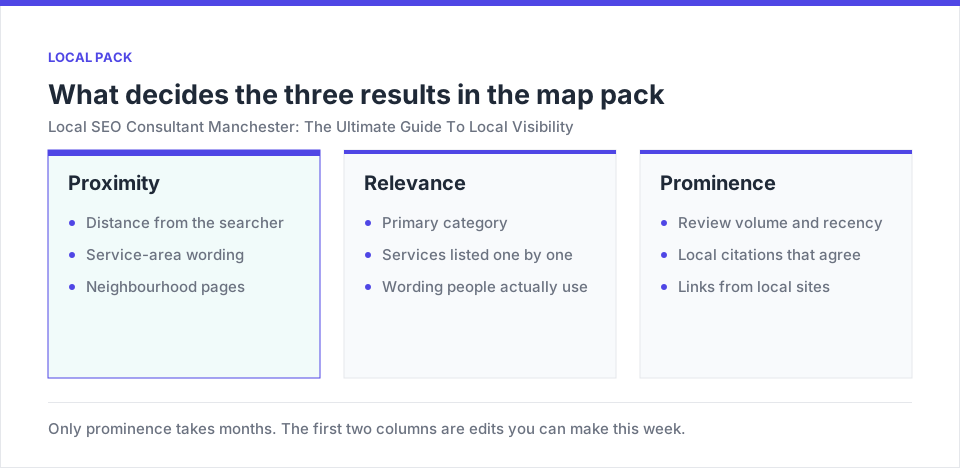
Concurrently, establish a Be Manchester hub that communicates city-wide authority and links to district proofs. Create a region-specific content calendar that prioritises boroughs by search demand and local footfall potential, enabling rapid testing and learning across districts.
- NAP fixes implemented across core Manchester listings for five priority locations.
- GBP health sprint completed with updated hours, categories, attributes, and photos for City Centre and adjacent districts.
- Two to three Ru Manchester depth pages launched for top boroughs, including maps, FAQs, and proximity content.
- Be Manchester hub content published with cross-links to depth pages to establish a city-wide authority loop.
- Parity dashboards established to monitor Local Pack impressions, GBP health milestones, and district-page engagement.
Proximity Signals And Footfall Optimisation
Beyond visibility, Manchester campaigns must translate proximity into action. Proximity signals are strengthened by district-specific proofs, accurate maps data, and directions that guide users from Local Pack entries to footfall or service inquiries. Use GBP posts to highlight local promotions, events, and neighbourhood-centric offerings. In parallel, correlate Local Pack clicks with in-store visits using Google Analytics 4 and store-visit signals where available, attributing both online engagement and offline conversions to Manchester locations.
In practice, align Be Manchester hub pages with Ru Manchester depth pages that feature maps, drive directions, customer testimonials from nearby districts, and neighbourhood FAQs. This tight coupling reinforces locality relevance and improves the probability that searches with proximity modifiers land on pages that meet intent.
Review Signals And Reputation Management
Reviews are a critical authority signal for Manchester’s locality proofs. Implement a proactive review strategy that encourages authentic feedback across each borough, with timely responses that acknowledge local context. Regularly monitor sentiment, respond to concerns, and use GBP posts to signal improvements or new offerings in specific districts. Integrate reviews into depth pages by featuring district-specific testimonials and case studies to reinforce proximity credibility.
Maintain a disciplined approach to NAP accuracy and listing health. A clear process for addressing inconsistent reviews or listing anomalies helps prevent Local Pack volatility and sustains trust with Manchester customers.
Content Accelerators: Seasonal Campaigns And Local Events
Manchester’s calendar offers opportunities to align content with local happenings, such as city-wide festivals, football fixtures, and seasonal service demand spikes. Create seasonal content clusters that tie Be Manchester themes to district-focused proofs, including proximity maps, event-driven FAQs, and location-specific promotions. Time-bound campaigns should be designed with clear measurement checkpoints so you can attribute uplift to the corresponding Be Manchester and Ru Manchester activities.
Coordinate with GBP health updates and timely landing pages for high-traffic periods. When executed well, these accelerators amplify proximity signals, increase depth-page engagement, and contribute to a sustainable rise in Local Pack impressions across multiple Manchester boroughs.
Measurement Framework: ROI, Dashboards, And Case Study Outline
Establish a comprehensive measurement framework that juxtaposes Be Manchester city-wide signals with Ru Manchester district proofs. Track Local Pack impressions by borough, page-level engagement on depth pages, and conversion signals from locality content. Use parity dashboards to visualise ROI, allocate resources to high-potential districts, and guide governance decisions as Manchester’s search landscape evolves.
Structure dashboards to capture KPI layers, including GBP health milestones, NAP consistency, proximity-driven clicks, and store visits. Prepare quarterly case studies that illustrate how Be Manchester and Ru Manchester activities translate into tangible local outcomes, helping stakeholders understand the value of two-tier localisation in Manchester.
To accelerate results, leverage the Manchester SEO services hub and start a discovery via the contact page. The two-tier framework supports scalable growth across Manchester’s boroughs, delivering durable Local Pack visibility and credible locality proofs. For primary guidance, consult established sources like Google’s Local Pack guidelines and Moz Local resources, and tailor implementations to Manchester’s distinctive market dynamics.
Start your tailored Manchester plan today by visiting Manchester SEO services or contact us to map Be Manchester topics to Ru Manchester proofs across your locations.
Measuring Success: Local SEO KPIs And Analytics
In Manchester’s two-tier local SEO framework, success hinges on more than just activity. It requires rigorous, auditable measurement that proves how city-wide Be Manchester signals translate into district-level Ru Manchester proofs, driving Local Pack visibility and tangible business outcomes. This part lays out a practical KPI framework, the parity dashboards that bind Be Manchester and Ru Manchester surfaces, data sources, attribution approaches, and governance rhythms that sustain momentum for local campaigns managed by a Manchester-focused SEO consultant.
Establishing A KPI Framework For Manchester
Begin with a concise set of metrics that reflect both layers of the two-tier model. Primary indicators include Local Pack impressions by borough, proximity-driven clicks, and depth-page engagement. Secondary metrics cover GBP health, NAP consistency, and map interactions combined with in-store or online conversions. The aim is to create a dashboard that makes it easy to see how Be Manchester activities uplift Ru Manchester proofs and, ultimately, conversions from locality content.
- Local Pack impressions by borough to monitor breadth and district-coverage.
- GBP health milestones and NAP consistency as enabling signals for proximity.
- Depth-page engagements such as time on page, scroll depth, and proximity map interactions.
- Proximity-driven calls, form submissions, and store visits where trackable.
- ROI attribution linking Be Manchester outputs to Ru Manchester outcomes and business results.
Dashboard Architecture: Parity Between Be Manchester And Ru Manchester
Parity dashboards are the central governance instrument. They present side-by-side views of city-wide Be Manchester signals (GBP health, hub content performance, and broad Local Pack visibility) alongside borough-focused Ru Manchester proofs (depth-page engagement, district maps, testimonials, and proximity content). The objective is to detect drift early, prevent signal conflicts, and maintain a coherent narrative from discovery to locality-specific conversion.
Key design principles include: consistent data sources across surfaces, aligned timeframes for rolling metrics, and clear owner responsibilities for Be Manchester versus Ru Manchester surfaces. The dashboards should be accessible to stakeholders and update automatically from connected data streams such as GBP insights, Google Analytics 4, and your content management system.
Data Sources And Attribution
Reliable attribution requires integrating GBP data, local listings health, and website analytics. Primary inputs include Google Business Profile insights, GBP health flags, Map interactions, local page impressions, and diverse calls-to-action. Supplement with Google Analytics 4 for on-site engagement, Google Search Console for query visibility, and your CRM or call-tracking system for conversions. The aim is to map locality activities (Be Manchester) to district outcomes (Ru Manchester) with credible ROI signals that stakeholders can verify.
- GBP Insights: monitor profile completeness, updates, reviews, and engagement signals by borough.
- Local Landing Pages: track proximity interactions, directions requests, and map clicks.
- Website Analytics: measure depth-page visits, time on page, and form fills by borough.
- Conversions: attribute calls, form submissions, and bookings to locality content paths.
Implementation Steps And Quick Wins
Translate the KPI framework into a practical rollout plan. Start with quick wins that stabilise GBP health and ensure NAP consistency across top Manchester locations. Then establish borough-focused depth pages and region templates that feed into Ru Manchester proofs. Finally, build a parity dashboard that makes ROI visible to leadership. A well-structured 90-day plan delivers early validation and sets the stage for scalable locality activation across Manchester.
- Baseline audit: GBP health, NAP consistency, and Local Pack visibility across priority boroughs.
- Two-tier content activation: Be Manchester hub improvements plus Ru Manchester depth pages for top districts.
- Dashboard deployment: parity dashboards with real-time data feeds and clear ownership.
- ROI modelling: estimate the uplift from locality activations and tie budgets to measurable outcomes.
Practical Templates And Reporting Cadence
Provide stakeholders with practical templates: a Be Manchester hub KPI sheet, a Ru Manchester depth page performance tracker, and a region-template change log. Establish a monthly governance cadence to review dashboards, address signal drift, and adjust priorities. Quarterly reviews should evaluate ROI, justify continued investment, and plan scale across additional boroughs. For authoritative guidance, align with Google’s Local Pack and Moz Local references as you tailor Manchester-specific dashboards.
For hands-on support in building these measurement artefacts, explore the Manchester SEO services on manchesterseo.ai and start your discovery via the contact page.
Reputation, Reviews And Social Proof In Local Manchester Markets
In Manchester’s competitive local landscape, reputation functions as a critical credibility amplifier for both Be Manchester (city-wide authority) and Ru Manchester (borough-level proofs). A two-tier approach recognises that strong GBP health and city-scale content set the stage, while district-focused reviews, case studies, and local testimonials translate trust into proximity-driven conversions. A Manchester-based local SEO consultant coordinates this ecosystem to ensure consistency, relevance, and measurable impact across Local Pack surfaces and depth pages. For authoritative guidance on review management and local signals, consult Google’s GBP resources and Moz Local literature, then tailor those principles to Manchester’s distinct boroughs.
The Two-Tier Reputation Advantage: Be Manchester And Ru Manchester
Be Manchester topics establish baseline authority, GBP health, and audience trust across the city. Ru Manchester depth pages demonstrate proximity and district-specific proofs that validate that authority at the neighbourhood level. When these layers are aligned, searches for Manchester services will see a coherent narrative: city-wide credibility supports local proofs, and local proofs reinforce city-scale relevance. A governance framework should include translation provenance notes to maintain terminology consistency as new boroughs are added, ensuring every piece of content fits the Be Manchester to Ru Manchester workflow.
Ethical Review Collection In Manchester
In the UK, reviews are a vital trust signal. Collect feedback through opt-in processes that respect customer consent and data privacy. Encourage authentic reviews at meaningful milestones—post-service completion, after successful support interactions, or following a local event. Use borough-tailored prompts to capture district-specific experiences without prompting inflated sentiment. Ensure GDPR-compliant handling of customer data, and provide a clear privacy notice about how reviews will be used and published. Regularly refresh review prompts to reflect new services or changes in hours across Manchester’s districts. For best-practice references, review Google’s GBP guidance and Moz Local frameworks, then apply them to the realities of Manchester’s boroughs.
Responding To Reviews And Reputation Management
Timely, professional responses to both positive and negative feedback build trust with local audiences and signal search engines that you value customer experience. A constructive approach includes acknowledging specifics, outlining remediation steps where needed, and inviting ongoing dialogue. Example responses might reference a City Centre experience and describe actions taken to resolve a scheduling issue in a nearby district. Pair responses with GBP posts that highlight improvements or new district services to demonstrate a responsive presence across Manchester.
Integrating Reviews Into GBP Health And Local Content
Reviews feed into GBP health metrics and district-focused content. When Be Manchester reviews emphasise city-wide service quality, translate recurring themes into Be Manchester hub updates. Conversely, district-specific testimonials fuel Ru Manchester depth pages, enriching proximity content with authentic voices from nearby boroughs. Use schema to annotate reviews on relevant pages, improving the likelihood of rich results and improving proximity signals for Manchester locations. Regularly summarise recurring themes in Be Manchester sections to demonstrate city-wide authority, while embedding district testimonials into Ru Manchester pages to validate proximity credibility. For external references, Google’s GBP guidance and Moz Local resources provide foundational context for reputation practices in UK markets.
Governance And Measurement Of Reputation
Be Manchester and Ru Manchester signals should be tracked with parity dashboards that display city-wide GBP health alongside district proofs. Key metrics include review velocity by borough, average sentiment stability, response times, and the correlation between review themes and content updates on depth pages. Regular governance meetings help reallocate resources toward districts delivering the strongest locality outcomes and ROI. For practitioners, a practical starting point is a dashboard that juxtaposes GBP health milestones with district-page engagements, providing a transparent ROI narrative for leadership.
Manchester Case Study: A Local Pharmacy Or Café
Consider a Manchester coffee shop with several neighbourhood outlets. A two-tier reputation programme would collect borough-specific reviews, feed them into depth pages featuring proximity maps, and integrate them with GBP health updates for City Centre, North Manchester, and South Manchester locations. Positive district testimonials would be showcased on corresponding depth pages, while city-wide success stories and GBP improvements support the Be Manchester hub. The outcome is higher Local Pack impressions across multiple boroughs, reinforced by credible locality proofs on depth pages and a clear ROI trail linking reputation activity to conversions and in-store visits.
Next Steps For Manchester Teams
To start deploying this reputation framework, begin with GBP health checks, standardise NAP across all Manchester locations, and consolidate district testimonials into Ru Manchester depth pages. Build Be Manchester hub content that reflects city-wide authority and links to district proofs, ensuring a coherent, scalable user journey from discovery to locality-specific conversion. For practical, two-tier guidance, explore Manchester SEO services on manchesterseo.ai and book a discovery via the contact page to tailor a programme to your locations and sectors. For best-practice references, consult Google’s Local Pack resources and Moz Local guides as you tailor strategies to Manchester’s boroughs.
The Local SEO Consultancy Process: Audit, Strategy, Implementation, Reporting
With a clear, auditable roadmap, Manchester businesses can translate two-tier locality ambitions into durable Local Pack visibility and credible locality proofs. This part of the guide outlines the practical consultancy workflow a Manchester-based expert from manchesterseo.ai follows to move from initial discovery to measurable ROI. The process emphasises Be Manchester (city-wide authority) and Ru Manchester (borough-level proofs) signals, ensuring every action contributes to both surfaces in a coherent, scalable way.
1) Discovery And Audit
The journey begins with a structured discovery that gathers essential context from stakeholders, analytics, GBP access, and local listings data. A Manchester-focused consultant maps current performance against the Be Manchester and Ru Manchester framework, identifying gaps between city-wide authority signals and district-level proofs. The audit examines GBP health, NAP consistency, local citations, page-level signals, and the alignment between Be Manchester topics and Ru Manchester depth pages. The objective is to establish a reliable baseline from which to measure progress and to prioritise initiatives with the highest locality impact.
Key outputs include a data access plan, a summary of current GBP health across Manchester locations, and an initial gap list covering NAP mismatches, incomplete local listings, and missing district content. The discovery also surfaces quick wins that can be implemented in weeks, such as GBP optimisations and initial Be Manchester hub tweaks that begin to stabilise Local Pack presence.
2) Strategy And Roadmap
Following the audit, the consultant crafts a two-tier strategy that translates Be Manchester intent into Ru Manchester proofs. A structured roadmap defines how city-wide authority content (Be Manchester) supports district-specific proofs (Ru Manchester), with region templates that enable scalable localisation. The strategy aligns content architecture, metadata standards, and region templates to deliver coherent user journeys from discovery to proximity-based conversions. The roadmap also details governance, milestones, and the data streams required to sustain measurement discipline over time.
Deliverables typically include a Be Manchester hub blueprint, a Ru Manchester depth-page plan for priority boroughs, and a parity dashboard concept that will later harmonise signals across surfaces. This phase establishes the skeleton for rapid rollout while safeguarding signal integrity and translation provenance as Manchester expands into new districts.
3) Implementation And Activation
With the strategy in place, the consultancy moves into hands-on execution. Implementation spans on-page optimisations, GBP health enhancements, and carefully staged content activations that reflect Be Manchester and Ru Manchester signals. The two-tier flow ensures Be Manchester topics establish city-wide credibility, while Ru Manchester depth pages demonstrate district proximity and relevance. Implementations are typically executed in sprints, starting with high-impact boroughs and expanding to additional districts as data matures. Regular coordination with the client ensures alignment with practical realities, such as hours, service areas, and local promotions.
Critical activities include refining meta data to embed locality intent, deploying region templates for rapid localisation, and constructing internal links that guide users from Be Manchester hub content to Ru Manchester proofs without sacrificing crawl efficiency. Throughout, translation provenance notes keep terminology consistent as new boroughs are added.
For the Local Pack side of this, the local SEO guide covers what to fix and how to track it in Semalt.
4) Measurement, Governance And ROI
The final phase concentrates on measurement, governance, and ROI attribution. Parity dashboards place Be Manchester and Ru Manchester signals side by side, tracking Local Pack impressions, proximity-driven clicks, and depth-page engagement by borough. The dashboards illuminate drift, guide resource allocation, and quantify how two-tier activations translate into business outcomes. Governance routines establish clear ownership, SLAs, and a cadence for review, ensuring consistency as Manchester grows and surfaces evolve.
ROI modelling ties locality efforts to tangible results such as increased footfall, inquiry volumes, and conversions. The measurement framework relies on data from GBP Insights, Map interactions, website analytics (e.g., GA4), and offline conversions where trackable. The aim is to present a transparent, auditable narrative that stakeholders can validate, adjust, and scale over time.
Putting It Into Practice: Next Steps
To transform this consultancy process into a live Manchester rollout, engage with Manchester SEO services on manchesterseo.ai and request a discovery via the contact page. The two-tier Be Manchester and Ru Manchester framework is designed to scale, delivering durable Local Pack visibility and credible locality proofs across Manchester. For reference, utilise authoritative guidance from Google on Local Pack and GBP health, and consult Moz Local for foundational principles that you can tailor to Manchester’s boroughs.
Budgeting, Pricing, and Engagement Models for Manchester Clients
Pricing for local SEO in Manchester must reflect the two-tier Be Manchester (city-wide authority) and Ru Manchester (borough-level proofs) framework while aligning with real-world business goals. A transparent, ROI-driven pricing approach helps Manchester clients forecast outcomes, manage budgets, and maintain governance as surfaces scale across the city’s diverse districts. This part outlines practical engagement models, what to expect in each, and how to judge value when partnering with a local SEO consultant from manchesterseo.ai.
Core Pricing Models For Manchester Campaigns
Three pricing paradigms commonly work for Manchester clients, each with advantages depending on budget, desired speed of impact, and governance requirements.
- Monthly Retainer: A predictable, ongoing engagement covering core Be Manchester activities, GBP health, and a defined set of Ru Manchester depth pages. This model emphasises steady progress, governance, and regular reporting. Suitable for small to mid-market businesses seeking durable Local Pack visibility and continuous locality proofs across multiple boroughs.
- Milestone-Based Projects: Fixed-price sprints tied to specific deliverables or borough deployments. Ideal for businesses with a clear expansion plan or a temporary campaign that targets particular districts within Manchester. Milestones can include GBP health improvements, a cluster of depth pages, or a regional content initiative.
- Hybrid Or Performance-Linked: A base retainer supplemented by performance bonuses tied to predefined outcomes (for example, Local Pack uplift by borough or increases in proximity-driven conversions). This model aligns incentives with concrete results while maintaining a stable core service level.
What Each Model Typically Covers
Understanding scope is essential. The following outlines what you can usually expect within each model while maintaining Be Manchester and Ru Manchester alignment:
- Retainer: GBP health management, NAP hygiene, initial Be Manchester hub content, borough-focused depth pages, ongoing localisation, monthly reporting, and governance meetings.
- Milestone: A defined set of activations per borough, with deliverables such asGBP updates, new depth pages, content clusters, and regional landing pages completed within a sprint timeline.
- Hybrid/Performance: Base retainer plus quarterly ROI reviews, with bonuses triggered by Local Pack impressions growth, proximity-led traffic, or increment in district engagements.
Engagement Tiers For Manchester: What You Get
To simplify decision-making, many Manchester campaigns are organised into three practical tiers. These are designed to be scalable and maintain signal integrity across Be Manchester and Ru Manchester surfaces.
- Essential Local SEO: Core GBP health, NAP hygiene, initial Be Manchester hub content, and GBP optimisation for 1–2 boroughs with light depth-page development.
- Growth Local SEO: Expanded GBP health, be Manchester hub enhancements, and Ru Manchester depth pages for 4–6 boroughs, plus region templates and content clusters to support locality proofs.
- Scale Local SEO: Full Be Manchester and Ru Manchester integration across all target boroughs, advanced content ecosystems, comprehensive region templates, advanced schema, and robust governance with parity dashboards and ROI attribution for ongoing expansion.
What Determines Price In Manchester?
Several factors influence pricing, including the number of Manchester locations, borough density, required GBP health depth, content volume, and competition intensity. Additional drivers include the complexity of service-area pages, the breadth of region templates, and whether you require ongoing digital PR, link-building, or advanced data governance. A transparent proposal will clearly link pricing to deliverables, KPIs, and milestone targets so you can see how every pound translates into Local Pack visibility and locality proofs.
Discovery, Proposals, And Onboarding
A robust discovery phase is essential to set pricing expectations accurately. You should receive a proposal that includes the Be Manchester to Ru Manchester signal mapping, a governance charter, a parity dashboard concept, and a clear ROI model. The onboarding process typically encompasses access provisioning for GBP and analytics tools, stakeholder introductions, and a phased rollout plan aligned to borough priority. This structure helps ensure pricing reflects reality and the plan remains auditable through the lifetime of the engagement.
Negotiation And Contracts: Practical Tips
- Ask for explicit scope definitions: request a written baseline scope for Be Manchester and Ru Manchester work, with a change-control process for additions.
- Demand a transparent ROI framework: ensure the proposal includes a documented method for attributing Local Pack and locality-proof outcomes to specific activities.
- Require milestone-based payments: align payments with measurable deliverables to avoid scope creep and protect ROI integrity.
- Clarify governance ownership: specify who owns Be Manchester outputs and who manages Ru Manchester depth pages, plus escalation paths.
Next Steps: Take Action In Manchester
To explore pricing models that fit your budget and growth plan, review the Manchester SEO services on manchesterseo.ai and initiate a discovery via the contact page. The two-tier Be Manchester and Ru Manchester framework is designed for scalable locality activation, delivering durable Local Pack visibility and credible locality proofs across Manchester's boroughs. A transparent pricing conversation sets the foundation for a practical rollout that your team can manage with confidence.
Reputation, Reviews And Social Proof In Local Manchester Markets
In Manchester’s competitive local landscape, reputation functions as a critical credibility amplifier for both Be Manchester (city-wide authority) and Ru Manchester (borough-level proofs). A two-tier approach recognises that strong GBP health and city-scale content set the stage, while district-focused reviews, case studies, and local testimonials translate trust into proximity-driven conversions. A Manchester-based local SEO consultant coordinates this ecosystem to ensure consistency, relevance, and measurable impact across Local Pack surfaces and depth pages. For authoritative guidance on review management and local signals, consult Google’s GBP resources and Moz Local literature, then tailor those principles to Manchester’s distinct boroughs.
The Two-Tier Reputation Advantage: Be Manchester And Ru Manchester
Be Manchester topics establish baseline authority, GBP health, and audience trust across the city. Ru Manchester depth pages demonstrate proximity and district-specific proofs that validate that authority at the neighbourhood level. When these layers are aligned, searches for Manchester services will see a coherent narrative: city-wide credibility supports local proofs, and local proofs reinforce city-scale relevance. A governance framework should include translation provenance notes to maintain terminology consistency as new boroughs are added, ensuring every piece of content fits the Be Manchester to Ru Manchester workflow.
Practically, align Be Manchester content with GBP health updates and broad service pages, while developing Ru Manchester depth pages that reflect each district's unique needs, maps, and testimonials. This two-tier approach creates a scalable path from awareness to locality-based conversions, making it easier to justify resource allocation to stakeholders and ensuring that proximity signals are reinforced rather than fragmented.
Be Manchester And Ru Manchester: Alignment Of Reviews Across Surfaces
Reviews feed into GBP health and locality proofs. A Manchester-focused strategy maps district-specific feedback to Ru Manchester depth pages while using city-wide sentiment to support Be Manchester hub content. The objective is a coherent narrative across surfaces where a positive district review enhances both the local proof and the broader authority, creating a reinforcing loop that boosts Local Pack impressions and trust signals for nearby boroughs.
Translation provenance notes should accompany every update to maintain consistent terminology as you expand, ensuring readers experience a single, trustworthy story from the city centre to outlying districts. Regular cross-pollination of reviews into content calendars helps keep Be Manchester content timely while ensuring Ru Manchester pages stay grounded in local realities.
Ethical Review Collection In Manchester
UK privacy norms require a transparent, opt-in approach to gathering customer feedback. Implement a structured workflow that respects consent, offers clear review channels, and provides district-focused prompts to capture location-specific experiences without inflating sentiment. Encourage reviews at meaningful milestones—after a service completion, post-support interaction, or following a local event. Ensure GDPR-compliant handling and publish a concise privacy notice about how reviews will be used and shared. Regularly refresh prompts to reflect new services or district changes in hours or locations.
Coordinate with GBP health activities so that authentic reviews feed directly into profile completeness and proximity signals for the relevant Manchester location or district. This disciplined collection builds a reliable stream of locality-specific evidence that strengthens depth pages and Local Pack attractiveness.
Responding To Reviews And Reputation Management
Timely, professional responses to both positive and negative feedback build trust with local readers and signal search engines that you value customer experience. Adopt a clear response framework: acknowledge specifics, offer remediation where appropriate, and invite ongoing dialogue. For example, reply to a City Centre experience by outlining concrete steps taken to address a scheduling issue or to improve availability in that district. Pair responses with GBP posts highlighting district improvements to demonstrate a responsive presence across Manchester.
Prioritise consistency in tone and terminology so readers experience a seamless Be Manchester to Ru Manchester journey. Use responses to feed district-focused content such as FAQs and case studies on depth pages, reinforcing proximity credibility and encouraging more local engagement.
Integrating Reviews Into GBP Health And Local Content
Reviews should actively inform GBP health improvements and district content strategies. Highlight recurring themes from reviews on Be Manchester hub sections to showcase city-wide capabilities, while embedding district-focused testimonials on Ru Manchester depth pages to validate proximity relevance. Use reviews to influence content calendars, triggering updates to maps, directions, and proximity FAQs on district pages. Where appropriate, apply FAQ schema to capture common questions echoed in Manchester’s boroughs, improving rich results and proximity signals.
Consult Google’s GBP guidance and Moz Local frameworks for foundational principles, then tailor them to Manchester’s geography. Summarise frequent themes in Be Manchester pages to reinforce city-wide authority and embed district testimonials into Ru Manchester pages to strengthen locality proofs.
Governance And Measurement Of Reputation
Two-tier reputation signals require parity dashboards that visualize city-wide Be Manchester signals alongside district-specific Ru Manchester proofs. Track Local Pack impressions by borough, depth-page engagements, and locality-driven conversions. Regular governance meetings should review sentiment trends, update content calendars, and adjust resource allocation to districts delivering the strongest locality outcomes. A practical ROI narrative emerges when reputation activity is linked to in-store visits, calls, and enquiry volumes attributed to locality content paths.
Use GBP Insights, map interactions, GA4, and CRM or call-tracking data as primary attribution sources. Prepare quarterly case studies that demonstrate how Be Manchester and Ru Manchester activities translate into measurable local results, helping leadership understand the value of a two-tier reputation programme for Manchester.
Sustaining Momentum And The Road Ahead For Local Manchester SEO
With the two-tier Be Manchester (city-wide authority) and Ru Manchester (borough-level proofs) framework established, Part 15 focuses on sustaining momentum, elevating governance maturity, and future-proofing localisation across Manchester. The aim is to convert early wins into durable, scalable value while maintaining rigorous measurement, clean data, and a clear path to ROI. This closing phase weaves together governance artefacts, parity dashboards, region templates, and practical playbooks that a dedicated Manchester SEO consultant can implement with the Manchester SEO services team at manchesterseo.ai.
From Tactics To Governance: Maturity To Scale
Early wins prove the concept; mature governance ensures those wins become a repeatable engine. A Manchester-focused governance model moves beyond project-by-project optimisations to an operational system where Be Manchester topics drive city-wide credibility and region templates enable rapid, district-level activations. Translation Provenance notes accompany every update to uphold terminology consistency as more boroughs are added. The result is a unified, auditable surface network that remains coherent as Manchester grows.
Key Components Of A Mature Two-Tier Governance Model
- Governance Charter: defines ownership, SLAs, decision rights, and escalation paths for Be Manchester and Ru Manchester work.
- Parity Dashboards: live, side-by-side views of Be Manchester signals (GBP health, hub content) and Ru Manchester proofs (depth pages, maps, proximity content).
- Region Templates: reusable blocks that support scalable localisation while preserving signal integrity and terminology.
- Translation Provenance: documented language and terminology guidelines that travel with every update as boroughs expand.
- ROI Traceability: clear attribution from locality activities to Local Pack impressions and district conversions.
90-Day Momentum Plan: Three Phases To Lock In Gains
The rollout framework translates into a practical three-phase 90-day plan that captures quick wins while building the foundations for long-term locality growth.
- Phase 1 (0–30 days): implement governance charter, stabilise GBP health, fix remaining NAP inconsistencies for priority Manchester locations, and publish the initial Be Manchester hub updates that link to a few Ru Manchester depth pages for high-potential districts.
- Phase 2 (30–60 days): accelerate Ru Manchester depth page expansion to additional boroughs, strengthen internal linking, refine region templates, and embed district maps, FAQs, and proximity content into the live pages.
- Phase 3 (60–90 days): deploy parity dashboards across surfaces, begin light digital PR or partner outreach to secure local backlinks, and run a governance review to reallocate resources toward districts delivering the strongest locality ROI.
Measurement, Attribution And Continuous Improvement
Two-tier locality success hinges on auditable measurement that proves Be Manchester activities lift Ru Manchester proofs and Local Pack performance. Implement a data architecture that ties GBP health, NAP consistency, depth-page engagement, and proximity interactions to online conversions and offline outcomes where trackable. Regularly refresh dashboards to reflect new boroughs, new GBP updates, and new content clusters. The governance rhythm should include monthly check-ins and quarterly ROI reviews to justify investment and prioritise high-impact districts.
Core KPIs To Track At This Stage
- Local Pack impressions by borough and city-wide reach for Be Manchester topics.
- Depth-page engagement metrics: time on page, scroll depth, and map interactions on Ru Manchester pages.
- GBP health milestones: profile completeness, updates, reviews, hours, and attributes.
- NAP consistency across maps, directories, and on-site pages for all Manchester locations.
- Conversions attributed to locality content: calls, form submissions, direction requests, and in-store visits where trackable.
Rollout Templates And How To Use Them
Region Templates, Translation Provenance notes, and Parity Dashboard blueprints become the standard toolkit for Manchester deployments. Use Be Manchester hub content to anchor city-wide authority and GBP health, then map to Ru Manchester depth pages for district relevance. A well-structured internal-linking plan ensures readers move seamlessly from Be Manchester topics to district proofs, reinforcing proximity signals across the city’s boroughs.
Next Steps: How To Engage With Manchester SEO Services
To translate this momentum into a concrete rollout, engage with Manchester SEO services at manchesterseo.ai and book a discovery via the contact page. The two-tier Be Manchester and Ru Manchester framework is designed to scale with your business, delivering durable Local Pack visibility and credible locality proofs across Manchester. For authoritative guidance on best practices, reference Google’s Local Pack guidelines and Moz Local resources to tailor strategies to Manchester’s boroughs, keeping translation provenance and governance front and centre.