Part 1 Of 12: Why A Manchester SEO Specialist Is Crucial For Local Business Growth
Manchester is a city of contrasts and opportunities. From its thriving professional services scene to its dynamic retail and tech sectors, local visibility in search can translate to real, measurable growth. A dedicated Manchester-based SEO specialist understands the nuances of this market: client needs, audience behaviour, and the competitive landscape across a wide range of boroughs from Salford to Stockport. A focused, localisation-led approach helps businesses appear when prospective customers are actively searching for the services you provide, in the right neighbourhoods and at the right times.
With a specialist rooted in Manchester, you gain more than technical excellence. You gain intimate knowledge of consumer intent patterns, local SERP features, and the distribution of search demand across the city. This includes significant activity around Google Business Profile (GBP), Google Maps, and Local Pages, all of which influence proximity-based conversions. A Manchester expert integrates these signals into a coherent strategy that aligns with your brand and regional realities. At ManchesterSEO.ai we emphasise governance-led diffusion—a framework that ties Local Pages, GBP, Maps and Locale Hubs into a single, auditable growth narrative.
Key questions to consider when evaluating a local SEO partner include: Can they demonstrate a track record with Manchester clients? Do they prioritise local intent alongside technical excellence? Is there a transparent process for reporting and ROI attribution? Answers to these questions should come with tangible outcomes, not generic promises. Our guidance emphasises practical steps and evidence-based planning, drawing on renowned benchmarks such as the Google SEO Starter Guide and Moz Local to inform responsible, long-term optimisation.
The Core Capabilities Of A Manchester SEO Specialist
- Comprehensive local audits that identify Manchester-specific opportunities and quick wins.
- GBP optimisation and Maps integration to improve presence in local search and navigation.
- Local content localisation and on-page optimisation that respects regional terminology and user intent.
- Technical SEO with a focus on mobile performance, crawlability, and structured data that supports local signals.
- Authority-building through local outreach, PR, and high-quality, relevant backlink acquisition.
- Ongoing reporting that links visibility and traffic to tangible outcomes such as calls, visits and conversions.
Choosing a Manchester specialist means prioritising a partner who can deliver a practical, city-specific roadmap. You should expect a staged process: an initial audit, a tailored localisation plan, a per-surface activation schedule, and a governance framework that keeps content aligned across Local Pages, GBP, Maps and Locale Hubs. This approach reduces drift, improves consistency, and accelerates the path to local conversions. For reference and inspiration, you can explore the broader methodologies at our SEO services and learn how a discovery call at the Contact page can jump-start your plan. External resources like Google SEO Starter Guide and Moz Local provide foundational context for localisation and local search best practices.
How does a Manchester specialist impact your business in practice? They translate business goals into diffusion-ready activations, map local search demand to your surfaces, and create a framework where language variants remain coherent as they diffuse across Local Pages, GBP and Maps. The aim is not only higher rankings, but more relevant traffic, better user experience, and increased local conversions. A trusted partner will also set expectations about timelines, costs, and measurable milestones, ensuring stakeholder alignment from day one.
What next? If you’re considering elevating your Manchester presence, start with a local audit and a diffusion-ready plan. Reach out to our team via the Contact page to arrange a discovery session. For practical benchmarks and case studies, consult the SEO services page and explore how language and local context can unlock affordable, scalable growth. You can also reference external frameworks for localisation and governance to strengthen your internal alignment and audit readiness.
Part 2 Of 12: Defining A Manchester SEO Specialist: Scope, Skills And Responsibilities
Manchester is a diverse and competitive marketplace where local visibility directly translates into nearby footfall and in-market conversions. A dedicated Manchester SEO specialist brings a customised blend of technical expertise and city-specific market intelligence. They translate business goals into actionable diffusion activations across Local Pages, Google Business Profile (GBP), Maps, and Locale Hubs, ensuring your brand resonates with Manchester audiences from Salford to Stockport. At ManchesterSEO.ai we embed a governance-led diffusion spine that ties Local Pages, GBP, Maps and Locale Hubs into a single, auditable growth narrative.
What does a typical Manchester SEO specialist do in practice? They combine audit discipline, strategic planning, and execution with rigorous measurement. The goal is not only to rank higher, but to drive local intent, engagement, and conversions that are attributable to your marketing investment. The role requires close collaboration with business leaders, marketing teams, and local partners to ensure a coherent, city-wide diffusion that respects Manchester’s unique geography and consumer behaviour.
Key responsibilities typically span the following areas:
- Conduct comprehensive local and on-site audits to identify Manchester-specific opportunities and quick wins.
- Develop localisation-driven SEO strategies that align with regional terminology and user intent.
- Optimise GBP and Maps presence to improve local visibility, directions, and store visits.
- Implement technical SEO enhancements focused on mobile performance, crawlability, and structured data to support local signals.
- Lead content localisation efforts, ensuring tone, terminology and cultural relevance across Manchester communities.
- Build authority through local outreach, PR, and high-quality, locally relevant backlinks.
Beyond the tactical work, a Manchester SEO partner must operate within a governance framework that enables scalable growth. This includes clear cadences for reporting, a shared glossary of local terms, and a diffusion roadmap that guides publishing across surfaces. The aim is to maintain a consistent brand voice while responding quickly to Manchester’s evolving local signals, such as neighbourhood events, commuter patterns, and retail calendar spikes. For reference and inspiration, review our SEO services and consider a discovery call via the Contact page to tailor a Manchester-specific plan. Foundational external references such as Google’s SEO Starter Guide and Moz Local provide useful context for localisation and local search best practices.
Core capabilities of a Manchester SEO specialist typically include the following:
- Localized audit proficiency, identifying area-specific opportunities across districts like Manchester City Centre, Salford Quays, and Chorlton.
- GBP optimisation and Maps integration to maximise proximity-based visibility and footfall.
- Local content strategy and on-page optimisation tuned to regional terminology and user intent.
- Advanced technical SEO with a focus on mobile performance, crawlability, and structured data to support local signals.
- Authority-building through local outreach, PR and high-quality, relevant backlinks from Manchester-area publications and associations.
- Transparent reporting that links visibility and traffic to tangible outcomes such as calls, visits and store footfall.
Implementation approaches should be pragmatic and staged. A typical engagement begins with an audit, followed by a localisation plan, then per-surface activation calendars, all under a governance framework that keeps content aligned across Local Pages, GBP, Maps and Locale Hubs. The diffusion spine should be an auditable, repeatable process that scales as Manchester’s surface ecosystem expands. For practical benchmarks and case studies, explore our SEO services page and request a discovery call via the Contact page to discuss a Manchester-focused roadmap. The Google SEO Starter Guide and Moz Local remain solid reference points for localisation and governance best practices.
When choosing a Manchester SEO specialist, organisations should expect a partner who can deliver a coherent, city-wide diagnostic, a localisation strategy that respects regional nuance, and a governance model that ensures consistent execution across all surfaces. A practical Manchester partner will provide clear pricing, timelines, and milestones, backed by evidence from prior Manchester clients. If you’d like a tailored Manchester plan, contact ManchesterSEO.ai to arrange a discovery session, or review the SEO services section for artefacts you can leverage immediately. For external validation, consult authoritative sources such as the Google SEO Starter Guide and Moz Local.
Part 3 Of 12: Understanding Manchester Market: Local Search Dynamics And Consumer Behaviour
Manchester presents a dense, diverse and highly networked local search ecosystem. The city’s mix of business districts—from the City Centre and Deansgate to Salford Quays, Chorlton and Didsbury—creates a mosaic of local intent signals that a Manchester-based SEO specialist must interpret to drive in-market visibility. At ManchesterSEO.ai, we treat these signals as a diffusion challenge: GBP, Maps, Local Pages and Locale Hubs must share a coherent set of anchors so that a user in Ancoats experiences a seamless, locational narrative across surfaces. This governance-backed approach helps ensure that local audiences encounter consistent messaging, relevant services, and timely calls to action, wherever they search from in the city.
Understanding the Manchester market begins with recognising how search behaviour varies by geography and by sector. In the City Centre, for example, footfall-driven searches for hospitality, retail and quick-service businesses spike around lunch hours, commute windows and event dates. In Salford and the Trafford Corridor, demand clusters around retail parks, business parks and transport hubs. In leafy suburbs such as Chorlton or Didsbury, intent shifts toward lifestyle services, local amenities, and community-oriented content. A Manchester SEO specialist maps these patterns to diffusion activations across surfaces, ensuring Local Pages and GBP reflect the same geographical anchors that Maps users rely on for directions, hours and proximity.
Key local signals to monitor include proximity-based queries, branded vs. non-branded density in Local Packs, and the way Google Maps places interact with GBP updates. The diffusion spine nods to these signals by structuring content and metadata around geography anchors that travel coherently from Local Pages through GBP and Maps to Locale Hubs. For practical benchmarks and governance guidance, see our SEO services and start a discovery conversation via the Contact page. Foundational references such as Google’s SEO Starter Guide and Moz Local provide useful context for localisation and local-signal best practices.
Local Intent And Behaviour In Manchester
The Manchester market exhibits three broad intent categories that shape SEO priorities: transactional intent (booking services, purchasing locally), navigational intent (finding a specific venue, supplier or store within Manchester), and informational intent (learning about areas, events, or services). Each intent requires surface-specific content and structured data that guides search engines toward the most contextually appropriate surface. Manchester audiences also respond to time-bound signals—match days, markets, festivals, and seasonal shopping periods—that alter search volume patterns across wards and neighbourhoods. A governance-led diffusion approach ensures ActivationTemplates and TranslationKeys parity keep these intents aligned as content diffuses across Local Pages, GBP and Maps.
Surface Signals And Diffusion Anatomy In Manchester
Effective Manchester SEO hinges on synchronising signals across six diffusion surfaces: Local Pages, GBP, Maps, Locale Hubs, Knowledge Graph Edges, and Catalog entries. The diffusion spine creates a shared framework for geography anchors, ensuring that updates to hours, addresses or service offerings propagate consistently. This avoids drift in topic identity as content diffuses, maintaining user trust and improving local intent capture. Local content should reflect Manchester’s terminology, community references and region-specific terms so users perceive relevance immediately. For practitioners, this means integrating Local Business or Organisation schema with locale-specific properties, and maintaining a central glossary to support translations without eroding topical anchors.
- Anchor geography selection. Choose Manchester districts that drive the highest local intent and start diffusion activations there, expanding outward as signals stabilise.
- Per-surface publishing rules. Apply ActivationTemplates to Local Pages, GBP posts, and Maps overlays so that each surface publishes with harmonised topics and local flavour without content drift.
- Translation parity. Maintain TranslationKeys parity so language variants carry the same topical anchors and meta landmarks across surfaces.
- Provenance and rights. Use a LicensingStamp and provenance ledger to track asset rights and diffusion movements across all surfaces.
- Measurement readiness. Align KPIs to diffusion health metrics (see our Diffusion Health Dashboard) so governance decisions reflect near real-time local performance.
Practical steps to start realising Manchester’s diffusion potential include auditing Local Pages and GBP hygiene, mapping key Manchester anchors to per-surface activation calendars, and building a governance cadence that supports rapid iteration. For detailed artefacts and case studies, explore our SEO services page and request a discovery session via Contact.
Keyword And Content Opportunity Across Manchester Districts
Manchester requires district-aware keyword strategies that reflect local search volumes and intent. Seed keyword research should cover city-wide terms (for example, Manchester SEO consultant, Manchester local SEO), as well as district-specific variants (for example, Nottingham? - ignore that no; instead Nottingham is not relevant; use Manchester districts like Manchester City Centre plumber, Chorlton hairdresser, Salford Quays restaurant). Data-driven prioritisation will identify which districts offer the strongest low-competition opportunities and which require a more aggressive content/PR push. Translation parity ensures those district anchors appear consistently across Local Pages, GBP and Maps so local users encounter coherent signals, no matter which surface they start from. External resources such as Google’s Starter Guide and Moz Local can be used to refine localisation and governance standards, while internal surfaces stay tightly integrated via ActivationTemplates and Provanance Ledger.
To begin, a Manchester-based SEO specialist should align district-level content calendars with local events, business hours, and community interests. This alignment increases the likelihood that Local Pages and Locale Hubs reflect real-world patterns and that Maps directions and GBP calls to action convert in the moment of intent. For practical artefacts and a view of how diffusion health is tracked, visit our SEO services page and book a discovery call via Contact.
In summary, Manchester’s local search dynamics demand a structured yet flexible diffusion plan. By grounding every surface in shared geography anchors, maintaining language parity, and continuously measuring diffusion health, a Manchester SEO specialist can deliver sustained visibility, stronger local engagement, and measurable ROI across Local Pages, GBP, Maps and Locale Hubs. For a practical, district-aware diffusion roadmap specific to your business, reach out to ManchesterSEO.ai today.
Part 4 Of 12: Local SEO Foundations: Listings, Citations, And NAP Consistency
In Manchester, local success starts with clean, consistent business data. Local listings, citations, and a single, authoritative Name–Address–Phone (NAP) foundation drive the visibility of Local Pages, Google Business Profile (GBP), and Maps surfaces. A Manchester-based SEO specialist at ManchesterSEO.ai advocates a governance-led diffusion spine that harmonises NAP anchors across Local Pages, GBP, Maps and Locale Hubs, ensuring your brand appears with reliable proximity signals wherever your customers search in the city.
Why does NAP consistency matter? Inconsistent name, address or phone data creates distrust with customers and search engines alike. GBP and Maps rely on proximity signals to surface the right business at the right location, and even minor discrepancies can fragment your local presence. A governance-focused approach ensures every surface carries the same anchors, reducing drift and improving proximity-based conversions. Our reference framework aligns Local Pages, GBP, Maps and Locale Hubs around shared geography anchors so users in Salford or Chorlton experience a seamless, trustworthy local journey.
Key elements of a solid Manchester local data foundation include: the canonical NAP, consistent business categories, verified hours, and uniform service areas. Local citations from reputable directories act as validators of your local presence, while structured data helps search engines interpret your location context accurately. External benchmarks such as Moz Local and BrightLocal Local SEO offer practical guidance on citation consistency and governance while Google’s own Local Business guidelines emphasise accuracy and up-to-date information across surfaces.
What does a Manchester SEO specialist actually do to stabilise these signals? They compile a master NAP list, audit core directories, and implement a per-surface publishing approach that preserves consistency as content diffuses. The aim is clear: GBP and Local Pages reflect the same location anchors and contact details that Maps users rely on for directions, opening hours, and proximity-based calls to action. A practical governance model also tracks changes to assets through a Provenance Ledger, ensuring every update is auditable and regulator-ready.
To begin implementing Manchester-friendly local data foundations, follow these steps:
- Establish a master NAP. Decide on the authoritative name, address, and phone format for your business and lock it as the source of truth across surfaces. Ensure the format aligns with GBP listing rules and local directory expectations.
- Audit core local listings. Review GBP, Maps, Bing Places, Yelp UK, and other prominent Manchester-relevant directories. Identify inconsistencies in company name, street address, postal code, and phone number, and prepare fixes.
- Standardise categories and attributes. Use consistent business categories across surfaces and map to locally understood terminology. Align opening hours, holiday schedules, and service areas with a single authority on the Diffusion Spine.
- Implement structured data. Attach LocalBusiness or Organization schema with locale-specific properties to your site and GBP; ensure your on-page metadata mirrors your canonical NAP anchors across surfaces.
- Publish and monitor citations. Build high-quality local citations from reputable Manchester-orientated outlets and industry associations. Track changes and maintain data provenance to protect governance integrity.
In practice, governance means more than data hygiene. It requires a repeatable rhythm: quarterly audits, per-surface publishing updates, and a live dashboard that surfaces NAP health alongside GBP and Maps performance. External resources like Moz Local and BrightLocal Local SEO ranking factors provide benchmarks for keeping your local data accurate and authoritative, while Google’s Local Guidelines remind us that consistency across surfaces is fundamental to trust and discovery.
Read next: SEO freelancer Manchester: hiring · Organic SEO consultants Manchester
If you’d like hands-on artefacts and guidance tailored to Manchester, explore our SEO services page to see ActivationTemplates and localization governance tools in action, or book a discovery session via the Contact page. For external validation, consult Moz Local and BrightLocal Local SEO ranking factors to understand localisation and citation governance best practices. A Manchester-focused approach, guided by these frameworks, helps your Local Pages, GBP and Maps operate as a coherent, high-credibility diffusion system.
Part 5 Of 12: SEO Audit — A Local-First Approach To Uncover Opportunities In Manchester
Manchester businesses win when their online presence reflects local intent with precision. Following the local SEO foundations outlined in Part 4, a rigorous SEO audit identifies both quick wins and long-term opportunities across Local Pages, Google Business Profile (GBP), Maps and Locale Hubs. At ManchesterSEO.ai we approach the audit as a governance-led diffusion exercise: map the Manchester surface ecosystem to a common geography framework, validate data integrity, and surface actionable steps that directly translate into local footfall, calls and store visits.
The audit consists of five interlocking phases. First, a surface health check across Local Pages, GBP and Maps to confirm that the city-wide diffusion spine has clean anchors and consistent signals. Second, a thorough on-site and technical audit to ensure the website ecosystem supports robust local signals and rapid content diffusion. Third, a local data hygiene review focused on NAP consistency, directory citations, and knowledge graph accuracy. Fourth, a content audit that evaluates local relevance, language nuance, and district-specific value. Fifth, a governance readiness assessment to ensure ActivationTemplates, TranslationKeys parity and a Provenance Ledger are in place to manage diffusion at scale.
1) Surface health and per-surface diffusion readiness
Assess Local Pages for district-level relevance and consistent topic anchors that travel through GBP and Maps. Check GBP claim status, category accuracy, hours, and post cadence. Verify Maps overlays reflect current inventory, services and directions. Identify surfaces that require consolidation or refresh to reduce fragmentation of the local narrative. The diffusion spine should preserve a single geography anchor set that users recognise, whether they start from Manchester City Centre or Ancoats.
- Local Pages health audit. Review title tags, meta descriptions, H1s and district-specific content to ensure alignment with local intent and surface-specific requirements.
- GBP integrity check. Validate business name, address, phone, categories, and posts; ensure consistency with Local Pages and Maps data.
- Maps synchronisation. Confirm map pins, hours and service areas mirror GBP and Local Pages, preventing conflicting proximity signals.
2) On-page and technical audit for local performance
Beyond content, the site must support diffusion with fast, mobile-friendly performance and crawlability. Key checks include: robots.txt directives that don’t block essential local assets, clean sitemaps that prioritise Local Pages and GBP-related surfaces, and clean, crawlable internal linking that strengthens district-level topical clusters. Structured data must reflect local entities and geography anchors to assist search engines in understanding proximity signals.
Technical optimisations should prioritise mobile performance, core web vitals, and the correct implementation of local schema (LocalBusiness or Organization) with locale-aware properties. A well-configured hreflang grid, where applicable, ensures language variants travel without content duplication in a multilingual Manchester ecosystem.
3) Local data hygiene: NAP, citations and authority
A unified Name–Address–Phone (NAP) anchor is non-negotiable in Manchester. The audit consolidates a master NAP, reconciles citations across GBP, Maps, and major Manchester directories, and verifies opening hours and service areas. Local data quality directly influences proximity-based visibility and user trust, so any drift must be flagged and fixed during the audit cycle.
New citations should prioritise authoritative Manchester sources, with a governance process that records changes and preserves provenance for auditability. This phase also evaluates the consistency of business categories across surfaces, ensuring the right intent signals are surfaced in Local Packs and Maps results.
4) Content and language localisation audit
Manchester’s audience spans diverse neighbourhoods. The audit assesses district-tailored content that reflects local terminology and user intent while maintaining a consistent brand voice. TranslationKeys parity is critical: every language variant must carry the same topical anchors and meta-structures, with locale-specific phrasing that resonates with local readers. Content gaps are mapped to activation calendars so that Local Pages and GBP reflect timely, relevant information.
External benchmarks from Google’s SEO Starter Guide and Moz Local offer practical guardrails for localisation quality and governance while internal ActivationTemplates guide per-surface publishing parity.
5) Governance readiness and artefacts for diffusion at scale
The audit culminates in a governance assessment. ActivationTemplates define per-surface publishing rules for Local Pages, GBP posts and Maps overlays. TranslationKeys parity ensures language variants retain identical topical anchors as the diffusion spine moves content between surfaces. The Provenance Ledger records asset movements and rights, delivering regulator-friendly traceability. A Diffusion Health Dashboard integrates surface-level signals with ROI metrics, enabling rapid, evidence-based decisions.
Deliverables typically include: a diffusion-ready audit report, per-surface activation briefs, a translation parity map, a Provenance Ledger template, and a dashboard workflow that aligns Local Pages, GBP, Maps and Locale Hub activity with Manchester-specific KPIs. For practical artefacts and exemplars, explore our SEO services page and book a discovery call via Contact.
If you’d like a tailored Manchester audit plan, ManchesterSEO.ai can provide a district-aware diffusion roadmap and practical artefacts to accelerate local growth. We integrate external references such as Google’s Starter Guide and Moz Local to validate localisation standards, while anchoring every step in a governance framework designed for local market realities. To begin, request a discovery session via the Contact page or explore the SEO services section for artefacts you can adapt today.
Part 6 Of 12: On-page And Technical SEO Essentials For Manchester Websites
A robust Manchester SEO programme relies on more than keyword thinking. On-page optimisation and solid technical foundations ensure your Local Pages, Google Business Profile (GBP), Maps overlays and Locale Hubs diffuse signals without losing topical identity. ManchesterSEO.ai champions a governance-led diffusion spine: ActivationTemplates govern per-surface publishing, TranslationKeys parity keeps language variants aligned, and a Provanance Ledger records asset movements for auditable growth. When these elements are in place, improvements to rankings translate into real local footfall, calls, and store visits across the city’s boroughs from City Centre to Salford Quays.
Why on-page and technical SEO matter in Manchester
Local intent in Manchester is highly contextual. A site that reflects district-level nuances, local terminology, and accurate business data signals search engines to surface the right surfaces at the right moments. The diffusion spine ensures that every surface—Local Pages, GBP, Maps and Locale Hubs—shares the same geography anchors, so users experience a coherent narrative regardless of where they begin their search in the city.
Beyond rankings, the goal is to improve proximity-based engagement. This requires fast, mobile-friendly pages, crawlable architecture, precise structured data, and dependable data across GBP, Local Pages and Maps. The resulting user experience supports higher conversion propensity and better attribution of local marketing efforts to tangible outcomes.
Implementation essentials: a practical checklist
- Site architecture and URL strategy. Build a clear, district-aware URL scheme that travels across Local Pages, GBP and Maps without creating content drift. Use stable slugs and, where appropriate, language subfolders with consistent canonical tags to guide search engines toward the right surface. Reward consistent internal linking that reinforces district topical clusters across surfaces.
- On-page elements aligned to local intent. Craft unique title tags, meta descriptions, and H1s that reflect Manchester district signals (e.g., Manchester City Centre plumber, Chorlton hairdresser) while preserving brand voice. ActivationTemplates should enforce per-surface language authoring rules so each surface presents a coherent, locale-relevant narrative.
- Structured data and local entities. Implement LocalBusiness or Organization schema with locale-aware properties (address, hours, contact points, service areas). Tie these to GBP and Maps signals to reinforce proximity relevance. TranslationKeys parity ensures language variants carry identical schema anchors across surfaces.
- Geography anchors and diffusion parity. Define anchor districts that feed Local Pages and Maps, and maintain anchor consistency as content diffuses. This parity reduces drift and supports a stable topic identity across Manchester’s diverse neighbourhoods.
- Crawlability, indexability and technical hygiene. Ensure robots.txt allows essential assets, maintain clean sitemaps prioritising Local Pages and GBP-related assets, and implement robust internal linking to strengthen district-level clusters. Monitor for crawl errors that disproportionately affect local surfaces.
- Mobile performance and Core Web Vitals. Prioritise LCP, CLS and FID improvements, especially on district pages that may host dense media or dynamic content. A fast mobile experience is critical to capturing in-market intent in high-traffic Manchester corridors.
- Per-surface governance and provenance. Tie updates to a diffusion cadence via TranslationKeys parity and ActivationTemplates. Use a Provenance Ledger to log asset changes, enabling regulator-ready audit trails when content diffuses across Local Pages, GBP and Maps.
- Internationalisation and language management. When multiple languages are necessary, implement a clear hreflang strategy and maintain parity of topical anchors across languages so users and search engines see consistent intent signals.
Operationalising diffusion-aware on-page and technical SEO means translating strategic goals into per-surface actions. For Manchester, this includes district-specific metadata, aligned product or service schemas, and per-surface translation briefs that guard topical anchors even as phrasing adapts to local language nuances. External references such as Google’s SEO Starter Guide and Moz Local provide foundational guardrails for localised data quality and governance, while internal artefacts from our diffusion framework ensure consistency and auditability across Local Pages, GBP, Maps and Locale Hubs.
To begin embedding these practices in Manchester, start with a thorough site and technical audit focused on: surface health, per-surface diffusion readiness, on-page optimisations for local intent, and the correct implementation of structured data. Follow with a governance plan that codifies per-surface publishing rules and a diffusion cadence that keeps ActivationTemplates and TranslationKeys parity in sync. If you’d like practical artefacts and tailored guidance for Manchester, explore the SEO services page or request a discovery call via the Contact page to tailor a Manchester-specific roadmap. For further validation, refer to Google’s guidelines and Moz Local as trusted references.
Part 7 Of 12: Local keyword research for Manchester: intent, volume, and competitive gaps
Effective local optimisation begins with a disciplined, Manchester-specific keyword research process. When Local Pages, Google Business Profile (GBP), Maps and Locale Hubs diffuse signals in a coordinated diffusion spine, keyword strategy must reflect the city’s districts, customer journeys and seasonal rhythms. At ManchesterSEO.ai we frame keyword discovery as a governance-enabled activity: seed terms map to geography anchors, language variants retain topic identity, and diffusion artefacts track how ideas flow across surfaces while driving measurable local conversions.
Understanding intent in Manchester requires distinguishing three broad categories of search: transactional, navigational and informational. Transactional queries capture immediate local actions (e.g., Manchester plumber near me, Manchester car servicing quotes). Navigational queries point to a known local destination or surface (e.g., GBP Manchester City Centre branch). Informational queries seek context and expertise (e.g., best coffee shops in Ancoats, Manchester local events this weekend). Each intent type maps to a diffusion activation on a specific surface, while maintaining a coherent Topic Identity across Local Pages, GBP, Maps and Locale Hubs. Our approach ensures district terminology and local phrasing are preserved as content diffuses, supported by ActivationTemplates and TranslationKeys parity within the diffusion spine.
Key Manchester examples to guide your seed list include district-focused and intent-rich variants such as:
- Manchester City Centre plumber
- Chorlton hairdresser near me
- Nottingham-free area – ignore; focus on Manchester
- Salford Quays restaurant hours
When estimating search volume in Manchester, it is essential to recognise city-wide rather than purely central metrics. Local volume can vary by district, time of day, and local events. Benchmarking should combine city-wide data with district-level signalling, so you can prioritise districts with the highest likelihood of conversion while maintaining a balanced diffusion footprint. Data sources such as Google Keyword Planner, along with competitive intelligence from Ahrefs or Moz, provide a directional view of volume and difficulty. Always interpret volume in the context of local intent and proximity, rather than relying on national averages alone. External references like Google’s SEO Starter Guide can guide interpretation of keyword intent and surface-level signals, while Moz Local aids in understanding location-based opportunity in Manchester.
District-level keyword architecture is a practical way to organise opportunities. Start by mapping geography anchors to surface-specific terms:
- Anchor districts: Manchester City Centre, Ancoats, Deansgate, Salford Quays, Chorlton, Didsbury, and surrounding wards.
- Surface-to-district mapping: Local Pages targets for each district, GBP posts that reflect district activities, Maps overlays with district inventory, and Locale Hub entries that extend content depth.
- Topic anchors and local synonyms: align terminology such as local services, community nomenclature and area nicknames to retain topical fidelity as diffusion occurs.
Seed generation should feed into a cluster-building process. Create thematic clusters around core services, neighbourhood needs, and seasonal patterns (e.g., football fixtures, local markets, school terms). Each cluster is then translated into per-surface briefs and activation calendars. TranslationKeys parity ensures that a district variant carries the same topical anchors across languages, which is critical for Manchester’s diverse populations. External guidance from Google and Moz Local helps frame localisation quality within governance standards while internal artefacts from the diffusion framework ensure cross-surface consistency.
Prioritisation starts with a structured scoring model that weighs potential impact against diffusion risk. Consider factors such as current visibility, conversion potential, district relevance, and proximity to a call to action. A practical scoring system informs resource allocation, content creation, and per-surface activation schedules. Pair this with a Diffusion Health Dashboard to monitor language-specific engagement, anchor fidelity, and licensing provenance as content diffuses across surfaces. In Manchester, this disciplined approach is essential to unlock sustained growth while maintaining Topic Identity across Local Pages, GBP, Maps and Locale Hubs.
How to start your Manchester keyword research today: begin with a city-wide seed list aligned to district anchors, then build out per-surface activation briefs and a diffusion calendar. Use ActivationTemplates to enforce per-surface publishing rules and TranslationKeys parity to preserve topical anchors across languages. Finally, establish a governance cadence with regular reviews of diffusion health and ROI as tracked in the Diffusion Health Dashboard. For practical artefacts and a tailored plan, explore our SEO services page or book a discovery session via the Contact page. For external validation and best-practice benchmarks, consult Google Structured Data guidelines and Moz Local.
Part 8 Of 12: Content Strategy For Manchester Audiences: Relevance And Engagement
Manchester is a city of distinct neighbourhoods and vibrant communities. For a Manchester-based SEO specialist, content must speak directly to local needs while remaining cohesive as content diffuses across Local Pages, Google Business Profile (GBP), Maps and Locale Hubs. A governance-backed diffusion spine ensures district nuances travel intact, preserving topic identity and driving meaningful engagement, inquiries, and in-person visits across the city. At ManchesterSEO.ai we emphasise purposeful localisation, district-aligned formats, and consistent metadata so content remains trustworthy no matter which surface a user encounters first.
The core objective of the content strategy is to translate local insights into surfaces that work in concert. This means aligning district-specific topics with user intents, accommodating regional terminology, and forecasting content needs around Manchester’s events, seasons, and commuter patterns. The diffusion spine binds Local Pages, GBP, Maps and Locale Hubs to common geography anchors so residents in Deansgate, Chorlton or Salford Quays see consistent signals and timely calls to action, irrespective of where they start their search.
Principles Of Localised Content For Manchester
- District-relevant topics that map to local intent across Local Pages and GBP posts.
- Language parity that retains Topic Identity while reflecting local terminology and phrasing.
- Formats that resonate locally, including district guides, FAQs, neighbourhood spotlights, and event-led content.
- Seasonal and event-driven content calendars that capture local search surges and engagement opportunities.
ActivationTemplates govern per-surface publishing rules, ensuring Local Pages, GBP posts and Maps overlays disseminate the same core topics with surface-specific nuance. TranslationKeys parity preserves anchor topics across languages so a Notable District feature or service remains recognisable whether a user searches in English, Polish, or another local language. The Provenance Ledger records asset movements and licensing to guarantee governance integrity as content diffuses city-wide.
Content Formats That Drive Manchester Engagement
To support local intent, consider a mix of content assets that travel well across surfaces while remaining locally meaningful. Examples include:
- District landing pages: concise overviews of services and attractions tailored to Manchester wards and districts.
- Local guides: curated itineraries, restaurant clusters, and service directories reflecting district cultures.
- Neighbourhood spotlights: profiles of community groups, events, and local business ecosystems.
- FAQs and how-to content: district-specific answers that respond to common local queries and timing cues.
For Manchester, the content calendar should sync with local calendars (markets, football matches, fairs, and seasonal shopping peaks). This enables GBP posts and Local Pages to reflect real-world timing, improving proximity signals and driving on-the-spot actions such as directions, hours checks, or phone calls during peak moments.
Practical Steps To Activate Local Content
- Audit district coverage: identify priority districts with the highest local demand and plan diffusion activations accordingly.
- Create district briefs: develop ActivationTemplates that set per-surface publishing rules and tone while preserving Topic Identity.
- Enable translation parity: implement TranslationKeys parity so language variants keep identical topical anchors across Local Pages, GBP, Maps and Locale Hub entries.
- Publish and monitor: execute per-surface content, then track diffusion health using the Diffusion Health Dashboard and KPIs tied to local outcomes.
Examples of Manchester-focused content might include district-led customer stories, guides to local services, and neighbourhood event roundups. Tightly integrate these with GBP updates and Maps annotations so directions, hours and contact points reinforce the same story. The goal is not only visibility but also relevance, helping local users move from discovery to action with confidence.
For practical artefacts and templates to accelerate this approach, visit our SEO services page and request a discovery session. You can also review external references such as Google’s SEO Starter Guide and Moz Local to anchor localisation governance, while internal diffusion artefacts guarantee consistency and auditability across Local Pages, GBP, Maps and Locale Hubs.
In summary, Manchester audiences respond best to content that feels locally authentic, timely, and easy to navigate across surfaces. By pairing district-focused content with a robust governance framework—ActivationTemplates, TranslationKeys parity and a Provenance Ledger—you can deliver coherent, high-quality experiences that convert at the local level while maintaining a scalable, city-wide voice. To start implementing this Manchester-ready content strategy, explore the SEO services hub on ManchesterSEO.ai or book a discovery session via the Contact page. For additional references on localisation and local signals, consult Google’s guidelines and Moz Local as trusted benchmarks.
Part 9 Of 12: Link Building And Local Authority In Manchester
In Manchester, earning high-quality, locally relevant backlinks and building tangible local authority are essential to a diffusion-led SEO programme. A Manchester-based SEO specialist understands that proximity signals and local trust compound when backed by authoritative Manchester domains, industry outlets, and community networks. At ManchesterSEO.ai we embed these signals into a governance-led diffusion spine, so Local Pages, GBP, Maps and Locale Hubs all benefit from coherent, district-aware link-building that reinforces Topic Identity across surfaces.
Core goals in Manchester link building include prioritising relevance over volume, securing links from trusted local sources, and ensuring every external signal reinforces proximity and credibility. Local backlinks should reflect genuine engagement with Manchester communities, rather than generic directory listings. A disciplined approach protects governance integrity and ensures ActivationTemplates, TranslationKeys parity and a Provenance Ledger travel with each diffusion render.
Key strategies for Manchester include the following:
- Local editorial links and Digital PR. Develop data-driven PR campaigns that attract coverage in Manchester outlets, industry journals, and university or think-tank publications. Link opportunities should arise from insightful studies, regional trend analyses, or community-focused initiatives that resonate with local readers. Pair these with per-surface ActivationTemplates so Local Pages, GBP posts and Maps overlays reflect the same topical anchors.
- Strategic partnerships and community sponsorships. Build relationships with Manchester chambers of commerce, business associations, and event organisers to secure relevant, context-rich backlinks that also support local events calendars and diffusion calendars across surfaces.
- Local citation hygiene and authoritative directories. While citations remain important, prioritise high-signal Manchester sources with topical relevance (e.g., regional industry bodies, local business directories, university portals). Maintain a master provenance record so each citation movement is auditable and aligns with governance standards.
- Content-led, district-focused linkability. Create district guides, case studies, and neighbourhood spotlights that inherently attract local mentions from businesses, press, and community groups. Ensure TranslationKeys parity so language variants retain topical anchors across districts as diffusion proceeds.
- Anchor text and geography-aware linking. Align anchor text with geography anchors (e.g., Manchester City Centre, Salford Quays, Chorlton) and service themes, while avoiding over-optimisation. The diffusion spine keeps anchors stable as content diffuses to Local Pages and Locale Hubs.
Implementation hinges on governance discipline. ActivationTemplates define per-surface publishing rules for Local Pages, GBP posts and Maps overlays, ensuring that external backlinks and press coverage reinforce the same geography anchors. TranslationKeys parity preserves identical topical anchors across languages, so multilingual Manchester audiences receive uniform signals. The Provenance Ledger records asset provenance and diffusion movements, delivering regulator-ready traceability as links propagate across surfaces.
Practical steps to build local authority in Manchester include conducting a backlink audit focused on geography, identifying target domains with direct relevance to your services in Manchester, and executing a phased outreach plan. Begin with a small set of high-authority Manchester sources, then expand to complementary outlets in adjacent districts as diffusion signals stabilise. Use ActivationTemplates to ensure these links travel with consistent anchors, and maintain TranslationKeys parity to preserve topical identity across languages.
A structured rollout might look like this: audit the existing backlink profile for Manchester relevance, define a tiered target list of Manchester-only domains, craft outreach briefs with local context, secure editorial mentions or guest posts, and measure impact through a Diffusion Health Dashboard. External references such as Moz Local and Google’s guidelines provide guardrails for local signals, while internal diffusion artefacts keep every link-building activity auditable and aligned with ROI objectives.
Measuring success relies on both proximity and authority signals. Track the volume and quality of Manchester backlinks, referral traffic, and how these links influence Local Pages and GBP visibility. Combine these with diffusion metrics to understand how link-building translates into local engagement and conversions. For a practical, district-aware plan, connect with ManchesterSEO.ai via our Contact page or explore our SEO services to see how ActivationTemplates and governance artefacts are applied in real-world Manchester campaigns. External benchmarks from Moz Local and Google’s Structured Data guidelines can help validate the governance approach as you scale local authority across the city.
Part 10 Of 12: Measuring Success: KPIs, Reporting, And ROI For A Manchester SEO Programme
Once governance-led diffusion is in place, understanding what works and why becomes essential. Measuring success in a Manchester SEO programme means translating surface activity into meaningful business outcomes across Local Pages, GBP, Maps, Locale Hubs and beyond. At ManchesterSEO.ai we pair a structured KPI framework with real-time dashboards, enabling leadership to see how language variants, geography anchors and diffusion artefacts drive proximity-based conversions across the city.
A KPI Framework For Manchester Diffusion
A practical framework centres six interconnected KPI families. Each reflects a facet of local diffusion, audience behaviour, and commercial impact.
- Surface health and anchor fidelity across Local Pages, GBP, Maps, Locale Hubs, Knowledge Graph Edges and Edge Experiences.
- Engagement and response metrics such as GBP interactions, Local Page interactions, and Maps direction requests.
- Proximity outcomes including store visits, directions, phone calls, and appointment bookings triggered by diffusion signals.
- On-site quality metrics, including page speed, mobile experience, crawlability and localised structured data that support diffusion signals.
- Content and localisation effectiveness, focusing on translation parity, district relevance, and topical anchor retention as content diffuses.
- Governance health indicators, including asset provenance, licensing visibility, and diffusion cadence adherence.
Measuring ROI And Attribution Across Manchester Surfaces
The value of diffusion becomes tangible when you tie surface activity to conversions and revenue. A robust Manchester diffusion framework ties GBP engagement, Local Page interactions, Maps-driven directions and Locale Hub depth to a coherent ROI narrative. Use a central Diffusion Health Dashboard to capture multi-surface performance, then translate these signals into actionable insights for marketing, operations and sales teams.
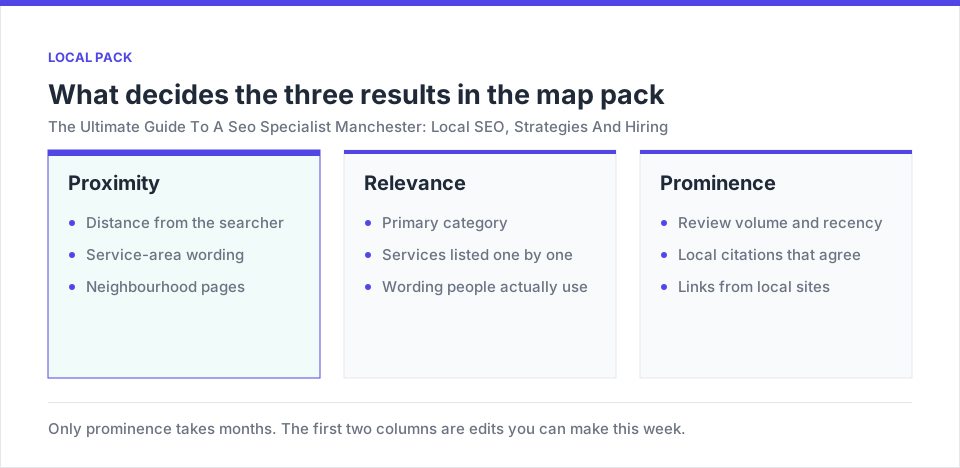
For the Local Pack side of this, the local SEO guide covers what to fix and how to track it in Semalt.
Recommended measures include:
- Cross-surface conversions attributed to diffusion activity, including in-store visits and phone calls.
- Proximity-driven engagement, such as directions requests and map interactions that precede a visit or purchase.
- Cost-to-ROI analysis that accounts for per-surface investments and the incremental lift from diffusion initiatives.
- Quality of signal, including anchor fidelity and translation parity, to ensure long-term durability of results across languages and districts.
Practical reporting cadence should balance speed with accountability. Monthly performance summaries keep stakeholders informed; quarterly reviews adjust diffusion depth, activation calendars and governance rules. Integration with CRM data and offline metrics enables a holistic view of ROI across Manchester’s local economy.
Target Setting, Baselines, And Forecasting
Effective measurement starts with clear baselines. Establish baseline visibility for each surface, district, and language variant, then set realistic short-, mid- and long-term targets. Use Diffusion Health Dashboard outputs to forecast performance under different activation scenarios, enabling rapid scenario planning if local events or market conditions shift. ManchesterSEO.ai emphasises a data-led approach: optimise for the Surface Health Index, push for higher anchor fidelity, and monitor licensing provenance as content expands city-wide.
Practical Reporting Cadence
- Weekly highlights: quick-read summaries of diffusion velocity, anchor fidelity, and urgent optimisations.
- Monthly dashboards: a comprehensive view of surface metrics, ROI, and progress against targets, with visuals showing cross-surface attributions.
- Quarterly governance reviews: strategic realignments, activation cadences, translations parity checks, and Provenance Ledger audits to satisfy regulatory and stakeholder requirements.
Artefacts you’ll rely on include the Diffusion Health Dashboard, ActivationTemplates, TranslationKeys parity maps, and a Provenance Ledger. External references such as Google’s guidance and Moz Local can validate data hygiene and governance practices while internal artefacts ensure auditable, repeatable diffusion across surfaces. If you’d like a starter kit tailored to Manchester, visit the SEO services hub on ManchesterSEO.ai and request a discovery session via the Contact page. For actionable benchmarks and tooling, explore resources from Google’s Structured Data guidelines and Moz Local.
Part 11 Of 12: Engaging With A Manchester SEO Specialist: Engagement Models, Timelines, And Collaboration
Manchester-based businesses benefit from a governance-led diffusion approach that ensures Local Pages, Google Business Profile (GBP), Maps and Locale Hubs speak with one, consistent geography anchor. When you engage a Manchester SEO specialist, the engagement model should match your goals, budget, and governance readiness. At ManchesterSEO.ai we emphasise clarity, accountability, and a framework that keeps diffusion anchors stable across surfaces while enabling rapid iteration and measurable ROI.
What you can expect from a typical engagement is more than a set of tasks. It is a structured collaboration that translates business goals into diffusion activations across surfaces, with a shared language, a transparent cadence, and auditable artefacts that travel with every diffusion render. The goal is to deliver not only higher rankings, but also stronger local engagement and tangible in-market conversions across Manchester’s diverse districts.
1) Core engagement models for Manchester SEO
- Audit-only engagement. A comprehensive site and surface audit existing at the outset, followed by a clearly defined action plan. This model suits organisations wanting governance-backed guidance without ongoing management. ActivationTemplates, TranslationKeys parity, and a Provenance Ledger outline the per-surface publishing rules and diffusion traces for audit-ready implementation.
- Ongoing consultancy and governance. A retainer-based arrangement that provides continuous strategic advice, surface health checks, and iterative optimisation. The Diffusion Health Dashboard becomes a living dashboard for governance decisions, and regular governance cadences (weekly touchpoints, monthly reviews, quarterly strategy sessions) ensure alignment with local market dynamics.
- Full diffusion programme management. A hands-on campaign where the specialist leads end-to-end execution across Local Pages, GBP, Maps, Locale Hub, and related surfaces, with per-surface ActivationTemplates and TranslationKeys parity, plus a live Provenance Ledger for auditability. This is ideal for organisations seeking rapid scale and city-wide coherence.
- Hybrid or blended models. A mix of audit discipline and ongoing management, or consultancy plus selective implementation sprints. These arrangements are customised to accommodate seasonality, project launches, or rapid expansions into new districts while preserving Topic Identity across six diffusion surfaces.
2) Timelines and milestone planning
Timelines in Manchester projects should reflect the diffusion spine lifecycle: discovery, governance alignment, activation planning, and per-surface publishing. A typical pathway might unfold as follows:
- Discovery and alignment (2–4 weeks). Stakeholder workshops, goal articulation, identification of anchor districts, and agreement on governance rules. Expect initial ActivationTemplates and TranslationKeys parity maps to be drafted during this phase.
- Baseline audit and diffusion setup (2–4 weeks). The surface health checks are performed, a master NAP and surface glossary is established, and the Diffusion Health Dashboard is configured. A provisional per-surface activation calendar is created.
- Activation and publishing cycles (ongoing). Per-surface content and metadata are published according to a cadence that respects district relevance and local events. Governance cadences govern changes, approvals, and asset provenance.
- Review and optimisation (monthly to quarterly). Performance review against diffusion KPIs, ROI, and local signals; plan adjustments to ActivationTemplates, TranslationKeys parity, and publishing calendars.
For quick, early wins, focus on GBP hygiene, per-district Local Pages updates, and Maps overlays that reflect current hours and inventory. The diffusion spine makes it easier to translate these updates into a coherent city-wide narrative that improves proximity-based conversions across Manchester’s wards.
3) Collaboration and governance cadences
Effective collaboration hinges on predictable rhythms and shared artefacts. A Manchester SEO partner should provide:
- A clearly defined governance charter that governs activation cadences, language workflows, and asset provenance.
- Accessible artefacts such as ActivationTemplates, TranslationKeys parity maps, and a Provanance Ledger that logs diffusion movements across Local Pages, GBP, Maps and Locale Hubs.
- A Diffusion Health Dashboard that presents cross-surface signals and ROI in a single view, enabling rapid decision-making.
In practice, expect weekly status updates, monthly performance reviews, and quarterly strategy sessions. Communication should be plain, with transparent data and status of deliverables. The aim is to create a working partnership, not a vendor relationship, where both sides share responsibility for local outcomes.
4) What you should expect from pricing and contracts
Pricing varies with the engagement model and scope. Audit-only projects often operate on a fixed-fee basis for the audit and a recommended action plan. Ongoing governance or full diffusion campaigns generally operate on monthly retainers, with milestones tied to activation calendars and diffusion health indicators. When negotiating, request a transparent breakdown: discovery, audit, activation calendars, per-surface publishing costs, and governance artefact maintenance.
Always ensure deliverables include clear success metrics, a plan for ROI attribution, and access to dashboards that stakeholders can understand. External references from Google’s guidelines and Moz Local can provide benchmarks for governance and localisation standards, while internal artefacts ensure ongoing auditability across Manchester surfaces.
If you’d like a tailored, district-aware diffusion plan with practical artefacts, connect via the ManchesterSEO.ai Contact page or explore the SEO services hub to start. For external validation, consult Google’s SEO Starter Guide and Moz Local as reliable governance references.
Part 12 Of 12: Choosing The Right Manchester SEO Specialist: Criteria And Questions To Ask
Selecting a Manchester-based SEO partner is a strategic decision that should be grounded in governance, locality, and proven outcomes. A capable specialist will diffuse signals across Local Pages, GBP, Maps and Locale Hubs without losing Topic Identity, and will present clear, auditable pathways from activity to ROI. The following criteria and question framework helps you differentiate between providers and choose a partner who aligns with your business goals and Manchester market realities.
Key criteria to evaluate a Manchester SEO specialist
- Local-market experience and track record. Look for demonstrable success with Manchester businesses or similar urban markets, including district-level diffusion across Local Pages, GBP, Maps and Locale Hubs.
- Holistic diffusion capability. Confirm the ability to plan and execute across six diffusion surfaces with ActivationTemplates, TranslationKeys parity, and a Provenance Ledger to maintain audit trails.
- Transparent governance and reporting. Demand a documented cadence of updates, dashboards (such as a Diffusion Health Dashboard), and clear attribution of ROI to surface activity.
- Strategic alignment with business goals. The partner should translate your objectives into a district-aware roadmap, not just a generic optimisation plan.
- Local data hygiene and compliance. Expect robust handling of NAP consistency, GBP hygiene, and local schema alongside privacy and data governance best practices.
- Practical pricing and contract clarity. Prefer fixed-scope audits with transparent futures options, or clearly scoped retainers with milestone-based deliverables and measurement milestones.
Five essential questions to ask at discovery
- Can you share Manchester or similarly-sized city-case studies that quantify impact across Local Pages, GBP, Maps and Locale Hubs?
- What governance framework do you use to ensure TranslationKeys parity, ActivationTemplates, and a Provenance Ledger travel together as content diffuses?
- How do you measure ROI across six surfaces, and what attribution model do you apply to disaggregate contributions from Local Pages, GBP, and Maps?
- What is your typical engagement model (audit-only, ongoing governance, full diffusion), and how do you scale if we expand to new districts?
- How do you handle data quality, privacy, and compliance, particularly around NAP, local directories, and schema across multiple languages?
Additional questions can tailor the evaluation to your sector, such as: how do you handle multi-language audiences in Manchester’s diverse communities, what is your process for onboarding and knowledge transfer, and how will you integrate with our internal analytics and CRM to demonstrate closed-loop ROI?
How to structure a practical discovery session
A productive discovery session should translate your business aims into a Manchester-ready diffusion plan. Request a live walkthrough of ActivationTemplates, TranslationKeys parity maps, and a Provenance Ledger prototype. Ask for a sample Diffusion Health Dashboard layout that aggregates Local Pages, GBP and Maps signals with ROI metrics. See how the partner plans to align anchor geography, content cadence, and per-surface publishing rules before any agreement is made.
How to assess proposals and pricing
Requests for proposals should include clear scoping for audits, activation calendars, and governance artefacts. Compare proposals on the basis of deliverables, governance cadence, and the granularity of per-surface publishing rules. Ensure pricing reflects measurable outcomes, with an explicit plan for ROI attribution across Local Pages, GBP, Maps and Locale Hubs. External benchmarks such as Google’s SEO Starter Guide and Moz Local can inform expectations around localisation quality and governance maturity.
As you review, prefer partners who provide a staged onboarding with tangible milestones and a governance charter that remains adaptable as your Manchester footprint grows. Also verify that any training or knowledge-transfer components are included, so your team can sustain diffusion governance after the engagement ends.
To start conversations with a Manchester specialist who prioritises governance-led diffusion, reach out via the Contact page or explore the SEO services hub at ManchesterSEO.ai. For practical governance benchmarks and inspirational references, review Google SEO Starter Guide and Moz Local to contextualise localisation and local signal best practices.
Bottom line: the right Manchester SEO specialist will offer a transparent, district-aware diffusion approach, demonstrated ROI, and a collaborative, knowledge-sharing relationship that keeps your local strategy scalable, compliant, and focused on long-term growth across Local Pages, GBP, Maps and Locale Hubs.