What A Manchester SEO Agency Does For SMEs
Manchester is a dynamic hub for small and medium-sized enterprises across technology, manufacturing, professional services, retail and creative sectors. For SMEs aiming to capture local demand, a Manchester-based SEO agency provides more than tactical keyword picks. It offers a governance-forward, district-aware approach that aligns signal quality across four surfaces—Web, Images, News, and Hub—and ties every action to measurable business outcomes. This Part 1 introduces the core rationale for choosing a Manchester SEO partner and how local expertise translates into durable visibility, higher quality leads, and sustainable growth for SMEs served by Manchester SEO AI.
Why A Local Focus Matters For Manchester SMEs
Local search is where proximity meets intent. In Manchester, customers typically begin with a district-based search such as "plumbers in City Centre" or "cafe near Ancoats". A Manchester-focused SEO programme ensures signals are mapped to geography, so Maps results, local packs, and district-anchored pages reflect real-world offerings. Core activities include maintaining accurate NAP data across maps and directories, keeping Google Business Profile health by district, and publishing district landing pages with authentic local content. This is not a one-off optimisation; it is a governance-driven system designed to remain regulator-ready as the city evolves.
From the outset, governance artefacts help teams audit signal journeys and data lineage. For SMEs, the objective is a repeatable, scalable framework that binds geography to user intent across four surfaces, ensuring that proximity translates into visits, inquiries, and revenue.
Practical references for Manchester leaders include guidance on GBP health signals and local-citation hygiene from industry authorities such as Google’s GBP Help and Moz Local SEO guidelines. These sources provide benchmarks to align signals with best practices while preserving four-surface coherence across Web, Images, News, and Hub.
The Four-Surface MTN Spine In Manchester
Our Manchester framework rests on four surfaces: Web, Images, News, and Hub. Each surface serves a distinct role in local discovery, yet they must operate in concert by geography. For a district such as City Centre or Ancoats, a Web page should be complemented by authentic district imagery (Images), timely local coverage (News), and evergreen district guides (Hub). When signals align by geography, proximity becomes actionable, turning online visibility into store visits, calls, or messages.
Key governance practices include maintaining GBP health by geography, ensuring district-level NAP consistency, and applying district-specific schema to reflect local attributes. This enables regulator-ready signal journeys that are auditable and scalable as Manchester grows and districts evolve.
Getting Manchester Signals Right: Priorities By District
The most impactful signals in Manchester combine local relevance with robust data hygiene. Foundations apply across districts: precise NAP data across maps and directories; district GBP health signals with current hours and attributes; district landing pages with depth and FAQs; and proactive review management to keep the customer journey seamless across devices. Governance artefacts from Part 1 enable auditable signal journeys that stay regulator-ready as districts like Salford, Chorlton, and Eccles evolve.
From day one, implement four-surface governance: activation briefs by surface, guardian dashboards that visualise MTN health by geography, and provenance trails to map data lineage. This structure helps district pages, GBP health signals, and local citations stay aligned as Manchester grows.
- NAP accuracy across maps and directories: Consistent name, address and phone data for every district, reducing proximity drift.
- GBP health by geography: District-specific hours, categories, attributes, and posts that improve proximity signals in Maps and Knowledge Panels.
- District landing pages with depth: Pages that cover core services, FAQs, and events tailored to each district.
- Reviews management by district: Localised responses reflecting district context and brand voice.
Next Steps For Manchester SMEs
To begin implementing a Manchester-focused local SEO programme, start with a baseline district footprint and a Four-Surface maturity assessment. Actions include claiming and optimising your Google Business Profile by district, auditing local citations, and publishing district landing pages with depth content. Implement district-specific LocalBusiness or Organization schema, with areaServed reflecting Manchester zones such as City Centre, Salford, Ancoats, Chorlton, and Didsbury. Ensure cross-surface internal linking reinforces district depth and signal propagation across Web, Images, News, and Hub.
Internal references to get you started include the Service Portfolio page and the Contact page to initiate a tailored Manchester plan. External references from GBP Help and Moz Local SEO provide practical benchmarks while you maintain four-surface coherence across surfaces.
The Three Core Pillars Of Manchester SEO
Within a district-aware, four-surface framework, Manchester-based businesses gain durable visibility by focusing on three interlocking pillars: Technical SEO, On-page optimisation, and Content & Link Building. This Part 2 translates the governance-forward, geography-first thinking introduced in Part 1 into practical, repeatable actions tailored for Manchester audiences. At Manchester SEO AI, we emphasise how each pillar must work in concert across Web, Images, News, and Hub to turn local intent into qualified engagement, all while maintaining regulator-ready signal journeys that scale as the city evolves.
Technical SEO Foundations For Manchester Sites
Technical health is the backbone of any long-term Manchester SEO programme. A district-aware site architecture mirrors geography, ensuring district pages, image sets, and hub resources load quickly and render consistently on mobile networks across City Centre, Salford, Ancoats, and beyond. Mobile-first indexing, clean crawl paths, and robust Core Web Vitals are essential to preserve proximity signals across all four surfaces.
Key practices include optimised sitemaps that prioritise district overlays, precise canonical handling to prevent cross-district cannibalisation, and structured data that communicates local attributes to search engines. Governance artefacts from Part 1—activation briefs by surface, guardian dashboards, and provenance trails—guide implementation so changes can be replayed with full context during audits.
For Manchester audiences, schema should reflect LocalBusiness or Organisation with district-level areaServed, alongside district FAQPage markup to surface local inquiries in knowledge panels. This approach keeps four-surface signals coherent as districts like Didsbury, Chorlton, and Hulme grow and shift.
On-Page Optimisation Foundations
On-page work must align with geography. Each district overlay warrants pages that address core services, FAQs, hours, directions, and events, all tethered to the wider four-surface strategy. Meta titles and descriptions should incorporate district identifiers where relevant, while H1s emphasise service relevance by district. Internal linking should move users naturally between district landing pages, service depths, and hub resources, reinforcing signal propagation across Web, Images, News, and Hub.
Micro-optimisations matter. Implement district-specific FAQPage markup to surface common questions in knowledge panels, use descriptive image alt text that mirrors district context, and adopt careful canonicalisation to prevent cross-district content clashes. GBP health signals by geography should be synchronized with district pages and hub guides to maintain proximity cues across Maps and Knowledge Panels.
Content & Link Building For Manchester
Content and authority are the engines behind sustainable Manchester SEO. By district, develop evergreen hub resources that establish long-term credibility, complemented by district-specific service-depth pages and timely local coverage. Link-building should prioritise high-quality, locally relevant domains that map to district pages or hub assets, with Provenance Trails ensuring auditability across four surfaces.
Content formats should be district-aware yet coherent city-wide. Web pages deliver depth and conversion opportunities; Images capture authentic district life; News covers local events; Hub hosts authoritative guides and thought leadership. This cross-surface orchestration strengthens proximity signals while preserving regulator replay capability as Manchester evolves.
To anchor authority, blend Digital PR with local storytelling, industry associations, and community partnerships. Guardian Dashboards can monitor backlink quality by geography, while What-If planning helps test signal journeys against regulatory changes or shifting district dynamics.
For practical benchmarks, consider Google’s starter guidelines for SEO and Moz Local guidelines to align tactics with industry standards while maintaining four-surface coherence across Web, Images, News, and Hub.
Getting Started With A Manchester SEO Plan
A practical plan begins with baseline district mapping and a Four-Surface maturity assessment. Start by claiming and optimising Google Business Profile by district, auditing local citations, and publishing district landing pages with depth content. Implement district-specific LocalBusiness or Organisation schema, with areaServed reflecting Manchester zones such as City Centre, Ancoats, Chorlton, and Didsbury. Ensure cross-surface internal links reinforce district depth and signal propagation across Web, Images, News, and Hub.
To take the next step, explore our Service Portfolio and book a consult via the Contact page. External references from Google’s guidance and Moz Local SEO offer practical benchmarks while you maintain four-surface coherence on Google Business and Moz Local.
Measurement, Governance, And What-If Planning
Every core service should feed the governance framework. Activation Briefs by surface define deployment steps; Guardian Dashboards visualise MTN health by geography and surface; Provenance Trails capture data lineage across discovery, publication, and updates. What-If scenarios should be rehearsed in quarterly governance reviews to stress-test signal journeys against regulatory changes or evolving local dynamics. This discipline ensures Manchester’s local SEO remains regulator-ready and scalable as districts expand.
Key performance indicators should be aligned with geography and surface, including district visibility, GBP health by geography, local inquiries, and content engagement. Use a unified dashboard set to visualise MTN health by geography and surface, and maintain Provenance Trails to support audits and regulator replay. External references such as Google’s Local SEO guidelines and Moz Local SEO provide benchmarks while keeping four-surface coherence at the city level.
Manchester Local SEO Strategies: Dominating Local Maps And Local Search
Manchester businesses can capitalise on a district-aware local SEO approach that binds signal quality across four surfaces—Web, Images, News, and Hub—while tying every action to tangible business outcomes. This Part 3 builds on the Four-Surface MTN spine introduced earlier, applying it to Manchester's distinctive districts such as City Centre, Salford, Ancoats, Chorlton, and Didsbury. The objective is to translate proximity into action: higher Maps visibility, richer district pages, and more local inquiries, bookings, and revenue for SMEs partnering with Manchester SEO AI.
The Local Search Landscape In Manchester
In Manchester, near-me queries are often district-driven. Users search for services within a recognizable area like City Centre plumbers, Salford treesurgeons, or Ancoats cafes. A district-aware programme maps signals by geography, ensuring district landing pages, district imagery, district News coverage, and hub resources stay coherent across all four surfaces. Governance artefacts enable auditable signal journeys, making the path from discovery to inquiry traceable for regulators and stakeholders alike.
Key practical considerations include maintaining district level GBP health signals, ensuring district NAP consistency across maps and directories, and publishing district landing pages with depth and FAQs. By aligning these signals with Manchester geography, businesses improve proximity cues and convert more searches into store visits, calls, and enquiries.
NAP Consistency And District Landing Pages
Name, Address, and Phone data must be consistent across Maps, GBP, directories, and schema for every district. District landing pages should offer depth on core services, FAQs, hours, and directions, with content tailored to the local area. AreaServed in LocalBusiness or Organisation schema should reflect Manchester zones such as City Centre, Salford, Ancoats, Chorlton, and Didsbury. GBP health updates, district imagery, and hub resources must be synchronised to preserve four-surface coherence and enable regulator replay.
- NAP accuracy by district: Ensure consistent name, address, and phone across maps and directories to reduce proximity drift.
- GBP health by geography: District-specific hours, attributes, and posts that align with district pages and hub content.
- District landing pages with depth: Pages that cover services, FAQs, events, and local proofs of proximity.
- Reviews management by district: Localised responses that reflect district context and brand voice.
Four-Surface Alignment By Geography
The Four-Surface MTN spine must operate by geography to translate local discovery into inquiries. Web district pages provide depth and structure; Images showcase authentic district life; News covers local events; Hub hosts evergreen district guides that anchor long-term authority. When signals are coherent by district, users flow smoothly from discovery to enquiry across all four surfaces. Governance artefacts, including Activation Briefs by surface, Guardian Dashboards by geography, and Provenance Trails for data lineage, ensure auditable signal journeys that scale as Manchester evolves.
External benchmarks from Google Local Guidance and Moz Local can help ground tactics while preserving four-surface coherence across Web, Images, News, and Hub.
Getting Started With A Manchester SEO Plan
Begin with a baseline district footprint and a Four-Surface maturity assessment. Claim and optimise Google Business Profile by district, audit local citations, and publish district landing pages with depth content. Implement district-specific LocalBusiness or Organisation schema, with areaServed reflecting zones such as City Centre, Salford, Ancoats, Chorlton, and Didsbury. Ensure cross-surface internal linking reinforces district depth and signal propagation across Web, Images, News, and Hub.
Then explore our Service Portfolio to see example activations and dashboards, and book a consult via the Contact page to tailor a Manchester plan. External references from GBP Help and Moz Local provide practical benchmarks while you maintain four-surface coherence.
Content And Signals By District
Across Web, Images, News, and Hub, district depth should be visible and coherent. Create district landing pages with service depth, local FAQs, and events; publish authentic district imagery; cover local News items about community events; and host evergreen hub resources for each district. A disciplined content calendar aligned with What-If planning helps keep regulator-ready narratives up to date while maintaining signal journeys across four surfaces.
Integrate GBP health updates with district content so Maps and Knowledge Panels reflect local realities. Guardian Dashboards provide geography-specific health visuals, and Provenance Trails preserve data lineage to support audits and regulator replay.
What Services To Expect From A Manchester SEO Agency
With the governance-forward, district-aware framework established in earlier parts, a Manchester SEO agency should offer a complete, scale-ready suite of services designed to boost visible relevance across Manchester’s diverse districts. This Part 4 outlines the core services you should expect, how they interlock across the four surfaces—Web, Images, News, and Hub—and how they translate into measurable outcomes for SMEs in and around the city. At Manchester SEO AI, the service offering is structured to deliver durable local visibility, accountable governance, and regulator-ready reporting as the city evolves.
Technical SEO Foundations For Manchester Sites
The technical backbone remains non-negotiable for scalable Manchester SEO. A district-aware baseline ensures crawlability and indexing work smoothly across all four surfaces and multiple districts such as City Centre, Salford, Ancoats, and Didsbury. Key focus areas include mobile-first architecture, clean crawl paths, and Core Web Vitals that maintain fast experiences even on slower local networks. District overlays should be reflected in the site architecture so district landing pages, hub resources, Images, and News areas load rapidly and consistently.
Core practices involve optimised sitemaps with district prioritisation, precise canonical handling to prevent cross-district cannibalisation, and structured data that communicates LocalBusiness or Organisation attributes at district level. Governance artefacts from Part 1—activation briefs by surface, guardian dashboards, and provenance trails—guide consistent implementation that can be replayed during audits.
In Manchester, district-specific schema should include LocalBusiness or Organisation with areaServed by geography such as City Centre, Salford, Ancoats, Chorlton, and Didsbury. Ensure the district GBP health signals remain coherent with these technical signals so Maps and Knowledge Panels reflect real local provisions across four surfaces.
On-Page Optimisation And Local Landing Pages
On-page work must mirror geography. For each district overlay, develop pages that address core services, FAQs, hours, directions, and local events. Meta titles and descriptions should incorporate district identifiers where relevant, while H1s highlight service relevance by district. Internal linking should guide users between district landing pages, service depths, and hub resources to reinforce signal propagation across Web, Images, News, and Hub.
Practical optimisations include district-specific FAQPage markup to surface common questions in knowledge panels, descriptive image alt text aligned to district contexts, and careful canonical management to avoid cross-district content conflicts. GBP health signals by geography should be synchronised with district pages and four-surface hub guides to maintain proximity cues across Maps and Knowledge Panels.
In Manchester, areaServed fields in LocalBusiness or Organisation schema should map to zones such as City Centre, Salford, Ancoats, Chorlton, and Didsbury. What-If planning helps anticipate regulatory changes or district dynamics, ensuring signal journeys can be replayed with full context.
Content Strategy And Link Building For Manchester
Content and authority are the engines behind durable Manchester SEO. Develop district-aware hub resources that establish city-wide credibility while enabling district-specific depth. Content formats should be district-aware yet coherent city-wide across Web, Images, News, and Hub. A disciplined editorial calendar aligned with What-If planning keeps regulator-ready narratives up to date and ensures signal journeys stay coherent across four surfaces.
Formats by surface should include: district landing pages with service depth on Web, authentic district imagery on Images, timely local coverage in News, and evergreen authority pieces on Hub. In parallel, implement high-quality, district-relevant link-building to reinforce proximity signals, with Provenance Trails providing auditability across surfaces.
To anchor authority, blend local Digital PR with community partnerships and industry associations. Guardian Dashboards can monitor domain quality by geography, while Provenance Trails retain the data lineage required for regulator replay. External benchmarks from GBP Help and Moz Local provide practical guidance while preserving four-surface coherence.
Local SEO And GBP Health
Google Business Profile health must be maintained by geography to reflect district realities. District GBP updates—hours, attributes, posts—should mirror district pages and hub guides to sustain Maps and Knowledge Panel proximity signals. A governance approach ensures signal journeys are auditable, so leadership can replay how district content influenced GBP health by geography across all four surfaces.
Practically, claim and optimise GBP by district, validate NAP consistency across maps and directories, and tie GBP updates to district content with explicit cross-links. What-If planning helps anticipate regulatory shifts or neighbourhood changes, preserving regulator replay capability as Manchester districts evolve.
Measurement, What-If Planning, And Governance
Every core service should feed the governance framework introduced earlier. Activation Briefs by surface define deployment steps; Guardian Dashboards visualise MTN health by geography and surface; Provenance Trails capture data lineage across discovery, publication, and updates. What-If scenarios should be rehearsed in monthly governance reviews to stress-test signal journeys against regulatory changes or evolving district dynamics. This discipline keeps Manchester SEO scalable and regulator-ready as the city grows.
Key performance indicators should align with geography and surface, including district visibility, GBP health by geography, local inquiries, and content engagement. Use guardian dashboards to visualise MTN health per geography and surface, and maintain Provenance Trails to support audits and regulator replay.
Next steps for Manchester teams involve mapping district overlays to Activation Briefs by surface, establishing guardian dashboards by geography, and maintaining Provenance Trails for data lineage. If you need a guided path, review our Service Portfolio and book a consult via the Contact page to tailor a Manchester plan. External references from GBP Help and Moz Local provide benchmarks while preserving four-surface coherence across Web, Images, News, and Hub.
Read next: PPC and SEO agency in Manchester · Local SEO agency Manchester: ranking
From Discovery To Reporting: The Typical Process For Manchester SEO
For Manchester businesses, a disciplined, governance-forward approach to SEO starts with discovery and ends with regulator-ready reporting. By aligning signal journeys across the four surfaces—Web, Images, News, and Hub—and layering district overlays for Manchester’s diverse footfall (City Centre, Salford, Ancoats, Chorlton, Didsbury, and beyond), a Manchester SEO agency delivers repeatable, auditable processes that convert discovery into meaningful inquiries and conversions. This Part 5 maps the end-to-end workflow a Manchester partner should provide, with practical artefacts and milestones you can expect when working with Manchester SEO AI .
Step 1: Discovery And Benchmarking
The journey begins with stakeholders outlining goals, district priorities, and customer intents. This phase includes a district-aware audience map that prioritises Manchester’s core zones, such as City Centre, Ancoats, and Chorlton, while acknowledging adjacent areas like Salford and Didsbury. A comprehensive competitor audit measures how peers perform across Web, Images, News, and Hub, and identifies opportunities unique to Manchester’s geography. The discovery phase also inventories current GBP health signals, local citations, and district landing pages to establish a baseline for four-surface alignment.
Key outputs from discovery include a district footprint document, a priority keyword map aligned to Manchester zones, and an initial What-If scenario library to anticipate regulatory or market shifts. Governance artefacts from Part 1—activation briefs by surface, guardian dashboards by geography, and provenance trails—frame how findings are captured and replayed later for audits.
Step 2: Audit And Baseline
The baseline audit translates discovery into a lived, testable plan. Technically, the audit examines crawlability, indexing, Core Web Vitals, and site architecture with a district lens so pages load rapidly for Manchester users in different districts. NAP consistency is checked across maps and directories district-by-district, and LocalBusiness or Organisation schema is reviewed for accuracy by geography. Cross-district cannibalisation is identified, and canonical strategies are proposed to preserve distinct district signals while maintaining a cohesive city-wide narrative.
On the content side, the audit assesses district landing pages for depth, FAQs, service depth, and events, plus the quality of imagery and local News potential. A robust Provenance Trail records data sources, transformations, and publications, ensuring every change can be replayed with full context in regulator reviews.
Step 3: Strategic Plan By District
With insights from discovery and baseline, the next step is to craft a district-specific strategic plan that maps to four-surface activation. Each district overlay receives an Activation Brief by surface, detailing objectives, success metrics, and the signals to be prioritised (for example, GBP health improvements by geography, district landing page depth, or local News engagement). The plan stitches together district pages, Images, News coverage, and Hub resources into a coherent, geography-forward architecture that scales as Manchester grows.
Crucially, the plan addresses governance requirements: how activation will be executed, who owns the data and outputs, and how What-If planning will be used to stress-test the signal journeys against regulatory changes or neighbourhood shifts. The district-aware approach ensures signals remain auditable and regulator-ready across Web, Images, News, and Hub.
Step 4: Implementation And Governance
Implementation translates plans into observable actions. Activation Briefs by surface guide execution for every district, while Guardian Dashboards provide visual health indicators by geography and surface. Provenance Trails capture the data lineage from discovery to publication, enabling regulators to replay the signal journey with full context. Internal linking strategies are designed to move users seamlessly between district landing pages, service depths, hub resources, and GBP health updates, reinforcing four-surface signal propagation by geography.
Governance also defines cadence: regular reviews to update activation artefacts, refresh GBP health signals by geography, and maintain district-specific schema and FAQPage markup. This ensures ongoing regulator readiness and scalability as Manchester’s districts evolve.
Step 5: Testing, What-If Planning And Validation
What-If planning is embedded from the outset. quarterly governance reviews test scenarios such as regulatory updates, changes in district demand, or shifts in GBP health signals. Guardian Dashboards visualise MTN health by geography and surface, while Provenance Trails preserve a complete data lineage that can be replayed to demonstrate why certain optimisations occurred. A practical 90-day cycle keeps the team aligned on what to test, what to measure, and how to adjust quickly when results diverge from expectations.
Testing spans technical health (core web vitals and mobile experiences), on-page performance (district pages and depth of content), and cross-surface signal propagation (how Web, Images, News, and Hub reinforce each other by district). The aim is to translate insights into impactful, auditable changes that regulators can review with confidence.
Step 6: Reporting Cadence And Optimisation
Reporting crystallises the value of the four-surface approach with district granularity. Monthly performance dashboards combine surface-level metrics (organic visibility, page depth, image engagement, News coverage, and hub interaction) with geography-specific visuals to show progress by district. Regulator-ready packs summarise activity, data lineage, and what happened in What-If simulations so leadership can replay decisions with full context.
ROI reporting links activity to business outcomes: inquiries, bookings, revenue, and local footfall by district overlay. Central governance artefacts—Activation Briefs by surface, Guardian Dashboards by geography, and Provenance Trails—remain the backbone of auditability and regulatory replay, ensuring Manchester SEO campaigns can scale without losing signal fidelity.
Onboarding, Kick-off, And How To Start With A Manchester Agency
To initiate effectively, request a complimentary audit or discovery call with Manchester SEO AI . Prepare by outlining the district footprint, current four-surface maturity, and regulatory considerations. During onboarding, expect a structured intake that connects your business goals to Activation Briefs, Guardian Dashboards, and Provenance Trails. This approach ensures a smooth handover, accountable ownership, and rapid time-to-value as you begin executing the district-aware plan.
Key questions to ask a prospect partner include: How do you map district signals to the four surfaces? What governance artifacts will you provide, and how will you replay decisions in audits? How do you quantify ROI by geography, and how often will What-If planning be revisited? The answers should demonstrate transparency, repeatability, and a clear path to regulator-ready reporting.
If you want a practical starting point, book a strategy session via the Contact page and review our Service Portfolio for activation templates and dashboards. External references from Google and Moz Local guidelines can anchor expectations while you maintain four-surface coherence across Web, Images, News, and Hub on manchesterseo.ai.
Team Structure And Collaboration In A Manchester SEO Agency
In a Manchester-based SEO agency, the ability to scale local visibility without compromising signal integrity hinges on a well-defined team structure and disciplined collaboration. This Part 6 focuses on how a modern Manchester SEO team organises itself to deliver four-surface coherence across Web, Images, News, and Hub, while incorporating district overlays that reflect the city’s diverse districts from City Centre to Chorlton and Didsbury. The aim is to cultivate high-trust processes, transparent governance, and a cohesive client experience that stands up to regulator-ready audits. This approach aligns with the governance-forward framework introduced on Manchester SEO AI and emphasises measurable outcomes for SMEs across Manchester.
The Manchester Team Model: Roles And Responsibilities
Effective Manchester SEO delivery rests on clearly defined roles that span strategy, technical execution, content, outreach, and data. The following structure supports a scalable, district-aware programme that remains auditable and regulator-ready across all four surfaces.
- Account Management: Owns the client relationship, sets expectations, coordinates across internal teams, and ensures delivery milestones align with business objectives.
- SEO Strategist (District Lead): Crafts district-focused strategies, maps signal journeys by geography, and translates business goals into four-surface activation plans.
- Technical SEO Specialist: Leads site architecture, crawl optimisation, Core Web Vitals, structured data, and cross-surface technical health.
- Content Strategist / Copywriter: Plans district-centric content, editors’ calendars, on-page optimisation, and FAQs tailored to Manchester audiences.
- Digital PR & Outreach Lead: Drives high-quality, locally relevant links and coverage that reinforce district authority and proximity signals.
- Data & Analytics Specialist: Owns KPI dashboards, What-If modelling, and performance attribution across Web, Images, News, and Hub by geography.
- CRO Specialist: Optimises landing pages and conversion paths to maximise local inquiries and bookings within each district overlay.
- UX / UI and Design Specialist: Ensures user journeys are smooth across devices and surfaces, with district-specific visual cues that support local relevance.
Cadence, Communication, And Cross-Surface Collaboration
Consistent cadence is essential to synchronise signal propagation across Geography and Surface. The following practices help maintain alignment and accountability:
- Weekly cross-functional stand-ups: Short, geography-focused sessions that identify blockers and align priorities across Web, Images, News, and Hub.
- Bi-weekly sprint planning and reviews: Structured planning to groom district overlays, set surface activation milestones, and review What-If scenarios.
- Monthly governance reviews by geography: Visualise MTN health by district, surface, and signal, ensuring traceability for audits.
- Shared artefacts and dashboards: Activation Briefs by surface, Guardian Dashboards by geography, and Provenance Trails for data lineage are maintained in a central repository accessible to all stakeholders.
Governance Artefacts And Regulator-Ready Workflows
Governance artefacts underpin scalable, auditable delivery. Activation Briefs define deployment criteria by surface, Guardian Dashboards visualise MTN health by geography and surface, and Provenance Trails capture the data lineage from discovery to publication. What-If planning is embedded into monthly governance cadences to stress-test signal journeys against regulatory shifts or district evolution. This disciplined approach ensures Manchester projects remain regulator-ready as districts expand and audiences shift.
Practically, these artefacts translate strategy into repeatable actions. Activation Briefs inform execution by surface; Guardian Dashboards provide real-time health visuals; Provenance Trails preserve decisions and data transformations for audits. This combination fosters transparency, accountability, and the ability to replay decisions for regulators or internal stakeholders.
Onboarding And Team Integration For Manchester SMEs
Onboarding a Manchester client requires a clearly documented pathway from discovery to execution. Expect a formal intake that maps the district footprint, four-surface maturity, and regulatory considerations to Activation Briefs, Guardian Dashboards, and Provenance Trails. A dedicated account manager guides the client through the governance framework, ensuring transparency and consistent communication from day one. Regular strategy sessions align business goals with district overlays and surface activations, while What-If planning is used to anticipate regulatory changes or evolving district dynamics.
Practical onboarding questions to consider with a potential partner include: How do you map district signals to each surface? What governance artefacts will be provided, and how can we replay decisions in audits? How will ROI be measured by geography and surface, and how often will governance cadences occur? The right Manchester partner will provide clear, artefact-backed plans and predictable time-to-value.
Next Steps: Practical Playbook For Manchester Brands
To start or expand a Manchester SEO programme, engage with Manchester SEO AI for a district-aware blueprint that reinforces four-surface coherence. Commission a complimentary audit to establish the district footprint, four-surface maturity, and regulator readiness. During onboarding, expect a structured intake that links district depth to Activation Briefs, Guardian Dashboards, and Provenance Trails. For guidance, reference industry benchmarks from authoritative sources and align tactics with Manchester’s evolving districts. A dedicated strategy session via the Contact page will set the plan in motion and map clear milestones across Web, Images, News, and Hub.
Internal governance should be transparent, with artefacts stored centrally so leadership can replay decisions with full context. This approach keeps Manchester SEO campaigns scalable, auditable, and aligned with business objectives as the city continues to grow and diversify.
Illustrative Outcomes From Manchester-Focused SEO
Building on the Four-Surface MTN spine (Web, Images, News, Hub) and district overlays established for Manchester, Part 7 translates governance-driven strategies into tangible business outcomes. By anchoring district depth to geography and maintaining regulator-ready signal journeys, Manchester brands can expect durable visibility gains, higher quality inquiries, and sustained revenue growth as the city evolves. The following scenarios illustrate realistic, non-brand-specific uplifts you might observe when partnering with a Manchester SEO agency such as Manchester SEO AI.
District-Driven Uplift In Organic Visibility
When signals mature by geography, district landing pages, district GBP health updates, and hub resources move higher in the Maps and Knowledge Panels ecosystem. A typical outcome is a measurable increase in organic visibility across core Manchester districts such as City Centre, Ancoats, Chorlton, Salford, and Didsbury. This translates into more district-captured impressions, better click-through rates on district-specific queries, and a broader, city-wide presence that remains cohesive across four surfaces.
The governance framework enables auditable rollouts: activation briefs by surface, guardian dashboards by geography, and provenance trails that capture data lineage. In practice, SMEs see a gradual compounding effect as district pages gain traction, then reinforce overall city visibility through cross-linking to hub guides and district events. Expect a lift in non-brand traffic that is highly relevant to the local service mix.
Enhanced Local Intent And Inquiries
District-depth content, FAQs, and service guides align with common resident intents, boosting the likelihood that a user who searches for a district-specific service will engage. Conversion pathways become clearer: users encounter relevant district pages, access hub resources, view local imagery, and see timely News coverage about community events. This cross-surface alignment supports higher-quality inquiries, phone calls, and request forms tied to a specific Manchester district overlay.
Regulator-ready reporting remains central. Provenance Trails document every data transformation and publication, ensuring what changed, when, and why can be replayed during audits. Guardian Dashboards visualise how district health signals translate into user actions, enabling leadership to demonstrate tangible progress to stakeholders.
GBP Health By Geography And Maps Visibility
Maintaining GBP health by geography yields refreshed knowledge panels and Maps health signals that reflect district-level hours, attributes, and posts. As district content expands and district schema is refined, visible health signals improve, stabilising proximity cues across user journeys. This improves not only Maps rankings but also the likelihood of direct engagement when locals search for nearby services in Manchester.
Governance artefacts ensure regulator replay remains feasible: district activation briefs, guardian dashboards by geography, and robust provenance trails preserve the context of changes to GBP health signals across four surfaces.
Content Depth And Authority By District
District landing pages become reliable anchors for topical authority. Evergreen hub content supports city-wide credibility, while district-specific service depths unlock local intent. Links from high-quality, locally relevant domains reinforce proximity signals and enhance hub authority. Guardian Dashboards track backlink quality by geography, and Provenance Trails maintain a complete data lineage for audits and regulator replay.
ROI emerges from a balanced mix: growth in organic sessions, increased district page depth, and stronger engagement with local News items and events. Over time, content that resonates at the district level also strengthens overall brand authority in Manchester, contributing to improved rankings for city-wide terms and district-specific queries alike.
Illustrative Milestones And How To Track Them
To translate these outcomes into steady progress, establish quarterly milestones aligned to four-surface maturity by geography. Milestones typically include: (1) district footprint consolidation with GBP health improvements by geography, (2) district landing pages with depth and FAQs, (3) cross-surface interlinking that strengthens district-to-hub signals, and (4) regulator-ready dashboards and provenance trails that document data lineage for audits. Track KPIs such as district visibility, GBP health by geography, local inquiries, and content engagement across Web, Images, News, and Hub. These metrics should be visualised in Guardian Dashboards and supplemented by ROI models that attribute inquiries and revenue to district activations over time.
For immediate action, consider a complimentary district-focused audit via Service Portfolio and schedule a strategy session through the Contact page to tailor a Manchester plan. External benchmarks from Google GBP Help and Moz Local provide practical guardrails while maintaining four-surface coherence across Web, Images, News, and Hub.
Technical SEO Essentials For A Manchester SEO Agency
With the Four-Surface MTN spine established for Manchester—Web, Images, News, and Hub—and district overlays guiding signal focus, Part 8 concentrates on the technical backbone that keeps those signals fast, accessible, and scalable. This section translates governance-forward thinking into practical technical actions designed for Manchester audiences across City Centre, Salford, Ancoats, Chorlton, Didsbury, and beyond. The objective is to ensure every district page, image set, and hub resource loads quickly, renders consistently, and communicates local relevance to search engines and users alike.
Technical Health Foundations For Manchester Sites
Mobile-first indexing is non-negotiable for Manchester’s diverse consumer base, from centre-based shoppers to residents in the suburbs. A district-aware site must optimise Core Web Vitals (CWV) across all districts to preserve proximity signals on slow or congested networks. Prioritise Largest Contentful Paint (LCP) within 2.5 seconds, minimise blocking resources, and reduce layout shifts to maintain a stable user experience. A robust hosting strategy, efficient CDN usage, and smart image handling reduce latency for district pages that load in tight timeframes, regardless of device or geography.
Site architecture should reflect geography without creating silos. District overlays should map to clean URL hierarchies, logical navigation, and consistent internal linking that keeps signal propagation coherent across Web, Images, News, and Hub. Regular performance audits, including lab and field CWV measurements, help identify regressions caused by new district content or feature updates. All changes should be logged against Activation Briefs by surface so audits can replay the rationale behind optimisations.
For Manchester teams, a disciplined deployment plan includes caching strategies, font delivery optimisations, and resource prioritisation that favours above-the-fold content for district pages. This approach sustains fast experiences while maintaining flexibility to enrich pages with district-specific depth over time.
Crawl Budget And Indexing At District Scale
Crawl budget management becomes more nuanced when Bournemouth expands into multiple districts such as City Centre, Salford, Ancoats, and Didsbury. Implement a district-weighted sitemap strategy that prioritises high-value pages (district landing pages, GBP health updates, and hub resources) while ensuring evergreen assets remain accessible. Separate sitemaps or sitemap indexes can help crawlers visit priority districts first, followed by deeper assets as authority builds.
Canonical governance is essential to prevent cross-district content from cannibalising rankings. Apply district-specific canonicalisation where appropriate, and use 301s to guide users toward the most relevant district overlays. Regularly audit cross-district signals with Provenance Trails so data lineage remains transparent and reproducible for regulators and internal stakeholders.
Server configurations should support clean crawl paths, including robots.txt that reflects district priorities and robust robots meta directives. Internal links should reinforce signal flow from district landing pages to service depths, hub assets, and GBP health updates, ensuring a cohesive, regulator-friendly discovery path across four surfaces.
Structured Data And Local Signals
Structured data acts as the map that helps search engines interpret local context quickly. Implement LocalBusiness or Organisation markup with district-level areaServed values reflecting Manchester zones such as City Centre, Salford, Ancoats, Chorlton, and Didsbury. Pair this with district-specific FAQPage markup to surface common questions in knowledge panels and Maps results, reinforcing proximity cues across four surfaces.
GBP health updates should echo district pages and hub guides, aligning hours, attributes, and posts with local content. Cross-surface schema alignment enables regulator replay and auditing, ensuring the signals exercised by district pages are transparent and reproducible. Governance artefacts—Activation Briefs by surface, Guardian Dashboards by geography, and Provenance Trails for data lineage—should document every schema deployment to support audits and regulatory review.
Rendering, JavaScript SEO, And Progressive Enhancement
Manchester sites increasingly rely on interactive components, but rendering must remain predictable for search engines and users. Employ server-side rendering (SSR) or static site generation (SSG) for district landing pages to deliver rapid initial content while enabling dynamic experiences behind progressive enhancement. For personalised or location-aware features, use dynamic rendering as a fallback, ensuring core district pages render on SSR/SSG to sustain four-surface visibility even if client-side rendering delays occur.
Testing should verify consistent content across devices and networks. Use Lighthouse, Google Search Console, and synthetic checks to ensure essential district content remains visible when scripts are deferred. Governance artefacts should capture rendering decisions, data sources, and publication timelines so regulators can replay the exact sequence of optimisations across Web, Images, News, and Hub.
Next Steps For Manchester SMEs
Practical next steps begin with a baseline technical audit aligned to your district footprint. Claim and optimise Google Business Profile by district, verify NAP consistency, and ensure district landing pages carry depth content. Implement district-specific LocalBusiness or Organisation schema, with areaServed reflecting Manchester zones, and integrate district GBP health updates with hub resources to sustain signal coherence across four surfaces.
To translate plan into action, review the Manchester SEO AI Service Portfolio for activation templates and governance formats, then book a strategy session via the Contact page. External references from Google’s guidance and Moz Local SEO provide practical benchmarks while maintaining four-surface coherence across Web, Images, News, and Hub on Google Business and Moz Local.
Local Vs National And International SEO For Manchester Brands
Manchester businesses often begin with a sharp local focus, aiming to capture nearby demand across districts like City Centre, Ancoats, Chorlton, Salford, and Didsbury. As growth extends beyond city limits, the challenge becomes scaling signals across national markets and, potentially, international audiences while preserving the four-surface coherence: Web, Images, News, and Hub. This Part 9 translates the governance-forward, district-aware framework established earlier into practical playbooks for expanding from Manchester into wider UK markets and beyond, without compromising regulator-ready signal journeys.
Deciding When To Focus Local, National, Or Global
The strategic decision rests on demand signals, capacity, and regulatory considerations. Local focus remains essential where proximity drives conversion, such as service sectors with immediate accessibility or district-specific offerings. When search interest consolidates around a broader geography, initiate national activation with city-partner content and district-overlaid pages that scale without diluting proximity cues. International expansion should be contemplated only after establishing a robust local-to-national signal framework, ensuring GBP health, district depth, and hub authority can translate across borders. This staged approach preserves What-If planning baselines, enabling regulators to replay decisions as markets evolve.
- Local priority first: Deep district landing pages, GBP health by geography, and district-specific reviews to capture proximity signals.
- National expansion when demand crosses borders: Create city-by-city service depth and cross-link to hub resources that provide city-wide authority while maintaining district granularity.
- International readiness only with governance in place: Plan for hreflang, currency and pricing localisation, and per-market content governance before publishing multi-country assets.
- What-If planning remains essential: Regularly rehearse regulatory changes, market shifts, and district evolutions to sustain regulator replay across all surfaces.
Local SEO The Manchester Way: Depth, GBP, And District Landing Pages
Local relevance remains the anchor of any expansion. Manchester brands should continue to prioritise district landing pages with authentic depth, district GBP health signals, and local content assets that resonate with residents and visitors. A national push can piggyback on this foundation by weaving district pages into city-wide hub assets and cross-linking to national service pages that reflect common needs across multiple districts. Maintain four-surface alignment by geography: ensure district Landing Pages, district Images, district News coverage, and hub resources collectively reinforce proximity signals while scaling to new markets.
Operational guardrails include district areaServed in LocalBusiness or Organisation schema, GBP health updates by geography, and robust cross-district internal linking. What-If planning helps anticipate regulatory or market shifts that could affect local-to-national signal journeys, allowing safe, auditable growth across surfaces.
From Manchester To The Nation: Tactics And Page Architecture
National scalability benefits from a clear information hierarchy that preserves proximity cues. Develop city-specific service hubs that aggregate common offerings, then connect them to district overlays to sustain local relevance. Use geo-modulated meta data, such as ‘City Centre services in Manchester’ or ‘Salford area coverage’, to keep pages discoverable for both local and national intents. Maintain consistent image assets and News coverage across districts to build city-wide authority that isn’t diluted when markets expand beyond Manchester.
Key architectural patterns include a master service index with district-linked variants, canonical strategies to avoid cross-district cannibalisation, and schema that communicates both district-level and city-wide context. Guardian Dashboards should illuminate how national visibility intersects with district health, while Provenance Trails maintain data lineage for audits.
International SEO: Guiding Principles From A Manchester Agency
Cross-border expansion introduces language, currency, and regulatory nuances. Start with a target-market assessment to decide whether a translated or localised version of assets is required, and plan a per-market content governance model. Implement hreflang carefully to avoid misinterpretations by search engines, ensuring that language variants point to appropriate country pages. Currency, units, and pricing must be naturally integrated and contextually accurate. In the UK context, international considerations often begin with nearby markets (e.g., Ireland or Europe) before broader, non-English-speaking regions.
Practices to embed into governance artefacts include per-market LocalBusiness or Organisation schema with country and language annotations, per-market FAQPage markup to surface locally relevant queries, and cross-market hub resources that preserve city-wide authority while catering to regional preferences. What-If planning helps anticipate regulatory introductions or market shifts before assets publish, maintaining regulator replay capability across all four surfaces.
Governance, What-If Planning, And Measurement Across Markets
The governance framework introduced earlier remains the backbone for multi-market expansion. Activation Briefs by surface define how to deploy in each market; Guardian Dashboards visualise MTN health by geography, surface, and country; Provenance Trails capture the data lineage for regulator replay. What-If scenarios should be embedded in quarterly governance to stress-test cross-border signal journeys, ensuring consistency and auditability as markets evolve.
KPIs must be translated to each market and surface, including local visibility, GBP health by geography, district-to-market conversions, and cross-surface engagement. The objective is to demonstrate tangible value from an international expansion while preserving the integrity of four-surface signals and regulator-ready reporting.
Measuring Success: KPIs And Reporting
With the Four-Surface MTN spine established for Manchester — Web, Images, News, and Hub — Part 10 translates signal journeys into measurable outcomes. The aim is to demonstrate auditable progress from discovery through to inquiry and, where possible, conversion, across Manchester’s diverse districts. Governance artefacts introduced earlier underpin transparent reporting, enabling regulator-ready replay of decisions while highlighting tangible business value for SMEs partnering with Manchester SEO AI.
Defining A KPI Framework For Manchester
A district-aware KPI framework anchors every metric to a surface and a geography, ensuring measurement is both actionable and auditable. Baseline KPIs should capture how signals travel across Web, Images, News, and Hub for each Manchester district, such as City Centre, Ancoats, Chorlton, Salford, and Didsbury. This structure supports regulator-ready reporting while guiding day-to-day optimisations.
Key outputs include a district KPI map, a surface-by-surface scoring rubric, and a What-If planning log that records regulatory or market shifts and the corresponding responses across all four surfaces.
Core KPI Categories By Surface
To keep the framework practical, group KPIs into four surface-specific families, each with district overlays. These provide clear signals for optimisation and governance reviews.
- Web: Organic visibility by district, district-depth page engagement, and on-site inquiry conversions.
- Images: Image impressions, alt-text relevance by district, and click-throughs to district pages or hub assets.
- News: Local event coverage, community updates, and partnerships driving proximity signals.
- Hub: Evergreen authority assets, long-form guides, and cross-district linkages anchoring regional credibility.
Leading, Lagging, And Attribution Metrics
Split metrics into leading indicators (early signals) and lagging outcomes (business results). Leading metrics help teams steer initiatives before outcomes appear, while lagging metrics confirm the value of implemented strategies.
- Leading indicators: District GBP health activity, new district landing page depth, and real-time signal propagation across surfaces.
- Lagging outcomes: Local inquiries, form submissions, bookings, and revenue attributed to district activations.
- Attribution: Cross-surface touchpoints traced from discovery on Web to conversions on site or via GBP interactions.
- Regulator-readiness: Provenance Trails capture data lineage and decisions to enable exact replay in audits.
Measurement Cadence And Governance Cadences
Adopt a disciplined cadence that balances timely insight with regulatory requirements. Monthly dashboards provide surface-level visuals by geography, while quarterly governance reviews re-run What-If scenarios and refresh activation artefacts. Guardian Dashboards should visualise MTN health by geography and surface, and Provenance Trails should record data lineage for auditability across the full discovery-to-inquiry journey.
ROI reporting must translate activity into business outcomes. Tie improvements in organic visibility and district engagement to tangible metrics such as local inquiries, bookings, and revenue, ensuring the impact by district overlay is visible and accountable.
Reporting Deliverables For Manchester Brands
Reporting should be concise, transparent and regulator-ready. Deliver monthly performance reports that pull data from Google Analytics, Search Console, GBP Insights, and hub analytics, then supplement with What-If scenario outputs. Include district-level visuals that show how Web, Images, News, and Hub interact to generate inquiries and conversions. Internal links to the Service Portfolio and Contact page help stakeholders map activity to activations and next steps.
Where appropriate, external benchmarks from Google GBP Help and Moz Local can provide industry context while you maintain four-surface coherence across Web, Images, News, and Hub for Manchester markets.
Measuring Success: KPIs, Analytics And Dashboards
With the Four-Surface MTN spine (Web, Images, News, Hub) and district overlays established for Manchester, Part 11 translates signal journeys into measurable outcomes. The aim is auditable progress from discovery through to inquiry and, where possible, conversion across Manchester’s diverse districts. By embedding Activation Briefs by surface, Guardian Dashboards, and Provenance Trails into the Manchester package, leadership can track performance with clarity and regulators can replay decisions with full context.
Defining A Manchester KPI Framework
A district-aware KPI framework ties every metric to a surface (Web, Images, News, Hub) and a district overlay. This ensures governance artefacts are testable, auditable, and regulator-ready as the city evolves. The dashboard set should cover both leading indicators (early signals) and lagging outcomes (inquiries, bookings, revenue) across each district.
- Local visibility growth by district: Organic sessions, impressions, and click-throughs broken down by district (e.g., City Centre, Ancoats, Chorlton, Salford, Didsbury).
- Inquiries and conversions by district overlay: Form submissions, calls, directions requests, and chat engagements attributed to district content exposures and surface activations.
- GBP health by geography: District completeness, hours, attributes, and posts that support proximity signals in Maps and Knowledge Panels.
- Engagement depth on district pages: Time on page, pages per session, and scroll depth by district overlay across all four surfaces.
- NAP consistency by geography: Consistent name, address, and phone data across Maps, GBP, directories, and district pages to reduce proximity drift.
- District content depth: Number of district pages with depth on services, FAQs, events, and hub links, plus evergreen asset maturity.
- Image signal strength: Image views, alt-text relevance by district, and click-throughs to district pages and hub assets that reinforce proximity signals.
- Hub authority and long-form content: Engagement with evergreen hub resources and cross-district linkages that bolster regional credibility.
- Cross-surface attribution: Lead generation and conversions attributed to surface activations by geography to quantify surface efficacy.
- ROI by district overlay: Revenue impact and lead quality by district, offset by spend, with transparent budgeting per overlay.
- Regulator readiness indicators: Activation Briefs by surface updated, Guardian Dashboards health visuals refreshed, and Provenance Trails maintained for data lineage and replay.
Guardian Dashboards And Provenance Trails
Guardian Dashboards provide per-overlay visibility, slicing MTN health by geography, district, and surface. Provenance Trails document the data lineage from discovery to publication, enabling regulators to replay signal journeys with full context. What-If scenarios should be integrated into governance cadences to test regulatory shifts or district changes before publishing updates.
Aligning Metrics Across The Four Surfaces
The four-surface architecture must translate district discovery into meaningful engagement. Deploy a coherent set of metrics that capture activity across Web, Images, News, and Hub for each district overlay. This alignment ensures that early signals in one surface ripple into others, strengthening proximity signals and enabling regulator replay across four surfaces as Manchester districts evolve.
Key cross-surface considerations include ensuring GBP health signals by geography mirror district pages and hub tools, maintaining district-level schema for LocalBusiness or Organisation with accurate areaServed values, and aligning image assets with district content to maximise relevance and accessibility.
ROI Modelling And Dashboards For Manchester
ROI modelling should be transparent, geography-aware, and tied to four-surface activations. Build an artefact that links spend by district overlay and surface maturity to outputs such as organic traffic, inquiries, GBP health improvements, and revenue. Use What-If scenarios to forecast regulatory or market shifts and record these in Provenance Trails so regulators can replay the journey with full context. A practical approach includes tracking traffic uplift by district, lead quality and volume, GBP health improvements, and cross-surface signal propagation to Web, Images, News, and Hub.
90-Day Measurement Cadence And Governance
Adopt a 90-day rhythm to instrument, track, and refine. Phase 0 focuses on baseline instrumentation and district-overlay alignment; Phase 1 expands district depth and accelerates cross-surface activations; Phase 2 finalises ROI models, regulator-ready reporting, and scales activations to new districts. What-If planning should be embedded in quarterly governance reviews to stress-test signal journeys against regulatory changes or evolving district dynamics, ensuring regulator replay remains feasible as Manchester grows.
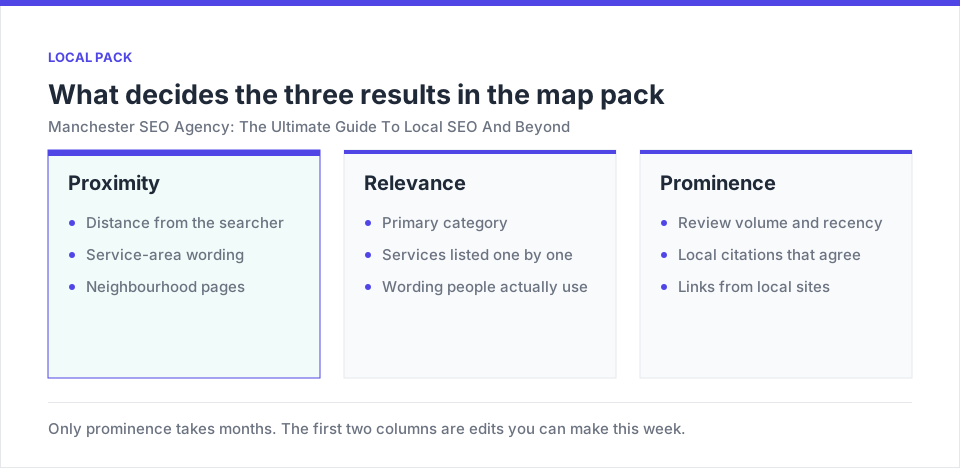
For the Local Pack side of this, the local SEO guide covers what to fix and how to track it in Semalt.
- Phase 0 (Days 0–30): Finalise baseline instrumentation, confirm district overlays for core Manchester districts, publish initial Activation Briefs by surface, stabilise GBP health by geography, and implement initial district landing pages.
- Phase 1 (Days 31–60): Expand district depth to additional neighbourhoods, accelerate cross-surface activations, and mature Guardian Dashboards and Provenance Trails for new districts.
- Phase 2 (Days 61–90): Finalise ROI models, regulator-ready packs, and full-scale district rollout to new districts. Ensure What-If outcomes are captured for audits and regulator replay across all four surfaces.
Reporting And Stakeholder Communication
Deliver concise, regulator-ready reporting that blends internal analytics with external benchmarks. Create monthly performance packs drawing from Google Analytics, Search Console, GBP Insights, and hub analytics, supplemented by What-If outputs. Include district-level visuals showing how Web, Images, News, and Hub interact to generate inquiries and conversions. Route stakeholders toward the Service Portfolio for activation templates and the Contact page for onboarding. External references from Google GBP Help and Moz Local provide context while preserving four-surface coherence across Web, Images, News, and Hub for Manchester markets.
How To Choose The Right Manchester SEO Agency
Selecting a Manchester-based SEO partner is a strategic decision that goes beyond chasing top rankings. The right agency should align governance-forward processes with district depth, delivering four-surface coherence across Web, Images, News, and Hub. This Part 12 translates the four-surface, district-aware framework into practical criteria, questions, and a decision blueprint to help Manchester SMEs partner with an agency that can scale, stay regulator-ready, and drive durable growth. At Manchester SEO AI, we emphasise transparent collaboration, measurable outcomes, and an architecture that supports Manchester’s evolving districts.
Why Local Experience Matters When Selecting A Manchester Agency
Local expertise translates into credibility and practical alignment with Manchester’s diverse districts, from City Centre to Chorlton and Didsbury. A Manchester-centric programme understands district-level search patterns, footfall rhythms around events, and the specific signals that move users from discovery to inquiry. By mapping signals by geography, an agency can deliver district landing pages with depth, maintain GBP health by district, and synchronise Images, News, and Hub assets around nearby opportunities. This district coherence supports regulator-ready reporting and makes audits straightforward to follow.
Crucially, governance artefacts travel with every change. Activation Briefs define what is deployed by surface and geography; Guardian Dashboards visualise health by district; Provenance Trails chronicle data lineage for regulator replay. When a Manchester agency demonstrates these tools, you’re not merely buying SEO; you’re acquiring a scalable governance framework that grows with your business.
Key Selection Criteria For A Manchester SEO Partner
Choose a partner that ticks five core criteria: SME-focused Manchester experience, transparent pricing and reporting, strict white-hat practices, demonstrable ROI and measurable outcomes, and a strong cultural fit with your team. The integration of governance artefacts and district overlays should be non-negotiable. In practice, this means asking for artefact-led proposals that include Activation Briefs by surface, Guardian Dashboards by geography, and Provenance Trails for data lineage, plus a clear What-If planning calendar and an ROI model.
- SME-focused Manchester track record: Look for case studies showing growth in district-level visibility and conversions for Manchester-based clients.
- Transparency in pricing and reporting: Require a clear, predictable cadence of updates across Web, Images, News, and Hub with itemised deliverables.
- White-hat and regulatory-minded practices: Evidence of ethical SEO methods aligned with Google guidelines and no risky shortcuts.
- Measurable ROI and evidence-based outcomes: Availability of ROI dashboards and robust attribution that links activities to inquiries or revenue by district.
- Cultural fit and collaboration: Demonstrated willingness to work with your in-house team, with regular strategy sessions and a named client partner.
Questions To Ask During A Consultation
Prepare questions that reveal practical capability and governance discipline. Inquire about geography-to-surface mapping, artefacts provided, ROI measurement by district, and how What-If planning is integrated into monthly reviews. Request details on team structure, communication cadence, tooling, and how district GBP health signals are maintained alongside district landing pages and hub resources.
- Do you publish Activation Briefs by surface and geography? Can you share a sample?
- Can you demonstrate Guardian Dashboards by district? Show examples of visuals and KPI alignment.
- What is your ROI model at district level? Explain attribution and the role of What-If planning.
- How do you ensure GBP health signals stay synchronised across four surfaces? Outline governance processes.
How We Fit Manchester SEO AI With Your Business
At Manchester SEO AI, engagements are designed around four-surface coherence and district depth. Our proposals emphasise governance artefacts, district overlays, and regulator-ready reporting. We tailor plans anchored by Activation Briefs by surface, Guardian Dashboards by geography, and Provenance Trails for data lineage. Internal links to the Service Portfolio illuminate activation patterns, while the Contact page initiates a structured discovery call.
Typical engagement models include monthly retainers or milestone-based projects, each with clear scopes and predictable delivery cadences. We align with external benchmarks such as Google guidance and Moz Local to anchor practices, while preserving four-surface coherence across Web, Images, News, and Hub.
Pricing And Engagement Models In The UK For A Manchester SEO Agency
For Manchester SMEs seeking durable online visibility, pricing models must reflect governance-forward, district-aware strategies that scale across four surfaces Web, Images, News, and Hub. This Part 13 translates the Four-Surface MTN spine into practical, UK-wide engagement structures that help businesses forecast spend, compare proposals, and recognise the value delivered by a Manchester-based SEO partner such as Manchester SEO AI. The emphasis remains on clarity, measurability, and regulator-ready reporting that aligns with Manchester’s evolving districts and commercial goals.
Common Pricing Models In The UK Market
Most Manchester agencies offer a mix of pricing structures designed to accommodate SMEs and growing businesses. The typical options fall into three core categories, each with its own strengths and trade-offs:
- Monthly Retainer With Scope By Geography: A predictable, ongoing fee that covers a defined scope of four-surface work and district overlays. This model suits steady growth and regulator-ready reporting, enabling consistent activation across Web, Images, News, and Hub. Expect tiered bands by district complexity and surface maturity.
- Milestone or Fixed-Price Projects: A one-off or staged investment for specific initiatives such as a site migration, a full district landing-page rollout, or a major content and link-building sprint. Prices vary with district count, content depth, and technical requirements, often ranging from mid four figures to mid five figures for substantial projects.
- Hybrid Models (Retainer Plus Add-Ons): A core monthly retainer supplemented by optional add-ons (for example, enhanced Digital PR campaigns, seasonal What-If planning, or rapid district deployments) to address time-sensitive priorities or new districts.
Within each model, Manchester-based agencies often embed governance artefacts such as Activation Briefs by surface, Guardian Dashboards by geography, and Provenance Trails to support regulator replay and audits. These artefacts not only guide execution but also provide a transparent audit trail when presenting to stakeholders or regulators.
What Influences Price In Manchester And The Wider UK
Several factors determine pricing for Manchester campaigns. District breadth and depth drive content requirements, GBP health management by geography demands ongoing updates, and four-surface governance increases the administrative overhead of audits and What-If planning. In practice, you should expect price tiers to reflect:
- Geography Footprint: More districts or zones mean more district landing pages, more GBP health signals, and more local content to curate.
- Surface Maturity: Web, Images, News, and Hub require coordinated activation; greater four-surface maturity elevates cost but raises potential ROI.
- Technical And Content Depth: Complex sites with advanced structured data, localisation, and multi-language needs command higher engagement costs.
- Governance And Reporting Cadence: What-If planning cycles, dashboards, and data provenance trails add value through regulator-readiness, but also add administrative overhead.
In Manchester, many SMEs find that a well-scoped retainer aligned to district overlays delivers better predictability and ROI than ad-hoc project pricing. The key is clarity on deliverables, measurement, and governance that supports ongoing decision-making by non-technical stakeholders.
What Should Be Included In A Manchester SEO Proposal
A robust proposal from a Manchester SEO agency should spell out cost structures, deliverables by surface, and district-level expectations. Look for:
- Detailed scope by surface and geography, including district landing pages, GBP health signals, district imagery, and hub resources.
- Baseline and target KPIs tied to district visibility, local inquiries, and conversion metrics across four surfaces.
- Activation Briefs by surface, Guardian Dashboards by geography, and Provenance Trails for data lineage and regulator replay.
- A clear What-If planning calendar showing cadence for governance reviews and signal optimisation.
- Transparent pricing with a breakdown of monthly fees, add-ons, and migration or refresh costs.
Internal references on Manchester SEO AI show how these artefacts translate into practical dashboards and governance for scalable local campaigns. External benchmarks from Google and Moz Local can offer context, but the proposal should remain district-focused and regulator-ready.
Onboarding Timelines And Initial Investment
Onboarding typically spans 4–12 weeks, depending on district footprint and surface maturity. Early milestones include district footprint confirmation, GBP health baseline by geography, and the publication of initial district landing pages with depth content. A common trajectory is:
- Week 0–2: Discovery, district footprint mapping, and governance alignment.
- Week 3–6: GBP health by geography, district landing page development, and initial four-surface activations.
- Week 7–12: Full activation across Web, Images, News, and Hub with guardian dashboards and provenance trails in place.
- Ongoing: Monthly reporting, What-If planning, and governance cadences.
Pricing discussions during onboarding should reflect not only the ongoing cost but the incremental value of governance assets and district depth. Specify the expected time-to-value and the milestones that justify continued investment. A transparent onboarding plan builds trust and helps both sides assess ROI early in the relationship.
How To Compare Proposals And Make The Right Choice
When evaluating Manchester-based SEO proposals, focus on governance clarity, district alignment, and the ability to replay signal journeys in audits. Ask for:
- Examples of Activation Briefs by surface and geography.
- Sample Guardian Dashboards showing MTN health by district.
- Provenance Trails illustrating data lineage and the ability to replay decisions.
- What-If planning calendars and the cadence for governance reviews.
- Realistic timelines for achieving four-surface maturity and district depth.
Always benchmark against the typical UK market rates and align pricing with the level of governance, not just the volume of tasks. A credible partner will provide a transparent pricing model, plus artefacts that demonstrate repeatable, regulator-friendly delivery across Web, Images, News, and Hub.
Next Steps: Taking The Next Step With Manchester SEO AI
If you are ready to explore pricing and engagement options, start with a complimentary audit or discovery call. Visit the Service Portfolio to review activation templates and governance formats, then book a consult via the Contact page to tailor a Manchester plan. External references from Google GBP Help and Moz Local can guide benchmarking while you maintain four-surface coherence across Web, Images, News, and Hub for Manchester markets.
Sustaining Manchester SEO Success: Long-Term Governance, Partnerships, And ROI
Having established a four-surface, district-aware framework for Manchester, the final phase focuses on longevity. This part articulates how ongoing governance, strategic partnerships, and disciplined measurement sustain momentum, protect signal integrity, and demonstrate tangible ROI as Manchester’s districts continue to evolve. It translates the earlier parts into a practical, repeatable playbook that keeps your Manchester SEO programme regulator-ready while driving sustainable growth for SMEs across the city.
A Durable, Scalable Framework For Growth
The cornerstone of lasting success is a governance-forward blueprint that can scale with Manchester’s changing geography. Four critical practices support this aim: continuous signal health by geography, regular What-If planning, transparent artefacts, and a culture of knowledge transfer. When every adjustment is traceable through Activation Briefs by surface, Guardian Dashboards by geography, and Provenance Trails for data lineage, leadership can replay decisions in audits and demonstrate clear cause-and-effect relationships for stakeholders.
In practice, this means adopting a quarterly cadence that revisits district footprints, updates GBP health signals by geography, and refreshes district landing pages, images, News coverage, and Hub resources to reflect new realities. It also means embedding privacy and data governance into every signal journey, aligning with GDPR and UK data protection expectations, to safeguard user trust as you expand into new districts such as Old Trafford, Eccles, or Didsbury Village.
To maintain a sharp competitive edge, combine ongoing technical health checks with content and outreach iterators. A structured process for What-If simulations—covering regulatory shifts, district demand shifts, and changes in Google’s local ranking signals—ensures you stay ahead rather than merely reacting. This is not a one-off exercise; it is a persistent capability embedded in your organisational culture.
- District health governance: Regular updates to GBP health, district NAP, and district schema reflect evolving local realities.
- What-If cadences by geography: Predefined scenarios tested quarterly to stress-test signal journeys.
- Provenance Trails for audits: Complete data lineage shows decisions, data sources, and publication histories.
- Cross-surface consistency: Ensure Web, Images, News, and Hub stay coherent for each district overlay.
- Privacy and compliance: Embed privacy-by-design into signal journeys and data handling across districts.
Partnerships That Endure: Selecting A Manchester SEO Agency
Choosing the right partner is as strategic as any technical or content decision. A durable collaboration hinges on transparency, governance maturity, and the ability to scale with district depth. Look for agencies that provide clear artefacts, such as Activation Briefs by surface, Guardian Dashboards by geography, and Provenance Trails for data lineage. These elements enable you to replay decisions, justify spend, and demonstrate regulatory readiness to stakeholders.
Beyond artefacts, assess cultural fit and communication cadence. A Manchester-focused partner should offer a dedicated district lead, cross-functional collaboration across Web, Images, News, and Hub, and a transparent road map with predictable milestones. Ask for case studies or reference dashboards that show how a partner maintained four-surface coherence while expanding district depth and authority over time.
Contractually, insist on aligned SLAs, a defined What-If planning schedule, and a governance plan that documents data sources, ownership, and audit readiness. This clarity reduces misalignment risk and accelerates time-to-value, especially when Manchester’s districts begin to diverge in needs and demand.
Measuring ROI: Long-Term Value By Geography
Return on investment in a district-aware Manchester programme matures as signals stabilise and authority grows. Track ROI through a combination of leading indicators (inquiries, conversions, and qualified leads) and lagging indicators (revenue, customer lifetime value, and repeat visits by district). Use guardian dashboards to visualise MTN health by geography and surface, while Provenance Trails provide a regulator-ready narrative for every optimisation. Over multi-quarter horizons, expect cumulative improvements in local visibility, higher quality inquiries, and stronger district-specific conversions that contribute to city-wide performance as well.
Practical measurement techniques include attribution modelling across four surfaces, district-level experiment frameworks, and regular audits of data lineage to demonstrate causality. When these practices are embedded in governance artefacts, leadership gains a reliable, auditable view of how district-friendly optimisations translate into tangible business outcomes.
Scaling Across Manchester’s Districts And Beyond
As Manchester grows, a scalable approach becomes essential. Start with the core districts and extend to adjacent areas in a controlled manner, using the same four-surface framework. Create a district expansion plan that specifies new landing pages, GBP health checks, and hub resources alongside updated imagery and News coverage. Maintain a central governance backbone while enabling district autonomy through Activation Briefs by surface, safeguarding signal fidelity and auditability during scale. This disciplined expansion supports rapid but coherent growth, avoiding the pitfalls of unmanaged fragmentation.
Key expansion levers include replicable district playbooks, reusable content modules, and scalable outreach strategies that prioritise local credibility. Guardian Dashboards help you spot early drift in new districts, while Provenance Trails guarantee every step of the expansion is documented for regulators and stakeholders alike.
Next Steps: A Practical Playbook For Manchester Brands
Ready to sustain momentum? Start with a district-focused audit and a What-If planning calendar reinforced by governance artefacts. Engage with Manchester SEO AI to obtain a district-aware blueprint that reinforces four-surface coherence. Schedule a strategy session via the Contact page to map a concrete roadmap across Web, Images, News, and Hub. Leverage external benchmarks from Google GBP Help and Moz Local to align tactics with industry standards while you maintain regulator-ready reporting.
As you move forward, ensure ongoing knowledge transfer across your team and your partner. This includes regular training, documented playbooks, and a shared central repository of Activation Briefs, Guardian Dashboards, and Provenance Trails. With disciplined governance and a trusted Manchester partner, you gain not just visibility, but durable authority and reliable, regulator-friendly reporting that supports sustainable growth across all districts.