SEO Marketing Manchester: Foundations For Local Growth
Manchester is a dynamic, buoyant commercial hub where local search behaviours blend city centre intensity with neighbourhood nuances. In a competitive market, SEO marketing in Manchester means more than generic visibility; it requires locality-aware strategies that surface the right services to nearby customers at the exact moment they search. On ManchesterSEO.ai, we emphasise a locality-first approach underpinned by governance artefacts such as Translation Provenance Identifiers (TPIDs), Activation Kits, and Surface Contracts. This Part 1 lays the groundwork for a 12-part series that will translate these concepts into practical steps for Manchester businesses looking to grow through authentic, measurable search visibility.
Understanding the Manchester opportunity
Local optimisation in Manchester hinges on accurate data, near-me proximity, and content that speaks to each district’s unique priorities. A Manchester-focused SEO partner should translate citywide intent into district-specific pages, GBP management for multiple neighbourhoods, and a governance cadence that keeps data clean as you scale. The aim is to move beyond vanity rankings and drive qualified traffic that converts in real-world contexts, from the city centre to Salford and Trafford Park. For teams implementing locality-first SEO, the eight surfaces framework—Search, Maps, Knowledge Panels, Local Packs, News, YouTube, Voice, and Images—offers a practical lens to plan, diffuse, and measure impact across surfaces.
For Manchester businesses, data provenance matters as much as discovery. TPIDs ensure every asset (hub topic, district page, or activation kit) can be traced back to its origin, enabling clean reporting and controlled diffusion as content moves across surfaces. As you begin, focus on aligning hub topics with district briefs, so later activations feel natural and measurable rather than ad-hoc.
Local market conditions that shape strategy
Manchester’s geography combines dense urban pockets with sprawling suburbs. Consumers in the city centre behave differently from those in Bury, Sale, or Stockport, but they share a need for fast, accurate information and easily accessible services. Local signals such as GBP presence, consistent NAP data, and suburb-specific content deliver higher relevance and better click-through in local search surfaces. A Manchester SEO partner should implement routine GBP governance, harmonise NAP across key directories, and craft suburb-focused content that answers local questions and reflects nearby landmarks and amenities.
- Proximity and intent alignment: optimise for location-based queries and map-driven results across Manchester districts.
- District-level content with hub topics: deploy a scalable structure where hub content diffuses to district assets without losing local nuance.
- Data governance of signals: Activation cadences and TPIDs ensure outputs stay provable and tied to business goals.
What a Manchester SEO agency brings to the table
A focused Manchester partner combines content, technical SEO, and local authority building to create a holistic programme. Expect a partner who can map district-level keywords to a clear content plan, optimise Google Business Profile for multiple suburbs, implement robust on-page and technical fixes, and provide transparent dashboards showing how locality signals translate into revenue. The aim is to move beyond generic tactics and build a repeatable framework tailored to Manchester’s geography and market realities. For practical templates and governance resources, explore the Manchester section of our services on ManchesterSEO.ai.
- Hyperlocal keyword research: district terms aligned with city-wide intent to cover micro and macro opportunities.
- GBP governance and local listings: structured routines for profile updates, reviews, and local citations in Manchester districts.
- Technical SEO for mobile and speed: fast, accessible experiences across devices in dense urban environments.
- Content strategy for suburbs: pillar pages and spoke content linked via TPIDs to preserve provenance across surfaces.
- Data-driven reporting: dashboards that connect district outputs to business outcomes across eight surfaces.
Part 1 focus and what to expect in Part 2
Part 1 establishes the rationale for engaging a Manchester-specific SEO partner, outlining the governance language around TPIDs and Activation Kits, and presenting the core capabilities needed to start delivering local impact. In Part 2, we will detail how to evaluate potential providers in Manchester, including practical criteria, case study considerations, and ROI frameworks to compare options with confidence. To begin exploring practical steps today, visit our services or get in touch for a personalised plan.
Why locality matters for Manchester growth
A locality-focused programme helps Manchester businesses avoid wasteful broad targeting. Suburb pages, accurate business data, and district content anchored to TPIDs create a durable diffusion framework across eight surfaces, enabling you to diffuse signals without diluting local relevance. The approach also makes reporting more actionable, helping leadership see how proximity translates into inquiries and conversions in real-world settings.
Next steps: evaluating potential Manchester providers
When you’re ready to compare partners, look for governance maturity, TPID-driven content maps, activation cadences per surface, and a transparent ROI modelling framework. Ask for district case studies, dashboard templates, and a clear onboarding plan that enables a smooth handover. For practical templates and governance resources, consult the Manchester SEO services on our services or get in touch for a tailored district plan aligned to your footprint.
Understanding The Manchester SEO Landscape: Local Search Dynamics
Building on the locality-first framework introduced in Part 1, this section zooms into Manchester’s unique search dynamics. Local intent in Manchester blends fast-moving city centre behaviours with district-specific realities across Salford, Stockport, and outlying suburbs. A Manchester-focused SEO programme surfaces the right services to nearby customers at the exact moment they search, while keeping governance intact through Translation Provenance Identifiers (TPIDs), Activation Kits, and Surface Contracts. This Part 2 translates those concepts into practical steps for Manchester businesses aiming to grow through authentic, measurable local visibility.
Manchester’s distinctive local search signals
Manchester’s geography presents a tapestry of dense urban clusters and diverse suburbs. The urgency of information in the city centre clashes with district-level needs in areas like Chorlton, Didsbury, and Eccles. Effective locality optimisation combines accurate NAP data, disciplined GBP governance, and suburb-specific content that answers questions readers in each district are asking. The eight surfaces framework remains a practical lens: Search, Maps, Knowledge Panels, Local Packs, News, YouTube, Voice, and Images. Using TPIDs ensures every asset—hub topics, district pages, or activation kits—retains provenance as content diffuses across surfaces.
- Proximity-driven relevance: optimise for location-based queries and map results across Manchester’s sectors.
- District content diffusion: structure hub topics so suburb pages inherit authority while preserving local nuance.
- Governance cadences: TPIDs, Activation Kits, and Surface Contracts keep outputs provable and aligned with business goals.
What a Manchester SEO agency delivers
A Manchester partner should harmonise content, technical SEO, and local authority building into a cohesive programme. Expect clear district-level keyword maps, GBP governance for multiple suburbs, robust on-page and technical fixes, and transparent dashboards showing how locality signals convert to revenue. The aim is a repeatable framework tailored to Manchester’s geography and market realities, not a collection of ad-hoc tactics. For practical governance resources and templates, explore the Manchester section of our services on ManchesterSEO.ai.
- Hyperlocal keyword research: district terms aligned with city-wide intent to cover micro and macro opportunities.
- GBP governance and local listings: routines for profile updates, reviews, and citations across Manchester districts.
- Technical SEO for mobile and speed: fast, accessible experiences across devices in dense urban environments.
- Content strategy for suburbs: pillar pages and spoke content linked via TPIDs to preserve provenance across surfaces.
- Data-driven reporting: dashboards connecting district outputs to business outcomes across eight surfaces.
Local market conditions that shape strategy
Manchester’s urban core demands rapid, reliable information, while suburbs reward content that mirrors local life, landmarks, and transport links. A Manchester SEO partner ensures GBP governance, consistent NAP data across directories, and suburb-focused content that answers local questions. This locality discipline yields more than rankings; it delivers traffic that meaningfully converts in real-world contexts.
- Proximity and intent alignment: optimise for location-based queries and map results across Manchester’s districts.
- District-level content with hub topics: diffusion structure that preserves local nuance while diffusing from a central hub.
- Data signal governance: Activation cadences and TPIDs keep outputs provable and aligned with business goals.
What to expect when evaluating Manchester providers
When assessing potential Manchester partners, look for governance maturity, TPID-driven content maps, activation cadences per surface, and a transparent ROI model. Request district cases close to your footprint, dashboard templates, and a clear onboarding plan that enables a smooth handover. To start exploring practical steps now, visit our services or get in touch for a tailored district plan.
Next steps: preparing for diffusion across Manchester
Begin with a district footprint map and a TPID map that links hub topics to district outputs. Develop district pillar pages and suburb spokes, then populate with TPID-linked editorial briefs. Deploy per-surface Activation Kits and Surface Contracts, and establish an ongoing governance cadence that evolves with Manchester campaigns. If you want practical templates and governance playbooks, review our Manchester services and case studies on ManchesterSEO.ai, or get in touch for a personalised plan.
Note: This is Part 2 of a 12-part Manchester SEO series. Part 3 will delve into Core SEO Pillars—Technical, On-page, and Off-page—and explain how local signals influence rankings in Manchester. For ongoing guidance, explore the resources on ManchesterSEO.ai and our services pages. External references to Google’s local guidelines and Moz Local can provide additional context for best practices: Google's experience optimisation guidelines and Moz Local guidelines.
Core SEO Pillars: Technical, On-Page and Off-Page For Manchester
Manchester businesses compete for local attention in a crowded market. The core pillars of search engine optimisation remain constant, but the way you deploy them must reflect locality. This Part 3 focuses on Technical SEO, On-Page optimisation, and Off-Page authority within a Manchester context, aligning every activity with a locality-first governance framework that uses Translation Provenance Identifiers (TPIDs), Activation Kits, and Surface Contracts. The aim is to convert broader visibility into nearby, measurable outcomes for Manchester-based organisations.
1) Technical SEO: Manchester-grade site health
Technical excellence underpins every click a Manchester user makes. Focus areas include site speed, mobile usability, secure connections, and robust indexing. A fast, mobile-first site reduces friction for local search users who expect rapid access to services near Salford, Didsbury, or Chorlton. Implement clean crawl instructions and ensure important pages are discoverable by search engines without unnecessary blockers.
Key tasks include mapping hub topics to district assets via TPIDs so technical changes preserve provenance as content diffuses. Build an accurate XML sitemap that prioritises district landing pages and activation-ready assets. Validate canonical tags to avoid duplication across multiple district pages and GBP variants. Maintain a solid SSL certificate and enforce strict privacy controls that align with UK regulations.
- Speed and mobile performance: optimise CSS, images, and server response times for Manchester users across devices.
- Indexing governance: provide clear robots.txt directives and a priority sitemap for hub-to-district diffusion.
- Structured data: implement LocalBusiness, LocalService, and FAQ schemas linked to TPIDs to support rich results.
- Duplication control: use canonicalisation to prevent content cannibalisation between district pages.
- Security and privacy: maintain HTTPS and privacy-compliant tracking that respects user consent.
2) On-Page optimisation: local relevance with hub coherence
On-page elements should mirror Manchester’s locality-forward intent. Start with district-focused title tags and meta descriptions that reflect common local queries. Structure pages around hub topics, using TPIDs to maintain provenance as content diffuses from central themes to suburb pages. Use clear H1s that align with spoke content and maintain a logical hierarchy (H2, H3) for services, FAQs, and local considerations.
Incorporate district FAQs, geo-targeted service lists, and authentic imagery to reinforce proximity signals. Apply local schema where appropriate, and ensure that TPID-linked content remains traceable from hub to district assets across surfaces such as Maps and Local Packs.
- District pages with TPID anchors: map every district page to a hub topic via TPID for traceable diffusion.
- Local keyword mapping: align district queries with city-wide intent to cover micro and macro opportunities.
- Structured data on-page: LocalBusiness, LocalService, and FAQ schemas to improve rich results.
- Internal linking strategy: link district spokes back to the hub and to relevant surface activations.
- Content quality and UX: create useful, concise text that answers local questions and supports conversions.
3) Off-page SEO and local authority building
Off-page signals amplify proximity and trust. In Manchester, develop a deliberate local outreach programme that earns authoritative links from district business associations, local publications, and community partners. Combine local citations with GBP engagement and district-focused content to create cohesive signals across eight surfaces. Use TPIDs to maintain provenance as external content references diffuse into your district pages.
- Local link strategy: seek high-quality, locally relevant placements in Manchester’s districts.
- Digital PR and partnerships: craft district stories and community news that attract natural mentions and links.
- Citation hygiene: ensure NAP consistency across major directories for each district.
- GBP engagement and reviews: optimise reviews and responses by district to reinforce proximity and trust.
- TPIDs in off-page: tag external references with TPIDs to preserve provenance in dashboards.
Integration: coordinating pillars for Manchester diffusion
Technical, On-Page, and Off-Page work as a cohesive system when guided by governance artefacts. TPIDs anchor every asset to hub topics, Activation Kits standardise surface outputs, and Surface Contracts define cadence and data schemas. When these elements align, diffusion across eight surfaces—Search, Maps, Knowledge Panels, Local Packs, News, YouTube, Voice, and Images—becomes credible and scalable for Manchester markets.
- Governance alignment: TPIDs, Activation Kits, and Surface Contracts ensure consistency across all pillars.
- Diffusion readiness: every pillar feeds the eight surfaces with coherent signals and local nuance.
- Measurement discipline: dashboards connect technical health, on-page relevance, and off-page authority to district ROI.
Core SEO Pillars: Technical, On-Page and Off-Page For Manchester
With Manchester’s competitive local market, a disciplined, locality-forward approach to the three SEO pillars—Technical, On-Page, and Off-Page—delivers durable visibility and measurable revenue. This Part 4 continues the Manchester-focused sequence, tying each pillar to governance artefacts such as Translation Provenance Identifiers (TPIDs), Activation Kits, and Surface Contracts. The goal is to translate broad search landscape insights into district-ready, TPID-linked outputs that perform across eight surfaces: Search, Maps, Knowledge Panels, Local Packs, News, YouTube, Voice, and Images. As you implement these pillars, the Manchester SEO framework stays auditable, scalable, and aligned with your business goals across the city footprint.
1) Technical SEO: Manchester-grade site health
Technical excellence creates a frictionless path for Manchester users to find and engage with local services. Priorities include fast, mobile-first performance; reliable indexing; secure connections; and clean, crawl-friendly architectures that respect district TPIDs. A technically sound site ensures hub topics linked to district assets diffuse without losing accessibility or authority as traffic moves from central pages to suburb pages across maps and knowledge panels.
Key practices include:
- Speed and mobile optimization: optimise critical rendering paths, compress images, and streamline CSS to deliver sub-second experiences on smartphones in dense Manchester zones such as the city centre and its surrounding suburbs.
- Indexing governance: maintain a clean robots plan and a priority sitemap that emphasises hub-to-district diffusion, ensuring district pages are discoverable without duplicative indexing.
- Structured data strategy: implement LocalBusiness, LocalService, and Local FAQ schemas, all TPID-linked to hub topics to support rich results on Maps and in knowledge panels.
- Canonical and duplication control: use canonical tags to prevent content cannibalisation between district pages and hub content while preserving diffusion provenance.
- Security and privacy alignment: uphold HTTPS everywhere and implement privacy-compliant analytics that respect UK regulations and user consent.
2) On-Page Optimisation: local relevance with hub coherence
On-page elements should reflect Manchester’s locality-forward demand while preserving hub authority. Begin with district-focused title tags and meta descriptions tailored to common local queries, such as "services near me" in a Manchester suburb, or district-specific needs. Structure pages around hub topics, then diffuse content to district spokes via TPIDs to retain provenance as content diffuses across surfaces.
Practical on-page practices for Manchester include:
- District pages with TPID anchors: map each district page to a hub topic using TPIDs so diffusion remains traceable.
- Local keyword mapping: align district terms with city-wide intent to cover micro and macro opportunities in areas like Chorlton, Salford, and Didsbury.
- Structured on-page data: LocalBusiness, LocalService, FAQ schemas embedded on district pages, linked to hub TPIDs for provenance.
- Internal linking discipline: connect district spokes back to the hub and to surface Activation Kits, supporting coherent diffusion.
- Content quality and UX: craft concise, helpful text that answers local questions and supports conversions, with authentic imagery tied to Manchester contexts.
3) Off-Page SEO: local authority and reputation
Off-page signals reinforce proximity and trust. For Manchester, develop a deliberate local outreach programme that earns authoritative links from district business associations, local publications, and community partners. Combine district-focused content with strategic GBP engagement, local citations, and authentic reviews to create signals that diffuse across eight surfaces while maintaining hub authority via TPIDs.
- Local link strategy: pursue high-quality, locally relevant placements within Manchester districts to reinforce proximity signals.
- Digital PR and partnerships: craft district narratives and community stories that attract natural mentions and backlinks relevant to Salford, Stockport, and surrounding areas.
- Citation hygiene by district: ensure NAP consistency across core directories for each district and update district landing pages accordingly.
- GBP engagement and reviews: encourage and respond to reviews by district, reinforcing local trust.
- TPIDs in off-page: tag external references with TPIDs to preserve provenance in dashboards and reports.
Integration: governance across pillars for Manchester diffusion
Technical, On-Page, and Off-Page operate as an integrated system when guided by governance artefacts. TPIDs anchor every asset to hub topics, Activation Kits standardise surface outputs, and Surface Contracts define cadence and data schemas. When these elements align, diffusion across eight surfaces becomes credible and scalable for Manchester’s markets.
- Governance alignment: TPIDs, Activation Kits, and Surface Contracts ensure consistency across all pillars.
- Diffusion readiness: Each pillar feeds the eight surfaces with coherent signals and local nuance.
- Measurement discipline: Dashboards connect technical health, on-page relevance, and off-page authority to district ROI.
Next steps: translating Pillars into Manchester growth
To put these pillars into practice, start by auditing your technical health, then map district TPIDs to spoke pages and activation templates. Review Manchester SEO services on ManchesterSEO.ai to access governance templates, district-case templates, and per-surface activation kits. If you’re ready to tailor a plan for your footprint, get in touch for a personalised Manchester district diffusion plan that aligns with your goals. For external context on best practices, consult Google’s guidelines for Local SEO and Moz Local resources as supplementary references.
Technical SEO Essentials For Manchester
Building on the locality-first framework established for Manchester, this section translates core technical foundations into practical, district-ready actions. It concentrates on site health, mobile performance, indexing, structured data, and governance—all tuned to Manchester’s dense urban geography and diverse suburbs. The objective is not only faster pages, but a scalable diffusion system where hub topics energise district assets without sacrificing provenance or local relevance. For ongoing templates and governance resources, refer to the ManchesterSEO.ai services and governance playbooks.
1) Speed, mobile performance, and Core Web Vitals in Manchester
In Manchester’s urban mix, users expect rapid, reliable experiences whether they are browsing city centre services or suburban offerings. Prioritise Core Web Vitals as baseline indicators of user experience, not merely a performance badge. Focus on three pillars: loading performance (LCP under 2.5 seconds for critical pages), interactivity (FID under 100 milliseconds), and visual stability (CLS under 0.1 for main content). Implement a mobile-first strategy that emphasises responsive layouts, compressed assets, and lazy loading for off-screen images to preserve perceived speed in dense districts such as Manchester City Centre, Salford Quays, and Didsbury.
Practical steps include: optimising critical rendering paths; reducing JavaScript execution time; employing modern image formats and responsive sizing; fast hosting and edge caching for Manchester visitors. TPIDs should map performance-focused assets to hub topics, ensuring diffusion maintains topical authority while improving user experience across district pages.
2) Indexing, crawlability, and diffusion-friendly site architecture
Manchester sites often feature hub content plus a network of district pages. Treat crawlability as a governance priority: ensure important pages are discoverable, avoid index loops, and prevent duplicate content from diluting relevance. Create a clean XML sitemap prioritising hub topics and district assets, while applying robots meta directives to control indexing for pages that are not mission-critical. Use canonical tags to prevent content cannibalisation when hub topics diffuse into district pages, and ensure TPIDs anchor every asset to its origin so diffusion remains auditable as content expands.
Implementation tips include: dedicated district landing-page architecture, redirect hygiene policy, URL parameter governance, and per-surface indexing plans that align with activation cadences. This approach supports diffusion across eight surfaces without compromising index clarity or authority.
3) Structured data, Local TPIDs and hub-to-district provenance
Structured data is the backbone of rich results and AI-assisted discovery. Implement LocalBusiness, LocalService, FAQ, and schema blocks that are TPID-linked to hub topics. Each district page should inherit hub authority while asserting district-specific niceties (hours, services, locations). This TPID-backed approach keeps diffusion traceable, so a search user in Didsbury or Salford sees the same provenance as someone in Manchester City Centre, with context preserved across Maps, Knowledge Panels, and Local Packs.
Key actions include: TPID tagging for every district asset; explicit schema for hub-to-district relationships; per-surface schema alignment (GBP, Local Pack, Knowledge Panels).
4) Canonicalisation and diffusion governance
As content diffuses from a Manchester hub to district pages, canonicalisation prevents content from competing with itself. Use canonical tags to consolidate authority on the most authoritative page while maintaining diffuser links to district variants. When hub topics diffuse into multiple suburbs, consider alternate methods such as rel=canonical pointing to the hub or rel=alternate for district versions, guided by your TPID-driven governance. This governance ensures consistent signals across eight surfaces and prevents mixed messaging from diluting local relevance.
Best practices include: consistent canonical strategies, careful handling of district dupes, and clear diffusion rules for activation cadences.
5) Security, privacy, and compliance in Manchester
Security and privacy are foundational for user trust and data integrity. Uphold a robust HTTPS posture, implement privacy-friendly analytics, and adhere to UK GDPR guidelines. Ensure that tracking consent is explicit, data is minimised, and retention policies align with regulatory standards. When diffusion activates new district pages or surfaces, governance must ensure that data collection respects user consent and remains auditable through TPIDs and Surface Contracts. This disciplined approach protects both user experience and your reporting accuracy as you scale across Manchester.
Additionally, establish access controls and change-management rituals for technical and content teams. Regular security reviews, vulnerability scans, and data governance checks should be standard practice before launching any new district asset or per-surface activation kit.
Content Strategy For Manchester Audiences
Building on the locality-first blueprint established in earlier parts, Part 6 translates Manchester-specific search behaviour into a practical content strategy. The goal is to map district-level keywords to a cohesive content plan that respects hub topics (TPIDs), Activation Kits, and Surface Contracts. This approach ensures nearby customers encounter highly relevant content exactly where and when they search, while preserving provenance as assets diffuse across eight surfaces – from Search and Maps to Knowledge Panels, Local Packs, and beyond. All guidance aligns with ManchesterSEO.ai’s governance framework, designed to be auditable, scalable, and business outcome-focused.
1) District-level keyword mapping and content architecture
Start with a district-centric keyword map that clusters terms by Manchester suburb and surrounding demographics, then ties them to Manchester-wide hub topics. Each district page should connect to a central Manchester hub page, ensuring diffusion from macro topics to micro, suburb-level queries while preserving local nuance. Translate this mapping into TPID-linked content briefs that maintain provenance as assets diffuse across surfaces such as Maps, Knowledge Panels, Local Packs, and News.
- District TPID allocation: Assign a unique Translation Provenance Identifier to every district asset to preserve origin as content diffuses.
- District priority topics: Identify two to three core questions per suburb (for example, local services, transport access, nearby landmarks) and craft briefs that translate into publish-ready blocks.
- Hub-to-district diffusion plan: Establish a predictable diffusion path from the Manchester hub to district pages, maintaining topical authority while capturing local intent.
2) District hub pages and suburb spokes: a diffusion playbook
Adopt a hub-and-spoke architecture where district hub pages anchor Manchester-wide credibility and each suburb spoke delivers locally relevant information. Link every spoke back to its TPID and to the hub to preserve authority as content diffuses across eight surfaces, including GBP, Maps, and Local Packs.
- Structured internal linking: Connect district spokes to the hub and to surface Activation Kits per surface.
- Activation Kits per surface: Prepare templates that standardise output for GBP posts, Local Pack content, knowledge cues, and schema markup.
- Editorial cadence alignment: Schedule district content production around local events, market shifts, and suburban needs to sustain momentum over time.
3) Content briefs, localization, and TPID governance
Each district asset should begin with a TPID-linked content brief that translates district questions into publishable pages, FAQs, and case studies. Localised templates should guide title tags, meta descriptions, headings, and schema. Map every asset to its TPID so diffusion remains traceable from hub topics to district assets across surfaces such as Maps and Local Packs. Regularly refresh briefs to reflect evolving district needs, local events, and transport updates that influence search demand.
Practical actions include district-specific service lists, local FAQs, and testimonial blocks that strengthen proximity signals while preserving hub authority.
4) Editorial calendars and Manchester event alignment
Create a quarterly editorial calendar that intertwines district topics with Manchester-wide themes and local events. Plan hub content first, then populate district spokes that address seasonal demand and suburb-specific questions. Maintain a publishing rhythm that balances evergreen content with timely updates – such as transport changes, new venues, or local partnerships relevant to each suburb.
Integrate content production with governance cadence: TPID mappings, Activation Kits per surface, and What-If ROI planning to forecast diffusion impact as you expand to more suburbs across the city.
5) Localisation templates and surface-ready assets
Develop modular templates that cover district title tags, meta descriptions, H1s, and content blocks. Each template should be TPID-aware and adaptable to multiple suburbs, preserving local voice while maintaining hub relevance. Include LocalBusiness and FAQ schemas to enhance local rich results and ensure TPID-linked provenance as assets diffuse across surfaces.
- District templates: Reusable templates that reflect district questions and conversion paths, enabling rapid deployment across suburbs.
- Hierarchical headings: Logical H1-H2-H3 structure that mirrors district audiences and queries.
- Schema and TPID discipline: Ensure LocalBusiness, LocalService, and FAQ schemas are TPID-tagged to preserve provenance.
6) Measurement, governance, and diffusion health
Establish a district diffusion health dashboard that links suburb outputs to hub topics with a clear data lineage. Track per-surface metrics (impressions, clicks, CTR), district engagement (time on page, scroll depth), and conversions (inquiries, bookings) at the district level. Use What-If ROI models to test diffusion velocity and spend scenarios as you expand to new suburbs. Regular governance meetings ensure TPIDs, Activation Kits, and Surface Contracts stay current and aligned with business goals across Manchester’s footprint.
Look for governance features such as district case studies, TPID-driven content maps, and a clear onboarding in What-If planning to forecast ROI for district expansion. For templates and dashboards, explore Manchester SEO resources on our services and case studies that mirror your footprint.
Next steps: how to begin using these practices in Manchester
To operationalise the governance framework described, start with the TPID mapping for your core districts, then review Manchester SEO resources for Activation Kits and surface templates. Schedule a discovery with our Manchester team to map your district footprint, confirm TPID allocations, and prepare district Activation Kits and Surface Contracts that align with your growth plan. If you are ready to discuss a tailored plan, explore our Manchester SEO services or get in touch to initiate a locality-first diffusion journey today.
On-page Optimisation And UX For Conversions
Continuing the locality-first framework for Manchester, this Part 7 focuses on turning proximity signals into tangible conversions through meticulous on-page optimisation and finely tuned user experiences. By aligning district-level pages with hub topics via Translation Provenance Identifiers (TPIDs), Activation Kits, and Surface Contracts, Manchester businesses can deliver highly relevant content that guides nearby customers from search to action across eight surfaces: Search, Maps, Knowledge Panels, Local Packs, News, YouTube, Voice, and Images. This section translates theory into practical steps you can implement within your ManchesterSEO.ai governance ecosystem.
1) On-page elements that cement local relevance
Title tags and meta descriptions must speak to Manchester’s districts while preserving the central hub theme. Start with district-targeted keywords embedded naturally within hub topics, then diffuse to suburb pages via TPIDs to maintain provenance as content moves across surfaces. Ensure H1s reflect the district focus, with H2s and H3s organising services, FAQ blocks, and local considerations. Keep content legible and actionable, especially for city centre queries about quick service hours or car-parking nuances, and for suburbs like Chorlton or Didsbury where local identity matters.
- District-centric title tags and meta descriptions: embed primary local keywords while clearly stating district, city, and service intent.
- TPID-backed structure for diffusion: anchor every district asset to a hub topic so future activations can diffuse without losing topical authority.
- Clear on-page hierarchy: use a logical sequence (H1 for district focus, H2 for services, H3 for FAQs) to support scannable content and accessibility.
2) Content architecture for suburb-level intent
Content should mirror Manchester’s real-world needs: suburb-specific questions, local landmarks, transport links, and community partnerships. Build district pillars that anchor a central hub page and spawn suburb spokes that inherit authority yet reflect local nuance. Each spoke should link back to the hub topic via TPID, ensuring diffusion remains traceable across surfaces such as Maps and Local Packs. Include district FAQs, service lists, and testimonials to bolster trust signals for nearby searchers.
- District FAQs and local cues: answer the pressing questions readers in each district ask, using locally resonant language.
- Suburb spokes with TPID anchors: connect every suburb page to its TPID and hub topic to preserve provenance.
- Local imagery and alt text: use authentic photos tied to Manchester districts to reinforce proximity signals.
3) Local schema, TPIDs and hub-to-district provenance
Structured data remains the backbone of local search. Implement LocalBusiness, LocalService, and relevant FAQ schemas that are TPID-linked to hub topics. Each district page should inherit hub authority while declaring district-specific details (hours, locations, services). The TPID system ensures diffusion is auditable so Manchester campaigns can demonstrate a clean data lineage across eight surfaces. Regularly review schema coverage to avoid gaps as new suburbs come online.
- TPID-tagged schemas: LocalBusiness, LocalService, and FAQ blocks connected to their TPIDs.
- Hub-to-district taxonomy alignment: ensure district pages map to the central topic taxonomy so diffusion remains coherent.
- Surface-ready metadata: synchronise schema across Maps, Knowledge Panels, and Local Packs for consistent rich results.
4) Internal linking and navigation for diffusion
Develop a cohesive internal linking strategy that steers users from hub content to district pages and back via Activation Kits. Every district spoke should link to relevant surface activations (GBP updates, Local Pack content, knowledge cues) and back to the hub to preserve topical authority. A well-planned navigation structure supports both user experience and search engine diffusion, making it easier for local customers to move from discovery to action.
- Hub-to-district anchors: robust navigation paths that direct users to district specifics from the hub page.
- Per-surface activation connections: ensure each surface has its own internal blueprint tying back to TPIDs.
- Editorial cadence alignment: cross-linking should reflect publishing cycles and local events to maintain freshness and relevance.
5) UX signals that boost conversions in Manchester
Beyond keyword optimisation, UX signals steer a visitor towards conversion. Place clear calls-to-action (CTAs) above the fold for district pages, highlight local testimonials, and provide easy access to appointment requests or quotes. Use local trust indicators such as reviews from residents, partnerships with local organisations, and visible GBP activity to reinforce proximity. Optimise forms for mobile devices and reduce friction with pre-filled inputs where possible, particularly for busy suburban readers who browse on smartphones while commuting.
- CTA prominence by district: district-specific CTAs near service details boost engagement.
- Trust signals and social proof: integrate local testimonials and partner logos relevant to each suburb.
- Form ergonomics: minimise fields, enable autofill, and provide progressive disclosure for longer forms.
6) Data and measurement for on-page UX improvements
Establish a measurement framework that ties on-page changes to real-world outcomes. Track metrics such as time on page, scroll depth, click-through rate from search results, and district-specific conversions (inquiries, bookings, consultations). Use What-If ROI models to forecast the impact of UX improvements and diffusion cadence on district performance. Dashboards should present per-surface and per-district views with TPID-backed data lineage, making it straightforward to explain ROI to stakeholders in Manchester.
- Per-surface UX KPIs: monitor engagement metrics for each surface to pinpoint where UX optimisations move the needle.
- District conversion signals: tie inquiries and bookings to TPIDs and district pages for precise attribution.
- What-If planning: run scenario analyses to anticipate ROI under different diffusion speeds and budgets.
7) Practical steps to implement on-page UX in Manchester now
Begin with a district TPID map and a set of district briefs that translate into publishable blocks. Update district landing pages with local FAQs, service lists, and testimonials. Deploy Activation Kits per surface to standardise outputs, and ensure Surface Contracts govern data schemas and cadence. Finally, establish a governance rhythm to review TPIDs, diffusion velocity, and ROI regularly. For templates and practical playbooks, explore our Manchester SEO services on our services and consider booking a discovery to tailor TPID allocations for your footprint.
Link Building And Digital PR For Manchester: Local Authority Engagement
In Manchester's locality‑first SEO framework, authority is earned as much through credible, local partnerships as through on‑page optimisations. This Part 8 focuses on link building and Digital PR tailored to Manchester’s districts, corridors, and communities. By tying external signals to Translation Provenance Identifiers (TPIDs), Activation Kits, and Surface Contracts, you can scale positive press, citations, and trusted references across eight surfaces: Search, Maps, Knowledge Panels, Local Packs, News, YouTube, Voice and Images. The goal is not only to secure quality links but to ensure every external reference strengthens district credibility while preserving hub authority.
1) Local authority link building: a district‑first approach
Manchester’s districts offer rich opportunity pools for credible, locally relevant links. Begin by mapping key stakeholders: business associations, trade bodies, universities, community groups, and cultural venues across the city and its suburbs. Each relationship represents a potential reference point that can anchor district pages and hub topics via TPIDs. The diffusion model should ensure every external signal is traceable back to a hub topic, preserving topical authority even as content spreads to district pages.
- Stakeholder mapping: catalogue Manchester districts and identify authoritative partners with content relevance to your services.
- Link quality over volume: prioritise publishers and organisations with strong local relevance and audience fit over sheer quantity.
- TPID‑driven outreach briefs: create district briefs that align outreach with TPIDs to retain provenance when links diffuse.
- Disavow and governance: maintain a clean link profile by regular audits and a formal disavow process for low‑quality references.
- Measurement and attribution: tie every link to district KPIs in your diffusion dashboards to prove impact on local visibility and conversions.
2) Digital PR that resonates with Manchester communities
Digital PR should tell authentic local stories, not generic press releases. Develop district‑level narratives that reflect neighbourhood identities, landmarks, and events, then cascade them through Activation Kits per surface. Coordinate with local outlets, community blogs, and regional media to secure mentions, interviews, and feature pieces that naturally link back to district pages and hub topics. TPIDs ensure these references remain auditable as they diffuse into Maps, Local Packs, and Knowledge Panels.
- District story mapping: pair each district with a core narrative, supported by authentic data and resident voices.
- Outreach campaigns by surface: tailor PR pitches to surface requirements (GBP posts, Local Pack snippets, Knowledge Panel cues) and keep TPIDs in the loop.
- Media partnerships: collaborate with local media outlets for long‑form coverage that yields high‑quality backlinks.
- Newsroom templates: use Activation Kits to standardise press releases, interview briefs, and media kits across districts.
- Impact measurement: track referral traffic, domain authority improvements, and new district page signals across surfaces.
3) Local citations and NAP hygiene as a foundation
Consistent Name, Address, and Phone data across Manchester directories underpin trustworthy local signals. Create a district‑level citation map aligned to TPIDs, and routinely audit key directories to ensure NAP consistency. Citations should be contextually relevant to the district and, where possible, linked to hub topics to reinforce diffusion. This approach strengthens proximity cues that surface in Local Packs and Maps while remaining auditable in dashboards through TPID provenance.
- Citation inventory by district: identify top directories for each suburb and validate data accuracy.
- Dual‑purpose citations: select outlets that can support both trust signals and editorial opportunities.
- Review governance integration: route citation updates through Activation Kits to sustain surface alignment.
- GBP synergy: embed citations and local mentions in GBP posts to amplify authority signals.
4) Ethical link‑building and Google‑aligned practices
Manchester campaigns must avoid manipulative tactics. Emphasise relevance, consent, and transparency. Build links through legitimate collaborations, editorial interest, and community value. Anchor text should remain natural and descriptive, avoiding over‑optimised phrases. Regularly audit link profiles to identify potential issues and adjust strategies accordingly, while keeping TPIDs and Activation Kits updated so diffusion across surfaces remains coherent with your governance model.
- Anchor text hygiene: prioritise informative, district‑relevant anchors rather than generic phrases.
- Editorial integrity: align PR and outreach with factual, verifiable content about Manchester districts.
- Editorial partnerships: foster long‑term relationships that yield sustainable, high‑quality links.
- Diffusion governance: ensure every external reference is TPID‑tagged to preserve provenance.
5) Measuring impact: dashboards, attribution, and What‑If planning
External signals are most valuable when their impact on local outcomes is visible in dashboards. Build district dashboards that fuse link metrics (domain authority, referring domains, trust signals) with hub topic performance, activation cadence, and diffusion velocity across surfaces. What‑If ROI planning becomes a quarterly activity, allowing you to forecast how new links and PR coverage translate into district inquiries, bookings, and revenue. The TPID framework ensures you can attribute gains accurately, even as content diffuses across eight surfaces.
- Per‑district link metrics: track referring domains, link quality, and proximity relevance.
- Surface attribution: understand which links influence GBP visibility, Local Packs, and Maps results.
- ROI forecasting: run What‑If scenarios to plan budget and activation cadences for district growth.
Measuring Success: ROI, Attribution, And Dashboards For Manchester Local SEO Campaigns
Having established a locality-first framework for Manchester through TPIDs, Activation Kits, and Surface Contracts, Part 9 translates these governance artefacts into real-world performance. This section focuses on how to quantify impact, attribute value across eight surfaces, and build dashboards that make district diffusion both visible and actionable for Manchester teams and leadership. The goal is to transform proximity signals into a clear ROI narrative that scales with your Manchester footprint while remaining auditable and easy to communicate to stakeholders at ManchesterSEO.ai and beyond.
Defining what success looks like in Manchester
Success in locality-first SEO isn’t confined to higher search rankings. It encompasses increased near-me conversions, higher-quality traffic, and measurable business outcomes in each district. Core success metrics include district inquiries, bookings, consultations, and offline footfall where trackable; engagement signals such as time on page and scroll depth; and activation-driven signals from GBP and local listings. In practice, tie these district outcomes to hub topics through TPIDs so diffusion remains auditable as assets move across eight surfaces: Search, Maps, Knowledge Panels, Local Packs, News, YouTube, Voice, and Images.
What to measure: per-district and per-surface KPIs
Per-district KPIs should reflect both online engagement and offline conversions. Per-surface KPIs capture the effectiveness of diffusion on each platform, ensuring you understand where to invest next. Suggested metrics by surface include:
- Search: impressions, organic clicks, CTR, average ranking position for district-targeted queries.
- Maps: views, direction requests, calls from Maps, and GBP post interactions by district.
- Knowledge Panels: flips to district-related knowledge surfaces, user clicks, and subsequent domain visits.
- Local Packs: visibility, clicks, and conversions attributed to district pages via TPIDs.
- News: district-related coverage, referral traffic, and sentiment insights.
- YouTube: video views, watch time, and CTA-driven engagements from district content.
- Voice: voice search impressions and actions tied to district services and hours.
- Images: image impressions and brand cues that correlate with district interest signals.
Beyond surface metrics, track district-level conversions (inquiries, bookings, appraisals) and align them to TPIDs to preserve data provenance in dashboards. A holistic ROI view combines these signals with cost data and What-If scenario outputs to demonstrate the true impact of diffusion on Manchester’s bottom line.
ROI modelling: What-If planning for diffusion across Manchester
What-If ROI modelling simulates diffusion velocity, activation cadence, and surface performance under different budget scenarios. Use it to forecast revenue uplift, identify diminishing returns, and set onboarding priorities for new districts. A typical What-If model for Manchester would include baseline performance, zone-specific diffusion rates, and surface-specific lift assumptions, all linked back to hub topics via TPIDs. This modelling enables leadership to plan resource allocation with greater confidence and clarity.
- Baseline establishers: current district performance across eight surfaces and TPID-linked assets.
- Velocity curves: diffusion speed from hub to district pages under different activation cadences.
- Budget impact: explore how changes in activation spending affect district ROI and surface outcomes.
- ROI milestones: define points in time where district activities become revenue-positive or surpass target metrics.
Attribution that respects locality and TPID provenance
Attribution in locality-first campaigns needs to balance credit across touchpoints and surfaces. A pragmatic approach combines multi-touch attribution with TPID-backed lineage, ensuring that district assets, hub topics, and activation outputs are consistently linked. Rather than attributing all value to the last click, distribute credit across surfaces such as search impressions, GBP engagements, Local Pack interactions, and subsequent district page visits. This approach aligns with Manchester’s diffusion model and supports fair budgeting and governance.
- Multi-touch across surfaces: credit multiple interactions across Search, Maps, Local Packs, and Knowledge Panels.
- Surface-level attribution: attribute credit to the surface where the user intersects with a TPID-connected asset.
- First-to-last touch balance: determine where to assign initial discovery versus final conversion, depending on district behaviour.
Dashboards: architecture for Manchester governance
Dashboards should present a dual lens: a district-level view for operators and a hub-level view for executives. Per-surface dashboards aggregate impressions, clicks, CTR, and engagement, while district dashboards consolidate inquiries, bookings, and revenue contributions. A clean data lineage, anchored by TPIDs, enables you to explain how diffusion translates into ROI and to compare performance across districts and surfaces with ease.
- Per-surface dashboards: surface-specific KPIs with TPID references for traceability.
- District dashboards: district-level conversions, GBP cadence impact, and diffusion velocity metrics.
- Executive summaries: a compact ROI narrative that ties district activity to business outcomes.
How to implement measurement now in Manchester
To operationalise measurement, begin with a TPID mapping exercise to connect hub topics to district assets. Set up district dashboards and per-surface Activation Kits, and implement a What-If ROI framework for quarterly planning. Establish governance cadences that review data lineage, diffusion velocity, and ROI, then progressively include more suburbs into the diffusion map. For practical templates and governance resources, consult the Manchester section of our services on ManchesterSEO.ai and contact the team for a customised district plan.
Next steps: governance-aligned diffusion road map
If you’re ready to turn measurement into management, book a governance session with our Manchester team. We will validate TPIDs, refine Activation Kits, and tailor Surface Contracts to your district footprint, preparing district dashboards that deliver actionable insights. Explore Manchester SEO services or get in touch to begin your locality-first measurement journey today.
E-commerce SEO In Manchester: Localised Product Optimisation And Diffusion
Manchester-based retailers increasingly rely on a locality-first SEO approach to turn online search into local purchases. Part 10 of our 12-part series focuses on e-commerce SEO within the Manchester footprint, explaining how product data, district-specific pages, and per-surface activations work together under a governance framework built on Translation Provenance Identifiers (TPIDs), Activation Kits, and Surface Contracts. The aim is to couple strong product performance with durable locality signals, ensuring Manchester shoppers see the right product pages at the right moment and convert where it matters most – in and around their neighbourhoods.
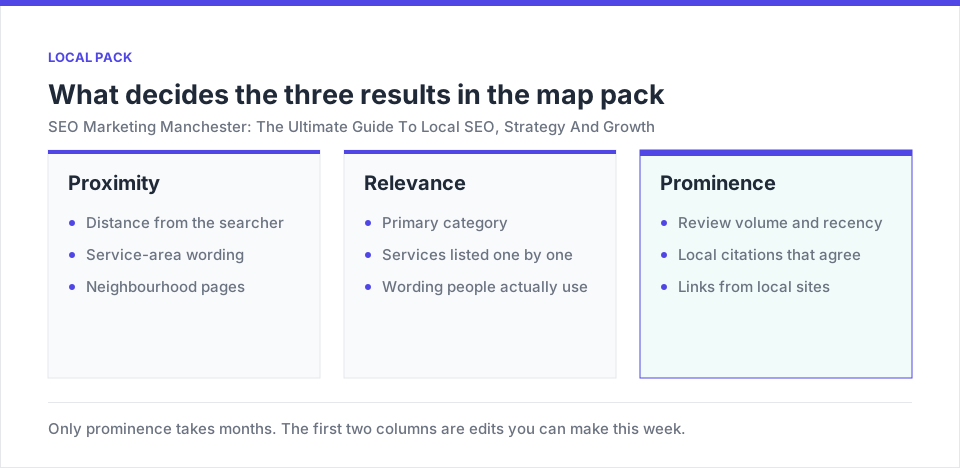
For the Local Pack side of this, the local SEO guide covers what to fix and how to track it in Semalt.
1) Local product data and TPID-driven schema
For Manchester retailers, product data must be clean, district-aware, and diffusion-ready. Begin with TPID-linked product briefs that tie each item to hub topics (for example, a city-wide "home improvement" theme) and map those briefs to district asset pages. Implement product schema (Product, Offer, AggregateOffer) that is TPID-tagged so rich results on Maps and in knowledge panels reflect local context. Include stock-keeping details such as store availability, delivery windows, and local pickup options to improve relevance for nearby customers. This approach helps search engines understand both the product and its local real-world implications, improving visibility in near-me searches around Manchester districts like Manchester City Centre, Salford, and Didsbury.
- TPID-tagged product data: attach TPIDs to each product, with district-linked attributes for diffusion provenance.
- District availability signals: surface stock, pickup options, and delivery windows in district pages and GBP updates.
- Structured data hygiene: maintain consistent schema across product pages, category hubs, and district spokes.
- Local pricing and offers: embed district-specific promotions within the product schema where feasible, avoiding price cannibalisation across districts.
- diffusion-aware images and alt text: use TPID-linked imagery that reinforces local relevance and accessibility.
2) District hub pages and product spokes: diffusion playbook
Adopt a hub-and-spoke model where a central Manchester product hub anchors authority, and district spokes tailor content to local needs. Each district page should include a product feed or curated selection relevant to that area, linked back to the hub via TPIDs. Spokes should cover popular local categories, local promotions, and district-specific FAQs about delivery, returns, and in-store pickup. This structure preserves hub credibility while giving shoppers a personalised, local experience that aligns with eight surfaces: Search, Maps, Knowledge Panels, Local Packs, News, YouTube, Voice, and Images.
- Hub-to-district diffusion map: define a predictable route for product content to diffuse into district pages while maintaining topical authority.
- District product briefs: create TPID-linked briefs that translate district intent into publishable product blocks and guides.
- Internal linking discipline: connect district spokes to the hub and to activation outputs per surface, ensuring diffusion stays cohesive.
3) Local promotions, price consistency and in-store pickup
Manchester shoppers respond to timely promotions, local stock updates, and convenient pickup or delivery options. Establish district-level price governance to avoid price inconsistency across suburbs, while enabling district-specific promotions that reflect local events or partnerships. Align product pages with GBP posts to highlight district offers, and ensure returns policies are consistent across districts to maintain shopper trust. Per-surface activation kits can standardise GBP updates, Local Pack content, and knowledge cues while preserving TPID provenance as content diffuses.
- District price and promotion governance: set rules for local price displays and seasonal offers by district.
- Delivery and pickup clarity: show precise delivery windows and in-store pickup capability on district product pages.
- Product reviews and local validation: surface district-specific reviews and user-generated content to bolster proximity signals.
4) Localised content for product discovery and conversion
Content should answer district-specific questions about product usage in Manchester, transport to pick-up points, and compatibility with local needs. Create district FAQs, how-to guides, and local case studies that demonstrate practical product benefits in the local context. Use TPIDs to connect district content back to hub topics, ensuring diffusion remains auditable as new districts come online. Include rich media assets such as tutorials or demonstrations relevant to Manchester buyers and their preferred shopping behaviours.
- District FAQs and how-to content: address common local queries and scenarios.
- Media that reflects Manchester life: locally shot videos and images with meaningful alt text linked to TPIDs.
- Conversion-focused UX by district: tailor CTAs and forms to the district audience, enabling quick actions like ‘Buy now’ or ‘Book pickup’.
5) Measurement: KPIs for ecommerce diffusion in Manchester
Establish a blended KPI framework that tracks both product-level performance and diffusion success by district. Core metrics include product impressions, click-through rate, and on-page conversions, alongside district-level inquiries, bookings, and revenue. Per-surface dashboards should couple product data with hub topics via TPIDs, enabling What-If ROI planning that forecasts diffusion velocity, inventory needs, and per-district marketing spend. The governance model should make it straightforward to report to stakeholders at ManchesterSEO.ai and beyond.
- Product-to-district attribution: attribute conversions to TPID-linked district pages and hub topics across surfaces.
- What-If ROI planning for ecommerce: forecast revenue uplift under different diffusion paces and promo plans.
- Dashboard architecture: two-tier views: district-level operational dashboards and hub-level executive summaries, both TPID-linked.
Multi-location And International SEO Considerations For Manchester
As Manchester brands scale beyond the city, the complexity of local search expands. This Part 11 translates the locality-first governance model into a multi-market playbook, enabling Manchester businesses to extend district-level authority into other UK cities and international markets without losing hub integrity. By applying Translation Provenance Identifiers (TPIDs), Activation Kits, and Surface Contracts to new markets, you can maintain provenance, coordinate diffusion across eight surfaces, and systematically measure ROI across locations.
Why multi-location SEO matters for Manchester brands
Expanding to other UK cities or international regions requires a clear governance framework so content does not drift or become inconsistent. The Manchester hub remains the authoritative narrative, while district pages in new markets mirror that authority through TPIDs. Activation Kits per surface standardise outputs (GBP posts, Local Pack content, Knowledge Panel cues, and schema) so diffusion can scale without sacrificing local nuance. The objective is a coherent, auditable diffusion that accelerates visibility and conversions in every market you enter.
- Consistent governance across markets: TPIDs, Activation Kits, and Surface Contracts maintain provenance as you expand beyond Manchester.
- Market-specific adaptation: local language, currency, regulatory notices, and consumer behaviour are reflected in district briefs while staying aligned to hub topics.
Geotargeting, language, and currency considerations
When extending to other markets, decide between a single domain with geotargeting or separate country domains. A Manchester-based brand might start with targeted subdirectories (for example, /uk/, /en-gb/, or /city-/) before moving to country-specific domains if volume justifies it. hreflang becomes critical to signal language and regional targeting, reducing content conflicts and ensuring the right version is shown to the right user. Local currency displays, taxation disclosures, and delivery options must be accurate for each market, with pricing tailored to local expectations and purchasing power.
Structured content should reflect market-specific intent. TPIDs enable you to tie regional pages back to the central hub, ensuring diffusion remains auditable as you extend to Birmingham, Leeds, Edinburgh, or international markets such as Dublin or Amsterdam. Consider external references like Google’s international SEO guidelines and Moz’s localisation resources to inform your approach.
International governance: TPIDs, Activation Kits and Surface Contracts
For each new market, create market-specific TPIDs that map to your Manchester hub topics. Activation Kits per surface should be deployed for GBP updates, Local Packs, knowledge panels, and structured data, ensuring consistent outputs across markets. Surface Contracts formalise cadence, data schemas, and success criteria so diffusion remains predictable as you scale into new regions. Regular governance reviews keep your multi-market diffusion aligned with business goals and compliance requirements.
- Market TPID strategy: assign a unique TPID set for each market that links to central hub themes.
- Surface playbooks per market: standardise outputs for GBP, Local Pack, Knowledge Panels, and related schema across all markets.
- Diffusion cadence governance: maintain consistent activation timings to avoid market drift and maintain performance parity.
Technical considerations: site architecture and canonical strategy
For multi-location diffusion, harmonise site architecture to support both hub and local content. Decide on a scalable URL structure that accommodates market pages without duplicating content. Use canonical tags carefully to avoid dilution of authority when similar hub topics appear in multiple markets. Maintain XML sitemaps that prioritise hub topics while clearly listing market and district assets. Ensure cross-market analytics track attribution across TPIDs to preserve data lineage and enable meaningful ROI comparisons.
Content strategy for Manchester-led multi-market growth
Map district-level keywords to broader market themes, then cascade into market-specific pages using TPIDs. Create hub-and-spoke content that can be localised quickly for each new market while preserving the central narrative. Local FAQs, testimonials, and 지역 partnerships should be aligned to district TPIDs to maintain provenance as content diffuses across surfaces such as Maps, Local Packs, News, YouTube, and Images. Use Activation Kits to standardise outputs and Surface Contracts to codify data structures for each market.
Measurement and ROI across locations
What matters is the ability to compare performance across markets while preserving data provenance. Implement a What-If ROI model that considers diffusion velocity, market expansion pace, and per-surface performance. Track per-market KPIs alongside hub topic performance, with dashboards that merge local engagement signals and conversions to provide a unified ROI narrative. Regularly review TPIDs, Activation Kits, and Surface Contracts to ensure ongoing alignment with business goals across Manchester and beyond.
Next steps: preparing for multi-market diffusion
Begin with a strategic mapping session to assign TPIDs for new markets, and develop activation kits and surface contracts tailored to each market's priorities. If you’re ready to explore multi-market diffusion for your organisation, review our Manchester SEO services on our services to access governance templates and district case studies, or get in touch to schedule a discovery. External references such as Google's international SEO guidelines and Moz's localisation resources can provide additional context for best practices.
SEO Marketing Manchester: Finalising The Local Growth Blueprint
Across the twelve-part Manchester SEO series, the aim has been to translate locality-first principles into a repeatable growth engine for Manchester businesses. Part 12 summarises the governance, measurement, and operational playbooks needed to sustain district diffusion at scale. It ties together Translation Provenance Identifiers (TPIDs), Activation Kits, and Surface Contracts, then translates these artefacts into a practical, district-ready roadmap that aligns with your business goals and Manchester’s distinctive geography. This final instalment provides a concrete, actionable blueprint you can implement now, or adapt with our team at ManchesterSEO.ai.
1) Consolidating governance for lasting impact
A robust governance framework is the platform on which all district diffusion rests. In practice, this means keeping TPIDs tightly synchronised with hub topics, ensuring Activation Kits are surface-ready and versioned, and maintaining Surface Contracts that codify cadence, data schemas, and reporting expectations. With governance aligned, new districts can be added without creating data silos or inconsistent messaging across eight surfaces. A central governance cadence also enables you to demonstrate clear ROI to stakeholders by tracing outputs back to origin points and business objectives.
- TPID consistency: maintain a single source of truth for hub-to-district relationships to preserve provenance across diffusion.
- Activation Kit governance: version and surface-tag kits so they remain current as new assets publish.
- Surface Contract discipline: codify cadence, data fields, and validation rules for each surface to ensure repeatable diffusion.
- Diffusion lineage: build dashboards that show how district outputs originate from hub topics and cascade through maps, search results, and knowledge panels.
- Auditable reporting: structure reports so leadership can verify how locality signals translate to revenue in Manchester.
2) Scaling diffusion across Manchester’s footprint
To grow beyond initial districts, adopt a staged expansion model. Start with high-volume districts in the city centre and key suburbs, then progressively onboard additional areas while preserving TPID-linked provenance. Ensure activation cadences per surface remain coherent as you onboard more districts, so data, content, and authority diffuse without colliding or duplicating. A scaled diffusion approach not only increases visibility but also strengthens locality relevance across conversations in search, maps, and local knowledge panels.
- Staged onboarding: sequence district activation to maintain consistency in diffusion and governance.
- Hub-to-district cadence: synchronize publication calendars with activation milestones to ensure timely diffusion.
- Per-surface readiness check: verify that each surface has Activation Kits ready for new districts.
- District capability tracking: monitor district-level outputs and adjust TPIDs as needed to sustain topical authority.
3) Advanced measurement, attribution, and What-If planning
Measurement is the bridge between activities and outcomes. Build district dashboards that merge surface-level metrics (impressions, clicks, CTR) with district-level conversions (inquiries, bookings) and revenue impact. A What-If model helps forecast ROI under varying diffusion speeds and activation budgets, enabling smarter investment decisions. Average attribution should recognise multiple touchpoints across surfaces, with TPIDs maintaining traceability as content diffuses from hub topics to district pages.
- Per-surface attribution: credit each interaction on Search, Maps, Local Packs, and Knowledge Panels to the corresponding TPID.
- District conversion funnels: map user journeys from discovery to action within each suburb.
- What-If ROI modelling: simulate changes in activation cadence and budget to forecast district performance.
4) District expansion roadmap and playbooks
Having a formal expansion roadmap ensures new suburbs adopt the locality-first framework with minimal friction. Develop district briefs that translate hub topics into publishable blocks, link spokes to their TPIDs, and supply Activation Kits tailored for each surface. Regularly refresh playbooks to reflect evolving local needs, transport updates, and community partnerships. A disciplined expansion approach reduces risk and accelerates diffusion gains across Manchester.
- District brief standardisation: create reusable briefs that map to hub topics and local intents.
- Spoke TPID linkage: maintain traceable diffusion by ensuring every suburb page ties back to its TPID.
- Surface activation readiness: ensure per-surface Activation Kits are prepared before new districts publish.
5) A practical district case study and final actions
Consider a hypothetical Manchester district expansion from the city centre into a suburban area with strong footfall and a connected transport corridor. By applying TPID-driven briefs, activating district spokes, and diffusing content across surfaces on a validated cadence, you can expect increased Maps views, more GBP engagements, and higher local conversion rates. The case illustrates how governance disciplines translate into tangible outcomes: proportional growth in district inquiries, stronger brand authority in Local Packs, and a measurable uplift in near-me search visibility. The key is consistency: maintain TPIDs and activation templates, and continuously monitor What-If scenarios to optimise ROI as the footprint widens.
- Scenario planning: run diffusion scenarios before onboarding new districts to estimate impact.
- District case studies: document learnings and reuse best practices for future districts.
- Governance refresh: schedule routine reviews of TPIDs, Activation Kits, and Surface Contracts to keep diffusion coherent.